201.-beyond-th-screens.pdf
Web PDFImposed PDFRaw TXT (OCR)


August 2023,

Ungrateful Hyenas Editions
uungratefulhyenas.noblogs.org
“Nothing is boring if'you are aware of it. It may be irritating but itis
not boring. Ifit is pleasant the pleasure will not fail so long as you are
aware of it. Being avware is the bardest work the soul can do, I think.”

— Solitude by Ursula LeGuin

‘As technological expansion hurtles forward at an increasingly
dizzying pace, the presence of smartphones threatens to become
normalized across the anarchist space; in many places, this
presence has already been normalized for a long time. Among
anarchists in the US, critiques of adopting smartphones, or any
other new tech gadget, have generally failed to escape the dead-
end binaristic logic of moralistic lifestyle politics. Choosing to
live without technology is reduced to a form of consumer activ-
ism - an arbitrary personal code that is irrelevant to the struggle,
or even harmful in terms of redirecting hostility against the state
into judgments of individual consumer choices.


‘The concept of ‘there no such thing as ethical consumption under
capitalism’ has, predictably, become a banner of the ‘radical social
media consumption frenzy that has engulfed anarchist milieus in
these territories and paved the way for the current state of things.
‘Today it is nearly unheard of to live without a smartphone; when
attending a meeting or event, one must assume there is a smart-
phone in each and every pocket, and any critique of this reality is
largely viewed as the squawking of old-timer, out of touch
wingnuts.


In some places anarchists have resisted this process of normaliza-
tion and maintained a clear and consistent eritique of the impact
of smartphone adoption, warding off the incursion from taking
hold in the first place. Everywhere that this is not the case
however, including but not limited to the US, where any such
critique has long since faded, is there any going back? What
‘would it look like to propose that anarchists ditch the technolo-
gies we have become increasingly dependent on and addicted to
for over a decade, that have come to mediate so much of our
lives, relationships, and forms of struggle?

This text will attempt to construct such a proposal, taking a hard
look at how we got into this mess, and sketching out some
possible escape routes, both individual and collective. I am
particularly interested in looking at how smartphone adoption
relates to the general erosion of anarchists’ ability or desire to
critically examine how we structure our lives on our own terms,
instead shaping ourselves into the alienated, flattened personas
that digitization demands, When we start to adapt to, and even
defend, this alienation as our de facto point of departure, we
quickly forget how to be anything else. The only way out, then, is
to remember.

‘Most analyses that I find relevant use the term ‘technology’ as
shorthand for the technologies of industrialism which contain
and reproduce the power relations of dominant society, rather
than engaging in debates about what is or is not a technology.
Although these debates can be valuable, too often they are useless
spirals that breeze past the realities of industrial devastation and
technological domination in the present. I am more interested in
considering smartphones in particular as the linchpin that has
made my generation of anarchists accept digital capture on a
level I still find hard to fathom, but it’s the nature of this capture
that I wish to focus on, rather than just the gadget on its own,

Hand in hand with bureaucratic obstacles, social pressures to
have a smartphone, to be connected and reachable at all mo-
ments, push us into an ultimatum: adapt or be left behind. This
framework is foisted on us from all angles, supplanting our own
questions with those constructed by the digital world. How do
‘we want to connect with the people we care about? With strang-
cers? What type of relationships do we want to nurture? These
considerations are paved right over with fear and threats — you'll
lose all connection, you'll lose touch with what's going on, you'll
become irrelevant ~ a parasitic and relational blackmail. We are
denied even the dignified option of solitude, which in the digital
world is rewritten as isolation, loneliness, depression, irrelevance,


2
‘As many analyses about technology have pointed out,! we don't
just use machines, they also use us, mutilating the way we think
and feel to fit into the pathways they have constructed for us. So
itis not only the devices themselves that encroach upon anarchist
spaces, but these ways of thinking, these ways of feeling and
relating ~ replacing our living spiderweb of affinity relations with
a digital web of disembodied connections. The ability to consider
a path of struggle that doesn't depend on optics, on public
opinion, on spectatorship starts to feel unrealistic or irrelevant.

‘There's much more to say about the horrors of smartphones, but
‘on some level, everyone who finds themselves caught in this net
already knows. Continually using this technology is in itself a
process of numbing and adapting to what you and this little box
are doing together, and to the extreme violence and destruction
required to bring it to your hands. The anxiety that creeps up
after being away from your phone for too long, and the feeling of
satisfaction when you get back to the sereen, finally able to get
your fix ~ these sensations are not incidental and can't be reduced
to individual pathologies; dependency is part of the design. That
feeling of your focus flitting around like a fly in its death throes,
trained by years of flipping between internet tabs, scrolling
through riot porn interspersed with memes, selfies of people you
don't even like, videos of police violence. We all know what's
happening, deep down under the layers of numbness and denial,
and it’s terrifying,


Interventions of recent years typically focus on how we use
technology, not if we should be using it in the first place. This
makes sense as a reaction to the reality of the social terrain where
smartphones are and will undoubtedly continue to be ubiquitous,
and the urgency of getting people to stop unwittingly snitching
on themselves and one another by, for example, planning crimes

via Signal.

L.*Caught in the Net: Notes from an Era of Cybernetic Delirium offers a
comprehensive analysis to this end.
“These debates and cycles of advice are endless, confusing, and
typically result in a kind of broken telephone where people adopt
tech security tips in bits and pieces without sceing the whole
picture. By way of example, I got into an argument with a
stranger after a demonstration who pulled out their smartphone
to look up directions to the bus stop. When I told them they
shouldn't have brought their phone, and definitely shouldn't use it
now, they got defensive and informed me that they had it on
airplane mode and were keeping it in a Faraday bag, so it was
‘okay. This logic made my head spin, since it didn't take into
account the police getting access to their phone if they were
arrested, which neither a Faraday bag nor airplane mode would
do anything to prevent.


“This anecdote is absurd, and I would like to believe that most
anarchists would follow a more sensible line of reasoning and
either leave their phones at home during sensitive moments or
ditch them entirely, but I'm not at all confident that this is the
cease, Judging from this person's behavior, they had put a great
deal of thought into their approach and it was likely based on
recommendations shared by others in their environment, reflect-
ing a tendency to heap tech-security measures one on top of the
other in a manner that effectively puts the underlying assumption
~ that they need their phone in the first place - beyond question,
And interestingly enough, the false security engendered by their
nonsensical precautions might endanger this person and their
comrades more than if they had taken no precautions at al.

“The text titled “Never Turn off the Phone: A New Approach to
Security Culture” reflects a similar mentality, though using a more
internally coherent logic. By taking for granted the fact that “we
all” use and will continue to use phones as the basis of their
approach, the author surrenders any possibility that we might live
any other way; instead arguing in favor of structuring our behav-
iors around the metadata created by constant phone and internet
use, While building awareness of daily patterns is a useful
starting point for confronting surveillance, the solution ~ never
turn off the phone ~ proposes expanding technology's hold over
our lives, omitting any consideration of the consequences of this
expansion.


Given how widely this text was circulated, and translated into
several languages, a significant number of people clearly found
the proposal valuable, testifying to the level that smartphones are
entrenched and normalized in the surroundings of people who
also want to act against the structures of domination. So how to
approach this reality? With more technical guidance recounting
what people already know ~ that they are carrying a cop in their
pocket? I don't want to discount technical advice in general,
which is clearly extremely valuable for sharing knowledge about
how to avoid putting information into the hands of our enemies,
especially given the constant developments in technologies of,
surveillance. Rather, I think that any technical approach has to be
based in a qualitative critique of technology or it risks further
normalizing this horrifying trend by “thinking more about how
to adapt to technological nuisances than how to get rid of
them.”*

‘The most recent issue of Return Fire republished “Never Turn off
the Phone” with a long footnote quoted from “Here. at the Cente
of the World in Revolt’, problematizing the text's understanding of
security culture by warning against the separation of “technical
knowledge from the strategic” -


“A broadly shared suspicion of communications technology, academ-
ics, journalists, and police, in the hands of an entire community,
‘will be far more effective at blocking State intelligence-gathering
than a sophisticated array of counter-surveillance techniques in the
sands of one affinity group; but the one need not and should not
exclude the oth


At least in my surroundings, not only is the technical separat-
ced from the strategic, but any hope of an expansive projectual

2, For a more in-depth critique of “Never Turn off the Phone” see “Fermer
Je clapet"in Avis de Tempetes #13.
approach seems to be abandoned entirely, anarchists focusing
instead on shaping struggle to fit the increasingly claustrophobic
technological enclosure.

Leaving aside what the author means by “community”, their
‘words also raise the problem of the faultlines formed between
those who refuse this enclosure on an individual level, possibly
along with their close comrades, and those who are ensnared ~
who maybe have never lived without a smartphone, were given
ipads as babies, have always had to swallow the feelings of heart-
break and rejection when their loved ones pull out their phones
instead of looking them in the eye. Constantly sharpening hos-
tility towards the digital cage isa valuable and necessary process,
and can also be an important gift forall those whose hostility

is buried under the anxiety and fear nurtured by smartphone
society. The timid approaches that accept the eternal ubiquity of
smartphones, likely out of a desire to avoid alienating all those
‘enmeshed in digital networks, are not only weak, they are inef~
fective and insulting in that they underestimate others’ desire to
escape the trap they are stuck in.


This perspective is based in my own experience, as someone who
has (very gratefully) received this gift from comrades many times.
Being surrounded by the sense of inevitability wears one down,
no matter how deep their hostility to technology. Proposals that
focus on resisting the current of digital consumption through

the force of individual will can be important, since at the end

of the day we must each decide how we want to live. However,
the paradigms and logic of compulsory connection seep into the
fabric of one’s life, and it’s extremely difficult to even recognize
what is happening, let alone take the necessary steps to banish it.
Thave gone through the process of being sucked in by technol-
ogy and, guided by the uncompromising spirit of my comrades,
cutting myself free, only understanding the extent to which I was
plugged in by experiencing the literal chemical withdrawal that
follows tearing out the plug. Sharing stories about living free
from this technology, challenging one another to think on our
‘own terms, to find solutions to the problems that arise when we


6
stop depending on robot servants, is a basic form of solidarity in
this technological nightmare, and an essential one.

“My attempts to share this gift with others in my environment,
starting with my closer comrades and moving into more extend-
ced networks of affinity, have been extremely well received and re~
ciprocated. Younger anarchists in particular have reflected about
how miserable they were as children of the smartphone genera-
tion, sharing how it feels to have never learned how to function
without this technology and the difficulties of figuring it out for
the first time. Rather than being defensive, as I cynically expect-
ed on some level, they launched head-first into the possibilities
that ditching their smartphones could open up. Exceptionalizing
young people as being a lost cause is, again, insulting given the
reality that technological dependence traverses all corners of
society. Those of us who lived without smartphones, maybe even
for most of our lives, and then gave in at some point are per~
haps faced with an even more difficult task of self-reflection and
reckoning.


‘Thinking through how to shift social norms away from digital
communication together is more effective if it considers all the
‘ways we relate and move through the world, Starting to just

drop by your comrades’ houses without texting or calling first, for
example, something that has come to be seen as invasive or disre-
spectful, can change the fabric of these relations ~ it forces us to
learn how to tell people we care about that we're busy and donit
have time to sce them, and on the flip side, how to accept this
‘without internalizing it as a rejection and falling back into the
“ease” of avoiding face-to-face interactions altogether. We need
to learn that this avoidance isn't actually easier, as it destroys our
relational skills, our ability to confront each other when necessary
and to maintain trust and respect throughout conflict. This is a
simple example that illustrates the importance of a deeper shared
commitment to re-learning, or learning for the first time, how

to escape the net. If we cant share this commitment, what are
our relations based on? I don’t want to know about the weath-

cr forecast from the app; I'll bring a map so you can leave your
phone; Can we just ponder this question together for a moment
instead of running straight to google? - all of these interventions
may be small, but if consistent and mutual, such little challenges
(alongside the bigger ones like actually GETTING RID of the
damn phone!) can open up space for connection that we didn't
even realize was stolen from us

On an individual level, we must make this same commitment to
ourselves, regardless of what everyone around us is doing, and
renew it whenever necessary. This is a process of earning back our
‘own trust, doing everything we can to avoid breaking it and, if
wwe do break it, learning how to earn it back again. Smartphones,
the internet, etc. teach us to mistrust our instincts, our own
sensory perception of the universe, trusting only the expertise of
the search engine. Ditching smartphones, therefore, cannot be
reduced to a technological ‘detox’, another means of adapting

to, and so accepting, the world as it is. The task at hand is not so
simple, Nor can we rid ourselves of phones as a mechanism of
distraction to avoid facing ourselves, to numb our fears and grief,
only to substitute in another such mechanism —TY, internet
surfing, etc. If we fail to challenge the core approach, the phones
will just sneak back in sooner or later.
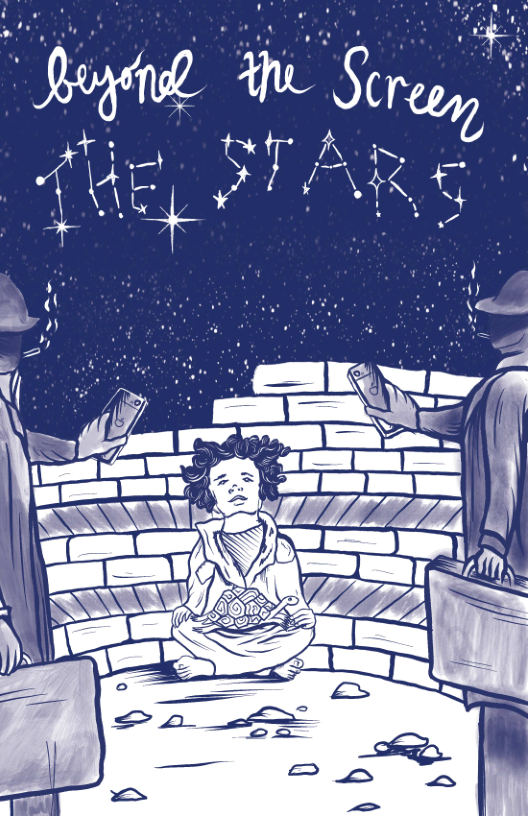
“Many were the evenings when, after her friends bad gone home, she
would sit by herself in the middle of the old stone amphitheater, with
the sky's starry vault overhead, and simply listen to the great silence
around her. Whenever she did this, she felt she was sitting at the centre
of a giant ear, listening to the world of the stars, and she seemed to
sear soft but majestic music that toucked ber beart in the strangest
sway. On nights like these, she always bad the most Beautiful dreams.
‘Those who still think that listening isn’t an art should see if they can
do it half as well.”

—Momo by Michael Ende


August 2023,

Ungrateful Hyenas Editions
uungratefulhyenas.noblogs.org
“Nothing is boring if'you are aware of it. It may be irritating but itis
not boring. Ifit is pleasant the pleasure will not fail so long as you are
aware of it. Being avware is the bardest work the soul can do, I think.”

— Solitude by Ursula LeGuin
‘As technological expansion hurtles forward at an increasingly
dizzying pace, the presence of smartphones threatens to become
normalized across the anarchist space; in many places, this
presence has already been normalized for a long time. Among
anarchists in the US, critiques of adopting smartphones, or any
other new tech gadget, have generally failed to escape the dead-
end binaristic logic of moralistic lifestyle politics. Choosing to
live without technology is reduced to a form of consumer activ-
ism - an arbitrary personal code that is irrelevant to the struggle,
or even harmful in terms of redirecting hostility against the state
into judgments of individual consumer choices.


‘The concept of ‘there no such thing as ethical consumption under
capitalism’ has, predictably, become a banner of the ‘radical social
media consumption frenzy that has engulfed anarchist milieus in
these territories and paved the way for the current state of things.
‘Today it is nearly unheard of to live without a smartphone; when
attending a meeting or event, one must assume there is a smart-
phone in each and every pocket, and any critique of this reality is
largely viewed as the squawking of old-timer, out of touch
wingnuts.


In some places anarchists have resisted this process of normaliza-
tion and maintained a clear and consistent eritique of the impact
of smartphone adoption, warding off the incursion from taking
hold in the first place. Everywhere that this is not the case
however, including but not limited to the US, where any such
critique has long since faded, is there any going back? What
‘would it look like to propose that anarchists ditch the technolo-
gies we have become increasingly dependent on and addicted to
for over a decade, that have come to mediate so much of our
lives, relationships, and forms of struggle?

This text will attempt to construct such a proposal, taking a hard
look at how we got into this mess, and sketching out some
possible escape routes, both individual and collective. I am
particularly interested in looking at how smartphone adoption
relates to the general erosion of anarchists’ ability or desire to
critically examine how we structure our lives on our own terms,
instead shaping ourselves into the alienated, flattened personas
that digitization demands, When we start to adapt to, and even
defend, this alienation as our de facto point of departure, we
quickly forget how to be anything else. The only way out, then, is
to remember.

‘Most analyses that I find relevant use the term ‘technology’ as
shorthand for the technologies of industrialism which contain
and reproduce the power relations of dominant society, rather
than engaging in debates about what is or is not a technology.
Although these debates can be valuable, too often they are useless
spirals that breeze past the realities of industrial devastation and
technological domination in the present. I am more interested in
considering smartphones in particular as the linchpin that has
made my generation of anarchists accept digital capture on a
level I still find hard to fathom, but it’s the nature of this capture
that I wish to focus on, rather than just the gadget on its own,

Hand in hand with bureaucratic obstacles, social pressures to
have a smartphone, to be connected and reachable at all mo-
ments, push us into an ultimatum: adapt or be left behind. This
framework is foisted on us from all angles, supplanting our own
questions with those constructed by the digital world. How do
‘we want to connect with the people we care about? With strang-
cers? What type of relationships do we want to nurture? These
considerations are paved right over with fear and threats — you'll
lose all connection, you'll lose touch with what's going on, you'll
become irrelevant ~ a parasitic and relational blackmail. We are
denied even the dignified option of solitude, which in the digital
world is rewritten as isolation, loneliness, depression, irrelevance,


2
‘As many analyses about technology have pointed out,! we don't
just use machines, they also use us, mutilating the way we think
and feel to fit into the pathways they have constructed for us. So
itis not only the devices themselves that encroach upon anarchist
spaces, but these ways of thinking, these ways of feeling and
relating ~ replacing our living spiderweb of affinity relations with
a digital web of disembodied connections. The ability to consider
a path of struggle that doesn't depend on optics, on public
opinion, on spectatorship starts to feel unrealistic or irrelevant.

‘There's much more to say about the horrors of smartphones, but
‘on some level, everyone who finds themselves caught in this net
already knows. Continually using this technology is in itself a
process of numbing and adapting to what you and this little box
are doing together, and to the extreme violence and destruction
required to bring it to your hands. The anxiety that creeps up
after being away from your phone for too long, and the feeling of
satisfaction when you get back to the sereen, finally able to get
your fix ~ these sensations are not incidental and can't be reduced
to individual pathologies; dependency is part of the design. That
feeling of your focus flitting around like a fly in its death throes,
trained by years of flipping between internet tabs, scrolling
through riot porn interspersed with memes, selfies of people you
don't even like, videos of police violence. We all know what's
happening, deep down under the layers of numbness and denial,
and it’s terrifying,


Interventions of recent years typically focus on how we use
technology, not if we should be using it in the first place. This
makes sense as a reaction to the reality of the social terrain where
smartphones are and will undoubtedly continue to be ubiquitous,
and the urgency of getting people to stop unwittingly snitching
on themselves and one another by, for example, planning crimes

via Signal.

L.*Caught in the Net: Notes from an Era of Cybernetic Delirium offers a
comprehensive analysis to this end.
“These debates and cycles of advice are endless, confusing, and
typically result in a kind of broken telephone where people adopt
tech security tips in bits and pieces without sceing the whole
picture. By way of example, I got into an argument with a
stranger after a demonstration who pulled out their smartphone
to look up directions to the bus stop. When I told them they
shouldn't have brought their phone, and definitely shouldn't use it
now, they got defensive and informed me that they had it on
airplane mode and were keeping it in a Faraday bag, so it was
‘okay. This logic made my head spin, since it didn't take into
account the police getting access to their phone if they were
arrested, which neither a Faraday bag nor airplane mode would
do anything to prevent.


“This anecdote is absurd, and I would like to believe that most
anarchists would follow a more sensible line of reasoning and
either leave their phones at home during sensitive moments or
ditch them entirely, but I'm not at all confident that this is the
cease, Judging from this person's behavior, they had put a great
deal of thought into their approach and it was likely based on
recommendations shared by others in their environment, reflect-
ing a tendency to heap tech-security measures one on top of the
other in a manner that effectively puts the underlying assumption
~ that they need their phone in the first place - beyond question,
And interestingly enough, the false security engendered by their
nonsensical precautions might endanger this person and their
comrades more than if they had taken no precautions at al.

“The text titled “Never Turn off the Phone: A New Approach to
Security Culture” reflects a similar mentality, though using a more
internally coherent logic. By taking for granted the fact that “we
all” use and will continue to use phones as the basis of their
approach, the author surrenders any possibility that we might live
any other way; instead arguing in favor of structuring our behav-
iors around the metadata created by constant phone and internet
use, While building awareness of daily patterns is a useful
starting point for confronting surveillance, the solution ~ never
turn off the phone ~ proposes expanding technology's hold over
our lives, omitting any consideration of the consequences of this
expansion.


Given how widely this text was circulated, and translated into
several languages, a significant number of people clearly found
the proposal valuable, testifying to the level that smartphones are
entrenched and normalized in the surroundings of people who
also want to act against the structures of domination. So how to
approach this reality? With more technical guidance recounting
what people already know ~ that they are carrying a cop in their
pocket? I don't want to discount technical advice in general,
which is clearly extremely valuable for sharing knowledge about
how to avoid putting information into the hands of our enemies,
especially given the constant developments in technologies of,
surveillance. Rather, I think that any technical approach has to be
based in a qualitative critique of technology or it risks further
normalizing this horrifying trend by “thinking more about how
to adapt to technological nuisances than how to get rid of
them.”*

‘The most recent issue of Return Fire republished “Never Turn off
the Phone” with a long footnote quoted from “Here. at the Cente
of the World in Revolt’, problematizing the text's understanding of
security culture by warning against the separation of “technical
knowledge from the strategic” -


“A broadly shared suspicion of communications technology, academ-
ics, journalists, and police, in the hands of an entire community,
‘will be far more effective at blocking State intelligence-gathering
than a sophisticated array of counter-surveillance techniques in the
sands of one affinity group; but the one need not and should not
exclude the oth


At least in my surroundings, not only is the technical separat-
ced from the strategic, but any hope of an expansive projectual

2, For a more in-depth critique of “Never Turn off the Phone” see “Fermer
Je clapet"in Avis de Tempetes #13.
approach seems to be abandoned entirely, anarchists focusing
instead on shaping struggle to fit the increasingly claustrophobic
technological enclosure.

Leaving aside what the author means by “community”, their
‘words also raise the problem of the faultlines formed between
those who refuse this enclosure on an individual level, possibly
along with their close comrades, and those who are ensnared ~
who maybe have never lived without a smartphone, were given
ipads as babies, have always had to swallow the feelings of heart-
break and rejection when their loved ones pull out their phones
instead of looking them in the eye. Constantly sharpening hos-
tility towards the digital cage isa valuable and necessary process,
and can also be an important gift forall those whose hostility

is buried under the anxiety and fear nurtured by smartphone
society. The timid approaches that accept the eternal ubiquity of
smartphones, likely out of a desire to avoid alienating all those
‘enmeshed in digital networks, are not only weak, they are inef~
fective and insulting in that they underestimate others’ desire to
escape the trap they are stuck in.


This perspective is based in my own experience, as someone who
has (very gratefully) received this gift from comrades many times.
Being surrounded by the sense of inevitability wears one down,
no matter how deep their hostility to technology. Proposals that
focus on resisting the current of digital consumption through

the force of individual will can be important, since at the end

of the day we must each decide how we want to live. However,
the paradigms and logic of compulsory connection seep into the
fabric of one’s life, and it’s extremely difficult to even recognize
what is happening, let alone take the necessary steps to banish it.
Thave gone through the process of being sucked in by technol-
ogy and, guided by the uncompromising spirit of my comrades,
cutting myself free, only understanding the extent to which I was
plugged in by experiencing the literal chemical withdrawal that
follows tearing out the plug. Sharing stories about living free
from this technology, challenging one another to think on our
‘own terms, to find solutions to the problems that arise when we


6
stop depending on robot servants, is a basic form of solidarity in
this technological nightmare, and an essential one.

“My attempts to share this gift with others in my environment,
starting with my closer comrades and moving into more extend-
ced networks of affinity, have been extremely well received and re~
ciprocated. Younger anarchists in particular have reflected about
how miserable they were as children of the smartphone genera-
tion, sharing how it feels to have never learned how to function
without this technology and the difficulties of figuring it out for
the first time. Rather than being defensive, as I cynically expect-
ed on some level, they launched head-first into the possibilities
that ditching their smartphones could open up. Exceptionalizing
young people as being a lost cause is, again, insulting given the
reality that technological dependence traverses all corners of
society. Those of us who lived without smartphones, maybe even
for most of our lives, and then gave in at some point are per~
haps faced with an even more difficult task of self-reflection and
reckoning.


‘Thinking through how to shift social norms away from digital
communication together is more effective if it considers all the
‘ways we relate and move through the world, Starting to just

drop by your comrades’ houses without texting or calling first, for
example, something that has come to be seen as invasive or disre-
spectful, can change the fabric of these relations ~ it forces us to
learn how to tell people we care about that we're busy and donit
have time to sce them, and on the flip side, how to accept this
‘without internalizing it as a rejection and falling back into the
“ease” of avoiding face-to-face interactions altogether. We need
to learn that this avoidance isn't actually easier, as it destroys our
relational skills, our ability to confront each other when necessary
and to maintain trust and respect throughout conflict. This is a
simple example that illustrates the importance of a deeper shared
commitment to re-learning, or learning for the first time, how

to escape the net. If we cant share this commitment, what are
our relations based on? I don’t want to know about the weath-

cr forecast from the app; I'll bring a map so you can leave your


phone; Can we just ponder this question together for a moment
instead of running straight to google? - all of these interventions
may be small, but if consistent and mutual, such little challenges
(alongside the bigger ones like actually GETTING RID of the
damn phone!) can open up space for connection that we didn't
even realize was stolen from us

On an individual level, we must make this same commitment to
ourselves, regardless of what everyone around us is doing, and
renew it whenever necessary. This is a process of earning back our
‘own trust, doing everything we can to avoid breaking it and, if
wwe do break it, learning how to earn it back again. Smartphones,
the internet, etc. teach us to mistrust our instincts, our own
sensory perception of the universe, trusting only the expertise of
the search engine. Ditching smartphones, therefore, cannot be
reduced to a technological ‘detox’, another means of adapting

to, and so accepting, the world as it is. The task at hand is not so
simple, Nor can we rid ourselves of phones as a mechanism of
distraction to avoid facing ourselves, to numb our fears and grief,
only to substitute in another such mechanism —TY, internet
surfing, etc. If we fail to challenge the core approach, the phones
will just sneak back in sooner or later.
“Many were the evenings when, after her friends bad gone home, she
would sit by herself in the middle of the old stone amphitheater, with
the sky's starry vault overhead, and simply listen to the great silence
around her. Whenever she did this, she felt she was sitting at the centre
of a giant ear, listening to the world of the stars, and she seemed to
sear soft but majestic music that toucked ber beart in the strangest
sway. On nights like these, she always bad the most Beautiful dreams.
‘Those who still think that listening isn’t an art should see if they can
do it half as well.”

—Momo by Michael Ende