Under the Enemy’s Blade: Anarchist Practices Against Torture
Web PDF • Imposed PDF• Raw TXT (OCR)

![At the Time | Was Down on My Knees “At the Time I Was Down on My Knees” is 4 poem written by Bahman, pseudonym of an Iranian man, activist, arsist, and poct. Bahman was in jail for seven years in Iran where he was brutally tortured. He then escaped from Iran to Canada where he wrote the follow- ing poem, which was published in English in the 2014 paper “Poetic resistance: Witnessing Bahman’s resistance to torture and political vio- lence.” The paper explains: “Bahman had always dreamed of winning an Olympic medal as a child. He said that one resistance strategy he had was emulating that childhood desire. Bahman concluded that, Tf T can keep my silence, i T have the strength and power to not ‘name anyone, it wil be as good s a gold medal’[...] The following details of one incident of tor- ture Bahman suffered are required in order for his acts of resstance to be revealed. Fol- Towing a session in which he was tortured and while he was again sble to not give anyone’s name to the torturers, Bahman was dragged o his cell and hung by his ‘wrists for eight days. When he was released from these bonds he was physically unable t0 stand, and was in excruciating pain. As with every experience of torture, Bahman did not know if he could survive another episode, and he could not know ifhe would](under-the-enemys-blade-anarchist-practices-against-torture-no-trace-project 5.png)


![A few words about my political views. I believe that the way socicty is organized should provide good for all people, and dircct democracy is the best way to reach that.In recent times 1 have not been taking part in actions, because I’ve come to realize that I have: to start with my own way of life. Start with those relationships we have with other people, making them more direct, lcarning to approach common work collectively. When I encountered torture, I was completely unprepared for it and did not expect that someone would be intercsted in torturing me for some reason. Of cours, it is only possible to really experi- ence it directly, but I still want to share some reflections on my experience. 1 think it is useful to try to talk about torture in 3 rational way. I wish that no one would ever find themselves in similar situation, but reality shows that such things arc closer than they scem, and if somcone reading this gets into a mess, | hope that something of what I have written below will help them get out of it with the least losses. But still, ] am not an expert on this subject and I base my conelusions mostly on my own expericnce, and since any experience is individual, they may not be suitable in another situation. It should be taken into account that the purposc of torture can vary. Probably the most optimistic case for you, if you are unlucky enough to be subjected to torture, is when the police have nothing or almost nothing on you personally, and they torture you to get information about your connection with the people they are interested in and information related to them (which was my case). These people are under serious suspicion, they must have been followed and it led to something, perhaps the police want to investigate all their acquaintances in the hope of finding some- thing intercsting, but at the same time, they do not know what they are looking for, which leaves room for mancuvering, It is ‘much worse if the cops suspect you personally, then they will spin the facts of interest to them and you can expect them to behave more toughly and persistently. Same thing if they are ready to put youin jail and only need your confession. 2](under-the-enemys-blade-anarchist-practices-against-torture-no-trace-project 21.png)
![In 1991 after six months of disappearance to avoid arrest, I went to visit my parents. The occupation forces came to arrest me and injured me while I tried to escape. As usual, beating and insulting began in the car. I was thinking about sumud then as I read texts such as Falsafat al-muwajaha."* In the interrogation center Twas constantly moving between the shabah’ and interrogation sessions. They used all the techniques[...] deprivation of food and sleep, the closet, the refrigerator, shaking, [...] They brought my father to the interrogation and threatened to bring my mother. Twelve interrogators interrogated me. [...] In each moment in the interrogation [ was inventing strategies to practice sumud. I refer to sumud in the interrogation as the collective spirit, the beli Palestine’s just cause,sincerity and loyalty, sense of belonging, self- confidence, and nurturance of the self throughout a long period. During the long interrogation scssions and torture I thought of my sumud as defending my mother and the mothers of others. I was continually thinking about the martyrs and captives and the Palestinians-in-sumud. 1 thought about the martyr Ibrahim El- 4ii** and constantly recited songs by the band Sabrin. I was in love with a girl and thought that if 1 practice sumud I would deserve her love. For me, to practice sumud meant to exist. BNTE note Falsafat al-msajaba wara’al-gudban (The Philosophy of Confrontation Behind Bars) is a handbook detsling the interrogation tech- niques ofthe Tseael Security Agency (better known as the Shabak or Shin Bet) and how these techniques can be defeated through practicing sumd, Tt was writien in prison in 1978 by Mahmood Fanoon and later distributed by the Popular Frone for the Liberation of Palestine (PFLP),a Palestinian Marxist— HNTE nter A torture technique consisting in tying & person in painful positions. PNTE note: A Palestinian militant who died under torture in an lsracl prison in 1988, 34](under-the-enemys-blade-anarchist-practices-against-torture-no-trace-project 35.png)
![1 [ “Come with usl” One of the men grabbed and twisted my arm, then handeuffed me. The men shoved me toward the door. ...] ‘They led me outside in handeuff, through the college campus and out to the busy strcet.In broad daylight, my captors casually hailed 2 cab. T was made to sit in the back, blindfolded between two of the men, and was told to keep my head low, touching my knces When the blindfold was removed, I found myself handcuffed to a chair desk in what looked like an ordinary classroom, with a teacher’s table and chair, chair desks, and blackboards on the front wall. The only things that did not seem to fit were slabs of wood piled in a corner of the room. Apart from my captors, several other plinclothesmen moved in and out of the room. The men scarched me. I had nothing on me except the clothes I was wearing and some pocket moncy. I did not even have a wallet or a cedula [residence certificate]. | was fingerprinted and made to 6l out some forms, 1 put down false entrics. Name? Leonardo Buensuceso. |...] Address? 542 Second Strcet, San Beda Subdivision, San Miguel, Manila. Years ago, our family lived at 538 Sccond Strcet. House number 542 did not exist. As T filled out the forms, I thought of what I was going to say during interrogation. My cover story would be that I was involved in a church-related rescarch project on the religious and social life of students in the Visayas.* I had just arrived in Cebu and would beleaving soon. Yes, I would tell them that I arrived on September 20, not September 8. That way,if | had to account for my activities in Cebu, I would only have to make up storics for the last three weeks. As I had done during my previous arrest, I would withhold TNTP noe: The Visayas are a geographical divison of the Philippines Tocated in the central part of the archipelago. Cebu City isin the Visayas. 36](under-the-enemys-blade-anarchist-practices-against-torture-no-trace-project 37.png)
![my true identity for a while, to buy time. I decided to also withhold the fact that I was a former political detaince. 1 agreed to play chess with two of the men to case my tension and hopefully delay interrogation. After nearly an hour, lunch was served—a decent meal of rice, meat, and vegetables. Despite my ansicty, | savored the rice, as the dasama [comrades] and 1 had been cating ground corn for the past month to save money. ‘Then it was interrogation time. The men in the room asked me questions in rapid fire. “Is this really your name—Leonardo Buensuceso?” “Yes.” “Yes, sir” “Yes,si “Leo for short?” es...sir” “Where do you live?” #542 Second Street, San Beda Subdivision. I wrote it there on the form you gave me... sir.” “But this is a Manila address. What is your address here in Cebu?” “I don’t live here. I’m just here for several weeks to do research.” “Rescarch, huh? Where are you staying right now?” Of all things, 1 had forgotten to think up an addsess in Cebu. T could not come up with one—all the houses 1 had been to were those of £asama or allics. “Ahh—Skyvue Hotel” I finally blurted out. “Skyvue Hotcl? You can afford to stay in Skyvue Hotel? What’s your room number?” “I don’t remember, sir.” “You’re really staying there? That’ll be easy for us to find out, you know. What name did you use when you registered?” “Leonardo Buensuceso.” 37](under-the-enemys-blade-anarchist-practices-against-torture-no-trace-project 38.png)
![said, putting an arm on my shoulder. “Look at yourself now. We don’t wani to be doing this to you.” They removed the handcuffs and allowed me to put my clothes back on. They returned my glasses and my watch. More words of “advice.” Then they served me merienda [snacks]—biscuits and Coke. When I had finished cating, they put a picce of paper and a ballpoint pen on the desk. and ordered me to write down what 1 had been doing in Cebu since my arrival, to name and describe persons 1 had met and identify places I had been to—or clsc. It was clear to me that the men would not stop unless I gave them my Cebu address. But divulging the Labangon house was just not possible—Lani, Ernic, Evelyn, other £asama would surcly be captured if I did. What addsess could I possibly give? If only Tknew of a house of someone who was clearly not politically in- volved, or a post® no longer used, or an abandoned house. I could not recall any. Then it occurred to me that the Labangon house would definitely be abandoned as a result of my arrest. I could not divulge the address now—1I would have to give the £asama enough time to vacate it. The practice among comrades was that 2 UG house [underground house] would have to be abandoned within 24 hours of the arrest of anyone who had been there. The fasama would realize that | had been arrested only in the cvening, when I did not return. To be sure that they would have ample time 0 escape, I needed to endure the torture and kep staling until tomorrow evening. Would I last that long? Hot. The men came back. had not written anything on the paper before me. They were furious. They transferred me to a smaller zoom. The beating resumed with greater intensity | was made to stand most of the time, my handeuffs semoved, but I was still blindfolded, and stripped naked. Aside from delivering hard blows on my body and slaps to my face, they banged my head against the conerete wall and pounded the butt of a pistol on the back of my hand. Several times, the force of their blows sent me recling o the floor and groveling in pain. ENTR note: A “post” was “a safe meeting place and drop-off point for 41](under-the-enemys-blade-anarchist-practices-against-torture-no-trace-project 42.png)
![Idropped my Skyvue Hotel story, but I could not come up with an altenative, Apart from demanding my addsess, my torturers kept asking when I actually arrived in Cebu, They insisted that 1 had lied about my date of arival. I stuck to September 20, Finally,they showed me a photograph with three other £asama and me clearly in it. We were emerging from a side road into what looked like the main thoroughfare. It must have been taken from the sccond floor of a house across the main road. Yes, I recognized the place —Cabahug!™ It was where I was first introduced to Lani. The ‘meeting post must have been known to the military for some time. 1 tried to recall when that mecting took place. The photo must have been taken on September 18, two days prior to the date claimed to have arrived in Cebu. No wonder my torturers refused to believe my story about arriving on September 20. Conceding that my September 20 story had also collapsed, 1 revealed the true date of my arrival, September 8, cven furnishing them with the name of the boat I had traveled on, the MV Cebu City; and the fake name I had used. I stated, however, that 1 had come by myself, that I met the Cebu Aasama upon my arrival, and that they had attended to me ever since. “Who met you at the pier?”asked Husky Voice. He scemed to be my main interrogator. “Karyong, the onc in the photo.” Although Rod was in the picture, 1 pointed to someone clsc whose name I could not remember. If you can’t beat them, mislead them, I thought. “Who’re the others in the photo?” “I don’t know, sir. ] only met them once, in that meeting.” My new storyline was that 1 had been shifted from one place to another, always accompanicd by a Aasama whenever 1 went out, and that by myself I would not be able to locate any of the houses Thad been to. My interrogators made me describe all the houses 1 ‘mentioned and all the people I met in those houses. To check that T was not just inventing a certain person, they made me describe NP mote: Cabahug was 2 “post”(a safe house) in Cebu City: 42](under-the-enemys-blade-anarchist-practices-against-torture-no-trace-project 43.png)
![this person all over again after 10 or 20 minutes. On the whole, managed to be consistent. The trick was to think of a real person, like a politically uninvolved friend in Manila, change his or her name a bit, and then deseribe him or her: “Did you get to meet Tony T2 “I don’t recall meeting anyone by that name.” “He uses the alias Delio” They showed me a photograph. Although the picture was not very clear, ] definitely recognized the man who had outlined my assignments in Cebu, the same person Thad met in Loyola Heights™ over two years before. “No, s without batting an eyelid. “The second interrogation session ended without my interrogators extracting my Cebu address from me. “We’l get it from you somehow:” one of the men vowed. “The night s sill young.” 3 “They served me supper. Fearing that I would have indigestion and vomit if they beat me up again, I ate very little. But I drank a lot — 1 had sweated a great deal during the ordeal. Shortly aftcr supper, the third bout began. The men smelled of liquor and sounded gruff. My anxicty grew. Would they still be able to control themsclves? Even after six hours of grilling and torture, I still had not given my interrogators any information of real tactical value. I sensed that they knew this and that they resented my putting one over them. Nonetheless, I replayed the story 1 had fabricated during the second session. Again, I was blindfolded and stripped naked. The mauling resumed. I stuck to my new story since the men could no longer point to any inconsistencics or major missing picces in it. My cover story held—except for my Cebu address. Soon my oppressors focused their questioning solely on this. It was the only NTR note: A distrct of Quezon Ciy: 43](under-the-enemys-blade-anarchist-practices-against-torture-no-trace-project 44.png)
![“Stop! Stop!” dirceted Husky Voice. The beating stopped. Then, moving close to me, he asked, “What did you say?” “1-4-8 Jakosalem, six.” I let out a big howl and broke down, weeping disconsolately. They took off the blindfold. Tears flowed fiecly from my cyes. How dramatic! I had acted in many plays in elementary and high school and even won several acting awards, but school theater was nothing compared to the seript I played out now. This was the performance of my life. It worked! Thinking that they had finally broken me, the men did not bother to ask for a description of 148 Jakosalem. Instead, they consoled me in their own duplicitous manner, “Stop crying now. Your ordeal’s over. You can rest now: See, had you cooperated with us earlier on, you would not have suffered so much.” T asked for some water; they gave me a glass and a family-size Coke bottle filled with water. T finished the bottl. Feling sticky all over, 1 asked i I could wash up. Magnanimously, they let me take a shower. ] dricd myselfwith my handkerchicf, squeczing out the water several times. By the time they handcuffed me to a bed in the small room, it was nearly 4 a.m. I speculated with some disquiet about what the men would do to me later that day when they discovered that I had given them a false address. It ook some time before I fell asleep. 4 “There was no word on 148 Jakosalem that day or the next. It was unlikely that they had raided the place—if they had, I would have been a punching bag all over again. Most likely, they had put it under surveillance T examined the results of the abuse they had inflicted upon me. A couple of lumps on my head, a numbness over my mouth and checks, contusions and swelling near my left wrist, bruiscs and sore spots in various parts of my body. Fortunately, no broken bones, no. marks on my genitals, no permanent disfigurement. And my head was stil in one picce. I concluded that my torturers must have 45](under-the-enemys-blade-anarchist-practices-against-torture-no-trace-project 46.png)
![been careful not to inflict permanent physical damage or injuics that would leave telltale marks. With my frail build, single strong blow on the chest would have cracked several ribs. Later, one of the men claimed that the blows they delivered had been measured. [ 5 Husky Voice barged into the room. His face was livid. “You fooled ust he thundered. “The address you gave us was falsel” “Wha—what do you mean?” I feigned ignorance. “That address you gave—148 Jakosalem—it was a clinic, a dental clinic. No one was living there. Now you better tell us your true address or we’ll beat the living daylights out of you!” He did not wait for me to reply. He slapped me hard on the face and then punched me in the stomach. Other men came in and joined in the action. They were getting carcless—they forgot to blindfold me. “Labangon,” said calmly: “I’s a house in Labangon.” ‘They stopped beating me. “What’s the house number?” one of them asked suspiciously,showing me his fist “No number. The houses there do not have numbers. If you take a jeepney you get down at the corner at the capilla [chapel] of San Isidro. It’s the sixth house after the bridge, on the right,just after a small sari-sari store [small convenience storc].” “They asked me to describe the place in detai,inside and out. I did “They scemed convinced that I was finally telling the truth. After several minutes questioning me and listening to my description of the house, they serambled out of the room. It certainly looked like they were going to stage a raid that very evening, Well, they would surely come up empty-handed. 1 glanced at my watch and did some mental caleulations. It had been more than 78 hours since SNTP nter A jecp used for public ransportation in the Philippines. 46](under-the-enemys-blade-anarchist-practices-against-torture-no-trace-project 47.png)
![my arrest. Then I fretted a bit. What if, in violation of security policies, the kasama had not vacated the house? No news that evening, Nor the following day o the day after. But 0 news was probably good news—no new arrests. Five days after my arrest, they let in a balding, middle-aged man with a doctor’s bag and a stethoscope. He examined me cursorily. “The traces of my ordeal had subsided but were still very evident. He did not comment on them. He asked me if 1 had ancmia. Perhaps my anemia story had helped, after all, making the men moderate the strength of their blows. I nodded. He inspected my fingernails, and then looked under my eyclids. “No anemia,” he concluded. The doctor left. I never saw a copy of a medical certificate afterwards.] think that my interrogators merely wanted to make sure their blows had left no lasting marks on me. My interrogators typed out a statement in which I confessed to engaging in subversive activity. They had me read and sign it. The statement was sidiculously self-contradictory. It included things 1 had made up, including both the Jakosalem and Labangon storics. [..] L signed the statement. It would be casy to retract everything later [...] 47](under-the-enemys-blade-anarchist-practices-against-torture-no-trace-project 48.png)
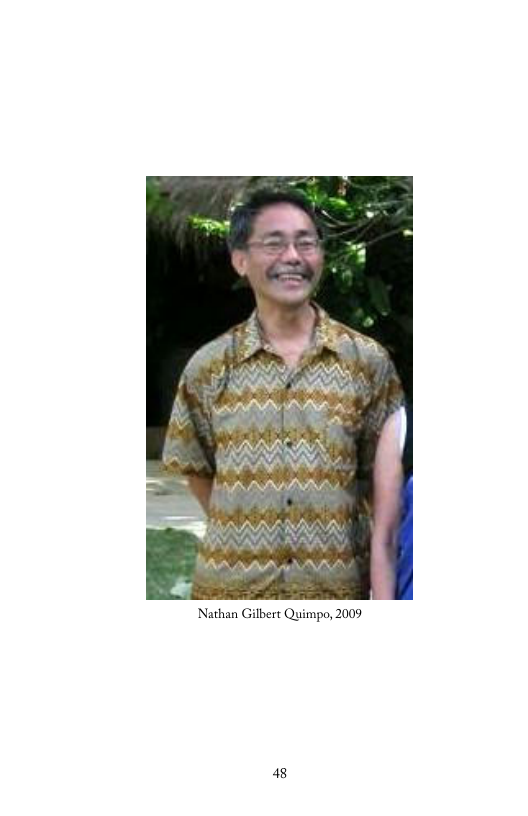
![As of today, the despicable and hated torturer, police officer Petros Mpampalis, no longer exists. He was exceuted by a group of ight- ers. His personality and actions arc known to everyone, During the period of the junta, his actions and reputation surpassed Grecee’s borders. He was one of the leaders of the repressive forces and head of the persccuting apparatus of Asfaleia” With particular ferocity, he sought to strike the fighters of the resistance against the junta and the regime that created it. He was responsible for the brutal terrorism of Asfaleia. He was responsible for the horrific torture of thousands and thousands of individuals. He was responsible for destroying the health and the lives of hundreds of fighters and not only them, but also anyone who, for any reason, found themsclves in the hands of the forces of Asfaleia. He was responsible for the “clevation” of hundreds of informers as elite torturers, many of whom still continue their actions today and are becoming increasingly essential pillars of the State power of the bosses. L] “Therefore, we,a group of fighters,a part of the forces of the popular and revolutionary movement of our country, decided to exccute Petros Mpampalis: « Because he was the notorious torturer and police officer of Asfaleia and he had to pay for his countless crimes; * Because he continued, even after his criminal actions as a torturer, to be 2 sig: ficant instrument and conscious partic- ipant of the “unofficial” repression and terror apparatuscs of the regime against proletarians, and; + Because through him and his actions, a specific “representa- tive function” of the system of capitalist power, violence and abuse was expressed. FNTP oe: Asfaleia (Aogidhewa), which can be transhated as “Security,” refers 0 2 police force from the period of the junta that was partcularly bated foris brutal ways. 50](under-the-enemys-blade-anarchist-practices-against-torture-no-trace-project 51.png)
![And this “representative function"is a very specific and continuous practice, essential for maintaining exploitation and oppression, and it is not an abstract “institution.” We will confront and fight this practice of violence and abuse with specific and continuous struggles, not with vague declarations and protests, which as has been shown, not only do not help at all but also distract, reassure, and weaken every disposition and will to fight. 8] TO DEVELOP THE POPULAR AND REVOLUTION- ARY VIOLENCE AGAINST THE TERRORISM OF THE REGIME AND THE EXPLOITATION OF THE BOSSES TO STRIKE WITH ALL MEANS THE OFFICERS AND THE APPARATUSES THAT SUPPORT THEM THE POPULAR AND REVOLUTIONARY STRUGGLE 1S THE ONLY WAY TO OVERTHROW CAPITALIST POWER—THE STRUGGLE CONTINUES 51](under-the-enemys-blade-anarchist-practices-against-torture-no-trace-project 52.png)
![T would often find the unexpected guest by my side. One never gets used to sccing it at work. Crushing, eradicating, destroying a life, such is its way of being, its uncxpected existence, that no one desires, imposcd as an abhorrent, but necessary act of low justice. Getting involved in this requires great preparation, not technical —it’s the least of one’s worries—but personal, intimate, moral. Its presence disturbs and fascinates at the same time. Someone who, 2 moment earlicr, was a living being, full of lfe, capable of hate, love, anticipation, procreation and all that the future could offer him, is suddenly not capable, because of his encounter with the unexpected guest, of any of that; he lies on the ground, crushed, like a puppet whose strings have been cut, an old rag, a motionless mass of flesh that will start decomposing in a few days. Where did this explosive potential, for good and evil go? It went up in smoke, the unexpected guest grabbed it and took it away. ] One less monster. How many tortures avoided? Similas to those 1 endured myselfand to others, unknown to me. Such a monster did not deserve to live. A sentence to contemplate. But who deserves to live? One who behaves well. But what does it mean, to behave: well? Respecting the rules? No torture. Centuries of prison, legal exceutions and all the rest of i, Is that behaving well? Is the one who ils after receiving a picce of paper signed by a judge less responsible than another who kills while torturing afer being verbally ordered to do so? Come on, let’s be serious. And if we became serious, then very few people would be left alive, Where is the dividing line? Who is in charge of tracing it Is it clear? Or sketched at random, a litele twisted, this person inside and that person outside? A difficult discussion when exploring its extreme consequences. Who decides? Who exceutes? [..] This radical cut [...] did not only remove a human monstrosity—and only human beings can be that monstrous—but also any critical consideration. Every question remained unanswered. Even in our group some comrades were convinced of the sound- ness of what they were doing and others uncertain. [...] The monstrosity of some human beings, some tasks, some State agen- 53](under-the-enemys-blade-anarchist-practices-against-torture-no-trace-project 54.png)
![cies, or of bounty hunters and paid killers, isn’t it a weed that needs to be uprooted at any cost? At any cost? Of course, a cost assessment is always required. One cannot be monstrously able to kill monsters, this would amount to replacing them, or rather doubling the massacres. So onc nceds discernment. Is this disccrnment unachicvable in the ardor of clandestine struggle? Unachicvable when operating in a country occupicd by a forcign army? Maybe. Or were there alternatives that were not consid- ered? Paying more attention to the information? A better, more carcful sclection of objectives? Did we not sometimes run the risk of hitting the casicst target? Weren’t some actions, sometimes, carsied out to pin a new metaphorical stripe on our chests? I do not know: I am not saying that this is what indeed happened, 1 am saying that [ was uncertain for years. As a clandestine combat unit, we had to show signs of life. Work, continuously check and cross-refercnce, carry out actions, bring into play the unexpected guest. What more could we do as a clandestine combat unit? Bite our mails? But who granted this supreme authority, that we delegated, after along and arduous work, to the unexpected guest? Certainly not the information we reccived from the movement in Dublin® which was almost always limited to background information, simple mentions of places and a few pictures, along with, though not systematically, short history of the individual’s ‘misdeeds. Did we grant this authority to ourselves by identifying the individual’s monstrous behavior with our rigorous, double- checked observations and days or wecks of worl? I don’t think so [..] Then the authorization came from the conviction of having in front of us 1 monster unworthy of belonging to the community of humans, of which we are all a part of, not only liberators like ‘myself, but also slaves and even those who run the world of daing by exploiting the slaves’ work. Well, this monster had to be put in front of the unexpected guest because through his doing he placed himself outside of this community. A way of comforting ourselves when faced with the incomprehensible. SAN.TP note: Capital of Ireland. The resistance movement from which Alfedo and his comades recived information o their targets wis based in Dublin. 54](under-the-enemys-blade-anarchist-practices-against-torture-no-trace-project 55.png)
![Some people pick you up. They take you to a house in a large city: They disguise you clumsily with makeup and a wig. During the drive they treat you with their characteristic coldness and suspicion. This is a cold welcoming. It is as if they were already telling you: “WE don’ belicve a word you say.” You arrive at the house. What do you think those waiting at the house to sce you will do when you arrive? Give you a hug? Show joy,or mistrust? You can’t even imagine it. You only know that you must tell them everything. The commanders [of the EPR] for the Valley of Mexico, Oscar and Vicente, arrive. The first interrogations are hard, stemming from dis- trust: "Whom did you rat out? How much money did you negotiate your release for?” During this first stage you do not resist. You don’t interrupt them, nor debate. Sometimes you can’t even talk. Even though that is precisely what you want to do You want someone to listen to you. But the dynamic here is different. Not only suspicion, which i understandable, but cven the rhythm and tone of the interroga- tion. You start to relive cverything. .. Later the ones charged with studying you arrive, those who will determine whether you tell truth or lies. They take you ts a psyehologist and a psychiatrist. They fill you with pills. And the inter- rogations.... You want them to listen to you, but they furn that into an interrogation. It is as if they had pulled you from that scene and then... Imean... no, mo.... They take x-rays of your whole body, more than thirty x-rays to sce if you have a microchip implanted somewhere. Rather than caring about your state of health, they are investigating to make sure you don’t “have a tail" They tell you: “You don’t have any visible scars. It doesn’t look like you’oe been beaten. We just don’tsee the evidence.” 1t is 50 common 1o say that a torture surviver needs to come out of captivity Bleeding, mutilated, dragging picces of one’s body along the Jloor. Those people don’t understand that torturers, with all their dia~ bolical, inuman methodology, have been perfecting their techniques. These aren’t the medicval tortures. No. In some cases the manner of 57](under-the-enemys-blade-anarchist-practices-against-torture-no-trace-project 58.png)
![causing another’s pain doesn’t change... Today they can wrap you up in a blanket and beat you with baschall bats without leaving visible scars. They can dislocate your joints and it won’t be because they tied youto a borse Despite this, you don’ fel resentfi toward your compasieros. You don’t Jfeel batred. But you know that they do not understand ke magni- tude of the damage done, the martyrdom of the body to the human being. They lack that dept of conscience. [-] But you want them to listen to you; you want to spea, speak, speak. But they criticize everything you say. You are telling your story and they interrupt you and say: “No, you’re wrong there. It dacsn’ el like that. It ecls this other way.” And deep inside yourself your question to them remains constant: Have you ever been there? They tell you: “Na, they didn’t want to kill you. They just wanted to seare you." And you only think: O, you should have told me so arlicr, asshales, because T thought they were going to kill me. Faced with your comrades’ distrust and callousness, you think: Now I just want the person who lived through something to speak. Tt should’t be hidden. Thisisn’t for me or for them to interpret. It is just an experience. One experience amongst many, yes, but this one is mine 1o tell, Others cannat tell their storics. Perhaps when they reappear. I didn’t do what I did just to tell, or write, the story. After so much suffering, so much mistrust, and this denial... T don’tcare. T don’t care and T have o intention of defending myself: Why? Because if it was this or that, or the fight, or something lsc... Fuck it. I have never been that person, nor am I now nor will 1 ever be. That is not my dream. This is what a rebel must face: cither you win or you get screwed in every sense, on every level, with your every move. Okay then, 1 assume my role as rebel now and akways. T identify with that role and not with any ather. I don’t sec it any other way. And I could have never told the story. T eould have never said: 1am. The one thing that is certain in all this is that I did not fight for an individual, 1 fought for a different world, for humanity with all that it fuces. And this is what happened to me. The fight is against a criminal State, against a State that murders, against a State that massacres, that disappears, that kills. This s hard. Tinvent, unmate, and take apart my character. Only I can administer 58](under-the-enemys-blade-anarchist-practices-against-torture-no-trace-project 59.png)

Under the Enemy’s Blade
A Search for Anarchist Practices
Against Torture
No Trace Project / No trace, no case. A collection of tools to
help anarchists and other rebels understand the capabilitics of
their enemics, undermine surveillance fforts, and ultimately
act without getting caught.
Under the Enemy's Blade: A Search for Anarchist Practices Against
Torture
Original textin English
No Trace Project
2025
notrace how/resources/#under-cnemy-blade
Contents
Preface...
No Trace Project
At the Time I Was Down on My Knees ...
Babman
Don't Give Up, Don't Sell Out: Torture and Testimony ... 7
Dpitry Petrov and comrades
How to Withstand Torture
Anonymons
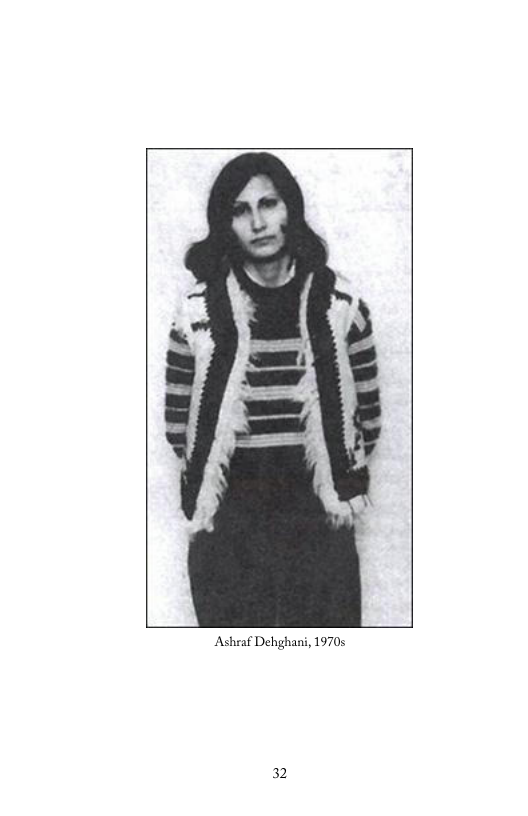
An Analysis Of Resistance Under Torture .
Ashraf Dehghani
“For me, to practice sumud meant to exist” .
Riyad
Hotand Cold.....
Nathan Gilbert Quimpo
‘Why We Executed Mpampalis
June 1978
.52
“But who deserves to live?”
Alfredo Bonanno
.55
“This is a cold welcoming”
Andrés Taompaxtle Tecpile, Jobn Giler
Postface ..
No Trace Project
.60
Preface
Torture—the deliberate infliction of severe pain or suffering for
punishment, interrogation or intimidation—is one of the tools
used by the State and its allics in their war against anarchists.
What individual and collective strategics can anarchists imple-
ment to prepae for, resist, and fight back against torturc? This
collection of texts aims to help answer this question by sharing
the experiences and insights of anarchists, communists, and other
militants who have been confronted with torture in the past five
decades.
Torture is onc of the toughest challenges that our movements can
face. How to prepare for the risk of torturc? How to organize so
that if a comrade s captured, tortured, and talks, the risks to other
comrades and to our activities are minimized? Should we commit
to ot talk under torture? How to not talk when faced with the
most brutal physical and psychological treatments? How to deal
with comrades who have talked under torture? How to fight back
against torturers? How to help survivors of torture manage their
pain and traumas?
We have strived to select texts that can help comrades answer
these questions here and now, without relying on the enforcement
of international laws or the lobbying of humanitarian NGOs.
Each text is preceded by a short introduction in which we present
the author and the original context of publication. Some of the
texts include explicit descriptions of acts of torture.
We would like to express our gratitude to the authors of the texts,
as well as to the translators who made their inclusion in this
collection possible
No Trace Project
At the Time | Was Down on My
Knees
“At the Time I Was Down on My Knees” is
4 poem written by Bahman, pseudonym of an
Iranian man, activist, arsist, and poct.
Bahman was in jail for seven years in Iran
where he was brutally tortured. He then escaped
from Iran to Canada where he wrote the follow-
ing poem, which was published in English in
the 2014 paper “Poetic resistance: Witnessing
Bahman's resistance to torture and political vio-
lence.” The paper explains:
“Bahman had always dreamed of winning
an Olympic medal as a child. He said
that one resistance strategy he had was
emulating that childhood desire. Bahman
concluded that, Tf T can keep my silence,
i T have the strength and power to not
‘name anyone, it wil be as good s a gold
medal'[...]
The following details of one incident of tor-
ture Bahman suffered are required in order
for his acts of resstance to be revealed. Fol-
Towing a session in which he was tortured
and while he was again sble to not give
anyone's name to the torturers, Bahman
was dragged o his cell and hung by his
‘wrists for eight days. When he was released
from these bonds he was physically unable
t0 stand, and was in excruciating pain. As
with every experience of torture, Bahman
did not know if he could survive another
episode, and he could not know ifhe would
be able to withhold giving anyone's name
again. It is important to Bahman for read-
ers to understand that the following poem
is not a metaphor.”
At the time I was
Down on my knces
With swelling fect
Exhausted
Thirsty for sleep
At the time they were
Powerful and angry
1 was the winner
Of that battlefield
My weapon was my silence
T was the champion
No crowd
No witness
But my reward was more than
A gold medsl
My reward
Was the safety
Of my friends
Don't Give Up, Don't Sell Out:
Torture and Testimony
“Don't Give Up, Don't Sell Out: Torture and
Testimony” was originally published in Russian
in 2021, signed Phil Kuznetsov and comrades.
Phil Kuznetsov was a nickname of Russian anar-
chist,ethnographist and historian Drmitry Petrov.
Dmitry joined the Russian anarchist movement
in the 2000, participated in many actions in Rus-
sia and abroad, and co-founded the Combat Or-
ganization of Anarcho-Communists (BOAK).
Following the 2022 Russian invasion of Ukraine,
he volunteered for the Armed Forces of Ukraine
and was killed in batele in 2023,
Along with a bricf presentation of the use of
State torture against anarchists in contemporary
Russia, this text offers an attempt at an cthical
evaluation of the act of “talking” under torture, of
providing uscful information to the State when
faced with brutal physical or psychological treat-
ments.
Introduction
Since 2017 our movement has faced repression of a scale and
intensity previously unseen. The main distinctive feature of the
situation is the massive use of torture by the FSB.! Previously,
cases of beatings and torture of anarchists in Russia, Ukraine and
Belarus were rather isolated exceptions. We heard that radical
Islamists and fascists were tortured brutally. Some may recall the
“Odessa case” against communists and anarchists.? But it's one
thing to “know” something in the abstract, quite another to expe-
rience it on your own skin.
Torture resulted in many people testifying against comrades and
cooperating with investigators after flling into the hands of the
special services.
‘The current erisis of the Russian anarchist movement is not just
the result of old splits and brutal repression. Perhaps an cven
greater challenge faced is the moral one of torture, of giving up
information, of betrayal to which we have not yet fully responded.
How to evaluate the situation where, during the course of an
investigation, many people betray comrades? Can torture serve
as a justification? What to do when popular members of the
‘movement, as in the case of, for example, Igor Shishkin from the
*No Truce Project (NTE) ot The FSB (Federal Securty Service) s
Rusia's main security agency.
NP noter Tn 2002, 11 people—communists and anarchists—were
operating in o near the city of Odessa. This case became known as the
“Odessa case.” They were all tortured by the Security Service of Ukraine
(SBU). One person dicd under torture. Most of the others testifed and their
testimonies were aceepted by the cout despite evidence that they were given
under torture. The 10 people left alive were sentenced to between 3 and 14
>NT noe: Tn late 2017 and casly 2018, about ten people were
in Russia and accused of being part of an underground organization called
“Network” that was allegedly planning attacks in anticipation of the 2018
Russian presidential lections and the FIFA World Cup. Most of them were
tortured by the FSB in the early stages of their detention.
rested.
8
“Network” case,” turn out to be among the people crushed by the
FSB to the point of collaboration?
These questions cannot be dismissed. Because, after all, they
raise the main problem: is the contemporary anarchist movement
something serious? Is its existence meaningful at all?
“The issue of torture and betrayal is the most important cthical
dilemna of the anarchist movement in recent years. Without
dealing with it, we can go no further.
“The palette of judgments that can be heard in anarchist circles
falls on a spectrum between two extreme positions: “No one
can be accountable for testimony given under torture” and “It is
unaceeptable to give new information to the encmy, no matter
the circumstances. Anyone who docs so is 4 traitor, a snitch, an
informer.”
Spoiler: the truth here is NOT somewhere in the middle. It is
much closer to the second thesis. But still not identical to it. Let's
look at it in more detail.
Where do principles come from?
We learn from an carly age that “snitching is unacceptable.” But
why is that?
Especially in the case of torture, if we look at it from a personal
perspective, it is easier to give the torturers what they want and
stop the suffering.
There are several arguments why this is not acceptable. At a
minimum, by starting to collectively participate in endeavors
potentially drawing State repression, people expect shared secrets
to be kept safe. Giving them away is a violation of that trust.
No one would take these risks knowing in advance that in a bad
situation a comrade will eveal everything to the cops. But perhaps
the strongest reason to not give comrades up s different: by giving
information to your enemies, you lterally break the lives of other
people, and people who are probably not strangers to you, since
you know something about them. Because of you, they will also
be facing torture and years in prison.
Yet these arguments are also relative. In fact, like any cthical
principle, the principle of no turning comrades in cannot be fully
“rationalized.” However, collective tradition, culture, and experi-
ence tellus that this principle i true. In Kropotkin's terms, ‘moral
sense” tells us this.*
On the same grounds, we put collective obligations above personal
comfort. Morcover, these commitments have no “expiration date”
if someone is disillusioned and leaves the movement, and after
a while finds themselves in front of cops and turns their former
associates in, the fault of such a person docs not become less.
So, we take it as a principle that it is unacceptable to pass on to
the enemy any true information concerning other people. Since
the violation of that rule entails grave consequences, the violation
itselfis a grave offence. The only question that remains is whether
torture or something else can serve as a “mitigating circumstance™
It wasn't better before
Of course, we can recall examples when someone from the move-
ment,in the face of repression, provided important information to
the authorities. The year 2010 immediately comes to mind. Then,
almost simultanously, both in Russia (after the attack on the city
administration of Khimk) and in Belarus (after a series of direct
action attacks), the anarchist movement faced repression. Torture,
as far as we know, was used only in rare individual cases and with a
lesser level of brutality than what we have seen since 2017. Still, in
both countries there were people who ended up collaborating with
the police. In all identified cases, the community has condemned
and expelled the informants
“NTP note: Peter Kropotkin (1842-1921) was 2 Russian anarchist and
geographer. In bis pamphlet “Anarchist Moralty” (1897), he argued that
10
“Thatis, the anarchist “collective mind”was guided by the principle
that there is no justification for testifying against comrades when
faced with threats, fear and psychological manipulation. It s hard
to disagrec with this approach. No matter whether you are being
threatencd or, on the contrary, the police is playing the “good cop,”
the enemy s in front of you. You are obliged to not give them any
information on your comrades
Even if a young and recent member of the movement is being
pressed by the police, it is expected that the person alrcady comes
into the radical community with a certain pre-sct moral code in
which the principle of “never turm anyone in” comes first. It scems
strange to have to say it, but recent years have taught us that it
is necessary to say it. Ten years ago, the question of a permissive
approach towards giving testimony against comades in the anar-
chist community did not aris It wasn't better before, it was casicr.
Bottom line: giving information to the State under verbal and
psychological pressurc is clearly unacceptable. But what about
physical torture?
Experience of revolutionaries
Digging through the documents of revolutionary organizations of
the pastitis not casy to find a specific atitude to testimony under
torture. The statutes of the exceutive commitece of the “People's
Will" succinetly prescribe that all the scerets of the organization
be kept in decp secrecy.
Carlos Marighella's “Minimanual of the Urban Guerrilla™ also
states in a short line and without details: “Those who go to the
*N TP note The “People's Will”(Narodnaya Volya) was alate 19th-century
revolutionary socialist organization operating in the Russian Empire, which
conducted assasinations of government offcals.
SNTP note: Carlos Marighella (1911-1969) was a Brazilan Marvist—
Leninist militant. He founded the urban guersilla group Agio Libertadora
Nacional (National Liberation Action) responsible for a series of bank
tobberies and kidnappings. In 1969, shortly before his death, he wrote the
“Minimanual of the Usban Guerrille”
1
police of their own free will to make denunciations and accusa-
tions, who supply information and who finger people, must be
exccuted when they are caught by the urban guerrillas.” Interest-
ingly,in the movie “Four Days in September,”sbout the struggle
of Marighella and his comrades, the characters have no doub that
their captured comrade-in-arms will talk under torture. And they
liberate him later anyway. A movie is 2 movie: how it really was,
the author does not know.
‘The IRA's “Green Book” devotes a lot of pages to psychological
preparation for arrest, interrogation and beatings to help partisans
remain silent. However,the text does not directly provide a moral
evaluation of testimony given under torture, And the torture
‘mentioned in the Green Book is limited to beatings and burning
with cigarettes. The connection of an clectric cable to the genitals
and prolonged electrocution with a taser may have been outside
the realities of Northern Ircland in the 1970s. The modern Russian
and Belarusian secret police act more brutally.
So,the principle of not testifying in any case i rather an unwritten
rule of revolutionary movements, something taken for granted by
default
In the USSR during the war it was considered unacceptable for
partisans and underground fighters to turn in comrades-in-arms,
regardless of any torture by the Gestapo.* For example, Viktor
Tretiakovich, commissar of the “Young Guard® (a Soviet under-
ground organization in the German-oceupied city of Krasnodon),
s still considered a controversial igure because of the suspicion
that before his exceution he could not withstand torture and gave
the Nazis names and addresses, although this version is refuted
by many.
“The view is sometimes expressed that in the hands of profession-
als” no person can withstand torture. This opinion s not without
"NLP ot The “Green Book” was trining manual issucd by the lrish
Republican Acmny (IRA) to new volunteers
NP note: The Gestapo was the seret police of Nazi Germany and in
German-occupied Europe.
12
foundation. Yet it is not true. There are many documented exam-
ples of people enduring terrible torture. Here is onc.
Boris Donskoy, member of the Left Socialist-Revolutionary party;
Killed the commander of German oceupation corps Hermann von
Eichhorn in Kiev in 1918. Boris was captured at the site of the
operation. “After he was brought to the jail, he was immediately
bound to a bed and tortured, demanded to hand over his accom-
plices. They tortured him for three days, replacing each other: they
burned, pricked, cut, thrust pins and spikes under his nail, plucked
all his toenails [... "—wrote in her memoirs Irina Kakhovskaya,
the comrade of Boris Donskoy. Donskoy said only his name,
origin, party affiliation and the motives for his actions. Not a
word about comrades-in-arms. His “testimony” actually became a
political statement.
Such examples are not unique at all.
How to resist torture?
Everyone who has experienced torture or even just beatings in the
police station knows very well how scary, painfil and humiliating
it is. And how difficult it is not to give in and give the torturers
what they want.
“The task of the torturcrsis to subdue you morally. It is important
not to lose clarity of consciousness, to play your own game,
depending on the situation feigning fright, exaggerating physical
suffering o otherwise confising the torturers
Methods for withstanding torture are something we almost never
talk about. From what can be said openly: when it becomes
unbearable, it may help if you come up with some false
cvents which does not involve any real people and information,
and “fixate” on it, make yourself believe that it is true, and insist
ersion of
onit during torture
But it is better, of course, to just keep silent.
13
Azat Miftakhov” showed us another effcctive way of action. When
they started torturing him, he cut his own wrists (with non-lethal
transverse cuts), after which the torturers were forced to stop and
call doctors.
What is wrong with the inquisitorial
approach?
We contend that it can never be “normal” or “acceptable”to turn
over people and information to the repressive authoritics. The
situation of torture is no exception. The principle of the movement
and of cach one of us individually can only be: better torture,
prison or even death than betraying comrades and giving im-
portant information to the enemy.
When you hear from 2 person that “one cannot be accountable
for testimony gi
realize that a slap on the wrist will be cnough for them to give
up everything. A movement where such an approach is taken as a
principle will never attract and raise resilient people in its ranks
Without resilient people, there will be no radical change.
n under torture,” you lose all trust in them. You
Then what is wrong with the position that “anyone who gives
information is a traitor”? Yes, resisting torture s realistic. But itis
obvious that not everyone succe
No one who has not gone through brutal torture themselves can
guarantee their own bel
s, even those who would like to.
for in such a situation,
Those who resisted the torturers but in the end still gave in under
really brutal physical pressure and spoke, can hardly remain our
comrades and participants in the anarchist movement (although,
of course, each case must be considered separately). But is it fair
to write such a person down as a traitor, who, in good consci
should be subject to retribution? Probably not.
INTE ot A
armested, accused of having built an explosive device, and tortured in custody.
Miftakbov i & Russian anarchist. In 2019 he was
14
“This thesis should not be confused with tolerance of testimony
against comrades. It always remains a grave fault. It s cveryone's
duty to do everything possible and even more to stay clean.
Dubovsky case
‘The behavior of Dimitry Dubovsky, a member of a Belarusian
anarchist partisan group, caused great controversy within the
movement. This story is not related to torture, but when talking
about testimony and cooperation with investigators, it is impos-
sible to ignore it, as it is the most recent cxample.
Itis silly to deny that during the investigative procedures recorded
on video, Dmitry said too much, describing who was standing
where and handing over bottles of gasoline. Neither the author-
ities nor the public need to know such details. However, there is
10 reason not to believe Dubovsky's explanation that he and his
comrades had agreed in advance to not deny their actions in case
of detention in order to make them a political statement. Had
this not been the case, other members of the group would have
reported it long ago. At least until other members of the group
‘comment the situation, who can know better?
Maybe Damitry, apparently out of confusion and misjudgement,
filed to fulfill their agreement. Some hastened to brand him
a “snitch and traitor,” that i, the gravest accusation for a revolu-
tionary. This is a clear example of an “inquisitorial” approach to
the issue. In order to stigmatize people in this way, you need good
reasons, which in this case we do not have,
In general, in Dubovsky's case we arc faced with a difficult prob-
Lem: the use of the courtroom as a political tribune. This is quite
a canonical practice in revolutionary history. The words spoken
during the investigation and in the courtroom can be powerful
means of revolutionary propaganda. But to do so, one would have
to openly declarc onc's views and probably at least part of one's
actions
15
‘The main question is whether the imprisoncd comrade’s actions
are aimed at propaganda from behind prison bars, or are an
attempt to protect his own skin.
“The criteria could bes does the testimony lead to new arrests, docs
it reveal the inner workings of the movement, docs it worsen the
fate of other prisoners and alleviates the situation of the one who
gives testimony? Do the statements serve to promote the idcas
behind the actions? Also, in the case of group detention, the con-
sent of other arrested comrades is important—it is unacceptable
to decide such things alone.
According to the proposed criteria,there is no real eason to accuse:
Dumitry Dubovsky of treason and snitching.
A few more words
“The issue of torture has two other important aspects. The first is
that the very fact of torture makes us realize through personal
sensory experience, not in the world of abstractions and phrases,
that the State and its representatives are our real enemics, crucl
and despicable. They must be fought hard and scriously.
“The second is: the movement must defend itself against traitors
If we are talking about a serious struggle, those who willingly and
abundantly supplied the repressive authoriies with information
and confirmed all this at further investigation and trial must
expect retribution, as it was in times when the revolution was not
merely an imitation. So far this question has not been seriously
discussed among present-day anarchists. To organize retribution
as an institution of the anarchist movement is onc of our impor-
tant tasks, however dreadful it may sound.
Conclusion
Modern trends: comprehensive cgocentrism, fixation on one's
own “traumas”and their “healing,”are not conducive to resistance
to State repression. If personal comfort and well-being are the
16
priority, it is two steps away from preferring them to convictions,
ethical principles, and the safety of comrades.
Modern culture promotes an apologia of weakness. As if it were
a sacred human right not to show courage and other uncommon
qualities, but to break and fall in a difficult situation. A humane
attitude to people and understanding of the limits of their capa-
bilities is necessary, but an apologia of weakness is vicious and
obviously destructive.
Yes, the demand to refrain from testifying under torturc is a
demand for extraordinary fortitude, but it is embedded in our
culture and has accompanied us since childhood.
‘This is the moment when the right to weakness ceases to apply
and the obligation to show inner strength becomes relevant.
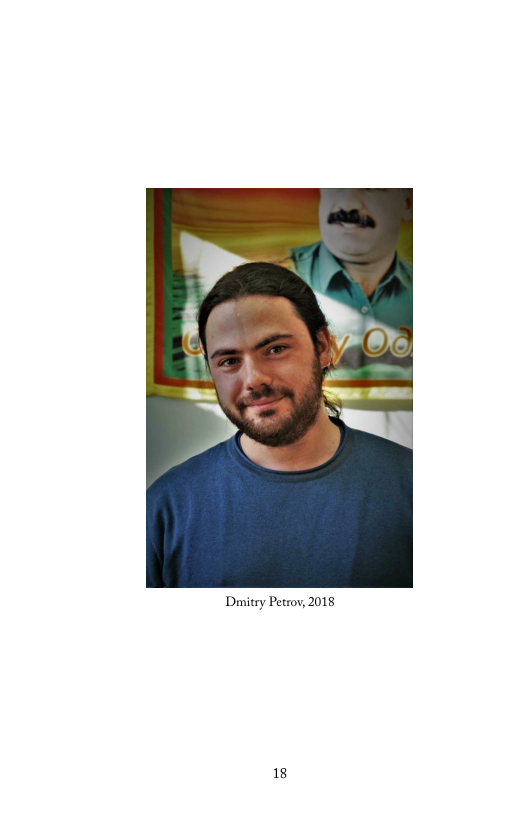
17
Dmitry Petroy; 2018
18
How to Withstand Torture
‘The following testimony comes from an anony-
mous comrade who was tortured in Russia some
years ago. It describes strategies for withstanding
torture based on the comrade's personal experi-
ence. It was published by the Russian anarchist
website Anarchy Today (a2day.org) in 2019.
19
A few words about my political views. I believe that the way
socicty is organized should provide good for all people, and dircct
democracy is the best way to reach that.In recent times 1 have not
been taking part in actions, because I've come to realize that I have:
to start with my own way of life. Start with those relationships
we have with other people, making them more direct, lcarning to
approach common work collectively.
When I encountered torture, I was completely unprepared for it
and did not expect that someone would be intercsted in torturing
me for some reason. Of cours, it is only possible to really experi-
ence it directly, but I still want to share some reflections on my
experience. 1 think it is useful to try to talk about torture in 3
rational way. I wish that no one would ever find themselves in
similar situation, but reality shows that such things arc closer than
they scem, and if somcone reading this gets into a mess, | hope
that something of what I have written below will help them get
out of it with the least losses. But still, ] am not an expert on this
subject and I base my conelusions mostly on my own expericnce,
and since any experience is individual, they may not be suitable in
another situation.
It should be taken into account that the purposc of torture can
vary. Probably the most optimistic case for you, if you are unlucky
enough to be subjected to torture, is when the police have nothing
or almost nothing on you personally, and they torture you to
get information about your connection with the people they are
interested in and information related to them (which was my
case). These people are under serious suspicion, they must have
been followed and it led to something, perhaps the police want
to investigate all their acquaintances in the hope of finding some-
thing intercsting, but at the same time, they do not know what
they are looking for, which leaves room for mancuvering, It is
‘much worse if the cops suspect you personally, then they will spin
the facts of interest to them and you can expect them to behave
more toughly and persistently. Same thing if they are ready to put
youin jail and only need your confession.
2
1 will emphasize some of the challenges that I was confronted
with when [ was in the hands of torturers and what helped me to
withstand torture to some extent.
‘The first, of course, is physical pain. Continued for a long time
without breaks, it becomes a serious pressure. It is possible to
tolerate it for a while, but gradually you stast to say and do what
they want you to say and do. At some point you want to go crazy
and don't care f you dic or not. But that docsn't mean you should
give up right away. Torturers also have weaknesses—they too get
tired both physically and mentally, even if they threaten that the
torture wil lst as long as they want.If they don't scc the desired
result within a few hours, they might get tircd of dealing with
you, their work shift will be over, and they will wan to sleep. You
just have to be paticnt until then. What clsc can help? It's helpful
o think of pain and other discomfort as a thought, simply as a
stream of neuronal signals coming from your body's cells. When
you rationalize it that way, the pain becomes less unbearable. 1
suggest practicing this when some unpleasant moments arise in
ondinary life
‘Then there's the psychological aspect. It is a terribly oppressive
feeling when you arc in someone clsc's complete power, ike an
animalin sluughterhouse. I important to try to maintain even
a little tiny picce of control, to sce what's going on as a struggle
rather than a predator-prey situation. It helped me a litele to rub
my head against the floor il it was painful, to keep a small sense
of freedom of action, and it also drowns out the cffects of the
pain. Cutting veins is also a solution, though more radical, but i's
important not to overdo it, and the conditions don't always allow
for it It's crecpy when torturers make threats of rape, along with
everything elsc, it makes us think about what we are willing to
sacrifice in order not to say too much. Remember your comrades,
that it is this moment and this place that will most likely decide
their fate, how they will spend the next years of their lives. Arc a
few hours, even if xtremely painfil for you, worth a few years, or
even more, of someone clsc’s frecdom?
21
A few words about the need to speak under stressful, panic-
inducing conditions. It was almost impossible for me to think
when I was tortured for hours and hours without breaks, The same
questions arc asked over and over again, but you have to speak,
and what you say must be as stable and logical as possible. Most
likely, the cops will have watched you for a while before catching
you, monitoring your Internet traffic places where your phone
has connected to cell towers, calls and texts. Thus they will know
things about your lfe. You will need to know how to explain what
they know, and it will be necessary to say something very similar
to the truth, and it will be extremely difficult to come up with
some complex stories that sound adequate and consistent. But if
you have chosen a ertain linc, you need to stick to it Itis better to
Took like a fool than to give different versions of significant cvents
to the torturers. It is even better to have an irrcfutable cover story
in advance,shared by all those it concerns. Of course, it won't work
for everyone, but in terms of alibis the most reliable is to live an
ordinary life, outwardly not differing from average people—work,
study; have different hobbies and a large list of numbers of non-
political people in your phone, a social media page with kiteens,
ete.Thisis uscful for many reasons including because when you are
stressed you then can, without making up anything, put it all out to
the police to confirm that you arc, in general, a random person. Itis
good tosayalot of distractingly neutral things,stretching the time
with information that seems to be relevant, butis not so important
for the cops and does not discredit anyone. If you are insistently
asked for things like names and places, you can make them up,
but it is important that they won't try to make you the only one
involved in crime with some “unidentified persons.” Also, one
option is to act crazy and say something completely out of order,
but I think you have to be a bit of an artist to do that. Lastly on
the topic of stress, | will write that in my experience | tried to keep
calm, looking at the situation as i from the outside, thinking that
what was happening was cither a drcam or the filming of a low-
budget horror movie—otherwise my mind would probably have
refused to perccive the events.
2
How not to give away important information? First of al, it is
extremely useful to not know unnecessary things. “The less you
know, the better you sleep,” literally. It is difficult to keep a large
amount of information sccret, and it is unwise to scck to obtain
compromising information without practical necessity Important
information should only be accessed from an cnerypted device in
arelatively secure location, and all important passwords should be
stored in a password manager, you don't even need to sce them.
For communications you can use, for cxample, Jabber with OTR-
encryption or PGP-enerypted email on a scure server, But you
nced to come up with an explanation in advance of why you are
encryping.
You may well hide some of your information during torture, For
cxample, it was my principle not o give unnecessary names and
not to discredit anyone, because it was logical to cxpect that these
people could also be subjected to torture. Since the cops did not
know that I actully knew any of these peopl, they backed off
after a while.
What we hold dear can be used as a means of blackmail. It is
hard to lose what we love, our friends and loved ones, our honor
and freedom, our life. But we must remember that the one who
blackmails you with the loss of any of the above can easily arrange
it even if you surrender. If you are already under someone’s total
power, you can no longer protect anyone or anything. The most
ridiculous thing is to believe the promises of the people who
brought you to this position. Also, do not think that your life
itself s of any great value, many will willingly sacrifice it for the
fulfllment of their goals.
“The cops may bluff by saying that you've supposcdly alrcady been
turned in and it's usless to deny it. Well, in any work you need
to trust the people you interact with, it is foolish to cmbark on
any important venture with people about whom you have doubts
that they may betray. It takes a long time, sometimes ycars, to
reach an appropriate level of trust and familiasity with a person.
‘With people you trust completely, you cannot think that they have
betrayed you, unless they have been tortured, but that is different.
23
If you are involved in the activities of a large group of peaple who
do not know each other well, it goes without saying that you have
to assume that some of the participants are willingly or unwillingly
passing information to the police, so you have to structure the
work of the group in such a way as to minimize the potential harm
from this.
It is also useful to understand the torturers and tell them what
would be in line with their values, trying to find common ground.
For example, appealing to God's retribution, agrecing that “those
Banderites™ in Ukraine really got out of hand,”and objecting to
accusations by saying that“I don't need all these revolutions, [ have
other things to worry about—building a house, buying a car,”ctc.
It'sscary aftertorture. Ofcourse, I was not ready to sign anything
without looking, but my will was clearly weakened, and 1 was
very afraid that the torture would repeat. When I was relcased,
the fear lasted for quite some time, 1 was afraid to be alone, cven
more so to go out in the strect. It s very important that in the
beginning people you trust can be with you, help you with housing
and everything you need. It is also good to have a lawyer's phone
number and access to the media, a valid passport and visa, spare
‘means of communication. I think immediately after the incident
you should record the injurics and publicize the case. The trauma
center instantly reports information to the cops, which may not
be usefl, so i’ better to go straight to a private forensic medical
examiner. Publicity in the media is not a cure-all against the repe-
tition of torture, but there is a big chance that the police do not
want to draw attention to themselves again, which can help make
them leave you alone, while someone who nobody cares about can
be tortured indefinitely. Although to stay living in Russia after
thatis a dangerous endeavor.
TNT nte: Banderites was originally the name given to members of a
faction of the Organisation of Ukrainian Nationaliss (OUN), acive duringg
the Second World War. In present-day Russia it i a pjorative term used to
refer to activstsfrom the 2013-2014 Maidan uprising in Uksaine, and more
generally to Ukainians who support sovereignty from Russa
24
A bit on a personal note. Torture s a thing that has a very
powerful impact. 1 would not say that I had illusions about the
compassionate nature of people before this experience or that 1
stopped loving people after it happened, maybe these factors made
it elatively casy to endure torture, Nevertheless, something in me
has clearly changed, probably that I have become more sensitive
to my own pain and the pain of others, but at the same time it
has also become more natural. From the inside,it's hard to know
if these changes are helpful or not.
To summarize, torture s just another tool at the disposal of those
who control our lives. There is no need to panic at the thought
of if, but rather to be aware of how it works and what we can do
to counter it. I hope the threat of torture docsn't stop you from
striving to fulfill your and our shared dreams, and 1 hope none of
you have to endure torture. Ifanyone does, 1 wish you perseverance
and faith in your own strength!
25
An Analysis Of Resistance Under
Torture
“An Analysis Of Resistance Under Torture” was
written in the early 1970 by Ashraf Dehghani
asa chapter of her prison memoirs, “Torture and
Resistance in Iran,” which were translated and
published in English in 1976,
Ashraf Dehghani (born 1949) is an Iranian
communist militant. In 1971 she joined the un-
derground Marsist-Leninist guerrilla group Or-
ganization of Iranian People’s Fadace Guerrillas
(OIPFG) and, later that yeas, was arested and
imprisoned. In prison she was regularly subjected
to torture, She resisted the brutal treatments and
did not provide any sensitive information to the
torturers. She escaped from prison in 1973 and
rejoined the OIPFG. After the 1979 Iranian
Revolution which led to the replacement of the
Imperial State of Iran by the Islamic Republic of
Iran, while some of her comrades moved away
from guerrilla warfare, Ashraf Dehghani founded
2 new organization (the lranian People's Fadace
Guerrillas, IPFG) to continue the armed struggle
against the new government. She later reportedly
moved to Europe, and her current whercabouts
are unknown.
2%
The factors that can help comrades to resist torture may be
summed up as follows:
1. Faith in the justice of the revolutionary path: this fiith must
be so strong and unshakable that, even in the unlikely cvent
of all other comrades turning their backs on the strugele it
cannot be lostor dented. It s impossible to resist torture and.
all the other enemy tricks without an unshakable faith in the
ideals for which we fight.
2. Hatred for the cnemy and love for other comrades: these
feclings must be so strong that they are an intrinsic part of
fighter's whole being. For me it was unimaginable to think
that I could ever, by divulging names, make another comrade.
endure the tortures | was suffering, With the love that 1 felt
for my comades and the boundless hatred for the encmy,
how could I possibly be instrumental in bringing my com-
rades to the torture chamber? It would be more agonizing
10 witness their torture than to endure the pain I suffered. It
would have been an utter betrayal of the cause for which I
was fighting if | had felt otherwise. To betray my comrades
1o the exccutioncr in order to escape torture mysclf, would
have meant a lfe-long endurance of mental torture, which
I was not prepared to accept. Morcover, surrender to the
hated enemy was to me tantamount to hating the people.
‘The enemy imagined that we took up arms to achieve high
positions. 1, on the other hand, knew that I would fight for
the liberation of our peaple from the claws of the exploiters.
To surrender to the enemy would mean that I had turned my
back on the people and let the exploitation go on unabated;
that I had a hand in the whole grisly business of exploitation.
Throughout my lfe I had conditioned myself to hate all
exploiters; and to think that I would ever behave according
0 their wishes flled me with revulsion. Was it possible that
Ishould now forget the people in chains? A people to whom
I had always been bound by affection and love. The enemy's
crimes were so real and self-evident that it was hard for me
27
to sec him as a human being, hence the thought of surrender
never occurred to me.
3. To see the whole thing in a historical perspective and in
the light of Marxist theorics. Dialectically, it is possible to
see the relationship between resistance and the triumph of
the revolution, whether it is achieved in a short or a long
period of time. In the short run, it might be that our resis-
tance could save a comrade from faling into enemy hands
or stop an attack on the Organization. However, what is far
more important s the fact that our resistance, our refusal
to surrender, s a step toward the final victory of the revolu-
tion. If this “step”is taken into account, in isolation, it may
appear very small and insignificant, but we must not forget
that similar resistance is being shown by countless other
comrades. One can well imagine the cumulative effect of all
the resistance and realize that to take even one “step” back,
to fail to resist,is a betrayal of the revolution. Thus, looking
at the whole thing in its proper perspective vill increase our
resistance to torture and enemy tricks
4. Objective approach to reaities. A Marxist awareness enables
us to approach realities with due objectivity. In the case of
torture what causes fear, demoralization and loss of the spirit
of resistance,is quite apart from its physical effect,primarily
2 subjective view that most people have about it. This view
has been augmented by a deliberate propaganda put out
by the SAVAK' about torture. However, if we look at it
objectively, the whole sordid business of torture will lose its
real significance. In the final analysis, nothing more impor-
tant than death can oceur under torture, and this presents
no problem to a fighter. Psychological torture does have an
effect on those who fail to look at it objectively. For example,
when they stripped me naked, I reasoned that there was no
difference between a bare leg and a bare hand and therefore
PNTE note: The Bureau for Tnteligence and Security of the State
(SAVAK) was thesecret police of the Imperial tate of ran. Ashraf Dehghani
was tortured by the SAVAK
28
refused to be affected by it; or that when the muzzle of a
revolver is put to one's temple to frighten one, its ultimate
physical effect was a bullet that could kill me, and, since 1
had no fear of dying for the cause, ths obviously was of no
significance. Hence, it is important to analyze things objec-
tively,to face the enemy with added strength.
Absolute distrust of the enemy: The motive behind whatever
the enemy docs to a captive is onc thing and one thing alone:
1o persuade a fighter to part with his secrets, and, thereby,
weaken the movement. Kindness, torture, threats, abuse,
various tales about traitors who turned their backs on their
ideals, e all designed for this purpose. Hence, it is imper-
ative that we should face the encmy with constant vigilance,
and distrust his actions, whether they scem important or
apparently insignificant. It is fatal to forget this. It is vitlly
important to refse to accept the enemy's kind gestures.
Loneliness, constant torture and various mental occupations
are a breeding ground for the acceptance of such gestures.
There is a bad motive behind the enemy's kind behavior. A
litele resistance to it wil reveal the real motive behind his
action and will also strengthen the fighter's morale.
A correct and philosophical understanding of such terms as
“frccdom”and “captivity”s under torture and in chains, | had
always felt free—and this was truly so. No feeling of conser-
vatism cver prevented me from expressing my hatred of the
enemy in the words of my choice. | had given everything for
the cause 1 belicved in, and all T had to preserve were my
beliefs. In the torturers, 1 could use their utter dependence
on petty and disgraccful matters of day-to-day existence.
“This knowledge was a source of great strength to me. | had
absolute faith in the fact that as a people’s fighter it was 1
who should try them; it was I who should determine their
fate. Hence, 1 would have shown mysclf utterly helpless if
1 had allowed them to bring me to heel. T believed that my
cause and my desires were beyond their comprehension. This
29
fecling of an all-embracing freedom in the face of captivity
increased my power of resistance.
7. A prior knowledge of the enemy's methods in dealing with
the fighters: it is imperative to study the experiences gained
by other comrades in facing the cnemy's tricks so that they
can be neutralized. For cxample, the cnemy trics to pinpoint
somebody's weak spot and dwell on it. The fighter simply
refusses to reveal his weak point. Or, by carcfully arranging a
set of common and useless data, the enemy tries to impress
upon a fighter that he (the encmy) is aware of everything,
“The fighter, having prior knowledge of this cnemy ploy, will
sce through it, and refuse to lose his balance.
8. An unshakable faith in human willpower: f we make a con-
scious cffort to strengthen this faith, all the encmy's fancy
chatter about hypnotism, injections, and force-fecding of
some kind of drug, which is supposed to make a prisoner tell
secrets while one s asleep, become ineffcetive. Inculeation
is particularly effcctive in withstanding pain. Thus, under
torture I felt no pain for some time. When the torture was
prolonged, 1 desperately wished for the end. Neverthelcss,
despite such fecling, I never felt morally weak, since I knew
that there was eventually an end to such pain—death. Until
death came, 1 was determined to stand upright. Hence,
the question of speaking or not speaking had never been a
serious problem. I ought to mention here that in our previ-
ous day-to-day living, Comrade Behrouz" and I had always
tried to strengthen the power of inculeation in ourselves.
9. ‘Thinking about the resistance of other fighters and their
courageous stand against the enemy. The history of the
movement of the world is full of epic resistance by fighters;
no less so is the history of the Iranian people's strugele,
ENTE note: Behrouz Dehghani (1939-1971) was Ashraf Dehghani's
older brother and was also & memberof the OIPFG. While Ashraf was being
tortured in prison, Behmouz was artested and died under torture without
giving sensitve information to his tortuers,
30
particularly in recent years. This can be a source of strength
to all true fighters.
Needless to say the factors mentioned above can operate in a neg-
ative way; for example, insufficient hatred for the enemy; secing
the movement as a momentary cpisode and failing to realize
its historical importance; trusting the enemy and treating him
Ieniently; lack of sufficient faith in one's own willpower; these are
the factors that help to demoralize a fighter
Moreover,a fighter who fails to face his weaknesses with absolute
honesty and does not criticize himself, fails to tackle his selfishness
and bourgeos tendencies; and he who fais to take steps to correct
his weaknesses, will be unable to resist torture, in spite of the faith
he has in the struggle.
A man who becomes used to deluding himself, who fails to face
his own faults with revolutionary honesty and even lies to himself,
is the most likely to become a traitor, since lying is the beginning
of treachery.
31
Asheaf Dehghani, 19705
32
“For me, to practice sumud meant
to exist”
“The following untitled testimony was shared by
a Palestinian, Riyad, and published in English
in the 2014 paper “Sumud: A Palestinian Philos-
ophy of Confrontation in Colonial Prisons” by
Lena Meari, a researcher from Birzit University
in the West Bank.
Since the beginning of its colonial project, the
State of Isracl has routinely tortured captured
Palestinians. In the late 1960s the concept of
sumud (from sumad, meaning “steadfastness”)
emerged among the Palestinian people as a cul-
tural value and a strategy of resistance to the
colonial occupation. In the following decades
sumud was used by Palestinian militants to resist
torture, as shown in this testimony.
Although sumud is specific to the Palestinian
people, we belicve that the sense of belonging
at the core of sumud can be found or developed
in other communities and that anarchists, in par-
ticular, could draw inspiration from sumud and
develop their own cultural-political values to help
comrades resist the violence of the State,
33
In 1991 after six months of disappearance to avoid arrest, I went
to visit my parents. The occupation forces came to arrest me and
injured me while I tried to escape. As usual, beating and insulting
began in the car. I was thinking about sumud then as I read
texts such as Falsafat al-muwajaha."* In the interrogation center
Twas constantly moving between the shabah' and interrogation
sessions. They used all the techniques[...] deprivation of food and
sleep, the closet, the refrigerator, shaking, [...] They brought my
father to the interrogation and threatened to bring my mother.
Twelve interrogators interrogated me. [...] In each moment in the
interrogation [ was inventing strategies to practice sumud. I refer
to sumud in the interrogation as the collective spirit, the beli
Palestine’s just cause,sincerity and loyalty, sense of belonging, self-
confidence, and nurturance of the self throughout a long period.
During the long interrogation scssions and torture I thought of
my sumud as defending my mother and the mothers of others. I
was continually thinking about the martyrs and captives and the
Palestinians-in-sumud. 1 thought about the martyr Ibrahim El-
4ii** and constantly recited songs by the band Sabrin. I was
in love with a girl and thought that if 1 practice sumud I would
deserve her love. For me, to practice sumud meant to exist.
BNTE note Falsafat al-msajaba wara'al-gudban (The Philosophy of
Confrontation Behind Bars) is a handbook detsling the interrogation tech-
niques ofthe Tseael Security Agency (better known as the Shabak or Shin Bet)
and how these techniques can be defeated through practicing sumd, Tt was
writien in prison in 1978 by Mahmood Fanoon and later distributed by the
Popular Frone for the Liberation of Palestine (PFLP),a Palestinian Marxist—
HNTE nter A torture technique consisting in tying & person in painful
positions.
PNTE note: A Palestinian militant who died under torture in an lsracl
prison in 1988,
34
Hot and Cold
‘The following text is an excerpt from the chap-
ter “Hot and Cold” of the book “Subversive
Lives: A Family Memoir of the Marcos Years,”
in which members of the Quimpo family relate
their resistance to the Marcos dictatorship in the
Philippincs, from the 1960s to the 1990s.
s particular chapter was written by Nathan
Gilbert Quimpo, and details his arrest and torture
by the military in 1976. Nathan was a member
of the Communist Party of the Philipy
(CPP), an underground revolutionary organiza-
tion fighting against the dictatorship. One month
before his arrest Nathan had moved from Manila,
the capital of the Philippincs, to Cebu City,
where he had been tasked by the CPP to carry out
“propaganda and cultural work.”In Cebu City he
lived with other comrades from the CPP—Lani,
Ernic, Evelyn—in a safe house in the residential
arca of Labangon.
We find this text to be an intercsting cxample
of the pitfalls—and potential bencfits—of the
practice of providing falsc, uscless, misleading, or
incomplete information to torturers. Note that
despite the brutality of the treatments described
here, Nathan explained in a 2019 interview with
‘The Platypus Affiliated Socicty that the torture
he experienced “was nothing compared with the
torture of other activist
35
1
[
“Come with usl” One of the men grabbed and twisted my arm,
then handeuffed me. The men shoved me toward the door. ...]
‘They led me outside in handeuff, through the college campus and
out to the busy strcet.In broad daylight, my captors casually hailed
2 cab. T was made to sit in the back, blindfolded between two of
the men, and was told to keep my head low, touching my knces
When the blindfold was removed, I found myself handcuffed to
a chair desk in what looked like an ordinary classroom, with a
teacher's table and chair, chair desks, and blackboards on the front
wall. The only things that did not seem to fit were slabs of wood
piled in a corner of the room. Apart from my captors, several
other plinclothesmen moved in and out of the room. The men
scarched me. I had nothing on me except the clothes I was wearing
and some pocket moncy. I did not even have a wallet or a cedula
[residence certificate]. | was fingerprinted and made to 6l out
some forms,
1 put down false entrics. Name? Leonardo Buensuceso. |...]
Address? 542 Second Strcet, San Beda Subdivision, San Miguel,
Manila. Years ago, our family lived at 538 Sccond Strcet. House
number 542 did not exist.
As T filled out the forms, I thought of what I was going to say
during interrogation. My cover story would be that I was involved
in a church-related rescarch project on the religious and social life
of students in the Visayas.* I had just arrived in Cebu and would
beleaving soon. Yes, I would tell them that I arrived on September
20, not September 8. That way,if | had to account for my activities
in Cebu, I would only have to make up storics for the last three
weeks. As I had done during my previous arrest, I would withhold
TNTP noe: The Visayas are a geographical divison of the Philippines
Tocated in the central part of the archipelago. Cebu City isin the Visayas.
36
my true identity for a while, to buy time. I decided to also withhold
the fact that I was a former political detaince.
1 agreed to play chess with two of the men to case my tension
and hopefully delay interrogation. After nearly an hour, lunch was
served—a decent meal of rice, meat, and vegetables. Despite my
ansicty, | savored the rice, as the dasama [comrades] and 1 had
been cating ground corn for the past month to save money.
‘Then it was interrogation time. The men in the room asked me
questions in rapid fire.
“Is this really your name—Leonardo Buensuceso?”
“Yes.”
“Yes, sir”
“Yes,si
“Leo for short?”
es...sir”
“Where do you live?”
#542 Second Street, San Beda Subdivision. I wrote it there on the
form you gave me... sir.”
“But this is a Manila address. What is your address here in Cebu?”
“I don't live here. I'm just here for several weeks to do research.”
“Rescarch, huh? Where are you staying right now?”
Of all things, 1 had forgotten to think up an addsess in Cebu. T
could not come up with one—all the houses 1 had been to were
those of £asama or allics. “Ahh—Skyvue Hotel” I finally blurted
out.
“Skyvue Hotcl? You can afford to stay in Skyvue Hotel? What's
your room number?”
“I don't remember, sir.”
“You're really staying there? That'll be easy for us to find out, you
know. What name did you use when you registered?”
“Leonardo Buensuceso.”
37
“Call Skyvue,”the man who scemed to be in charge dirceted one
of the younger agents.
T'm done for, I groancd to myself. 1 won't be able to talk my way
out now.
Within a few minutes, the agent was back. No Leonardo Bucn-
suceso was registered in Skyvue. I could not describe how Skyvuc's
Iobby and rooms looked to back up my story, since I had never
been inside the hotel
‘The agents pressed me for my real address in Cebu. I stuck to
Skyvue Hotcl or just kept mum, since 1 could not think up
another address. They asked other questions—when and how 1
was recruited into the movement and into the CPP who recruited
me, who my colleagucs were. Making up storics about my political
involvement in Manila was casy enough. All 1 had to do was
tallcabout my pre-martial law involvement in KM-Atenco” and
‘maintain that I had transferred to UP'* and had lain low since
then. I denicd being in the Party'” When asked to name names,
Tinvented them or mentioned Aasama who were dead or who had
been previously arrested. It was Cbu, this unfamiliar place, that
gave me problems—when and how I arrived, what places I had
been to, what my assignment was, whom I had met. My inter-
rogators threatened to beat me up when I did not answer. They
repeated questions over and over,or came back to them, when they
were not satisfied with my responses. Having been caught in a ib,
T could not summon enough courage to demand to know on what
charges they were holding me.
VTR note: Kabataangg Makabayan (KM) was a communist youth orga-
nization in the Philippines. In 1972, president-dictator of the Philippines
Ferdinand Marcos declared martial Law: the organization was banned and
went undergeound. The Atenco de Manila University (or simply “Atene”)is
a private university located in Quezon City the most populous city in the
Philippines. KM-Atenco was the chapter of KM at this university. Here,
Nathan admits his involvement in KM-Atenco before the mastial law, that
PNTP note The Usiversity of the Philippines (UP) s a public universiey
i the Philippines.
PNTE note:*Party” here refers o the CPP.
38
Myinterrogators refused to believe the yarn that I had spent most
of my time in Cebu doing rescarch in public and school librarics.
“They also rejected my claim of having arived in Cebu only on
September 20. They appearcd inereasingly infuriated. When it
became apparent that I was uncooperative and that their grilling
was going nowhere, they changed their tactics
2
Hotand cold. Part of the kasama's lexicon were these two words to
describe tactical interrogations. It entailed several hours of severe
beatings, followed by a recess. A sympathetic, often soft-spoken
officer orders your tormentors away and speaks to you in private,
urging you to confide in him to save yourself. If you persist in
your silence, the procedure is repeated until your captors gain their
objective or tire of the game.
Hot. They removed my glasscs and blindfolded me again. With
my left hand still handcuffed to the chair, some 12 men started
roughing me up. Thud! T felt a slab of wood hit my head. I cried
out.
“Where are you staying in Cebu? Where?” barked somconc in a
husky voice.
“Thud! Another blow on my back. To my horror, I realized what
the incongruously placed wooden slabs were for.
“Where are you staying?”
They pummeled my body with blows, hit and slapped me hard
on the face, delivered karate chops on my shoulders, and kicked
my legs.
“When did you arrive?"
“What is your mission here?”
“Are you a member of the CPP?”
“Where are you staying?"
39
It was the first time in my life I had been beaten up. Each time
they hit me, I cricd out in pain. I struggled, but my left arm
remained handeuffed to the chair and restricted my movements.
AsT failed with my right hand, my watch hit someone. They took
it off. I begged and pleaded, “Stop, please. Have pity on me! T have
anemia.” It wasn' truc. 1 just wanted them to stop. Weighing less
than a hundred pounds, I could have been anemic.
As T still proved stubborn, the men stripped me naked and thrust
alive wire, probably a telephone wire, at my genitals and thighs.
sereamed. They continued beating me up. When I eried out agin,
they stuffed a picce of cloth into my mouth. They delivered more
blows. “Are you still not going to talk?” onc of them asked. More
blows. The same question. More....
Finally,I nodded. They removed the blindfold and then the cloth
from my mouth, which I discovered was my underwear. Sobbing,
1 told them who I was, that I had been detained in Ipil,® that
my brothers were also exdetainees and my sister was currently
detained. T said 1 requested to be redeployed to work in Cebu
because I was already known to the military in Manila. | admitted
being a candidate-member in the CPP. Asked who recruited me
into the Party, | mentioned Bill Begs,* without saying that he
had already been killed. 1 tried to keep talking, between sobs,
for as long as I could. What I told my interrogators was new to
them, but everything about the Quimpo arrcsts and detentions®
was already in the military iles. I was not actually providing them
with any sensitive tactical information. Soon, however, the inter-
rogators saw through my ploy and started demanding my Cebu
address again.
Cold. This time, instead of beating me up, they resorted to smooth
talk. “Why don't you cooperate with us2"a fatherly-looking agent
NTP noe: Nathan had previously been detzined at the “Tpil Reception
Center,” the largest prison for politial prisorers during the martial .
SNTP oe: An activist from KM,
SENTP noe: Quimpo s Nathan's family name. The *Quimpo arrests and
detentions” efer o the information Nathan just gave the torturers about his
brothers and sister.
40
said, putting an arm on my shoulder. “Look at yourself now. We
don't wani to be doing this to you.” They removed the handcuffs
and allowed me to put my clothes back on. They returned my
glasses and my watch. More words of “advice.” Then they served
me merienda [snacks]—biscuits and Coke. When I had finished
cating, they put a picce of paper and a ballpoint pen on the desk.
and ordered me to write down what 1 had been doing in Cebu
since my arrival, to name and describe persons 1 had met and
identify places I had been to—or clsc.
It was clear to me that the men would not stop unless I gave
them my Cebu address. But divulging the Labangon house was
just not possible—Lani, Ernic, Evelyn, other £asama would surcly
be captured if I did. What addsess could I possibly give? If only
Tknew of a house of someone who was clearly not politically in-
volved, or a post® no longer used, or an abandoned house. I could
not recall any. Then it occurred to me that the Labangon house
would definitely be abandoned as a result of my arrest. I could
not divulge the address now—1I would have to give the £asama
enough time to vacate it. The practice among comrades was that
2 UG house [underground house] would have to be abandoned
within 24 hours of the arrest of anyone who had been there. The
fasama would realize that | had been arrested only in the cvening,
when I did not return. To be sure that they would have ample time
0 escape, I needed to endure the torture and kep staling until
tomorrow evening. Would I last that long?
Hot. The men came back. had not written anything on the paper
before me. They were furious. They transferred me to a smaller
zoom. The beating resumed with greater intensity | was made to
stand most of the time, my handeuffs semoved, but I was still
blindfolded, and stripped naked. Aside from delivering hard blows
on my body and slaps to my face, they banged my head against
the conerete wall and pounded the butt of a pistol on the back of
my hand. Several times, the force of their blows sent me recling
o the floor and groveling in pain.
ENTR note: A “post” was “a safe meeting place and drop-off point for
41
Idropped my Skyvue Hotel story, but I could not come up with an
altenative, Apart from demanding my addsess, my torturers kept
asking when I actually arrived in Cebu, They insisted that 1 had
lied about my date of arival. I stuck to September 20, Finally,they
showed me a photograph with three other £asama and me clearly
in it. We were emerging from a side road into what looked like
the main thoroughfare. It must have been taken from the sccond
floor of a house across the main road. Yes, I recognized the place
—Cabahug!™ It was where I was first introduced to Lani. The
‘meeting post must have been known to the military for some time.
1 tried to recall when that mecting took place. The photo must
have been taken on September 18, two days prior to the date
claimed to have arrived in Cebu. No wonder my torturers refused
to believe my story about arriving on September 20.
Conceding that my September 20 story had also collapsed, 1
revealed the true date of my arrival, September 8, cven furnishing
them with the name of the boat I had traveled on, the MV Cebu
City; and the fake name I had used. I stated, however, that 1 had
come by myself, that I met the Cebu Aasama upon my arrival, and
that they had attended to me ever since.
“Who met you at the pier?”asked Husky Voice. He scemed to be
my main interrogator.
“Karyong, the onc in the photo.” Although Rod was in the picture,
1 pointed to someone clsc whose name I could not remember. If
you can't beat them, mislead them, I thought.
“Who're the others in the photo?”
“I don't know, sir. ] only met them once, in that meeting.”
My new storyline was that 1 had been shifted from one place to
another, always accompanicd by a Aasama whenever 1 went out,
and that by myself I would not be able to locate any of the houses
Thad been to. My interrogators made me describe all the houses 1
‘mentioned and all the people I met in those houses. To check that
T was not just inventing a certain person, they made me describe
NP mote: Cabahug was 2 “post”(a safe house) in Cebu City:
42
this person all over again after 10 or 20 minutes. On the whole,
managed to be consistent. The trick was to think of a real person,
like a politically uninvolved friend in Manila, change his or her
name a bit, and then deseribe him or her:
“Did you get to meet Tony T2
“I don't recall meeting anyone by that name.”
“He uses the alias Delio” They showed me a photograph.
Although the picture was not very clear, ] definitely recognized the
man who had outlined my assignments in Cebu, the same person
Thad met in Loyola Heights™ over two years before.
“No, s without batting an eyelid.
“The second interrogation session ended without my interrogators
extracting my Cebu address from me. “We'l get it from you
somehow:” one of the men vowed. “The night s sill young.”
3
“They served me supper. Fearing that I would have indigestion and
vomit if they beat me up again, I ate very little. But I drank a lot
— 1 had sweated a great deal during the ordeal.
Shortly aftcr supper, the third bout began. The men smelled of
liquor and sounded gruff. My anxicty grew. Would they still be
able to control themsclves?
Even after six hours of grilling and torture, I still had not given
my interrogators any information of real tactical value. I sensed
that they knew this and that they resented my putting one over
them. Nonetheless, I replayed the story 1 had fabricated during the
second session. Again, I was blindfolded and stripped naked. The
mauling resumed. I stuck to my new story since the men could
no longer point to any inconsistencics or major missing picces in
it. My cover story held—except for my Cebu address. Soon my
oppressors focused their questioning solely on this. It was the only
NTR note: A distrct of Quezon Ciy:
43
item left that they could make tactical use of. I sensed that they
were now racing against time. They knew that if they did not force
the address out of me now, the other asarma at this address would
be able to flee.
“Thud! Thud!” Some of their blows were landing on my lower ribs.
“The beating was even more intense and prolonged than during the
second bout. I dropped to the floor many times, but they picked
me up cach time and continued to pummel me with blows, kicks,
and karate chops. What hurt most was when they banged my head
against the wall. | thought I would pass out. For hours, they gave
me no respite cven though | was exhausted and fecling very weak.
“Would you like us to use the ‘truth serum’ on you as we have
on your comrades?” threatened Husky Voice, “I¢ll make you tell
us the truth, We don't really want to resort to it because ill
have lasing psychological effccts on you. Possibly cven make you
erazy.
1 had heard of the truth serum from other detainces. It did not
seally force you to tell the truth; it just made you more garrulous,
more apt to say things you would have preferred not to talk about.
And sometimes it did leave permancnt psychological damage.
“No, please. No,sir”
“Then you better tell us where you're staying”
‘The beating continued. Why didn't they stop? It scemed to me
that 1 was nearing the end of my rope; I would not be able to
endure the blows any longer. Tomorrow cvening was too distant,
it scemed like an cternity. Then an idea flashed in my head. What
i1 pretended that they had broken me and just invented a Cebu
address? Would that work? Would they not ask me to describe
the house inside and out? Still | thought of giving it a try. 1 was
desperate.
“1-4-8 Jakosalem,” I cried out as they continued to maul me.
Jakosalem, as far as I could recall, was a long street that was mainly
residential but had some commercial establishments. I hoped 143
Jakosalem was a house, not a shop, so the story would have some.
eredibility.
44
“Stop! Stop!” dirceted Husky Voice. The beating stopped. Then,
moving close to me, he asked, “What did you say?”
“1-4-8 Jakosalem, six.” I let out a big howl and broke down,
weeping disconsolately. They took off the blindfold. Tears flowed
fiecly from my cyes. How dramatic! I had acted in many plays in
elementary and high school and even won several acting awards,
but school theater was nothing compared to the seript I played
out now. This was the performance of my life.
It worked! Thinking that they had finally broken me, the men did
not bother to ask for a description of 148 Jakosalem. Instead, they
consoled me in their own duplicitous manner, “Stop crying now.
Your ordeal's over. You can rest now: See, had you cooperated with
us earlier on, you would not have suffered so much.”
T asked for some water; they gave me a glass and a family-size
Coke bottle filled with water. T finished the bottl. Feling sticky
all over, 1 asked i I could wash up. Magnanimously, they let me
take a shower. ] dricd myselfwith my handkerchicf, squeczing out
the water several times. By the time they handcuffed me to a bed
in the small room, it was nearly 4 a.m. I speculated with some
disquiet about what the men would do to me later that day when
they discovered that I had given them a false address. It ook some
time before I fell asleep.
4
“There was no word on 148 Jakosalem that day or the next. It was
unlikely that they had raided the place—if they had, I would have
been a punching bag all over again. Most likely, they had put it
under surveillance
T examined the results of the abuse they had inflicted upon me.
A couple of lumps on my head, a numbness over my mouth and
checks, contusions and swelling near my left wrist, bruiscs and sore
spots in various parts of my body. Fortunately, no broken bones, no.
marks on my genitals, no permanent disfigurement. And my head
was stil in one picce. I concluded that my torturers must have
45
been careful not to inflict permanent physical damage or injuics
that would leave telltale marks. With my frail build, single strong
blow on the chest would have cracked several ribs. Later, one of
the men claimed that the blows they delivered had been measured.
[
5
Husky Voice barged into the room. His face was livid. “You fooled
ust he thundered. “The address you gave us was falsel”
“Wha—what do you mean?” I feigned ignorance.
“That address you gave—148 Jakosalem—it was a clinic, a dental
clinic. No one was living there. Now you better tell us your true
address or we'll beat the living daylights out of you!”
He did not wait for me to reply. He slapped me hard on the face
and then punched me in the stomach. Other men came in and
joined in the action. They were getting carcless—they forgot to
blindfold me.
“Labangon,” said calmly: “I’s a house in Labangon.”
‘They stopped beating me. “What's the house number?” one of
them asked suspiciously,showing me his fist
“No number. The houses there do not have numbers. If you take
a jeepney you get down at the corner at the capilla [chapel] of
San Isidro. It's the sixth house after the bridge, on the right,just
after a small sari-sari store [small convenience storc].”
“They asked me to describe the place in detai,inside and out. I did
“They scemed convinced that I was finally telling the truth. After
several minutes questioning me and listening to my description of
the house, they serambled out of the room. It certainly looked like
they were going to stage a raid that very evening, Well, they would
surely come up empty-handed. 1 glanced at my watch and did
some mental caleulations. It had been more than 78 hours since
SNTP nter A jecp used for public ransportation in the Philippines.
46
my arrest. Then I fretted a bit. What if, in violation of security
policies, the kasama had not vacated the house?
No news that evening, Nor the following day o the day after. But
0 news was probably good news—no new arrests.
Five days after my arrest, they let in a balding, middle-aged man
with a doctor's bag and a stethoscope. He examined me cursorily.
“The traces of my ordeal had subsided but were still very evident.
He did not comment on them. He asked me if 1 had ancmia.
Perhaps my anemia story had helped, after all, making the men
moderate the strength of their blows. I nodded. He inspected
my fingernails, and then looked under my eyclids. “No anemia,”
he concluded. The doctor left. I never saw a copy of a medical
certificate afterwards.] think that my interrogators merely wanted
to make sure their blows had left no lasting marks on me.
My interrogators typed out a statement in which I confessed to
engaging in subversive activity. They had me read and sign it. The
statement was sidiculously self-contradictory. It included things 1
had made up, including both the Jakosalem and Labangon storics.
[..] L signed the statement. It would be casy to retract everything
later [...]
47
Nathan Gilbert Quimpo, 2009
48
Why We Executed Mpampalis
This text is an excerpt from a communiqué
published by the Greek revolutionary group
“June 1978" following the assassination of Petros
Mpampalis in 1979.
Petros Mpampalis was 2 torturer and police
officer during the period of the “junta’—the mil-
itary dictatorship that ruled Greece from 1967
to 1974, After the end of the dictatorship, Pet-
ros Mpampalis was sentenced to 18 months in
prison for his torture of political prisoners. June
1978 was likely a branch of the “Revolutionary
Organization 17 November,” a Greek Marxist-
Leninist urban guerrilla group.
‘We share this text as one example (among many)
of revolutionarics fighting back against Statc
torture through the physical elimination of a
torturer.
49
As of today, the despicable and hated torturer, police officer Petros
Mpampalis, no longer exists. He was exceuted by a group of ight-
ers. His personality and actions arc known to everyone, During the
period of the junta, his actions and reputation surpassed Grecee's
borders.
He was one of the leaders of the repressive forces and head of the
persccuting apparatus of Asfaleia” With particular ferocity, he
sought to strike the fighters of the resistance against the junta and
the regime that created it.
He was responsible for the brutal terrorism of Asfaleia. He was
responsible for the horrific torture of thousands and thousands of
individuals. He was responsible for destroying the health and the
lives of hundreds of fighters and not only them, but also anyone
who, for any reason, found themsclves in the hands of the forces
of Asfaleia. He was responsible for the “clevation” of hundreds
of informers as elite torturers, many of whom still continue their
actions today and are becoming increasingly essential pillars of the
State power of the bosses.
L]
“Therefore, we,a group of fighters,a part of the forces of the popular
and revolutionary movement of our country, decided to exccute
Petros Mpampalis:
« Because he was the notorious torturer and police officer of
Asfaleia and he had to pay for his countless crimes;
* Because he continued, even after his criminal actions as a
torturer, to be 2 sig:
ficant instrument and conscious partic-
ipant of the “unofficial” repression and terror apparatuscs of
the regime against proletarians, and;
+ Because through him and his actions, a specific “representa-
tive function” of the system of capitalist power, violence and
abuse was expressed.
FNTP oe: Asfaleia (Aogidhewa), which can be transhated as “Security,”
refers 0 2 police force from the period of the junta that was partcularly bated
foris brutal ways.
50
And this “representative function"is a very specific and continuous
practice, essential for maintaining exploitation and oppression,
and it is not an abstract “institution.” We will confront and fight
this practice of violence and abuse with specific and continuous
struggles, not with vague declarations and protests, which as has
been shown, not only do not help at all but also distract, reassure,
and weaken every disposition and will to fight.
8]
TO DEVELOP THE POPULAR AND REVOLUTION-
ARY VIOLENCE AGAINST THE TERRORISM OF THE
REGIME AND THE EXPLOITATION OF THE BOSSES
TO STRIKE WITH ALL MEANS THE OFFICERS AND
THE APPARATUSES THAT SUPPORT THEM
THE POPULAR AND REVOLUTIONARY STRUGGLE
1S THE ONLY WAY TO OVERTHROW CAPITALIST
POWER—THE STRUGGLE CONTINUES
51
“But who deserves to live?”
“The following text is an cxcerpt from the book
“Llospite inatteso” (“The Unexpected Guest”) by
Alfredo Bonanno, published in Italian in 2013.
Alfredo Bonanno (1937-2023) was an Italian an-
archist. Proponent of insurrectionary anarchism,
he pursued his ideals in many ways throughout
his life, both in his writings and in action. He was
imprisoned and tortured several times and wrote
this book in 2010 while imprisoned in Greece
for an alleged bank robbery In “The Unexpected
Guest” Alfredo recounts his direct involvement
in the assassinations of torturers, informers, trai-
tors, and other agents of State repression in
various parts of the world in the 1970s: in Greece
against the military dictatorship, in Palestine
against Isracl's colonial rule, and in Northern
Ireland against the British forces. The figure of
the “unexpected guest,” recurrent throughout the
book, is a symbol of death that comes without
warning, it is the role that Alfredo or one of his
comrades assumed in action at the moment of
Killing their target.
In this particular excerpt, remembering his in-
volvement in Northern Ircland, Alfredo shares
his doubts regarding his past actions and offers us
an attempt at an ethical evaluation of the act of
killing torturers and other State “monsters.”
52
T would often find the unexpected guest by my side. One never
gets used to sccing it at work. Crushing, eradicating, destroying a
life, such is its way of being, its uncxpected existence, that no one
desires, imposcd as an abhorrent, but necessary act of low justice.
Getting involved in this requires great preparation, not technical
—it's the least of one's worries—but personal, intimate, moral. Its
presence disturbs and fascinates at the same time. Someone who,
2 moment earlicr, was a living being, full of lfe, capable of hate,
love, anticipation, procreation and all that the future could offer
him, is suddenly not capable, because of his encounter with the
unexpected guest, of any of that; he lies on the ground, crushed,
like a puppet whose strings have been cut, an old rag, a motionless
mass of flesh that will start decomposing in a few days. Where
did this explosive potential, for good and evil go? It went up in
smoke, the unexpected guest grabbed it and took it away.
]
One less monster. How many tortures avoided? Similas to those 1
endured myselfand to others, unknown to me. Such a monster did
not deserve to live. A sentence to contemplate. But who deserves
to live? One who behaves well. But what does it mean, to behave:
well? Respecting the rules? No torture. Centuries of prison, legal
exceutions and all the rest of i, Is that behaving well? Is the one
who ils after receiving a picce of paper signed by a judge less
responsible than another who kills while torturing afer being
verbally ordered to do so? Come on, let's be serious. And if we
became serious, then very few people would be left alive, Where
is the dividing line? Who is in charge of tracing it Is it clear? Or
sketched at random, a litele twisted, this person inside and that
person outside? A difficult discussion when exploring its extreme
consequences. Who decides? Who exceutes? [..] This radical cut
[...] did not only remove a human monstrosity—and only human
beings can be that monstrous—but also any critical consideration.
Every question remained unanswered.
Even in our group some comrades were convinced of the sound-
ness of what they were doing and others uncertain. [...] The
monstrosity of some human beings, some tasks, some State agen-
53
cies, or of bounty hunters and paid killers, isn't it a weed that
needs to be uprooted at any cost? At any cost? Of course, a
cost assessment is always required. One cannot be monstrously
able to kill monsters, this would amount to replacing them, or
rather doubling the massacres. So onc nceds discernment. Is this
disccrnment unachicvable in the ardor of clandestine struggle?
Unachicvable when operating in a country occupicd by a forcign
army? Maybe. Or were there alternatives that were not consid-
ered? Paying more attention to the information? A better, more
carcful sclection of objectives? Did we not sometimes run the risk
of hitting the casicst target? Weren't some actions, sometimes,
carsied out to pin a new metaphorical stripe on our chests? I do
not know: I am not saying that this is what indeed happened, 1
am saying that [ was uncertain for years. As a clandestine combat
unit, we had to show signs of life. Work, continuously check and
cross-refercnce, carry out actions, bring into play the unexpected
guest. What more could we do as a clandestine combat unit?
Bite our mails? But who granted this supreme authority, that we
delegated, after along and arduous work, to the unexpected guest?
Certainly not the information we reccived from the movement
in Dublin® which was almost always limited to background
information, simple mentions of places and a few pictures, along
with, though not systematically, short history of the individual's
‘misdeeds. Did we grant this authority to ourselves by identifying
the individual's monstrous behavior with our rigorous, double-
checked observations and days or wecks of worl? I don't think so
[..] Then the authorization came from the conviction of having
in front of us 1 monster unworthy of belonging to the community
of humans, of which we are all a part of, not only liberators like
‘myself, but also slaves and even those who run the world of daing
by exploiting the slaves' work. Well, this monster had to be put in
front of the unexpected guest because through his doing he placed
himself outside of this community. A way of comforting ourselves
when faced with the incomprehensible.
SAN.TP note: Capital of Ireland. The resistance movement from which
Alfedo and his comades recived information o their targets wis based
in Dublin.
54
“This is a cold welcoming”
The following text comes from the book “Torn
from the World: A Guerrilla's Escape from a Se-
eret Prison in Mexico by John Gibler, published
in English in 2018 (after a first publication in
Spanish in 2014).
“The book tells the story of the arrest, torture, and
escape of Andrés Tzompaxtle Tecpile, a militant
from the Mexican guerrilla movement Ejército
Popular Revolucionario (EPR, Popular Revolu-
tionary Army). In 1996, Andrés was arrested by
the Mexican military and was disappeared: he
was held in hidden detention facilitcs, denicd
any communication with the outside world, and
authorities never acknowledge the arrest.” An-
dés was brutally tortured with beatings, clectric
shocks, and threats of rape, but did not provide
any sensitive information to the torturers. After
several months of torture he managed to escape
the facility where he was being held and regiin
his freedom. A few years later John Gibler con-
ducted several interviews with Andsés while the
latter was in clandestinity: The book is based on
those interviews.
‘The events described here took place a few days
after Andrés’ escape. He has managed to contact
his comrades from the EPR who have sent people
*NTR note: Forced disappearances followed by the murder of the disap-
peared person were carried out at the time in Mexico by the Mesxican Armed
recent years: it estimated that between 2006 and 2025 tens of thousands of
civilians have been disagpeared by the Stat.
55
to pick him up and bring him to a safc housc to
‘meet commanders from the organization. Andrés
deseribes this difficult reunion in which his com-
rades are skepical of his claim of having escaped
the detention facility and wonder if he may have
been “turned” by the Mexican military and may
now be working as a double agent. lnalicized
words are direct quotes from the intervicws, the
rest is written by John Gibler based on the inter-
We find that Andés' testimony raises complex
questions about trust, comradeship, and how to
welcome back comrades into our communities
after they have been tortured.
56
Some people pick you up. They take you to a house in a large city:
They disguise you clumsily with makeup and a wig. During the
drive they treat you with their characteristic coldness and suspicion.
This is a cold welcoming. It is as if they were already telling you:
“WE don' belicve a word you say.”
You arrive at the house. What do you think those waiting at the
house to sce you will do when you arrive? Give you a hug? Show
joy,or mistrust? You can't even imagine it. You only know that you
must tell them everything.
The commanders [of the EPR] for the Valley of Mexico, Oscar and
Vicente, arrive. The first interrogations are hard, stemming from dis-
trust: "Whom did you rat out? How much money did you negotiate your
release for?”
During this first stage you do not resist. You don't interrupt them,
nor debate. Sometimes you can't even talk. Even though that is
precisely what you want to do You want someone to listen to you.
But the dynamic here is different. Not only suspicion, which i
understandable, but cven the rhythm and tone of the interroga-
tion. You start to relive cverything. ..
Later the ones charged with studying you arrive, those who
will determine whether you tell truth or lies. They take you ts a
psyehologist and a psychiatrist. They fill you with pills. And the inter-
rogations.... You want them to listen to you, but they furn that into
an interrogation. It is as if they had pulled you from that scene and
then... Imean... no, mo.... They take x-rays of your whole body, more
than thirty x-rays to sce if you have a microchip implanted somewhere.
Rather than caring about your state of health, they are investigating
to make sure you don't “have a tail"
They tell you: “You don't have any visible scars. It doesn't look like
you'oe been beaten. We just don'tsee the evidence.”
1t is 50 common 1o say that a torture surviver needs to come out of
captivity Bleeding, mutilated, dragging picces of one’s body along the
Jloor. Those people don't understand that torturers, with all their dia~
bolical, inuman methodology, have been perfecting their techniques.
These aren't the medicval tortures. No. In some cases the manner of
57
causing another's pain doesn't change... Today they can wrap you up
in a blanket and beat you with baschall bats without leaving visible
scars. They can dislocate your joints and it won't be because they tied
youto a borse
Despite this, you don' fel resentfi toward your compasieros. You don't
Jfeel batred. But you know that they do not understand ke magni-
tude of the damage done, the martyrdom of the body to the human being.
They lack that dept of conscience.
[-] But you want them to listen to you; you want to spea, speak,
speak. But they criticize everything you say. You are telling your
story and they interrupt you and say: “No, you're wrong there. It
dacsn' el like that. It ecls this other way.” And deep inside yourself
your question to them remains constant: Have you ever been there?
They tell you: “Na, they didn't want to kill you. They just wanted to
seare you." And you only think: O, you should have told me so arlicr,
asshales, because T thought they were going to kill me.
Faced with your comrades’ distrust and callousness, you think:
Now I just want the person who lived through something to speak. Tt
should't be hidden. Thisisn't for me or for them to interpret. It is just
an experience. One experience amongst many, yes, but this one is mine
1o tell, Others cannat tell their storics. Perhaps when they reappear.
I didn't do what I did just to tell, or write, the story. After so much
suffering, so much mistrust, and this denial... T don'tcare. T don't care
and T have o intention of defending myself: Why? Because if it was
this or that, or the fight, or something lsc... Fuck it. I have never been
that person, nor am I now nor will 1 ever be. That is not my dream. This
is what a rebel must face: cither you win or you get screwed in every
sense, on every level, with your every move. Okay then, 1 assume my
role as rebel now and akways. T identify with that role and not with
any ather. I don't sec it any other way. And I could have never told the
story. T eould have never said: 1am. The one thing that is certain in all
this is that I did not fight for an individual, 1 fought for a different
world, for humanity with all that it fuces. And this is what happened to
me. The fight is against a criminal State, against a State that murders,
against a State that massacres, that disappears, that kills. This s hard.
Tinvent, unmate, and take apart my character. Only I can administer
58
the telling of the story so as ot to suffer damage. Because totellthestory
only o tell it, besides being uncomortable,is painful. I think that very
time I tell the story other things come out, the hidden damage, or the
permanence of that bidden damage, or perhaps the bealing of it al.
T am not going to force myslf to convince you. Perhaps you'll become
convinced of something, or a part of it, of ane day of it of mothing, or
of cveryhing I don’t know. T simply bear it. That is how I understand.
it and it is not my role to comvince anyone. It is not.... I am not the
ane who should be giving explanations. T can do so. Ves. I could answer
your absurd questions. T could accept your ridiculous observations, your
racist assessment, your arrogance, your delirium in imagining things
that don't exist. T could, but ns, that als is not a part of my dream.
TR mote: Andsés is Nahua—an Indigenous group in Mexico. By “racist
assessment,” he refes to the fact that his commanders could not beleve that
a Nahua man from s smallvllage would be capable of withstanding what he
did,or of planning and casrying out the escape as he did.
59
Postface
In“The Unexpected Guest,” Alfredo Bonanno wrote that power
“comprises in itself the urgency that drives it o resort to massacre
and torture.” We belicve this to be true. Military dictatorships
must routinely torture to ensure their self-prescrvation. Democ-
racies, i they do not routinely torture already, will do so as soon as
they feel sufficiently threatened. Underground organizations are
certainly not immune: nine years after Nathan Gilbert Quimpo
was tortured by the military for his membership in the Commu-
nist Party of the Philippines, the Party’s armed wing reportedly
tortured and killed at least 60 of its own sympathizers in a mass
“purge.” We therefore contend that the issue of torture is of
concen to all who want to abolish allinstitutions that perpetuate
authority, and the power they carry within then.
“Then, what to do?
We suggest that a first step anarchists take against torture is to
carry out an assessment of the risks and modalities of torture in
their context, including of
« “The selection eriteria for torture, Whether a person i tortured
after their arrest may depend on the crimes they are suspected
of having committed, on their political afiliation or suspected
political affiliation, or on their ethnicity, nationality, gender
identity or expression, sexual orientation, religion, ctc.
* “The objective of torture. While al torture, to an extent,serves
to intimidate the vietim and/or third partics, some torture is
genuinely carried out in the hope of extracting information
from the victim, while other torture purely aims to terrorize.”*
* “The torture techniques. These can depend on the instructions
and habits of torturers, as well as on their willingness or
PNT note: For example, the systematic torture in Diyarbakr Peson in
Turkey in the mid-1980s simed to terrorize Kurds with the larger goal of
exadicating the Kurdish identity:
60
unwillingness to leave lasting marks of torture on the vietim
and/or to kill the torture victim.
* “The length of torture. Torture may be limited to the moment
of arrest, or oceur exclusively or mainly in the frst hours or
days of detention, or occur for wecks, months or years.
Anarchists can then develop individual and collective strategies
‘based on this assessment, such as:
“ An emphasis on sceurity principles such as compartmental-
ization and the need-to-know principle. Comrades should
fnow as lttle sensitive information as possible so that they
simply don't have much information to give to torturers.
+ Communication protocols that allow learning as quickly as
possible when a comrade is arrested, in order to take imme-
diate steps to:
+ Protect the arrested comrade. In some contexts where
torture is limited to the first hours or days of detention,
putting pressure on authorities as soon as possible after
the arrest (eg. by involving lawyers or journalists) may
help to stop the torture or limit the severity of the acts
of torture.
+ Protect the comrades who are stll free, in case the
arrested comrade “talks.” This will depend on what the
arrested comrade knows, and can include abandoning
safe houses, discontinuing projects, entering clandestin-
iy, ete
+ Preparing psychologically to resist torture. We are unfortu-
nately not able to recommend proven preparation techniques,
we can only hope that the insights shared in this collection
may help.
“Then comes a difficult problem: how to deal with comrades who
have been tortured after their release, whether they admit or deny
having “talked” under torture, whether we believe them or not.
Dmitry Petrov writes that those who have talked “can hardly re-
main our comrades and participants in the anarchist movement.”
Andrés Tzompaxtle Tecpile shows us that when the stakes are
61
high, not having talked may not be enough and your comrades
may not believe you. We do not have an answer, but we would
ke to ask questions. Can we have nuanced approaches? Can
we conduct ethical evaluations on a case-by-case basis, with the
involvement of the torture victim, as difficult as this may be? Can
we give second chances? When we are not sure what to believe,
can we both suspend our trust in a comrade and still accompany
them, help them heal their pain and trauma, even if they remain,
temporarily or permanently,excluded from our activities? Through
torture, our enemies seck to destroy and isolate us. If we are
able to ask ourselves all these questions, won't it help us avoid
this destruction and this isolation, won't it bring us closer to the
downfll of our enemies?
In this collection’s preface we wrote that torture s a tool “used
by the State and its alles in their war against anarchists.” We did
not use the term “war”lightly and it is in this framework that we
included in this collection texts that present the assassination of
torturers as a potentially useful and appropriate response to this
particular aspect of State violence. Again, we do not have answers
We can only encourage comrades to use their best judgment in
allsituations, and hope that this collection may help get a clearer
idea of the issues at hand.
We would like to share a few words from Haifa Zangana, an Iraqi
writer, painter,and revolutionary activist, from a book in which she
recounts her experience of political repression, torture, and exile:
“Is sadness the first and last resting place? Is it the clement
that shatters dreams=? Agony;stay away and let people wander
through the forests of their dreams. At the end of the corridor
stands a gil talking to the sun about her fear of darkness,
raising a finger, entreating each and every one of us:Is it not
time to restore to hope some of its glory"
— Hifa Zangana, Dreaming of Baghdad, 2009
Strength and courage to friends and comrades everywhere,
No Trace Project
62
Torture—the deliberate infliction
of severe pain or suffering
for punishment, interrogation or
intimidation—is one of the tools
used by the State and its allies in
their war against anarchists. What
individual and collective strategies
can anarchists implement to prepare
for, resist, and fight back against
torture? This collection of texts aims
to help answer this question by
sharing the experiences and insights
of anarchists, communists, and other
militants who have been confronted
with torture in the past five decades.
new york city anarchist black cross
EN office box 110034
rooklyn, new york 11211
Depending on yous context,possession of cerain documents may be criminalized or atract
umvanted atention. B carcful about what zines you print and where you store then