Intercommunalism
Web PDF • Imposed PDF• Raw TXT (OCR)
![federal government in particular, s corporate ideology, reflecting the corporate outlook and interests, and because, cherefore, the framework of articulated policy choices lies well within the horizon of chis outlook, political outsiders may be tolerated and even highly cffective in serving the corporate system and its programs. Thereare two principal ways (in addition to those already discussed) by which corporate ideology comes to preval i the arger political realm. In the first place, i does so through the corporate (nd upper-class) control of the means of communication and the means of production of ideas and ideology (the mass media, the foundations, universities, exc.). However, even this control, which is vast but not ubiquicous in ensuringthe general predominance ofthe ideas of the dominan lass, is notlefe to work at random. Thus, in Professor Domhoff’ investigation of the American ruling class, he found that *in most inseances” non upper-class political leaders “were selected trained and employed in [special] insticutions which function o the benefit of members of the upper class” Such leaders, Professor Domhoff concluded, “re selected for advancement i terms of the inerest of the members of the upper The second basic way in which corporate ideology comes to prevail, parcicularly at the foreign policy level, is by the very face that the dominane seality of society is corporate, and therefore policical “realism” dictates for any statesman or poliician that he work within its framework and accep its assumptions. fche horizon of political choice is limited to an area in which the corporate interests s not directly challenged, because it would be both imprudent and impractical (utopian) to do so, if the framework of privae properey in the means of production is accepted as not realistcally subject to change, then the “national” interest, which is the concept under which politicians and statesmen tend to operate (pasticularly i foreign policy), necessarily coincides with the interests of the corporations,the repositorics of the nation’s wealth, the organizers of its productive power, and hence the guardians of the material basis ofits strength. In a class-divided society under normal (i.¢.. non-revolutionary) conditions, the nacional interest vis-ievis external interests inevitably i inerpreted as the interest of the dominane or ruling class. Thus, in a corporate capitalist society, the corporate outlook as a matter of course becomes the dominant outlook of the state in foreign affirs INTERCOMMUNALISM o](intercommunalism-huey-p-newton 9.png)





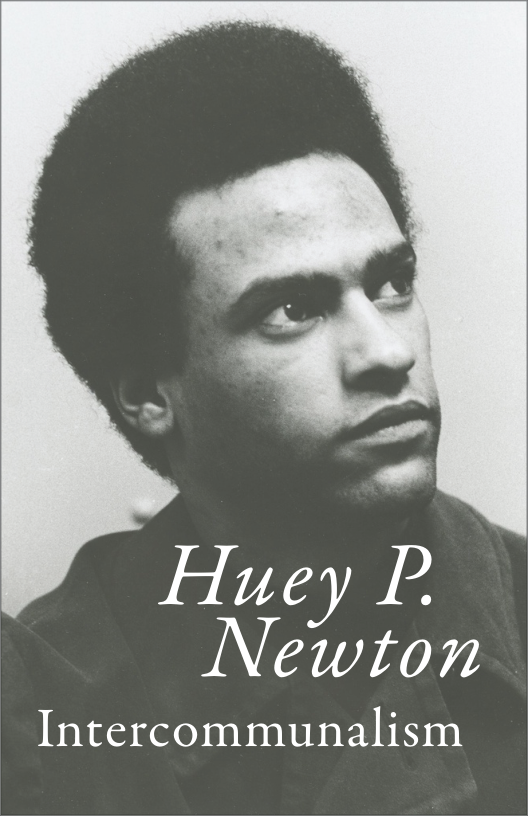
Huey P.
Newton
Intercommunalism
Layout by Anarchist Black Cross Chicago, 2019.
Originally published online at:
heps://wwvwviewpointmag.com/2018/06/11fintercommunal
ism-1974/
For more printable and shareable zines, visi us a chiabe cumblr.com
[ chicagoanarchistblackeross@riscupunet |
On September 5, 1970, Huey . Newton, corfounder of the Black
Panther Party (BPP), introduced bis theory of intercommiunaliom at
the Revolusionary People’s Constitutional Convention in Philadelphia.’
He later expanded on this theory before an audience at Boston College
in November of that year, and then again In February 1971 during a
Join talk e gave with pychologist Evik Erikson across several days ar
Yale University and later in Oatland.* Newton's opening remarks as Yale
Lasted over an hour bu were reduced o about en pages in the subsequently
published In Search of Comman Ground.’ As a philosopbical foundation
Jfor bis remarks on intercomminaliom, that introductory specch included
an engagement with the work of Hegel, Mars, Freud, Jung, Kan, Pierce,
and James, among others* Portions of the material of this main speech,
the subsequent Q-4, and other writingsof Netwton's were ater combined,
recompused, and expanded upon under the it of “Intercommunaliom”
in 1974, the same year that he completed his bachelor's degree and fled
semporarily to Cuba. This ext had wntil now been available only through
access to the Dy Huey 2. Newton Foundation Inc. Collction (1968-
1994), beld in archive in Stanford University’s Special Colletions.®
- Delio Visquez
1 The ssengshs of this piece are in Jasge part o o the support and citque
of Tyson Amir, Ana Cruz, Vanessa Dunstan, Kiran Garcha, Maya Gonzalez,
Asad Haider, Lani Hanoa, Parsick King, Zhandacka Kurt, Ben Mabie, and
Rosa Petzerson. | als extend my sinceres thanks to Frederika Newton and the
Dx. Huey P, Newton Foundstion for theie support.
2 Bescaia Rodrigucr, “Long Live Thind World Uniy! Long Live lecnation:
alism: Huey P Newton's Revolucionary Incercommunalism,” Sous 853 (2006),
119-131. Huey P. Newton, “Specch Delvered at Boston College: Novermber
18,1970, To Disfor e Posple: The Winge of Haty P Newto, . Tons Morrison
(New York: Vintage, 1972), 20-38. Erik H.
Searchof Common Grod: Comvesations it i H. Erikson and Hue P, Newton
(New York: W, W. Norton & Company, 1973)
3 Judson Jeffies, “Iotsoduction,” Hugy P Newton: Th Rl Theoi (ackson:
Universty Press of Misissippi, 2002), i,
irikson and Huey P Newton, In
4 Eskson and Newton, I Seach of Common Ground 16.
5 Huey P Newton, “Intcscommunalism” (1974), Dr. Huey P. Newton Foun-
dation Inc. Collecion, Box 50, Folder 2.3, Collcted in his dossicr. Much
of chis matcrial s i face becn prior published clscwhere, though in picces
across a varity of tets, including Huey P. Newton and Eik H. Erikson's In
Swarchof Common Ground, Newson: Revotonary Suicide o in “Who Makes US.
Forcign Policy?” (1974)
Intercommunalism
1974
he logie of the thesis of intercommunalism is: imperialism
leads to “reactionary intercommunalism” to “revolutionary
intercommunalism” to pure communism and anachy. Each of
the concepesis in need of definition and redefinition
“The imperialist war is ushering in the era of social revolution”
said Lenin in 1915. The scholar David Horowiz, finds, as we do,
imperialism and revolution to be functions of each other:*
Following World War Il and the exponential technological increase in
weapons systems and communications, the concept of “one world” and
the *Global Village” began to be offered as bourgeois metaphors to
complete with the socialist image of *The New Man” and incernational
prolecarianism. The technological network emanating from America
was the spine of the “Free World” image that was to roll back socialism.
Who makes US. forcign poliey? The question is by no means academic,
for the historical record shows that over the las ffty years and more,
US. poliey has consistently run in channels which are antagonistic to
the mose publicized ideals of the American Republic, isuing finally
in the conflices which we associate with the Cold War. Those ideals—
enshrined in the Declaration of Independence—recognize the right
of nations to self-determination, and of any oppressed people to
overthrow by force the institutions of their oppressors i order to secure
for chemselves the righes to "life, liberey, and the pursuit of happiness”
et the record shows that as the United States has assumed the role
of a geeat and then dominane world power, it has more and more
6 Viewpoint Magasine Editor's Note: In the original text, Newton here
features 2 16-page quotation from David Horowitz’ Empire and Revolu-
tion (1969/1970), pp. 29-45. We have left out this portion of the text for
copyright reasons,
4 HUEY P.NEWTON
consistently opposed the major social revolutions of our time, and
in violation of the principle of self-determination, it has intervened
milicasily, diplomatically, and economically to crush or to cause grave
serbacks to these revolutions, whether in Rusia, Mesxico, China, Cuba,
Greeee, o Vietnam.
Nowhere has this pattern of policy been more evident, cercainly, chan
with the American intervention in Vieenam. In 1945, the Democratic
Republic of Vietnam was proclaimed in a document modeled on the
American Declaration of Independence and at first recognized by
the former colonial power, France. Yet when that power sought to
reassert control of its former colonial territory, establishing a puppet
régime in Saigon for ths purpose, it found suppor in US. policy. Not
only did Washington back France’ illegitimate war of conquest with
economic and military aid, bue when the French failed, Washington
inselftook over the seruggle to defeat the Vietnamese Republic through
the quisling government in Saigon. Indeed, more than twenty years
after the proclamation of Vietnam's Declaration of Independence, the
Vietnamese peasanes are stil being assaulted by the ULS. armed forces
in what will undoubtedly beeome the most ruthless and deseructive
incervention on historical record.
Nor is this counterrevolutionary expedition exceptional as US. Cold
War policy, despite the unprecedented ferocity and unparalleled
savagery ofthis exceution. Asalready noted, it forms rather a consistent
pactern with other US. interventions in Santo Domingo, Cuba,
‘Guatemala, the Congo, the Middle Ease, China, Greece, and elsewhere
during the Cold War years, and in Rusia, Mexico, Cuba, China, and
other countries earlier in the century. Indeed, counerrevolutionary
incervention, which is at the heart of the Cold War and its conflcts,
has been a characteristic of UL, forcign policy ever since the United
States embarked on a course of overseas cconomic expansion following
the closing of the geographical frontier more than seventy years ago.
How s this counterevolutionary policy, which runs discetly counter
o the high ideals of the American republic, to be explained? How is
it to be explained chat the largest “defense” program of any nation in
history (and of the United States in particular, which, prior to the
posewar decades, never maineained a peacetime conseription army) is
organized around the unprecedented concepe of counterinsurgency?
INTERCOMMUNAI
These paradoxes can only be answered if it can be shown that there
is a group wiclding predominant power in the American polity
whose interests run counter to America high ideals and which can
impose its own interpretation of the American tradition onto the
framework of policy-making in the seate. If it can be shown that there
is 4 class among the plurality of competing interest groups which
enjoys a predominance of power and can establish ies own outlook as
a prevailing ideology and if it can be shown that these interests are
expansionist, anti-revolutionary, and tending o be militarie by nature,
then an explanation of the paradoxieal character of American policy
will have been found and, beyond that, the sources of the Cold War
conflicts and their permanence.
Such a *ruling class” can, in fact, be readily shown to exist. Its locus
of power and interest is in the giant corporations and financial
inscicutions which dominate the American economy, and morcover,
the cconomy of the entire Western world. “In terms of power” writes
one authority on the corporations (himself a corporate exceutive and
former US. policy-maker) “without regard to assee positions, not
only do five hundred corporations control, not only do five hundred
corporations control ewo-thirds of the non-Farm cconomy, bue within
each of chat five hundred a sill smaller group has the ultimate decision
making power. This i, I chink, the highest concentration of economic
power in recorded history”” Morcover, “since the United States carries
on not quite half of the manufacturing production of the entire
world today, these five hundred groupings—each with ies own letle
dominating pyramid within it—represent a concentration of power
over cconomics which makes the medieval feudal system look like a
Sunday school party”
As this abserver points out, many of these corporations have budgets,
and some of them have payrolls which, with their cuscomers, affect
a greater number of people than most of the hundred-odd sovereign
countries of the world. Indeed, the ffty largest corporations employ
almost three times as many people as the five largese US. seates, while
their combined sales ae over five times greater than the tases the states
collect
7 Editors note: This quotation from A.A. Berle s “Economic Power and the
Free Society: A Prcliminary Study of the Corporadion;” (New York: Fund for
the Republic) 1957.
¥ P NEWTON
In the lase analysis, it is the dependence of men individually and
collectively on the corporately organized and controlled economy
that provides the basis for the corporate domination of US. policy.
especially US. forcign policy. The basic fulerum of this corporate
power is the investment decision, which is effectively made by a
small group of men relative to the cconomy as a whole. This decision
includes how much the corporations spend. what they produce, where
the produces are to be manufactured, and who is to participace in the
process of production.
Butchis is not the whole extent of the power of the corporate invesement
decision. In the national cconomy, the smalloligarchy of corporate and
financial rulers, who are responsible to no one, determine through
their investment outlays the level of output and employment for the
economy as 2 whole. As Keynes observed, the national prosperity is
excessively dependent on the confidence of the business community
This confidence can be irreparably injured by 2 government which
pursues a course of policy inimical to business intereses. In other
words, basic to the political success at the polls for any government, as
o the success of iesspecific programs, will be the way the government's
policie affect the system of incentives on which the cconomy runs—a
system of incentives that i also the basis of the privileges of the social
upper clases.
This does not mean, of course, that the business community as such
muse prefer a particular candidate or party for that candidace or party
to be victorious. It means, much more fundamentally, that short of
commiting politica suicide, no party or government can step oueside
the framework of the corporate system and its politics, and embark on
a course which consistently threatens the power and privileges of the
giane corporations. Either a government must scize the commanding
heighesof the economy at once, .. initate acourse ofsocialrevolution,
o run things more o less in the normal way, that s, according to the
priorities and channels determined by the system of incentive payments
to the corporate controllers of the means of production. This is an
unspoken bue well understood fact conditioning politics in capivalist
countries, which explains why the patceen of resource allocation—the
priority of guns over butcer, of highway construction over schools and
hospitals—is so similar in all of them. It also explains wh, despite the
congressional and parliamentary enactment of progeessive tax laws
in all these countries, the spiri of the law has been thwarted, and
INTERCOMMUNAI
nowhere has the significant rediseribution of income promised by
these democratically ratified starutes taken place.
‘The sheer cconomic pressure that the corporations can exert over the
policies of democratically elected governments is lucidly manifest in
the experience of the Wilson Labour government in England. For while
owing s office to labor vores and labor money, this government was
forced by "the economic situation; .., by domestic and incernational
eapital, to pursue precisely the policies that i had condemned as anti
labor while in opposition.
OF course, under normal conditions, and pasticularly in the United
States, where no labor party exists the corporaions have less suble
means a their disposal for ensuring policies conducive to their
continued vigor and growth,
The means by which the upper classes maincain their prvileged position
and vested interests in countrics where universal suffrage prevails vary
with the differing traditions, social institutions, and class struetures of
the countries involved. They vary also with their hiscorical roles. Thus,
in the twentieth century, a5 the United States has replaced Brivain
as the guardian power and policeman of the international system of
property and privilege, the corporace ruling class, with its equally
expanding overseas interests, has less and less been able to entrust
poliey to indirectly controlled representatives and has more and more
had co enter direetly the seats of government esel.
Inthe postwar period, the strategic agencies of foreign policy—the Staee
Department,the CIA, the Pentagon, and the Treasury, as well s che key
ambassadorial posts—have all been dominaed by representatives and
rulers of Americas principal corporate financial empires. In addition,
all the special committees and task forces on foreign policy guidelines
have been presided over by the men of this business dlice so that on all
importan levels offoreign policymaking, “business serves asthe fount
of ertical assumptions or goals and seraegieally placed personnel”
While the corporate-based upper clas in general oceupies a prodigious
number of positions in the highest reaches of the “demoeratic” state,
it need not strive to oceupy all the top places to impose its own
incerpretation of the national ineerest on American policy. Preciscly
because the prevailing ideology of US. politics in general, and of the
5 HUEY P.NEWTON
federal government in particular, s corporate ideology, reflecting the
corporate outlook and interests, and because, cherefore, the framework
of articulated policy choices lies well within the horizon of chis
outlook, political outsiders may be tolerated and even highly cffective
in serving the corporate system and its programs.
Thereare two principal ways (in addition to those already discussed) by
which corporate ideology comes to preval i the arger political realm.
In the first place, i does so through the corporate (nd upper-class)
control of the means of communication and the means of production
of ideas and ideology (the mass media, the foundations, universities,
exc.). However, even this control, which is vast but not ubiquicous in
ensuringthe general predominance ofthe ideas of the dominan lass, is
notlefe to work at random. Thus, in Professor Domhoff’ investigation
of the American ruling class, he found that *in most inseances” non
upper-class political leaders “were selected trained and employed in
[special] insticutions which function o the benefit of members of the
upper class” Such leaders, Professor Domhoff concluded, “re selected
for advancement i terms of the inerest of the members of the upper
The second basic way in which corporate ideology comes to prevail,
parcicularly at the foreign policy level, is by the very face that the
dominane seality of society is corporate, and therefore policical
“realism” dictates for any statesman or poliician that he work within its
framework and accep its assumptions. fche horizon of political choice
is limited to an area in which the corporate interests s not directly
challenged, because it would be both imprudent and impractical
(utopian) to do so, if the framework of privae properey in the means
of production is accepted as not realistcally subject to change, then the
“national” interest, which is the concept under which politicians and
statesmen tend to operate (pasticularly i foreign policy), necessarily
coincides with the interests of the corporations,the repositorics of the
nation's wealth, the organizers of its productive power, and hence the
guardians of the material basis ofits strength. In a class-divided society
under normal (i.¢.. non-revolutionary) conditions, the nacional interest
vis-ievis external interests inevitably i inerpreted as the interest of the
dominane or ruling class. Thus, in a corporate capitalist society, the
corporate outlook as a matter of course becomes the dominant outlook
of the state in foreign affirs
INTERCOMMUNALISM o
Thisis not o say that there is never a confliet over foreign policy that
expresses a conflict beeween corporations and the state Justasthere are
differences among the corporate interests themselves, within a general
framework of interests, so there are differences between the corporate
community outside the state and the corporate representatives and
their agenes i the seae, esulting from the difference in vaneage and the
wider and nasrower interests that each group must take into account.
Buthere, o, the horizon of choice,the framework of decisive interests,
is defined by the necessity of prescrving and strenghening the status
quo order of corporace capitalism and consequently the interests of the
social classes most benefited by it
What, then, is the nacure of corporate ideology as it dominates US.
foreign policy and what s its role in the development of the Cold War?
As a result of the pioncering work of Professor William Appleman
Williams and his students, these questions ean be answered preciscly
and succinetly. The chief function of corporate ideology s, of ourse, to
make an explicit identification of the national radition and interest—
the American Way of Life—with its own particular interest. This
identification is accomplished by means of an economic determinism,
which eakes as its cardinal principle the proposition that policical
frcedom is inseparably bound up with corporate property: that a “frce
enterprise” economy is the indispensable foundation of a free polity
(where free enterprise s defined to coincide with the status quo order
of corporae capitalism, not with an outdated system of independent
farmers and traders).
Stareingfrom this ot premise,the ideology, as artieulaed by American
polieymakers since the nincteenth century, maintains th
nexpanding
frontier of ever new and accessible markets is sbsolutely essential for
capitalise America’s domestic prosperity and hence, that the extension
of the American system and its inseicutions abroad is a necessity for
the preservation of the American, democratic free-enterprise order at
home. Originally formulated as an *Open Door” policy. o prevent the
closing of the external frontier by European colonialism, and to ensure
American access to, and eventual domination of, global markets,
this policy has become in the postwar period policy of preserving
and extending American hegemony and the free enterprise syseem
throughout the external frontie, o, asit is now called, the *free world.”
From Woodrow Wilson's Firse World War cry that the world muse be
made safe for democracy, it was but alogical historical step to Secretary
0 HUEY P.NEWTON
of State Byeness remark at the close of the Second World War that
the world must be made safe for the United States. This is the core of
Americas messianic crusade: that the world muse be made over in the
American image (read: subjected to the American corporate system) if
the American Way of Life (read: the corporate economy) is to survive
ac home.
If expansion (and militarism) had held the key not only to American
prosperiey, but to American sccurity as well, the postwar period would
undoubtedly have realized Secretary of State Byres’ ambitious goal.
In the lase seages of the war and the first of the peace, the United States
successfully peneteated the old European empires (mainly those of
France, Great Britain, and the Netherlands), assumed control of apan
and its former dependencies, and extended its own power globally to
an unprecedented degree. By 1949, the United States had liens on some
four hundred military bases, while the expansion of direet overseas
investments was aking place ata phenomenal rate. Thus, while beeween
beeween 1929 and 1946 US. foreign investments had actually declined
from $7.9 o 7.2 billion, between 1946 and 1967 they increased an
incredible cightfold to more than $60 billion. It i this global seake in
the wealth and resources of the external frontier that forms the basis of
the ULS. commitment to the worldwide status quo (though it may not
always provide the whole explanation for particular commitments or
engagements). s this commitment to the internal seatus quo in other
countries (the State Deparement actually runs a course for forcign
service officers and ambassadors called “Overseas Internal Defense”)
that renders Washingeon's expansionist progeam not the key to scurity
but the very souree of Cold War conflct, with its permanent menace
to mankinds survival.
For the expansion of corporate overseas investment has to an
overwhelming degree not produced beneficial results on the whole,
and the status, of which the corporations incvitably consticute 3
dominating pare, is almost everywhere a status quo of human misery
and suffering;
Noone acgquainted with the bebavior of western corporations o heir
pilgrimages forprofc during he Last fifty years can really besurprised
that the ... explosions now taking place (in the wnderdeveloped
world) are doing s in an anti-American, anti-capitalist, ant-
western contest. For many years these continens have been happy
INTERCOMMUNALISM n
bunting grounds for corporate adventurers, who have taken out
great resources and great profits and lefi behind greas poverty, great
expectations and great resentments. Gunnar Myrdal poinss out that
eapitalist intervention in underdeveloped countries thus for has
almost wniformly had the result of making the rich richer and the
poor poorer..*
This has indeed been the undeniable historical consequence of
eapitalise corporate expansion, alchough his is not what one is led to
believe by the orchodox theorists and academic model builders who
function so frequently as the sophisticated apologists of the American
Empirc and the policy of counterrevolutionary intervention necessary
In the writings of such theorists, the expansion of Americss
monopolisei giants and theis control of the markets and resourees of
the poverty-sericken regions is presented a3 entiling the net export
of capital o these capital-starved areas, the transfer of industrial
technologies and skills, and the flow of wealth generally from the rich
world to the poor. From this point of view, revolutions which challenge
the presence and dominaion of foreign corporations and their states
are cither misguided or sinister in intent, and contrary to the real
needs and interests of the countries involved. Indeed, for those who
mainsain this view, revolutions are regarded as alien-inspired effores
aimed a¢ subvering and scizing control of the countries in question
during periods of great difficulty and instabiliey prior to the so-called
takeoff into sclf-sustaining growth. This is the argument advanced
by W. W. Rostow, former dircctor of the State Department’ Policy
Planning Seaff and the chief rationalizer of America expansionist
counterrevolutionary crusade.
In face, his view rests neicher on historical experience, which shows
the presence of foreign capital and power to have had a profoundly
adverse effect on the development poential of the peneerated regions,
nor on a sound empirical basis Far from resulting ina eransfer of wealth
from richer to poorer regions, the penetration of the underdeveloped
world by the imperialise and neo-imperialist systems of the developed
seates has had the opposite effece. As a resule of direee UL, overseas
8 WH. Ferey, “Irespansibilies in Metracorporste Ameriea”in Hacker, The
Corpostion Tuke-Orsr
2 HUEY P.NEWTON
investments beeween 1950 and 1965, for example, there was a ner
capital flow of $16 billion to the United States, and this was juse a pare
of the negative transfer. Similarly, when looked at in cheir political
and economic settings, the much-heralded benefits of the advanced
technologies transplanted into these areas, but under the control of
incernational corporations, also tend to be circumseribed and even
adverse n their effects. Indeed, regarded in terms of its impact on total
societies rather than on particular cconomic sectors, the operation of
opening the backward and weak areas to the comperitive penetration
of the advanced and powerful capitalist states has been nothing shore
of a catastrophe. For as Paul Baran showed in his pioneering work
The Poliical Economy of Growsh, it i preciscly the peneteacion of the
underdeveloped world by advanced capicalism that has in the past
obseruceed its development and coneinues in the present to prevent
it. Conversely, it has been primarily their ability to escape from the
net of forcign investment and domination that has made a chosen few
among these countries, like Japan, excepions to the rule. Professor
Gunder Feank and others have continued the work that Baran
initiated, showing how foreign capivalise investment produces the
pattern of underdevelopment (or “growth without development; as it
is sometimes caed) that is the permanen nightmate of these regions.
The crisis of reactionary intercommunalism has now, inevitably, given
rise to the concepe of “revolutionary intercommunalism.”
Webelieve that everychingis in a constant sate of change, so we employ
a framework of thinking that can put us in touch with the process of
change. That s, we believe that the conclusions at which we arrive will
always change, bu the fundamentals of the method by which we arrive
ac our conclusions will emain constane. Our deology, therefore, is the
most important pare of our thinking,
There are many different ideologies or schools of thought, and all
of them seart with an set of assumprions. This is because mankind is
sill imited in ies knowledge and finds it hard, a this hiscorical stage,
o talk abou the very beginning of things and the very end of things
without starting from premises that cannot yee be proved
Thisis true of both general schools of thoughe—the idealistic and the
materialise. The idealises base their thinking on certain presumptions
about things of which they have vy lietle knowledge: the materialists
INTERCOMMUNAI
3
like to believe that they are very much in contace with reality or the
real material world, disregarding the fact that they only assume there
is 2 material world.
The Black Panther Party has chosen materialist assumpions on which
o ground it ideology. This is a puely arbitrary choice. Idealism might
be the real happening: we might not be here at all. We don'e really
know whether we are in Connecticut or in San Francisco, whether
we are dreaming and in a dream state, or whether we are awake and
in a dream state. Perhaps we are juse somewhere in a void; we simply
can’t be sure. Bue because the members of the Black Panther Parcy are
materialises, we believe that some day scientises will be sble to deliver
the information that will give us not only the evidence but the proof
that there isa material world and ehatits genesis was material —motion
and matter—nor spiritual.
Until that time, however, and for the purposes of discussion, | merely
ask that we agree on the stipulation tha 3 material world exists and
develops externally and independenely of us all. With this sipulation.,
we have the foundation for an incelligent dialogue. We assume that
there is a material world and hat it exists and develops independently
of us; and we assume that the human organism, through s sensory
system, has the abiliey to observe and analyze that material world.
Now the dialectical materiaise believes that everything in existence
has fundamental internal contradictions. For example, the African
gods south of the Sahara always had at lease two heads, one for evil and
one for good. Now people ereate God in their own image, what they
think He—for God is always a *He” in patriarchal societies—what He
is like or should be. So the African said. in effcct: 1 am both good and
evil; good and evil are the two pares of the thing that is me. This s an
example of a inteenal contradiction.
Western Societies, though, split up good and evil, placing God up in
heaven and the Devil down in hell. Good and evil fight for control over
people in Western religions, bu they are two entirely differen entitics.
Thisis an example of an external contradiction.
This struggle of mutually exclusive opposing tendencies within
everything that exises explains the observable fact that al things have
motion and are in a constant seate o eransformation. Things transform
n HUEY P.NEWTON
themselves because while one tendency o force is more dominating
than another, change is nonetheless a constant, and at some point the
balance will aleer and there will be a new qualiative development. New
propertics will come into existence, qualities that did not alcogecher
exist before. Such qualiies cannot be analyzed without understanding
the forces struggling within the objec in the first place, yet the
limitations and determinations of these new qualities are not defined
by the forces that created them,
Class conflet develops by the same principles that govern all other
phenomena in the material world. In contemporary society,classthat
owns property dominates a class that does not own property. There is
a class of workers and class of owners, and because there exists # basic
coneradiction in the interests of these two classes, they are constantly
seruggling with one another. Now, because things do no stay the same
we can be sure of one thing: the owner will not stay the owner, and the
people who are dominated will not seay dominated. We don't know
exacely how ehis will happen, but afier we analyze all the other clements
of the situation, we can make a few predictions. We can be sure that if
we increase the intensity of the struggle, we will reach a poine where
the equilibrium of forces will change and there will be a qualicarive
leap inco a new situation with 4 new social equilibrium. 1 say “leap”
because we know from our experience of the physical world than when
eransformations of this kind oceur they do so with great force.
These principles of dialeeical development do not represent an iron
law that can be applied mechanically to the social process. There are
excepions to those laws of development and transformacion, which
is why, s dialecical materialises, we emphasize that we must analyze
each set of conditions separately and make conerete conditions in each
instance. One cannot always predict the outcome, but one can for the
most pare gain enough insight to manage the process.
The dialectical method i essentially an ideology, yet we believe that it
is superior to other ideologies because it puts us more in contace with
what we believe to be the real world; it inereases our ability to deal with
that world and shape its developmene and change.
You could asiy say, “This method may be successfully applicd in one
particular inseance, bue how do you know thac it is an infallible guide
in all ases?” The answer is tha we don't know. We don't say “al cases”
INTERCOMMUNAI
or “infallible guide” because we try not to speak in such absolute and
inclusive terms. We only say that we have o analyze each instance,
that we have found this method the bese available in the course of our
analyses, and that we think the method will coninue to prove itself
in the future. We sometimes have a problem because people do not
understand the ideology that Marx and Engels began to develop.
People say, “You claim to be Marsises, but did you know tha Marx was
a racise?” We say, “He probably was a racist: he made 1 seatement once
about the marriage of 2 white woman and a black man, and he called
the black man a gorilla or something like thae” The Mariscs claim he
was only kidding and that the statement shows Mar's closeness to the
man, but of course that is nonsense. So it does scem that Marx was 3
Nowifyou are a Marxise, then Mary' racism affects your own judgment
because a Marsist is someone who worships Marx and the thought
of Marx. Remember, though, that Mars himself said, *I am not a
Marxise” Such Marsises cherish the conclusions which Marx arrived at
through his method, but they throw away the method itseli—leaving
themselves in a totally seatic posture, That is why mose Marsises really
are historical materialise: they look to the past to get answers for the
furure, and that does not work.
1 you are a dialecical materialis, however, Marx's racism does not
matter. You do not believe in the conclusions of one person but in
the validity of a mode of thought: and we in the Parey, as dialectical
materialise, recognize Karl Marx as one of the great contributors to
that mode of thought. Whether or not Marx was racist is ireelevant
and immaterial to whether or not the system of thinking he helped to
develop delivers teuths about processes in the material world. And chis
is eruc in all disciplines. In every discipline you find people who have
distorted visions and are at a low sate of consciousness who nonetheless
have flashes of insight and produce ideas worth considering. For
instance, John B. Watson once stated that his favorite pastime was
hunting and hanging niggers, yet he made great forward serides in the
analysis and investigations of conditioned responses
Now that have said a word about the ideology of the Party, L am going
to describe the history of the Party and how we have changed our
understanding ofthe world. When we sarted in October 1966, we were
wha one would call black nationaliss. We realized the contradictions
16 HUEY P.NEWTON
in society, the pressure on black people in particular, and we saw that
most people in the past had solved some of their problems by forming
inco nations. We thercfore argued that it was rational and logical
for us to believe that our sufferings as 2 people would end when we
established a nation of our own, composed of our own people
Butafter a while we saw that something was wrong with thi resolution
of the problem. In the past, nationhood was a faiely easy thing to
accomplish. Ifwe look around now, chough, we see that the world—the
land space, the livable pares as we know them—is pretey well sttled.
S0 we realized that to create a new nation we would have to become
2 dominan faction in this one, and yet the face that we did not have
power was the coneradietion that drove us to seck nationhood in the
firse place. It s an endless circl, you sce: to achieve nationhood, we
needed to become a dominant force; but to become a dominant force,
we needed to be a nation.
S0 we made a further analysis and found that in order for s to be
a dominan force we would at least have to be geeat in number. We
developed from just plain nationalists or separatise nationalises into
revolutionary nationalists. We said that we joined with all the other
people in the world struggling for decolonization and nationhood,
and called ourselves a “dispersed colony” because we did not have the
geographical conceneration that other so-called colonies had. But we
did have black communities throughout the country—San Francisco,
Los Angeles, New Haven—and there are many similarities beeween
these communities and the traditional kind of colony. We also thought
that if we allied with those other colonies we would have a great
number, a greater chance, a greater force; and that s what we needed of
course, because only force kept us a colonized people.
We saw that it was not only beneficial for us to be revolutionary
nationalists but to express our solidarity with those friends who
suffered many of the same kind of pressures we suffered. Thercfore we
changed ous self-definitions. We said that we are not only revolutionary
nationalists—thac is, nationaliss who want revolutionary changes in
everything, including the economic system the oppressor inflcts upon
us—bue we are also individuals deeply concerned with the other people
of the world and their desires for revolution. In order o show chis
solidariey, we decided to call ourselves internationalists
INTERCOMMUNAI "
Originally as I said, we assumed that people could solve a number of
their problems by becoming nations, bue this conclusion showed our
lack of understanding of the world dialectical development. Our
mistake was to assume that the conditions under which people had
become nacions in the pase sill existed. To be nation, one must satisfy
certain essential conditions, and ifthese things did not exist or cannot
be created, then it is not possible to be a nation.
In the past, nation-states were usually inhabited by people of a cercain
echnic and religious background. They were divided from other people
cither by a partition of water or a great unoccupied land space. This
natural partition gave the nation's dominant class, and the people
generally, a cerrain amount of control over the kinds of political,
cconomic, and social inseicutions they established. It gave them a
certain amount of control over their destiny and their terriory. They
were secure at lease to the exten chat they would not be ateacked or
violated by another nation ten thousand miles away, simply because
the means to transport troops chat far did not exist. This situation,
however, could not lase. Technology developed unil there was a
definite qualitative transformarion in the relationships within and
beeween nations.
We know that you cannot change a pare of the whole without
changing the whole, and vice versa. As technology developed and
there was an increase in military capabilicies and means of travel and
communication, nations began to control other terrtorics, distant
from their own. Usually they controlled these other lands by sending
administeacors and seetlers, who would extract labor from che people
o resources from the earch—or both. This is the phenomenon we
know as colonialism.
The serelers” control over the seized land and people grew to such
an extent that it wasn'e even necessary for the settler to be present
to maintain the system. He went back home. The people were so
incegrated with the aggressor that their land didn't ook like a colony
any longer. But because their land dida’e look lke free state cither,
some theorises starced to call these lands “neocolonies Arguments
about the precise definition of these entities developed. Ate they
colonies or noe? If they aren't, whac are they? The theorises knew that
something had happened, but they did not know what it was
15 HUEY P.NEWTON
Using the dialectical materialist method, we i the Black Pancher Party
saw chat the United States was no longer a nation. It was something
elses it was more than 1 nation. It had not only expanded its territorial
‘boundaries, but it had expanded all of s controls as well. We called
it an empire. Now at one time the world had an empire in which the
conditions of rule were different—the Roman Empire. The difference
beeween the Roman and the American empires is that other nations
were able to exist external to and independent of the Roman Empire
because cheir means of explorations, conquest, and control were all
elatively limited.
But when we say “empire” today, we mean precisely what we say
An empire is a nation-stace that has transformed ieself into a power
conerollng all of he world' lands and people.
We believe that there are no more colonies or neocolonies. If 2 people
is colonized, it must be possible for them to decolonize and become
what they formerly were. Bue what happens when the raw materials
are extracted and labor is exploited within a territory dispersed over
the entire globe? When the riches of the whole carth are depleced and
used to feed a gigantic industrial machine in the imperialiscs home?
Then the people and the economy are o integeaced into the imperialist
empire that it is impossible to “decolonize to return to the former
conditions of existence.
Ifcolonies cannot “decolonize” and recurn to their original existence as
naions, then nations no longer exist. And since there must be nations
for revolutionary nationalism o internationalism to make sense, we
decided that we would have to call ourselves something new.
We say that the world today is adispersed collection of communitics.
A community s different from a nation. A community is a small unit
with a comprehensive collection of institutions that serve to exist a
small group of people. And we say furcher that the seruggle in the world
today is between the small circle that administers and profies from the
empire of the United States, and the peoples of the world who want to
determine their own destinies.
We call this situation intercommunalism. We are now in the age of
reactionary intercommunalism, in which a ruling circle, a small geoup
of people, control all other people by using their technology.
INTERCOMMUNAI
19
At the same time, we say that this technology can solve mose of the
material contradictions people face, chat the material conditions exist
that would allow the people of the world to develop a culture that is
essentially human and would nurcure those things that would allow
people to resolve contradictions in 2 way that would not cause the
muraal slaughter of all of us. The development of such a culeure would
be revolutionary intercommunalism.
Some communities have begun doing this. They have liberaced their
territories and have established provisional governments. We recognize
them, and say that these governments represent the people of China,
North Kores, and the people in the liberated zones of South Vietnam,
and the people of Norh Viewam.
We believe their examples should be followed so that the order of
the day would not be reactionary intercommunalism (empire) but
revolutionary intercommunalism. The people of the world, that is,
muse seize power from the small ruling circle and expropriate the
expropriators, pull them down from their pinnacle and make them
equals, and distribute the fruits of our abor that have been denied us in
some equitable way. We know that the machinery to accomplish these
asks exists and we want aceess to it
Imperiaism has laid the foundation for world communism,
and imperialism itsel§ has grown to the poine of reactionary
incercommunalism because the world is now integrated into one
community. The communications revolution, combined with the
expansive domination of the American empire, has created the “global
village” The peoples of all culeures are under siege by the same forces
and they all have aceess to the same technologies.
There are only differences in degree becween what is happening to the
blacks here and what s happening to all of the people in the world,
including Africans. Their needs are the same and their energy is the
same. And the contradictions they suffer will only be resolved when
the people establish a revolutionary intercommunalism where they
share all the wealeh that they produce and live in one world.
The stage of history is set for such a tansformation: the technological
and administrative base of socialism exises. When the people scize the
means of production and all social inseicutions, then there will be 3
El HUEY P.NEWTON
qualicative leap and change in the organization of society. It will take
time toresolve the contradictions of racism and all kinds of chauvinism;
but because the people will control their own social instieutions, they
willbe free to re-create themselves and eo establish communism, 2 stage
of human development in which human values will shape the seructure
of society. At his time, the world will be ready for sell higher level, of
which we can now know nothing.
We can be sure that there will be contradietions after revolutionary
incercommunalism is the order of the day. and we can even be sure
that there will be contradictions after communism, which s an even
higher stage than revolutionary intercommunalism. There will always
b contradictions or else everything would stop. It i not a question of
“when the revolution comes”: the revolution is always going on. It is
not a question of “when the revolution i going to be”:the revolution is
going on every day, every minute, because the nev is always seruggling
against the old for dominance
‘Wealso say that every determination isa limication, and every limitation
isadetermination. This s the seruggle of the old and new again, where
4 thing seems to negate iself. For instance, imperialism negates itself
after laying the foundation for communism, and communism will
eventually negare itself because of its internal contradictions, and then
we will move to an even higher stat.
S0 of course there will be contradietions in the future. But some
contradictions are_antagonistic and some contradietions are not
antagonistic. Usually when we speak of antagonistic contradictions,
we are talking about contradictions that develop from conflicts of
economic interest, and we assume that in the future, when the people
have power,these antagonistic contradictions will occur less and less
The expropriacors will be expropriated. All chings carry a negative sign
as well as a positive sign. That is why we say every decermination has
a limitation and every limitation has a determination. For example,
one’s organism carries internal coneradictions from the moment of
birch and the beginning of deterioration. First you are an infane, then
a small child, then an adolescent, and so on until you are old. We keep
developing and burning ourselves out ae the same time; we are negaring
ourselves. And this is just how imperialism is negating itslf now: It
has moved incoa phease we callreactionary intercommunalism and has
INTERCOMMUNAI 2
thus laid the foundation for revolutionary intercommunalism, because
as the enemy disperses its roops and controls more and more space, it
becomes weaker and weaker, the people become stronger and stronger.
The primary concern of the Black Pancher Parey is to life the level
of consciousness of the people through theory and practice to the
poine where they will sec exacely what is controlling them and what
is oppressing them, and therefore see exacely what has to be done—
o a least what the first step is. One of the geeatest contributions of
Freud was to make people aware that they are controlled much of their
lives by eheir unconscious. He attempred to seip away the vil from the
unconscious and make e conscious: thatis the first step in feeling frce,
the fist step in exerting control. It seems to be natural for people not
o like being contolled. Marx made a similar contribution to human
frcedom, only he poinced out the external things that control people.
In order for people to liberate themselves from external conerols, they
have to know aboutthese controls. Consciousness of the expropriator is
s o sproprsing the sproprsor, o hoving of el
Dialectics would make it necessary o have a universal dentity. If we
do not have universal identity, then we will have culeural, racial, and
eligious chauvinism, the kind of echnocentrism we have now. Even if
in the future there will be some small differences in behavior patterns,
different environmentes would all be a secondary thing. And we struggle
for a future in which we will realze that we are all Homo sapicns and
have more in common than not. We wil be closer together than we are
The mass media have,in a sense, psychologized many of the people in
our country, so that they come to desire the controls that are imposed
upon them by che capitalis syseem, so that they are psychologically, at
least, pase of the ruling class. We have to understand that everyehing
has a material basis, and that our personalities would no exist, what
others call our spisit or our mind would not exise, if we were not
material organisms. So to understand why some of the vietims of the
ruling class might identify with the ruling ciecle, we must look at their
material lives; and if we do, we will realze that the same people who
idenify with the ruling crcle are lso very unhappy. Their feelings can
be compared to those of a child: a child desires to mature so that he can
conerol himself, but he believes he needs the proteetion of his father to
2 HUEY P.NEWTON
do so. He has conflicting drives. Psychologises would call his conflice
neurotic if the child were unable to resolve it Firse, people have to be
conscious of the ways they are controlled, then we have to understand
the scientific laws involved, and once that is accomplished, we can
begin to do what we want—to manipulate phenomena.
The revolutionary thruse will come from the growing number of what
we call “unemployables” in this society. We call lacks and third world
people in particular, and poor people in general, “unemployables™
because they do not have the skills needed to work in a ighly developed
technological society. As every society, like every age, contains its
opposite: feudalism produced eapitalism, which wiped out feudalism,
and capitalism produced socialism, which will wipe out capitalism;
the same is true of reactionary intercommunalism. Technological
development creates large middle class, and the number of workers
inereases also. The workers are paid a good deal and gee many comforts.
But the ruling clas i stll only interested in itslf. They might make
certain compromises and give a litcle—as a matter of fact, the ruling
cirele has even developed something of a social structure or welfare
state to keep the opposition down—but as technology develops, the
need for workers decreases. It has been estimated that ten years from
now only a small percentage of the present workforce will be necessary
to run the industries. Then what will happen to your worker who s
now making four dollars an hour? The working class will be narrowed
down, the class of unemployables will grow because it will take more
and more skills to operate those machines and fewer people. And as
these people become unemployables, they will become more and
more alienated; even socialist compromises will not be enough. You
will then find an integration beeween the black unemployable and the
white racise hard hat who is not regularly employed and mad ac the
blacks who he thinks threaten his job. We hope that he willjoin forces
with those people who are already unemployable, bue whether he docs
or noe, his material existence will have changed. The prolecarian will
become the lumpen proletarian. I s this fucure change—the increase
of the lumpen proletariat and the decrease of the proletariac—which
makes us say that the lumpen proletariat is the majority and careies the
revolutionary banner
We say that black people are the vanguard of the revolution in chis
country, and, since no one will be free uneil che people of America are
free, that black people are the vanguard of world revolution. We inerit
INTERCOMMUNALISM B
this legacy primarily because we are the lase, and as the saying goes,
“The lase willbe the firse” We believe that black Americansare the first
el incernationaliss; notjust e Black Panther Parey, bue black people
who live in America. We are internationalists because we have been
ineernationally dispersed by slavery. and we can casily idenify with
other people in other cultures. Because of slvery, we nevr reall felt
attached to the nation in the same way that the peasant was ateached to
the soilin Russa. We are always along way from home.
And, finally, the historical condition of black Americans has led us
to be progressive. We have always talked equality, you sce, instead
of believing chat other people must equal us. What we wane is not
dominance, but for the yoke to be released. We want to live with other
people, we don't want to say that we are berter: in fact, if we suffer a
faule, it is that we tend to feel we are worse than other people because
wehave been brainwashed o think that way. So these subjective factors,
based on the material existence of black people in America, coneribute
0 our vanguard position.
Asfar as the Parey is concerned, it has been exclusively black so far, We
are chinking about how to deal with the racisesituation in America and
the reaction black people in America have to racism. We have to get to
the black people fist because they were carrying the banner first, and
we ery to do everything possible to get chem to relate to us.
Ou big burden is teying o simplify our ideology for the masses. So far
T haven't been able to do it well enough to keep from being booed off
the stage, bue we are learning, | think one way to show how dialectics
works is to use practical example afier practical example buc I am
sometimes afraid to do that because people will ake each example and
think, “If chisis erue in one case,then it must be teue in all other cases”
I they do that, then they become historical materialses like most
Masisescholars and most Marxist parties. These scholars and parties
don't really deal i dialectis acall, or else they would know that at chis
time the revolutionary banner will not be carried by the proletarian
class but by the lumpen prolecariar.
The concepe of the black bourgeoisie is something of an illusion. It is
a fancasy bourgeoisie, and this is rue of most of the white bourgeoisie
as well There are very few controllers even in the white middle class
They can barely keep their heads above water, they are paying all the
2 HUEY P.NEWTON
bill living hand-to-mouth, and they have the extea expense of efusing
o lve like black people. So they are not really controlling anyehing;
they are controlled. In the same way, I do not recognize the black
bourgeoisic as different from any other exploited people. They are
living in a faneasy world, and the main thing is o insell consciousness,
o point out their real intereses, their objective and erue interests, just
as our white progressive and radical friends have to do in the white
communicy:
We saw a need to formalize education in the black communiey because
we did not believe that a haphazard kind of learning would necessarily
bring aboue the best results. We also saw that the so-called halls of
learning did nothing but miseducate us; they cither drove us out or
Kicked us out. What we are trying to do is structure an educational
inseicution of our own,
Our firse atcempe along these lines is chat we call our Ideological
Instieute. So far we have about one hundred students and chese
hundred students are very unique studens, because all of them are
brothers and ssters off the block. What | mean is that they are lumpen
prolecarians. Mose of them are kickoues and dropouts; most of them
lefeschool in the eighth, ninth or tenth grade and those few who stayed
all the way did not learn how to read or write, just as I did not learn
until L was sbout sixteen. They are now dealing with dialcctics and they
are dealing with science—they study physics and mathematies so that
they can understand the universe—and they are learning because they
think it s relevant to them now. They will relate this learning back to
the communiey and the communicy will in curn sce the need for our
progeam. I i very practical and relates to the needs of the people in
2 way that makes chem recepive to our teaching and helps open their
eyes to the fact that the people are the real power. They are the ones
who will bring about change, not us alone. A vanguard i like the head
ofa spear, the thing that goes firse. Bue wha rally hures is the buee of
the spear, because even though the head makes the necessary entrance,
the back part is what penetrates. Wichout the buet a spear is nothing
but a toothpick. We, the Black Panther Pary control our Ideological
Instituee, IF the people—the oppressed people—do not conerol their
schools, withou reservation, and without having to answer for what is
done there or who speaks there,then it s not a progressive insticution.
INTERCOMMUNAI
The quilicsive leap from reactionary intercommunalism to
revolutionary intercommunalism will no be the millennium. le will
not immediately bring into being iher a universal identity or a culture
that s essentially human. It will only provide the material base for the
development of those tendencies
When the people scize the means of production, when they seize the
mass media and so forth, you will sl have racism, you willseill have
echnocentrism, you will seill have contradictions. But the fact that the
people will be in control of all the productive and insticutional units
of society—not only factories, but the media too—will enable them
o stare solving these coneradictions. It will produce new values, new
identities; i will mold a new and esentially human culeure as the
people resolve old conflcts based on eultural and economic conditions.
At some poine, there will be 2 qualiative change and the people will
have transformed revolutionary intercommunalism into communism.
We call it “communism” because atchis point in hiseory people will not
only coneol the productive and insticutional unies of society, but they
will also have seized possession of their own subconscious atitudes
toward these things: and for the firse tme in history they will have 3
more rather than less conscious relationship to the material world—
people, plants, books, machines, media, everything—in which they
live. They will have power, that is they will control the phenomena
around them and make it act in some desired manner, and they will
Know their own real desires. The first scep n this process i the seizure
by the people of their own communitics.
T would like to sce the kind of communism I just described come inco
being, and I think it will come into being, Bu the coneepis s far from
my comprehension that I could not possibly name the contradictions
that will exise, although I am sure thac the dialecties will go on. Only the
basis for the contradictions exists now. Many of our relationships with
other groups, such as the white radicals with whom we have formed
coalitions, have been eriticized by the vry people we are erying to help.
For example, our offer of troops to the Viemamese received negaive
reaction from the people, truly oppressed people. Welfare recipicnts
wrote leters saying, I thought the Party was for us: why do you want
to give those dirty Vietamese our life bloodz” I would call this 2
contradiction, one we are trying to solve. We are erying to give some
therapy, you might say. to our community and lfe their consciousness
but fiese we have to be accepted. Ifthe therapist is not accepeed. then he
% HUEY P.NEWTON
cannot deliver the message. We try to do whatever is possible to mect
the patient on the grounds that he or she can best relate to, because,
after all they are the issue. I would say that we are being pragmatic in
order to do the job that has to be done, and then, when that job is done,
the Black Panther Party will no longer be the Black Panther Party
Inapaperofhis lengeh the balance between philosophy or ideologyand
material daea s difficule. And to look forward to world communism,
the withering away of the State, and, then, anarchy can only be done by
speaking, here, only in the most general terms.
Ernese Mandel calls the next stage the “end of political cconomy and
commodity production.” I his book, Marvist Economic Theory, Vol Il
Mandel says
Ut is mot only the logic of the new mode of production that wil bring
about this withering away of commadiy production. Automation
entails the same logical necessity in the sphere of production.
The production of an abundance of goods and services is in fuct
accompanied by the more and more rapid eliminations of all living,
divect, human labour from the production process, and cven from
she distribution proces (automatic power stations; goods train
driven by remote consol; selfservice disribution centers; automatic
vending machines; mechanized and automised ofices, etc.). But the
climination ofiving hman Labowr from thecot of production means
the climination of wages from the cost of production! The laseer is
increasingly reduced o the “osts” of operations between enterprises
(purchase of raw materials and depreciation of fised plans). Once
these enterprises have been socialized, this involves much less
sransfers of real money than simply accounting in monetary units.
s services will continue non-antomised for a longer period than
goods, maney cconomy will retreas more and more into the spheres
of exchange of services for services, purchase of services by consumers,
and purchase of services by the public sctor. But in proportion as the
principal services become automised in their turn (eg. public services,
automatic machines for providing drinks and standardized articles
of ewrrent use, laundries,ec.), money cconomy willbecome resticted.
more and more to “personal services” only, the most important
of which (medicine and education) will, however, be the first to
undergo a radical abolition of money relations for veasons of social
INTERCOMMUNALISM 2
B
priovity). In the end, automation will leave 1o money economy only
the periphery of social life: domesti servants and valets, gambling.
prosttution, ete. But in a soialist saciety which ensures a very high
Standard of living and security 1o all ts citizens, and an all around.
revaluation of “labou” which will increasingly become intellectual
Labou, ereative Labour, who will want 10 undertake such forms of
work? Socialist atomation thus brings commodity cconomy to the
brink of absurdity and will cuse i 10 wither asay.
This withering auay, begun in the sphere of distribution, will
spread gradually into the sphere of production. Alyeady in the era
of sransition from capitaliom 1o socialiom, sacialization of the
major means of production and planning imply « more and more
general subsitution of moncy of account for fiduciary money in the
circulation of means of prodiucion.
Only she purchase of Labour power and e purcbase of raw materials
from the non-state sector will involve the use of fdciary money.
‘But when the increase in the standard of living is accompanicd by
a reduction and no longer by an increase in individual wages, the
circulation finds of enterprises also start o wither away. With the
‘industrialisation of agriculture; with the withering away first of
private enterprise and then of co-aperative enterprises in agriculture
and distribusion, this withering away spreads 1o rlations between
producing enterprises and owners of Labour-poreer, rlations between
enterprises and suppliers of raw materials. The withering away of
money becomes general. Only ‘wnits of account’ survive, s0 that an
cconomy based on accounting in terms of hours of Labowr may govern
the management of enterprises and ofthe cconomy raken as a whole
Economic Revolution and Prychological Revolution
S i we have considered only e cconomic consequences of the new
mode of production, the withering-away of commodity economy and
of moncy 10 which it will lead. We mucst now consider the social
and psychological esulss, that s, the complete pheaval in relations
between men, besween individuals and saciety, as these have
developed out of thousands of years ofscial expericnce derived from
antagonism between clases of exploitation of man by man.
HUEY P.NEWTON
Free distribution of bread, milk and all other basic foodstufs will
bring about a_ psychological evolution without precedent in the
bistory of mankind. Every human being will henceforth be ensured
bis subsistence and that of his hildren, merely by viriue of being 4
member of buman saciety. For the irst time since man’s appearance
on carth, the insecurity and instability of material existence will
wanish, and along with it e fear and frustration that this insecurity
causes in all individuals, including, indirectly, those who belong to
the ruling dasses
1t is this uncertainty abou the morrow, this need to ‘asser onesel”
in order to ensure one’s survival in a rensied struggle of all against
all, that is at the basis of egoiom and the desire for individual
envichment, cver since the beginning of capitalist society and even,
102 certain extent,since the development of commodity economy. All
she material and moral conditions for the withering wway of egoism
as a dyiving force in cconomic conduet will have vanished. True,
individal sonership of consumer goods will doubtless expand 1o an
unbeard-of degree. But in fuce of the abundance of these goods, and.
the freedom of access 1o them, the attachment of men o ounership
will likewise wither away. It is the adaptation of man 1o these
new conditions of lfe that will reate the basis or the ‘new man;
socialst man, for whon buman solidarity and co-aperation will b as
“natural’as is oday the efort 10 succeed individually, as the expense
of others. The brotherhood of man will cease 10 be a pious hape o«
bypoeritical slogan, 10 become a narural and cveryday reality, upon
which all social elations will increasingly be based.
Will an cvolution along these lines be contrary to human nature’s
This is the argument invoked as a last resort against Marsiom,
against the prospect of classlesssocety. It is regularly pt forward by
those who do not know this human nature, who base themselees on
erude prejudices orsuspicions i order o identify morals and customs
derived from a certain socio-cconomic context with biological or
anthrapological characteristcs aleged o be ‘wnchangeable’in man.
It s abso invoked by those who endeavor 1o preserve ar all costs 4
conception of man which is based on the ide of original sin and the
impossibilityof ‘redemption’ on this carth
But anshropolugy starts from the idea that thas which is distinctive
of man is precisely his capacity for adaption, bis capacity to create
INTERCOMMUNALISM E)
a second nature in the culure which forms the only framework in
which we can live, as Profesor A. Gehlen puts it. These practically
unlimited possibilities of adaptation and apprenticeship are the
essential anthropological feature. Human ‘wasure’is what precisely
enables man continally to rise above what is merely biological, to
consinually surpass himself
The tendency o competition, 1o the struggle of all against all, to
the assertion of the individual by crushing other individuals, is
ot a all sometbing innate in man it is tself the product of an
‘acculiurisation’ of an inberitance which i not biological but socal,
the productof particular social conditions. Compeition i a tendency
which is not ‘innate’ but socially acquired. Similarly, co-operation
and solidarity can be systematically acquired and transmitied as 1
social heritage, s soon asthe social milicu has been radically changed
in this divection.
More than that—a disposition to co-operation, to solidarity, to lroe
of one’s neighbor corresponds fur better to specific biological needs
and basic anthropological features than a tendency 1o competition,
conflict or appression of others. Man is a social being not only in
the sacio-economic sense bus also in the biolagical sense. Of all the
bigher mammals he is the one who is born in the weakest state,
least prorected and least capable of slf-defence. Anthropo-biology
regards man as an embyyo prematurely born, who thereby pussesses
« physiological organization making bim capable of a much longer
period. of apprenticeship and pracrically unlimited adaptability—
hands 10 activity and socialization during a year of existence as
an extra-uterine embryo. Phylogeny here confirms ontogeny, since
roday it is generally agreed that these very processesof activation (the
beginning of deliberate prasis) and socialization are a the ovigin of
the buman species”
Marx shows that *alienation appears not only in the resule, but also
in the process of production..” He contrasts the type of production
before extensive division and fragmentation of labor with modern
production:
9 Editors note: from Mas's Esonomic and Philsslic Mansspt of 1944,
0 HUEY P.NEWTON
In handicraf..he workman makes wse of a tool in the factory the
machine makes use o him. There the movements of the instruments
of labor proceed from hims here it is the movement of the machines
that he must fllow
What did Marx see in his lacer works as posibiliies for the future?
He believed that a necessary precondition for the eventual cure of
alienation is reorganization of society, in such a way that the means
of production are owned by the public a large, the produce being
ereated and distributed solely according to human need. In such 2
society, man consciously would take himself as the subject of history
He would experience himself as the source and control of his powers,
and use them to release himself from dependence upon things and
external circumstances. He saw the objective as the full development
of the individual person’s potentilicis,stifled now by the techniques
employed to make production more efficient
Modern indusery... compels society,.. to replace the detail-worker
of today, erippled by lfelong reperition of one and the same trivial
operation. and thus reduced to the mere fragment of 3 man, by the
fully developed individual...to whom the different social functions he
performs are bue so many mades of giving free seope 10 his on nasural
and acquired powers."*
He expected a flowering of freedom in such changed conditions not
only for the individual bue for the entirc human community.
In fact, dhe realm o freedom does not commence wnsil the point is
passed where labor wnder the compulsion of necesity and of external
uilty is required. ™
There is an old African saying, *I am we? If you met an African in
ancient times and asked him who he was, he would reply, 1 am we”
This is revolutionary suicide: I, we, all of us are the one and the
multitude.
10 Edivor' notes from Marx’s Capita A Griigue of Pl Exammy, Vil 1
11 Edivor's nores Thid
12 Eivor' notes from Mars’s Copital: A Grigu of Pl Econsy Vil 3
INTERCOMMUNALISM 3
The difference lies in hope and desire. By hoping and desiring, the
revolutionary suicide chooses lfes he i, in the words of Nictzsche, an
arrow of longing for another shore.” Both suicides despise eyranny, but
the revolutionary is both a great despiser and a great adorer who longs
for another shore. The reactionary suicide must learn, as his brother
the revolutionary has learned, that the desere s not acrcle. It s aspiral.
When we have passed through the desert, nothing wil be the same.
The preacher said that the wise man and the fool have the same end: they
g0 t0 the grave as a dog. Who sends us to the grave? The unknowable,
the foree thar dictates to all classes, all terrivories, all deologies: he is
death, the Big Boss. An ambitious man sceks to dethrone the Big Boss,
o free himself,to control when and how he will go to the grave.
There is another lluminating scory of the wisc man and the fool, found
in Mao’ Litele Red Book: A foolish old man wene to Norch Mountain
and began to dig: a wise old man passed by and said, “Why do you
dig, foolish old man? Do you not know that you cannot move the
mountain with a liele shovel?” Buc the foolish old man answered
resolutely, “While the mountain cannot get any higher, i will et lower
with each shovelful. When I pass on, my sons and his sons and his son's
sons will go on making the mountain lower, Why can't we move the
mountain?” And the foolish old man kept digging, and the generations
that followed after him, and the wise old man looked on in disgust.
But the resoluteness and the spirc of the generations that followed the
foolish old man touched God's heart, and God sent two angels who put
the mountain on their backs and moved the mountain.
This is the story Mao told. When he spoke of God he meant the
six hundred million who had helped him to move imperialism and
bourgeois thinking, the two geeat mountains
The reactionary suicide is *wise? and the revolutionary suicide is a
“fool?” 4 fool for the revolution in the way that Paul meant when he
spoke of being s fool for Christ” What foolishness can move the
mountain of oppression; it is our great leap and our commitment to
the dead and the unborn.
2 HUEY P.NEWTON
The reactionary suicide must learn, as his brother
the revolutionary has learncd, that the desert is
not a circle. It s a spiral. When we have passed
through the desert, nothing will be the same.
CHIABC.TUMBLR.COM