In The Belly (2024)
Web PDF • Imposed PDF• Raw TXT (OCR)


![[CRCTEEIN] MAGAZINE WHO WE ARE We are an abolitionist publication that works to support ecosystems of incarcerated organizing. While we support these projects, we are not an organization that can assist with mutual aid, legal cases, or penpal correspondence. At our core, we print revolutionary political education material by and for incarcerated people. EDITORS SafearNess Randy"Ya’iyr Carter Pierre Pinson lan Scott IN THE BELLY COLLECTIVE Lauren Ogden Lainie Rini ARTWORK “Animal’ Jose Amaya Keya KennethM.Key ~MartinBueno “The Statesman” DESIGN lanScott Anthony Fosu THANK YOU To all our volunteer transcribers, patrons, and accomplices. The work of In the Belly would not be possible without you.](in-the-belly-2024-in-the-belly 4.png)
![QUARTER 1]ETTY] PRINCIPLES OF UNITY WE ARE ANTI-CAPITALIST, AS IN... We are against the exploitation of land, labor, and people for profit. WE ARE ANTI-IMPERIALIST, AS IN... We are against the domination and colonization of people to sustain capitalism. We believe all people should have control over their own destiny. We recognise that the United States is the core of a vast settler empire and we are determined to struggle against it. WE ARE ANTI-PATRIARCHY, AS IN... We are against the systemic oppression of women and gender nonconforming people. We believe that patriarchy is a tool of colonization and we reject all forms of misogyny, homophobia, and transphobia. WE ARE ABOLITIONIST, AS IN... We see all the above problems as connected to each other. And to struggle against one, is to struggle against them all. This work requires not only the destruction of imperialism, capitalism, and patriarchy, but also If we are serious about abolishing prison Ithe imagination of a better world based on liberation. WE PRIORITIZE POLITICAL EDUCATION, AS IN... We see political education as a means to giving oppressed people the tools to liberate themselves. Political education builds community; it grounds us in the history of liberatory struggles that came before us, and prepares us for the struggle ahead. WE PRIORITIZE THE AUTONOMY OF INCARCERATED PEOPLE, AS IN... In America incarcerated people are subjected to the full brunt of state oppression. In fact, prisons have been at the forefront of slavery, settler colonialism, and capitalism for the last 400 years.If we are serious about abolishing prisons, we must also be serious about creating amovement that is led by the people it impacts the most.](in-the-belly-2024-in-the-belly 5.png)


![THE DEAD AND THE LIVING ‘M SUPPOSED TO DIE IN] [PRISON. robably from complications from heart disease, cholesterol, high blood pressure or Alzheimer’s. Or maybe from being stabbed. Or possibly from “natural causes” after a beating from the guards. Maybe at 6 am when they order me to stand and be counted. O at 7 am when | eat what passes for breakfast. Or when a guard stops me for arandom pat search. Each attempt by the state to convince me that | am not my own is an attempt on my life - on my personhood. It is a declaration: | am no one, just a number in their possession. The architecture of this bondage forms a peculiar structure designed to suppress any sign of life | show and murder my psyche. Basketball courts and football fields are the doors of escapism. Overseers organize ~ leagues; facades of entertainment equivalent to the banjos and fiddles slavers gave our ancestors for organized parties on Saturday nights. We also have TV, movies, and tablets. We can listen to music and play imitation Tetris. Distractions can be effective pacifiers on the plantation. Prisonis designedto break familial ties and atrophy friendships. It’s a spectacle of psychic violence; the savage molding of minds into a cynical worldview found ever present at the most cutthroat extremes of society. “Self preservation” justifies ~nihilistic individualism and every action from snitching to shooting into a crowd. For many, conversations about social justice, politics and prison abolition, are fruitless pursuits; examples of naivete. It’s not easy to have hope for change while witnessing medical neglect, abuse, and assaults by guards, who enjoy impunity. It can appear we are alone, and fighting back feels futile without people on the outside fighting alongside us. We know without a multitude of people outside applying pressure, there won’t be changes in laws, policies, or harmful conditions, QUARTER 1 [ETYY} WE HAVE JOINED A SUCCESSION OF KNOWLEDGE SHARES IN THE HISTORY OF RESISTANCE. Some of us form communities built on shared principles and the commitment to remain unbroken. We are the few among many. We discuss Black Liberation, the Prison Industrial Complex (PIC), and settler colonialism. We debate, sharpening our blades against one another. Sometimes the sound of steel against steel calls newcomers to the training ground. Its like living outside the Matrix, occasionally finding someone who wants to wake up from among the masses. At other times it seems like we’re surrounded by people who feel t’s easier to stay asleep. There is also a perception here among some that men like us are abunch of old guys (35-45 year olds) speaking code language about a long dead movement. History, politics, and ~ social justice seem frivolous to them when living in a prison. Survival, making money, and going home are the top priorities. It’s true, we “conscious brothers" are a dying breed. Almost three years ago, | did some self criticism about what | was, and was not, contributing to the struggle. | could not help but 9](in-the-belly-2024-in-the-belly 9.png)

![THIS WAS A TOUGH TIME FOR THE WHOLE WORLD, BUT HERE IT WAS LIKE THE ENTIRE PRISON WAS IN SOLITARY CONFINEMENT. EDUCATION AS ABOLITION Leaning about the history of resistance to oppression helps us analyze the present and informs how we choose to struggle for a better world. History teaches us that we need a mass movement to challenge the system, and history ~provides us with a myriad of theories and tactics. The mistakes and successes of past movements teach us how to move forward. When people come together they can build power and overcome daunting obstacles. People are capable of momentous change; of building better worlds. It was in studying with others that | began to recognize the intersections between race, class, gender, and sexuality. | also recognized how together we can challenge these oppressions. We do not have to be passive victims or complicit actors. We can be active resistors and builders of a more human and equitable society. Its challenging work, competing against ~ the distractions that pacify us. The overseers know our studies can guide us to liberation and work to stop us. It is reminiscent of how enslaved Afrikans were barred from receiving an education. It happens in the so-called free world, too, withpoliticians banning books on Black history and LGBTQIA+ folks. In here guards censor out mail, blocking books and other literature. They lock us in solitary for "unauthorized group activity” We are a threat because we have joined a succession of knowledge shares in the history of resistance. We are not the well-known faces of the movement, but we are integral toits success. QUARTER 1 EXFY] REACTION, REPRESSION As | have continued this journey, I have watched our small groups grow to become networks and support systems. | have watched myself develop greater political understanding,and more capacity for organizing. And stamina for enduring consequences In prison being an organizer gets you sent to solitary confinement, then transferred to a different prison so you can be someone else’sproblem.itparallelshowthey used to get rid of “troublemakers” on plantations back in the day. The separating of families was not incidental to the punishment of enslaved Afrikans. It was part of the intended psychological](in-the-belly-2024-in-the-belly 11.png)


![[T MAGAZINE] CHAD HAS NO IDEA THAT HE’LL BE RELEGATED TO A SOCIETAL TOILET DESIGNED BY RACE AND RACISM. much harder than his “white’ friends he needs to work for equal human opportunities. His parents represent a custom utopia of their own design. Chad is blind to its exclusivity to them. He may never question what about either made his parents attracted to one another. Has his black parent internalized every fallacy - - * e path to racism that social objective R3C€ & | assigns to @ v dong a phenotypic allows 4 spectrum. If biology fails to Phenotype make the same specification,one 10 Seve as. may ask, why does race need to 3 dualtative credential for be a social construction? The ! surface lie: shorthand distinction ©Xtension and for description. The underlying novation in fields, truth: stratification of phenotypes SUCh as science. to crown one as superior and A Man of superior others inferior. If the final stratum Phenotype is permitted makes an inferior,a lesser human 10 draw conclusions from may be deemed sub-human or COMecture, and classify inhuman. If an anthropomorphic . ©e" phenotypes beingwalksandtalkslikeahuman, nferior. Race is not only but “race” determines that it is 2" Imaginary - creation, sub-human, it can be considered :;gmizf ;enfi::;} unworthy of human regard. It | phe can be captured and beaten into that certifies itself as a submissionandmadetoservethe SCientific authority. willof those consideredhuman.Its physical make can be spotiighted, probed, and examined in all manners, and placed in exhibition to specify certain physical traits as markers of inferiority. Chad has no idea that he’l be relegated to a societal toilet designed by race and racism. Before long hell notice how |](in-the-belly-2024-in-the-belly 16.png)




![DRG] MAGAZINE Curriculum Prison Lives Materis a collective i which we come together as ike-minded poliically orented community o siategize on how 1o obain collective lieration from an oppressive sate. Currenly we are focusin on cadre development, to educate ourselves on the current politcal climate and use our critcal thinking to fnd ways o combat oppression. With focus on POW Journal Book 9 cadre reques i Settlers: The Mythology of the White Proletariat by J Sakai We Are Our Own Liberators by, Jalil Muntagim Stand Up, Struggle Forward by Sanyika Shakur Lumpen Ed Mead Cages of Steal by Ward Churchill development section to get a better idea on how to move forward. 1f you would like a copy of this journal please write o us to “New Afikan POW Journals #1-12” (emphasize on 1, 9, &12) (contact us for copies of these journals) Meditations on Frantz Fanon’s Wretched of the Earth by, James Yaki Sayles Captive Genders: Trans Embodiment and the Prison Industrial Complex Edited by Eric A. Stanley and Nat Smith Current Capacity & Needs of PLM Prison Lives Matter i in i’s “Infrastructure Building Stage,” this means we don’t have the capacity of our long term mission statement & goal. We need people o take on mre responsibilities and netwrk inside & outside of prison wals to grow our movement and capacity. We are asking comrades who have been actively organizing & conducting political education classes to step up and help build Regional Organizing Committees (ROC) Currently we have one main PO BOX that answers all the mail we receive personally, the other PLM PO BOX only sends out content. We would like to see PO BOX’s in each region to take on the role of responding o the surplus of mail we receive. The following is a step by step guide on how to create ROCS. = = How to Build Regional Organizing Committee’s Step 1: Study & Find folks who wanna study with you Study material should focus on establishing structurprogrars, understanding the politcal line that we are focused on & more importantly how to maintain that line and keep those politics in command. “See “Curiculum” above Step 2: Focus on Cadre Development Building individuals up to the point that they overstand the political line & programs, they are able to educate and train others, turning theory into practice. We can have all the theory and programs in writing but we need cadre in action or there is nothing. This includes enacting Decolonization Programs. Part of colonization is that we depend on the appressor/establishment for education, food, clothing, housing, employment, and security. Decolonization means establishing self determination in all of these spheres. (Contact PLM for more details on roles etc...) 26 Step 3: Establish inside-out contact, coordination, & comradeship. Finding the committed individuals inside & out that are willing to correspond and network to help build the chapters/statewide Structure/infrastructure through the roles of ROC (f it does not already exist in your region) Connect with National Coordinating Committee to learn more about creating this infrastructure. Once you’ve established a list of individuals inside-out set up conference calls to trategize what decolonization looks like and how to actualize it. Network with existing formations; share resources & collaborate on tactics, and form spokes-councils to move ideas forward & maintain communication between formations. Step 4: Political Steering Commiltee Selecting cadre within the collective wha are able to strategize and move things forward through sharing collective ideas and finding new ways to turn those ideas and theory into concrete plans of action, that’s most suitable for the coliective. Doing these things with a focus on wha the desires of the collective are and meeting their needs as they move forward, Step5: Extend your Network. When you have social media; link up with our FB: “Prison Lives Matter NCC" and lets collectively share each others struges Follow us on G @PLMnational. Have your outside support system check out www.supporiprisonlives.org & join our emailing list. To request a more in-depth break down of PLM Infrastructure ‘Building or to JOIN our mailing lst write a request to: PO BOX 134 Arvonia, VA 23004 OR EMAIL PrisonLivesMatter@protonmail.com We Can We Can’t V’ brintsend educational materials, X Be individuals aresource guide, relevant news pen Pals anicles Take on legal v Send you information on joining. x cases # PLM a5 2 GM, Field Marshll, ROC or NCC member. Take on personal V’ Connect you ithfoks in your personal egion requests](in-the-belly-2024-in-the-belly 26.png)
![QUARTER 1 [ETYY} -] PRISONERS UNITE! Prisons and prison staff have a habit of stifling any type of prisoner unity even before it begins. Certain boundaries are created and enforced. Staff even go so far as to begin rumors and falsehoods about prisoners to create friction. Race and color boundaries are created and rarely crossed. Boundaries are set up between the heterosexual and LGBTQ community, and crossing those are extremely taboo. Then there are prisoners who have been convicted of certain crimes, such as those which are sexual in nature, and crimes with victims who are children. It doesn’t matter if there is innocence claimed or not. In order to experience prisoner unity and overcome oppression, we as prisoners need to set aside our differences and dare to cross the boundaries prisons create and enforce. Instead of complaining about oppression and prison life, we need to take steps to exhibit unity and work together for the good of us all. When we spend a lot of energy in pulling others down putting up those boundary walls, we lack the energy to put into overcoming the system of oppression. The prison staff stick together covering one another when one falls into scrutiny for their actions. They have each other’s backs no matter what/ Why can’t we do the same? It’s high time we stick together and strive to collectively overcome the system of oppression. Abolition begins with ourselves. We can be our own liberators if we can choose to exhibit unity and cross those boundary lines. THIS IS A CALL FOR PRISONERS OF THE SYSTEM TO UNITE! 27](in-the-belly-2024-in-the-belly 27.png)

![t can be even harder to cope when that violence is transacted through the agency of the govemment. Many Americans have experienced the traumatic reality of having to witness their wrongfully incarcerated loved ones wither away and die under life sentences or be undeservingly murdered through death sentences. Posthumous exonerations are proof that the criminal justice system s quite literally, fatally flawed. These ceremonies allow the system to own up to its shortcomings and in the process relieve burdens carried by surviving family members and friends. However posthumous exonerations force us to question why there isn’t more being done to exonerate before death Inthelegal system an exoneration describes the process of an accused criminal defendant being acquitted, or freed from all blame in whatever charges they may have faced. For wrongfully convicted prisoners serving prison sentences, years can pass fighting and dreaming for that fateful day of vindication. Unfortunately for many that day may never (QUARTER 1[ETFY] THE BIGGEST CRITIQUE IS THAT POSTHUMOUS EXONERATIONS SEEM TO HAVE LITTLE OR NO IMPACT WHATSOEVER TO THE IRREPARABLE HARM THAT HAS BEEN DONE come. Every year several inmates are executed or die in prison of natural causes, disease, and accidents. It is not unusual for evidence proving a defendant’s innocence to surface years or decadesaftertheinitial conviction. As some cases demonstrate, that evidence may be discovered too late to save a defendant’s life. For those that have suffered from this miscarriage of justice, a growing trend of posthumous exonerations has been emerging in courtrooms throughout the nation arousing healthy amounts of skepticism. The biggest critique is that posthumous exonerations. seem to have little or no impact whatsoever to the imeparable harm that has been done, “The exoneration of a deceased defendant may appear, at first glance, to be a mostly empty gesture’ (Wiseman, 687). However, families of victims have expressed that they feel the proceedings are a significant step in the right direction. Clearing the name of the deceased can lift burdens carried by survivors, “We knew he was innocent, and now we want everyone else to know it too" (Vellastrations, 2). Susie Wiliams Carter told reporters this after a hearing in which her sibling, Alexander McClay Williams was exonerated 91 years after his state commissioned murder. At 16 years old he became the youngest person to be put to death in Pennsylvania’s history. Within six months of his wrongful conviction in which he was accused of murdering a teacher at Glen Mills’ infamous facility for youthful offenders, he was executed in the electric chair. The symbolic clearing of a name itself can be impactful, “Those who are innocent... suffer additional devastation of being blamed for terrible crimes, their names, families, and entire lives are forever tainted” (Wiseman, 703). In certain cultures a family name is cherished and protected; to bring shame upon a family name is sometimes believed to be worse than death because family names last for centuries. Through posthumous. exoneration proceedings, the stigma that accompanies criminals can be removed. Though the deceased are unable to witness it the loved ones can take pleasure in having the truth known. Families of victims can also be financially compensated through wrongful death lawsuits though no amount of money can properly 29](in-the-belly-2024-in-the-belly 29.png)
![NRCTEIN] MAGAZINE compensate for alife lost. Though ~ there documented ~ cases of posthumous exonerations, the number s steadily increasing One instance of an innocent life lost at the hands of the criminal justice system should be enough to rethink how the system operates. Even low levels of risk or accidental deathis not toleratedin other areas of our society besides the prison system. Hypothetically if this rate of unwarranted death occurred in buses, televisions, or hotel stays, the practice would be immediately reformed and made to operate safely. If it was not possible to operate in a safer manner and reduce mortality of innocent life, the aren’t many production would be immediately discontinued to avoid the recurrence of such tragedies. In the case of corrections, wrongful deaths are regarded as collateral damage. Prisoners are viewed as insignificant beings unworthy of a second thought, similar to bugs squashed against a windshield The deaths of these innocent people will never be enough to stop the machine. A major reason for that is most victims aren’t "attractive” enough to gamer the national attention required to address the ils that run deep within the criminal justice system. In Life Grover Thompson was a disabled transient who suffered from schizophrenia. He was known to travel from place to place without shoes on his feet, even in winter. He didn’t have much, so it was fairly easy for him to be framed as the fall guy for an attempted murder. It was miraculous that, in death, the students of Southem llinois University Law cared enough to fight for his name to be cleared Thompson died of natural causes 14 years after being wrongfully convicted (Kirsc, 1). McClay was a colored man who was already labeled as a criminal for the crime of arson when he was wrongfully executed. Another notable posthumous exoneration was that of Timothy Cole. He was falsely convicted of rape, which he was known to adamantly deny. 13 years into](in-the-belly-2024-in-the-belly 30.png)
![his 25 year sentence, he died of an asthma attack picking cotton at his mandatory prison job. It would be another 10 years before Cole would be posthumously exonerated through DNA testing. No one is arguing about what a tragedy it is that these people have lost their lives. They get their posthumous day in court and everyone shakes hands and goes home. ~ Thompson, McClay Willams, and Cole never got the chance to go back home. Sometimes sorry just isn’t enough asis the case here. Society needs to ensure this never happens again. Besides posthumous, exonerations there are several other semblances claiming to properly address wrongful convictions that don’t address what is needed. The first is the legislation that has been enacted in varying states to compensate victims after exoneration. These statues do provide much needed support to victims but there are several issues with that. First, the compensation has caps. These caps often fall well below what has been awarded by jurors to victims, most notably the state of Wisconsin only provides $ 5,000.00 per year with a maximum of $25,000.00 available to victims. Secondly, it is impossible to put a price on the years of a life that are lost. Who could successfully valuate witnessing a child bom, getting married, or even burying a loved one? An even larger problem is these statutes are in place to help after people are exonerated. They do nothing to address the needs of those that are in the system. Criminal appeals are notoriously difficult to win. The only recourse for a victim who can not afford a lawyer (most victims can’, ineffective counsel is a leading cause for wrongful conviction) is to solicit innocence projects for help or try to appeal to the hearts of a lawyer that s willng to accept a case onapro bono basis (free of charge to the defendant). Both of these tasks are extremely arduous. Innocence projects can takedecadestoreviewacase (this is not the same as investigating a case). Innocence projects are often comprised of volunteers and these organizations often have very little resources. Because of these reasons, they generally are only able to accept cases that they are guaranteed to win. For a defendant to have an organization such as these to QUARTER 1[ETTY] commit to represent them it is like hitting the lottery. Another contributing factor to the deaths of those wrongly convicted s legal manipulation After years of advocating to reform laws concerning access to post conviction DNA testing in Pennsylvania, Senator Stewart J. Greenleaf introduced a bill to allow broader testing. The bill was signed into law in October 2018. Despite the new law, judges and prosecutors have fought vigorously to deny testing to applicants. President Judge Emeritus, John T. Bender of The Pennsylvania Superior Court also advocated for victims to have better access to testing in his 2015 appellate opinion, “The DNA Testing Statue which was passed unanimously by the General Assembly should be. interpreted in favor of the class of citizens intended to benefit therefrom, namely those wrongly convicted of a crime.” (Payne, 272). As a senator, Greenleaf’s mission was to exonerate as many wrongly ~ convicted prisoners as possible. Since the passing of the bill, Greenleaf’s work has been reduced to just another minor appeal issue. Courts have made the statue very difficult to overcome. The decision to grant THE REASON FOR SUCH EXTRANEOUS MEASURES BEING EMPLOYED IS THAT COURTS DON’T WANT TO OFFER TESTING TO DEFENDANTS THAT THEY BELIEVE ARE GUILTY. 31](in-the-belly-2024-in-the-belly 31.png)

![THE BIRD By Sky Rose Maya Angelou’s caged bird does not sing. It wails, screaming for redemption to a nation, a society that turns its back eyes closed and deaf ears to the caged Prisoners we both are, the bird and | at the hands of man, captives like the exhibits in a zoo “oddities,” separate from society The bird’s gilded caged and my iron bars are different yet the same The bird may experience a certain care atenderness, even love The inmate seldom knows such amidst whistles and blaring intercoms a cacophony of prisoner and captor the daily chaos of incarceration I know how the caged bird feels and it does not sing, it cries looking between the bars at freedom just as | stand at my barred window & QUARTER 1[ETTY] 33](in-the-belly-2024-in-the-belly 33.png)
![LTSIN] MAGAZINE] PHONE RESISTANCE By Safear Ness Could you live without your cell phone? How would you function? Most people in the free world couldn’t imagine life without it Prisoners don’thave that privilege. Cell phones are prohibited in Pennsylvania State Prison. But for those locked away, there are few things more precious than the phone. Its mounted on the wall costs a dollar for 15 minutes, and is limited to 20 numbers that must be pre-approved by the prison Despite its limitations, it’s our lifeline tothe free world. We ive our lives through it. Some get married on it, others divorced. Parents raise children. Children care for parents. We laugh, scream, and cry through the receiver. In prison, a phone is much more than a phone. The mission of the Pennsylvania Department of Corrections (PA DOC) is to ‘reduce criminal behavior by providing individualized treatment and education to offenders, resuting in successful community reintegration through accountabilty —and positive change.” The emptiness of their words s crushed by the hypocrisy of their actions. Studies show that one of the most effective means of decreasing recidivism is a strong support system and building connections in the community. While the PA DOC seems to support this in speech, their policy often reflects differently 34 During the COVID-19 pandemic, in direct opposition to the mission of “successful community reintegration,” the administration at SCI Fayette decided to limit incarcerated people to one 15 minute phone call per day. This essay is how a rainbow coalition of prisoners at Fayette fought the phone restriction policy. And how, despite the mountain of opposition, we won. When the pandemic first started and prison officials restricted our movement, abolished the chow hall, canceled programming and confined us to our cells, we openly speculated that the prison would use this medical emergency to their advantage and continue these restrictions as a means of control. As incarcerated people, our ccommunication with the outside world mostly depended on phone callsandvideovisits.Westruggled to maintain relationships with our loved ones on a limit of four 15 minute phone calls each day. The administration at Fayette asked us to comply with COVID precautions to make the transition easy. Most of us were worried about catching the virus, so we complied. At that point violence among prisoners was ~ almost non-existent. As time passed they told us to take the vaccine to open the prison back up. We were tired of being locked down, so most of us complied with that too. Then, they offered the booster. We took that too. After all that, the prison administration repaid us by implementing a new policy limiting us to just one 15 minute phone call per day. News of the phone restriction first came from a video recording posted on a television channel the prison hosts. An administrator announced the new policy in a condescending tone. He claimed that he previously warned us that if we couldn’t work out the phone situation ourselves that they would do it for us. He said they were still getting complaints. Now they were taking it into their own hands. The policy was to implement a phone sign up sheet. Each prisoner would be limited to sign up for one 15 minute slot during their recreational time each day. If there was time left, discretion would be eftto the block sergeant to allow further use of the phone. There was no guarantee we could make more than one call. But it was the administration that created the stressful phone environment in the first place. They split the block into cohorts, only allowing a limited amount of time for everyone to get on the phone. There were too many people, not enough phones,](in-the-belly-2024-in-the-belly 34.png)
![and not enough time. Instead of extending our time out, or adding more phones to the block, they decided to punish us for a situation they created. 1 was heated. My comrades were furious. Everyone that used the phone, which is almost every prisoner, hated the idea of the upcoming restriction. We had already done the best we could to make the phone situation as safe as possible. We created our own phone lines. | was on three different blocks during the lockdown. On each block the lines would be long, and sometimes we couldn’t get on at the exact time that we wanted, but everyone eventually had time to get on the phone more than once. To us, the administration was flexing their power. But what, if anything, could be done? Would we take this sitting down? Or would the people finally say enough is enough and stand up to fight? Prison twitter was ablaze with speculation. A group of us understood that a revolution needs organizers. We had the anger of the people. Now we just needed to channel it. But we had to work fast. The administration announced that the restrictions would be implemented in about a week.First stage: planning. The planning began with a small group of us housed together on the same block. We came from various social groups in the prison: Muslim, Christian, Black nationalist, white, and “gang” affiiated. Using our networks we checked the pulse of the people. Not a single person wanted the restriction. Most were ready to take a stand. There was a hurdle to overcome, however. Even amongst those ready, many expressed doubt of whether other people would ride or if they fold when the pressure came. Our group quickly developed a plan of action. The public action itself was pretty straightforward: We would boycott the phone list and refuse tossign. We anticipated that the prison may counter by preventing us from using the phone so we decided we would boycott the phone altogether. If therestriction continued we would then increase our resistance with afood boycott and send our trays back to the kitchen. Most social groups have a leader or leaders that they look to for guidance. Some are explicitly labeled a leader, others act in that capacity without the title. Regardless, to be as effective as possible we targeted leaders of the various groups throughout the prison. Once we got them active in the resistance, they influenced others. Spreading our message as a group tothose withinfluence over large numbers of people allowed us to share some of the risk. Now there was an army of organizers. That made it much more difficult for the administration to identify the initial organizers. And even if they did by sending us to solitary confinement, it wouldn’t neutralize the resistance. It’s not that we were leaderless. Instead, our leaders were embedded with the people, taking direction from the people, and directly QUARTER 1[ETFY] accountable to them. This is called building a hydra. When you chop a dragon’s head off, it dies. A hydra has multiple heads and when you chop one off, two more growinits place. A debate occurred over whether we should write a pamphlet to distribute. The writing would be a reminder to the people of all the things the prison had taken from us over the years, their plans for the phone restriction, and our plan to fight back with help from outside accomplices. It would serve as an encouragement to stand up to our oppressors. Some people felt that a pamphlet would make it back to the administration. If that happened, they argued, someone may go to the hole. Others felt like the administration was going to hear about our plans through their informants anyway. Besides, this group said, we want the administration to feel the pressure; we want them to know we don’t plan on taking this lightly. Everyone understood that, pamphlet or not, some of us may end up in the hole. In the end it was decided to go forward with distributing it to select organizers who would show it to other people, buttake it back when they were done reading it Some of us had been developing friendships with free world abolitionists. We knew that if we wanted to pull this off we would need people attacking from the outside in as well. Our outside accomplices were delegated two tasks. First, a phone campaign would be developed on social media. An inside comrade wrote a short description of the restriction 35](in-the-belly-2024-in-the-belly 35.png)



![[ECTETN] MAGAZINE ; ’ ; L SOME FRONTLINE REFLECTIOAs ON BL(l)CK cop CITLY » > 4 ’ hedrfro“n anonymous writer on Q?: Hés fromthe Atlanta Forest 1 £ £ Republi On Monday, November 13, a group of about 350 people marched from Gresham Park to Constitution Road in an effort to march onto the Cop City construction site. We participated as an affinity group of five people from Atlanta. "You fight with the army you have, not the army you wish you had.” We are writing this report back as a group that was initially skeptical of the Block Cop City initiative, finding the "nonviolent direct action” framework a bit naive. We are not among those who thought it “dangerous” or “liberal” As revolutionaries, we chose to participate despite our reservations, recognizing that the worldisnotalways as we wantitto be. We saw few alternate avenues for mass participation in the wake of a failed referendum campaign and an objective decline in the frequency of clandestine actions. We offer our experience, analysis, and critiques from a place of respect for all the organizers and participants, and a desire for revolution in our lifetime. 42 We unequivocally ~ denounce and distance ourselves from the opportunistic, shameful, and unsolidaristic ~statements and screeds written by bloggers, passive spectators, and media spokespeople from the City government about this mobilization and its proponents over the last several months. May we all outgrow that part of ourselves seeking to demean and belittle people we disagree with. We send our humble greetings to those who participated in the front of the clash and also those who set fire to 16 Emst Concrete trucks onthe nightof the 13th. We are also proud and inspired by the vigil at Dekalb County Jail during which inmates broke windows, set fire to a bush outside the jail and successfully lowered plastic bags to the ground; bags which protesters filled with cigarettes, lighters, and pizza. While Block Cop City caused hundreds of police to evacuate the construction site of all equipment, the arson on the night of the 13th extended the consequences of the initiative well into the future, halting construction for at least a week and forcing the APF’s concrete provider to unceremoniously back out. ONTHE SPOKESCOUNCIL The first day of the spokescouncil was an opening presentation and QRA closing. About 450 people crowded the room, a majority of which were not from Atlanta and had never been to the forest. Many had never been to a protest involving tear gas or less lethal munitions, and a significant percentage had never been to a protest at all. Accordingly, a basic framework for the action was shared as well as some rather necessary information about the forest, the roads surrounding it, and the activity happening there recently. More specific details about the content of the action were discussed the next day. Organizers of the spokescouncil tookresponsibilityforcoordinating hundreds of strangers into a collective conversation, and they did a good job. They declared their support and solidarity with acts of combative protest and clandestine sabotage within the](in-the-belly-2024-in-the-belly 42.png)


![Tortuguitas murder, and the small crowd that assembled for the 6th Week of Action. Regardless, given the forces we had and the terrain (which is currently much more favorble to police than protesters), it made sense to pull some of our punches Perhaps an intention of the organizers in setting these parameters was to re-establish trust with the socialist and abolitionist Left, factions of which used March 5th as an excuse to distance themselves from the direct action-oriented segments of the movement. In our experience, though they support bold action abstractly,these parts of the local Left never really show up toactions they do not organize. This does not mean they are untrustworthy. We also respect and understand efforts to build alliances, because we believe that the real nature of politics is war, and the side with greater alliances can ultimately marshall ~the greater force. That said, we don’t think the mobilization worked to build those alliances as intended. We hope to be proven wrong. We also recognize that an innovative and misleading form of political queitism is re-emerging at this phase of the movement. Some people have taken to over- emphasizing the violence and capacity of the police, hoping to lead people to believe that only extremelydisciplined,clandestine, and destructive force is adequate for the task at hand. This frameworkis lodged energetically somewhere in the political Venn-diagram ~ connecting the "we keep us safe’ community organizer world, the “nihilist" environmentalist subculture, and the militarist orientation of left wing militias. Because proponents of this framework cannot be held accountable for following through on their proposals (since it would be an unjustifiable security risk to inquire), we believe that for most (but not all) proponents of this theory, it is just the latest and most fashionable way to retreat from real confrontation with Cop City and its supporters. We are not a part of this tendency. We hope the disproportionate police response dispelled the narrative that pacifism can keep us safe from police violence, while re-broadening the definition of “nonviolence’ back to where it was during the Civil Rights Movement and the Anti-War movement of the 1960s and 70s. More than that, we hope that some of those who participated feel encouraged to take confident andboldinitiative moving forward, with whatever means or tactics they prefer. Fight peacefully, fight forcefully. However you are willing, just fight. THE CONSEQUENCES We will not know the real consequences of this experiment for at least a couple weeks or months. For our part, we feel that the BCC action did well to “break the spell” of the RICO indictments and general atmosphere of repression. Some of us had grown wary of public demos, extremely fearful of arrest and long-term legal consequences despite being seasoned participants in the riotous events of the George QUARTER 1[ETTY] Floyd Uprising and prior. Police arrested only one person during the weekend. They were notin the crowdorinthemarch. That person was charged with misdemeanor obstruction. If we were to guess, we think that the movement has created circumstances in which the state feels it can no longer charge people with Domestic Terrorism and RICO, for to do s0 weakens the initial case. The last ten people arrested in the vicinity of the forest or even on the construction site have only received misdemeanor charges. Thismay be ahigherlevel strategy of the prosecutor to illustrate that they have a discriminate strategy of law enforcement, and are only charging “actual terrorists” with terrorism. Only more action can clarify this matter. We hope to see self-directed action taking place in cities across America continuing the protracted struggle against Cop City. The paths proposed in the “What’s Next’ info session on Sunday-chiefly the “Uncover Cop City" campaign targeting insurance providers Nationwide and Accident Fund-should be undertakenwiththesametenacity as was the campaign against Atlas Technical Consultants, who dropped out of the project after "you guys smashed all our windows," according to an executive. FINAL NOTE ON “HIERARCHY" AND "“DISMISSIVENESS" Inafinal debrief session following the action, one participant noted atension within the reflections of 47](in-the-belly-2024-in-the-belly 47.png)

IN THE BELLY
MAGAZINE
QUARTER 1, 2024
[CRCTEEIN] MAGAZINE
WHO WE ARE
We are an abolitionist publication that works to support ecosystems of incarcerated
organizing. While we support these projects, we are not an organization that can assist with
mutual aid, legal cases, or penpal correspondence.
At our core, we print revolutionary political education material by and for incarcerated people.
EDITORS
SafearNess Randy"Ya'iyr Carter Pierre Pinson lan Scott
IN THE BELLY COLLECTIVE
Lauren Ogden Lainie Rini
ARTWORK
“Animal’ Jose Amaya Keya KennethM.Key ~MartinBueno “The Statesman”
DESIGN
lanScott Anthony Fosu
THANK YOU
To all our volunteer transcribers, patrons, and accomplices. The work of In the Belly would not be
possible without you.
QUARTER 1]ETTY]
PRINCIPLES OF UNITY
WE ARE ANTI-CAPITALIST, AS IN...
We are against the exploitation of land, labor, and people for profit.
WE ARE ANTI-IMPERIALIST, AS IN...
We are against the domination and colonization of people to sustain capitalism. We believe
all people should have control over their own destiny. We recognise that the United States is
the core of a vast settler empire and we are determined to struggle against it.
WE ARE ANTI-PATRIARCHY, AS IN...
We are against the systemic oppression of women and gender nonconforming people.
We believe that patriarchy is a tool of colonization and we reject all forms of misogyny,
homophobia, and transphobia.
WE ARE ABOLITIONIST, AS IN...
We see all the above problems as connected to each other. And to struggle against one,
is to struggle against them all. This work requires not only the destruction of imperialism,
capitalism, and patriarchy, but also If we are serious about abolishing prison Ithe imagination
of a better world based on liberation.
WE PRIORITIZE POLITICAL EDUCATION, AS IN...
We see political education as a means to giving oppressed people the tools to liberate
themselves. Political education builds community; it grounds us in the history of liberatory
struggles that came before us, and prepares us for the struggle ahead.
WE PRIORITIZE THE AUTONOMY OF INCARCERATED PEOPLE, AS IN...
In America incarcerated people are subjected to the full brunt of state oppression. In fact,
prisons have been at the forefront of slavery, settler colonialism, and capitalism for the last
400 years.If we are serious about abolishing prisons, we must also be serious about creating
amovement that is led by the people it impacts the most.
THE BELLY VXV E|
SUBMIT YOUR WORK!
1. Our coverage is focused on organizing inside of and against the Prison Industrial Complex. In this, we
prioritize the writings of currently incarcerated organizers. We also include important content from free world
collaborators.
2.We publish essays, editorials, frst person narratives, poems, political commentary, media reviews, exposés,
creative writing pieces, and art.
3. We prioritize original work, but will accept previously published submissions with permission.
4.We publish a wide variety of topics including, but not limited to:
a.Prison and police abolition
b.Decolonization
c. Experiments in organizing
d.Revolutionary political analysis
e.Interventions against liberalism, academia, and the Nonprofit Industrial Complex
. Litigation techniques
We do not accept:
. Unprincipled criticism, gossip, or slander
b Pieces that promote racism, misogyny, homophobia, transphobia, or any other forms of bigotry
5. All submissions should be sent to our PO box at the following address:
Inthe Belly
19 Colonnade Way, Suite 117
PMB #156
State College, Pennsylvania
16803
6. Submissions should preferably be between 600 - 1200 words, with a maximum of 2000 words.
7.Writers should indicate:
2. What name should the work be published under
b If they want their contact information to be made available online or in print, i at all
6.Due to capacity, we are not currently able to respond to all letters and submissions. We will, however,
contact all contributors whose work has been accepted.
(QUARTER 1[ETFYY
TABLE OF CONTENTS
THE WORLDS IN WHICH WE LIVE 8
AMERIKA THE LIE | on.a3
WANNA RACE? )
TO ANYONE WHO WILL LISTEN 1y
RAMADAN 2023 ),
INVISIBLE WOMAN by .20
LIFELONG LEARNING /y ¢
PRISON LIVES MATTER NEWSLETTER #1.25
PRISONERS UNITE! 27
BUGS ON THE WINDSHIELD \,
THE BIRD
PHONE RESISTANCE ), ©
SCENES FROM PALESTINE ACTION U.S. 38
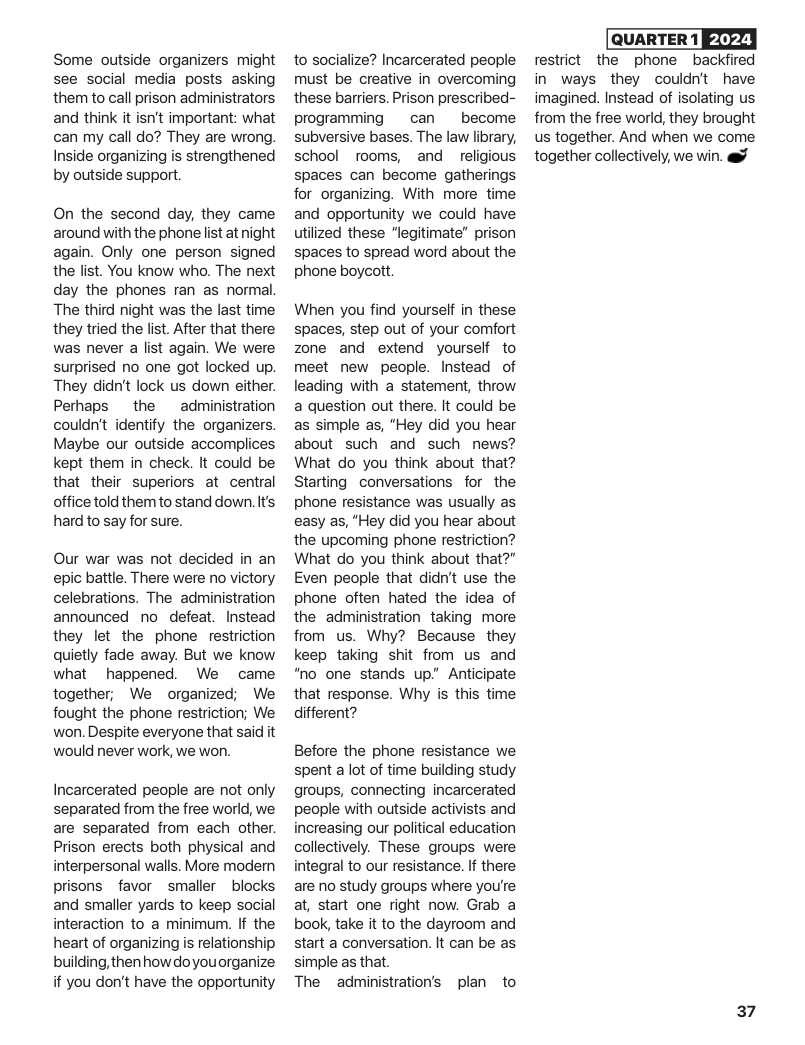
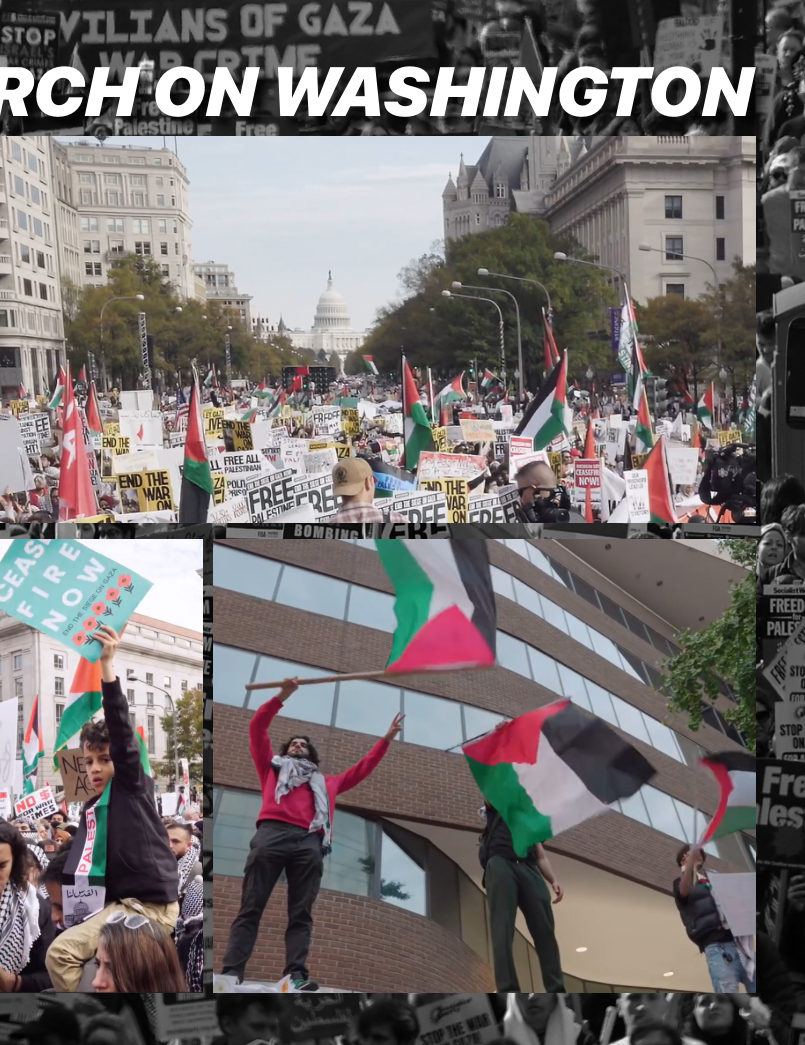
THE PALESTINIAN MARCH ON WASHINGTON .40
DON'T PANIC, STAY TIGHT .42
i
THE DEAD AND THE
LIVING
‘M SUPPOSED TO DIE IN]
[PRISON.
robably from complications
from heart disease,
cholesterol, high blood pressure
or Alzheimer's. Or maybe from
being stabbed. Or possibly from
“natural causes” after a beating
from the guards.
Maybe at 6 am when they order
me to stand and be counted. O
at 7 am when | eat what passes
for breakfast. Or when a guard
stops me for arandom pat search.
Each attempt by the state to
convince me that | am not my own
is an attempt on my life - on my
personhood. It is a declaration: |
am no one, just a number in their
possession.
The architecture of this bondage
forms a peculiar structure
designed to suppress any sign of
life | show and murder my psyche.
Basketball courts and football
fields are the doors of escapism.
Overseers organize ~ leagues;
facades of entertainment
equivalent to the banjos and
fiddles slavers gave our ancestors
for organized parties on Saturday
nights. We also have TV, movies,
and tablets. We can listen to
music and play imitation Tetris.
Distractions can be effective
pacifiers on the plantation.
Prisonis designedto break familial
ties and atrophy friendships. It's
a spectacle of psychic violence;
the savage molding of minds into
a cynical worldview found ever
present at the most cutthroat
extremes of society. “Self
preservation” justifies ~nihilistic
individualism and every action
from snitching to shooting into a
crowd.
For many, conversations about
social justice, politics and prison
abolition, are fruitless pursuits;
examples of naivete. It's not easy
to have hope for change while
witnessing medical neglect,
abuse, and assaults by guards,
who enjoy impunity. It can appear
we are alone, and fighting back
feels futile without people on the
outside fighting alongside us.
We know without a multitude of
people outside applying pressure,
there won't be changes in laws,
policies, or harmful conditions,
QUARTER 1 [ETYY}
WE HAVE JOINED
A SUCCESSION
OF KNOWLEDGE
SHARES IN THE
HISTORY OF
RESISTANCE.
Some of us form communities
built on shared principles and the
commitment to remain unbroken.
We are the few among many.
We discuss Black Liberation,
the Prison Industrial Complex
(PIC), and settler colonialism. We
debate, sharpening our blades
against one another. Sometimes
the sound of steel against steel
calls newcomers to the training
ground. Its like living outside
the Matrix, occasionally finding
someone who wants to wake
up from among the masses. At
other times it seems like we're
surrounded by people who feel t's
easier to stay asleep.
There is also a perception here
among some that men like us are
abunch of old guys (35-45 year
olds) speaking code language
about a long dead movement.
History, politics, and ~ social
justice seem frivolous to them
when living in a prison. Survival,
making money, and going home
are the top priorities. It's true, we
“conscious brothers" are a dying
breed.
Almost three years ago, | did
some self criticism about what |
was, and was not, contributing to
the struggle. | could not help but
9
TR MAGAZINE
wonder if the days of standing up
against oppression were behind
us. | brought my issue to some of
my associates: Do our impromptu
debates and history lessons have
any material impact? My friends
shared my concerns, lamenting
that the younger generation
is not interested in resistance
and revolutionary praxis. Their
escape is drugs, and the cycle of
depression and addiction is only
getting worse.
Thenin2020the prisonplantation
overseers used the pandemic as
an excuse to lock us in the cells
all day, canceling our meetings.
This was a tough time for the
whole world, but here it was like
the entire prison was in solitary
confinement
Soon after the lockdown, with the
help of some friends in the outside
world, we began organizing
political education study groups.
These collaborations with
outside folds were new to me.
I had not been aware of the
many abolitionist organizers and
activists beyond the walls. Atfirst |
tried to figure out what their game
was; how they were profiting from
seeking connections with people
in prisons. It took some time,
but | learned that most of them
just want to do their part in the
struggle against the PIC.
| connected with some of these
folks and we built bonds. We
developed friendships ~ and
formed a community. It was two
of my imprisoned comrades,
Safear and Stevie, who inspired
me to start my own study group
despite the risk of punishment
from prison overseers. We used
email and snail mail to connect
our members because we could
not get together physically. In
essence, we created classrooms
that permeated walls. The more
we learned together, the more |
began to see the value of these
study groups, and the importance
of replicating these scenes of
initial engagement between folks
inside and outside the walls.
These are signs of life in the land
of the dead
THIS WAS A TOUGH TIME FOR THE
WHOLE WORLD, BUT HERE IT WAS
LIKE THE ENTIRE PRISON WAS IN
SOLITARY CONFINEMENT.
EDUCATION AS
ABOLITION
Leaning about the history of
resistance to oppression helps us
analyze the present and informs
how we choose to struggle for a
better world. History teaches us
that we need a mass movement
to challenge the system, and
history ~provides us with a
myriad of theories and tactics.
The mistakes and successes
of past movements teach us
how to move forward. When
people come together they can
build power and overcome
daunting obstacles. People
are capable of momentous
change; of building better
worlds.
It was in studying with
others that | began to
recognize the intersections
between race, class,
gender, and sexuality. | also
recognized how together
we can challenge these
oppressions. We do not
have to be passive victims
or complicit actors. We
can be active resistors and
builders of a more human
and equitable society.
Its challenging work,
competing against ~ the
distractions that pacify
us. The overseers know
our studies can guide us
to liberation and work to stop us.
It is reminiscent of how enslaved
Afrikans were barred from
receiving an education. It happens
in the so-called free world, too,
withpoliticians banning books
on Black history and LGBTQIA+
folks. In here guards censor out
mail, blocking books and other
literature. They lock us in solitary
for "unauthorized group activity”
We are a threat because we have
joined a succession of knowledge
shares in the history of resistance.
We are not the well-known faces
of the movement, but we are
integral toits success.
QUARTER 1 EXFY]
REACTION,
REPRESSION
As | have continued this journey,
I have watched our small groups
grow to become networks and
support systems. | have watched
myself develop greater political
understanding,and more capacity
for organizing. And stamina for
enduring consequences
In prison being an organizer gets
you sent to solitary confinement,
then transferred to a different
prison so you can be someone
else'sproblem.itparallelshowthey
used to get rid of “troublemakers”
on plantations back in the day.
The separating of families was
not incidental to the punishment
of enslaved Afrikans. It was part
of the intended psychological
LTSN MAGAZINE
torture of slavery, and it remains
s0. On the prison plantation,
people coming together to create
a community is subversive. And
the overseers show themselves
true to their history by separating
us. Still we build under siege.
WE ARE WORLD
BUILDERS
After almost three years, | have
met many new friends, learned a
ton, and discovered a nationwide
community linked by solidarity.
People are making connections,
forming ~ organizations, and
leading campaigns. One of my
comrades left prison to go live
and work with the folks he met
through study groups. Prison did
not make his time meaningless.
He filled it with purpose. Though
temporarily confined, he tumed
his position ntoa place of learning
and helped build a community
that is stronger than prison walls.
It is a growing world where we
stand together despite the walls
between us. @
12
dAm
By Kevin “Rathi
Everything i ka is inverted
Every ideal it p: s perverted
Take for examp name depar(men(
of defense | \
Which makes absolucely rsefie
Its only role invasions
And infiltrations of weaker nations
And the department of justice
Targets just u‘f (! A
But protects those wgzl:hy others
% While the rich,
vrmn
‘The poor, powerless and people of color
odies
While clxl
nd the lie of
‘ee society
omy that trickles
Bu the poor and workers into the
ground
4 exempt from tax-
atio,
And up the cost of living with infla-
With cops who swear to serve and pro-
tect us
But on[y kill maim and disrespect us
Who commit cnmes
Everyd ut Amerika is inverted
And undermin, L
Every yal aims to uphold perverted
World peace and'sability
Because they ha§@lthe ability
g mJ(i(:les but few
Because the s stem shields
And exercise i
Kn[lm and robl
realize 1(
The power they wield =
Through corptm monopolies’
But call ic a fre e&a society
Promoting deporting huge portions
Qf masginalized groups while opposing
ortions
-
And birth cofl(m[.
Assuming therol
mlsms n.fulers disguise
A society sustained by lies
Like the clai f the fi
Fome iff%i‘é‘fl*:" e
But steeped in racism and built by slaves
ix-years-old. Sweet kid;
curly hair; light-brown
complexion like caramel or
barely-toasted bread. Chad looks
this way because one of his
parents is deeply pigmented (or
dark-skinned); the other is lesser
pigmented or light-skinned. One
is considered “black’; the other
“white” which makes Chad
“mixed-race" or “biracial."
Supposedly,
“black” and
“white’ are ‘race:
That is, “anthropological”-"bio-
scientific/taxonomic” indicators
of distinguishable human
phenotypes. (Phenotype: a
biology termfor the outer physical
appearance of an organism--or
the way an organism looks. That
is, for humans, plants, insects, and
animals).
derived
taxonomy,
Race terminology
methodology ~ from
anthropology, and biology, when
16thand 17th century “scientists”
sought to segregate species
of *humans’ by distinguishing
them the way botanists and
biologists separate plant and
animal species. Race taxonomy
separates human groups by
skin color, by hair texture, and by
global region, while anthropology
applications indicate _historical
development of specified lineal
ancestry.
Proponents o race biology
endeavor to prove that DNA
formats such differences.
DNA, however, makes no
racial distinction in genotypes
(what humans look like inside).
Human spermatozoan gametes
do not discriminate in making
human beings. There ~exist
numerous blood “types,’ but
none coordinate to specified
phenotypes. Blood type
distinction is dependent on
heredity; wherein, random
procession jumbles DNA
% ke lottery balls. A
& human may be
bom with
any given :
blood type. When it
comes to human beings, there is
nobiological means to distinguish
“race." So why is it necessary to
designate human phenotypes?
Two persons, one male, one
female, merge to create a
new person, like Chad, whos
WHY DOES RACE
NEED TO BE A SOCIAL
CONSTRUCTION?
relatively new at 6. Society
considers Chad “black,” though
one of his parents is considered
“White” Why not ‘mixed” as
a ‘race?” Or Black-n-White?
Or “Biracial?” According to
racism (the shorthand way
to impose a double-standard
meant to benefit “whiteness’),
if one of Chad's parents is black
and the other white, Chad is
categorically “black” Chad's
“race’ classification is social. The
social merit of Chad's “race” will
be validated by how the world
perceives him.
He may be expected to have a
limited learning capacity—certain
physical abilties or endowments.
He may be denied access to
certain places, barred from
opportunities to lear or to know
vital information about his
ancestry, or denied
4
-
access to clean
air. To these hindrances he would
be biind at 6. At 16 he may notice
that he's punished harsher than
whites for petty slights, or walk in
fear of being murdered by police
at any time. For these reasons
“race’ socially stands.
15
[T MAGAZINE]
CHAD HAS NO IDEA THAT HE'LL BE
RELEGATED TO A SOCIETAL TOILET
DESIGNED BY RACE AND RACISM.
much harder than his “white’
friends he needs to work for equal
human opportunities. His parents
represent a custom utopia of their
own design. Chad is blind to
its exclusivity to them. He
may never question what
about either made his
parents attracted to
one another. Has
his black parent
internalized
every fallacy
- -
* e
path to racism
that social objective R3C€ & | assigns to
@ v dong a phenotypic allows
4 spectrum. If biology fails to Phenotype
make the same specification,one 10 Seve as.
may ask, why does race need to 3 dualtative
credential for
be a social construction? The !
surface lie: shorthand distinction ©Xtension and
for description. The underlying novation in fields,
truth: stratification of phenotypes SUCh as science.
to crown one as superior and A Man of superior
others inferior. If the final stratum Phenotype is permitted
makes an inferior,a lesser human 10 draw conclusions from
may be deemed sub-human or COMecture, and classify
inhuman. If an anthropomorphic . ©e" phenotypes
beingwalksandtalkslikeahuman, nferior. Race is not only
but “race” determines that it is 2" Imaginary - creation,
sub-human, it can be considered :;gmizf ;enfi::;}
unworthy of human regard. It | phe
can be captured and beaten into that certifies itself as a
submissionandmadetoservethe SCientific authority.
willof those consideredhuman.Its
physical make can be spotiighted,
probed, and examined in all
manners, and placed in exhibition
to specify certain physical traits
as markers of inferiority.
Chad has no idea that
he'l be relegated to a
societal toilet designed by
race and racism. Before
long hell notice how |
“blackness," and thus unconsciously (or Walking home from school with his
consciously) seeks to escape t? Has that white friend Dave, Chad looks over
parent chosen a white partner in an attempt and says, "Wanna race?” They take
toassimilate into “whiteness'? theii marks, aligned equally--for the
moment. @&
What if Chad's white parent absorbed a
litany of myths about “black sexuality’,
“physical excellence’, and ‘innate intellectual
deficiency’? Choosing a black partner
may combine desire for sensual bliss with
sympathy and patemalism. Or Chad's
parents could be "post-racial” progressives
whove chosen a partner under rationale
outside of race identity or racial politics, and
resent those who question their motivation.
“Whiteness," however, employs ‘“race”
to carve out whites-only spaces—where
Chad and his “black’ parent
may gain limited entree
as individuals, but never as parts of a
collective. Regardless, in both "black” and
“white’ spaces, Chad's mixed’ origin
will suffer simultaneous promotion and
demotion: praise within either for his
mythical endowments and resentment
or discrimination for the same reason. He
may reject his "blackness'—always hiding
from the sun while pronouncing his “mixed-
race’ pedigree to make it known that a
part of him is “white" He may reject the
idea of “whiteness’—perpetually chasing
sunlight and becoming an anti-racist
revolutionary black activist. He may develop
bipolar syndrome where familialjsocietal
dysfunction drives him to fluctuate between
racial personae—oscillating between racist
black stereotypes and white supremacist
thought and behavioral patterns.
All of the above punctuates the objective of
race as a social construct: ameans by which
to create and sustain a social hierarchy,
to manufacture a pluralistic preference or
collective opinion regarding that hierarchy,
and to maintain an inferior-superior binary
between ‘races” most distinctive (i.e, black
and white).
17
[RECTEIN MAGAZINE
18
- TO ANYONE
WHO WILL LISTEN
af I'had a dream. s
I woke up at 4:05 a.m. and started crying because | wanted to tell my mom
that | couldn't do this any more, to just let me go. | was dreaming about my son.
We were in the woods at our house in Chatham. He was walking in front of me,
and he had his little Pro-Keds sneakers on and a pair of jeans. | could not see his
face, but | saw that familiar spring in his step that all kids have when they are two
years old and innocent and excited about the world. Unfortunately, | lost him to
the criminal justice system when he was 2 years old. He is 19 now.
This emptiness ties knots in my stomach, and | could feel the blood in my veins
eating away at what is left of my humanity. As | stare at the wall in the dark,
this torture overwhelms me and | look forward to the last bit of my emotional
decapitation. | decided to get up and write this letter so that | wouldn't forget
this fracture in my being, because by six o'clock some other dream, some other
nightmare, will have erased this moment from my life.
linstantly thought of one of my college professors. She taught me about Martin
Luther King, systemic racism, mass incarceration, wrongful convictions, and the
fact that our country has more people in prison than any other country in the
world. Prison and criminal justice reform has been the rhetoric in New York for
at least 10 years now. Oh, the Legislature passed the Clean Slate Act for some
people out there. Imagine if we all could have a clean slate? The world would be a
better place. | am so tired of dreaming.
CAN I PLEASE GET A CLEAN SLATE?
WILLIAM MULLER
& GREEN HAVEN CORRECTIONAL FACILITY E
Bismilah (In the name of God)
My Fast this Year Taught Me Some Valuable
Lessons - Many of Which | Will Keep With Me
for a Lifetime -
We Muslim Men Give ALL Praise to Allah -
Who We Embrace As The Cherisher and
Sustainer of ALL The World Far and Wide -
| have Welcomed all my Blessings Promised To
Me This Year -
Thank You Allah for My Ramadan 2023, And
for the Humility You restored in Me.
Khalfani Malik Khaldun, (Leonard B. McQuay),
#874304,
5501 South 1100 West,
Westville, IN. 46391
RAMADAN 2023
>
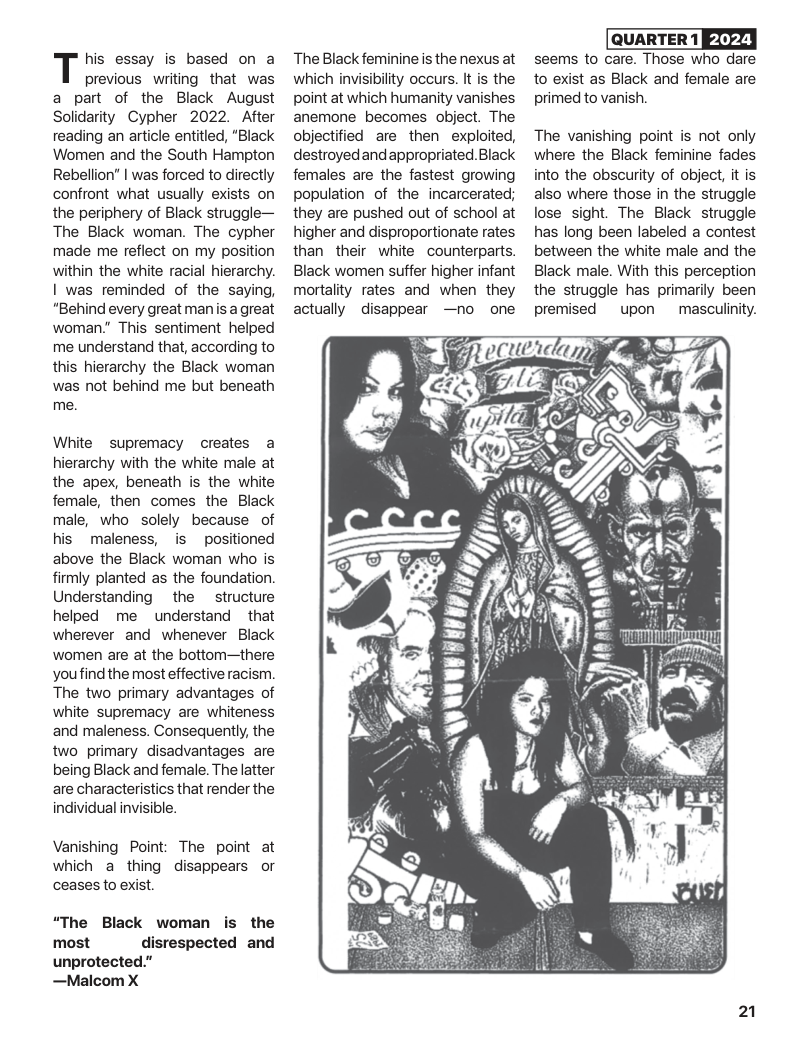
“Aerielle Jackson appears only
to be made to disappear. She is
METAPHOR."
—Christina Sharp, In the Wake
his essay is based on a
previous writing that was
a part of the Black August
Solidarity Cypher 2022. After
reading an article entitled, “Black
Women and the South Hampton
Rebelion” | was forced to directly
confront what usually exists on
the periphery of Black struggle—
The Black woman. The cypher
made me reflect on my position
within the white racial hierarchy.
I was reminded of the saying,
“Behind every great man s great
woman.” This sentiment helped
me understand that, according to
this hierarchy the Black woman
was not behind me but beneath
me.
White supremacy creates a
hierarchy with the white male at
the apex, beneath is the white
female, then comes the Black
male, who solely because of
his maleness, is positioned
above the Black woman who is
firmly planted as the foundation.
Understanding ~ the structure
helped me understand that
wherever and whenever Black
‘women are at the bottom—there
youfind the most effective racism.
The two primary advantages of
white supremacy are whiteness
and maleness. Consequently, the
two primary disadvantages are
being Black and female. The latter
are characteristics that render the
individual invisible.
Vanishing Point: The point at
which a thing disappears or
cceases to exist.
“The Black woman is the
most disrespected and
unprotected.”
—Malcom X
The Black feminine s the nexus at
which invisibilty occurs. It is the
point at which humanity vanishes
anemone becomes object. The
objectified are then exploited,
destroyedandappropriated. Black
females are the fastest growing
population of the incarcerated;
they are pushed out of school at
higher and disproportionate rates
than their white counterparts.
Black women suffer higher infant
mortality rates and when they
actually disappear —no one
seems to care. Those who dare
to exist as Black and female are
primed to vanish.
The vanishing point is not only
where the Black feminine fades
into the obscurity of object it is
also where those in the struggle
lose sight. The Black struggle
has long been labeled a contest
between the white male and the
Black male. With this perception
the struggle has primarily been
premised upon masculinity.
21
[RECTEIN MAGAZINE
However, if we examine the
hierarchy as a physical structure,
we would understand it as a
pyramid with Black women at
its foundation. Therefore, the
overthrow of white supremacy
requires the elevation of the Black
woman. The elevation of the Black
woman tums this world upside
down.
The elevation cannot be symbolic,
such as celebrating so-called
accomplishments, _ milestones
and black-firsts. These are
“Phantoms of Liberty," meant to
placate the people. Look at how
many people celebrated Kamala
Harris as the first Black woman to
hold the office of vice-president
That accomplishment means
nothing within the boundaries
of the struggle. It only serves to
dupe the enslaved into believing
that they too, can one day work in
the master's house.
Tobe clear, enslavement is not the
same as slavery. In this context to
be enslavedis to be held in mental
bondage. The war waged on
Blackness is a psychological one
that leads to physical destruction.
Therefore, there must first be a
psychological shift in order for
there to be true appreciation and
elevation of the Black feminine.
This must be the core of Black
resistance. For the Black male,
resistance must be denying
ourselves the advantages of
sexism; it is separating ourselves
from the dominance of patriarchy
and refusing to use male privilege
forexploitation. tis understanding
that our Blackness informs our
maleness not the other way
around. To choose maleness over
Blackness is to align ourselves
with the very systems and
ideologies meant to enslave us.
The point at which the Black
‘woman vanishes is the point at
which we become complicit. @
22
LIFELONG LEARNING
BY BRIAN FULLER
ULTIMATELY, WE ARE
ALL RESPONSIBLE
FOR OUR OWN
EDUCATION, OR LACK
THEREOF.
ve always been secretly
I jealous of people who make
academics look easy. Most of us
struggle. Yet, it is in that struggle
where we reach common ground
and attain transcendence.
Because after ll, if we are willing
toinvest the effort, we will realize
the possibilities.
Never in a million years would
1 have thought I'd be doing this
again. You see, I'm one of the
thousands upon thousands
who fell through the cracks in
the “system.” Back when this
nightmare first began, | knew
I couldn't continue making
decisions based on emotional
reactions. So very early, | set
my sights upon education and
outreach. They imprisoned the
body...not the mind.
When we get locked up,
something happens with our
memories. Instead of forgetting
them, they go into hyperdrive—
permeating our thoughts at
will. Its as if someone else has
grabbedtheremote. The screens
inside our heads change and
all we can do is smile in sweet
surrender while we bask in the
splendor of days gone by.
Iwas working at afoundry before
1 got arrested. It was hot, hard,
dangerous work. | loved every
second of it. When molten metal
is poured from the crucible into
the mold, it looks like hot lava
flowing from a volcano. I'm
immediately shot back through
space and time to that inquisitive
five-year-old sitting on ~the
floor flipping through pages of
National Geographic. Dad walks
inand | pointtothe caption. “Etna
is Grandnana’s name!” He smiles
and says, “Close enough. Maybe
Etna is how they spell Edna in
taly” | keep turning pages and
don'tlook up when | speak. “Itiee
is where they make peetsa and
skettee.”
Autistics are visual learners. |
wouldn't even find out | was on
the spectrum until much later in
life. Everybody always told me
I was a smart boy. | was a good
boy. All 1 knew was that
the other kids picked onme.Iwas
alittle weirdo and they hated me.
Ididn't dare tell the grown
ups what was really going on in
my brain. Those were the days
when children were expected
to be seen and not heard. To
deviate from the norm would let
everybody down.
Our public school system
was considered top-notch.
Nowadays, kids can't imagine
a time without computers. |
simply loved those old books.
The weight of them. The smell of
them.
Beautiful illustrations and
brilliant photography. Before
I could even spell words like
“biology”, “architecture’, and
“geography’, Id already been
absorbing them subconsciously.
Those sneaky teachers had
duped me into study time. All the
while, | thought | was doing my
own thing.
The streets would bring a
different kind of training.
Navigating social awkwardness
and shrewd business
negotiations. Staying aware of
my surroundings. Reading faces
and body language. Skepticism
means survival when so many
people are trying to swindle
you. Don't ever let anyone tell
you you're just being paranoid.
Follow your instincts. Trust your
intuition.
1 entered the workforce early in
life. Mentally ill does not mean
mentally deficient.
Compensationis apoor measure
of intelligence. I've worked for
some complete imbeciles. All |
could do was watch silently in
horror as they ran perfectly good
LTSN MAGAZINE
businesses into the ground. |
had the willingness to work hard.
1 just lacked the confidence to
speak up.
Movingfromjobtojobbroadened
my skill set. Regardless of the
task, | always struggled with
concentration and attention
span. My mind would detach
from my body; | would daydream,
working out pressing problems or
projects that really interested me.
I've done almost every job there is
to do in this place. I'm at the age
now where they don't make me
work if | don't want to. However,
can still work circles around these
youngsters. Our “50's" really are
the new “30's" Somehow | still
feellike ateenager in my head. I'm
the oldest student in both of my
college courses. I'm even older
than one of my professors
Wefre locked downatthemoment.
While everybody is trying to figure
out how to get their contraband
through “shake-down” I'm
preoccupied with when we are
goingtoattend class again. This s
the first time in roughly two years
that our renowned professor has
been allowed to come and give
lectures in person. | truly enjoy his
enthusiasm, focus, and energy.
Out of all the things they could
have confiscated, Il miss these
magazine subscriptions the most.
For whatever reason, our captors
seem to have such a perverse
disdain for knowledge that it
borders on fear and loathing.
When | noticed the cart for the
library, | asked the sergeant,
‘can you please donate those
to education?” Art, history, and
24
literature must be preserved at all
costs.
Although ~ their relentless
foolishness still makes me angry,
Im leaning to channel that
energy into fuel. It becomes the
catalyst for change. Who knows?
Maybe another renaissance will
explode out of the kinetic forces
locked inside of our own potential. @
PRISON LIVES MATTER -
S r
sper
E T T E R
“Prison Lives Matter is a United Front for Political
risoners, Prisoners of War, Politicized individuals behind
enemy lines and their organizations, as well as any outside
formations in unison to abolish legalized slavery. Our goalis
the connect all the abolition networks together to create an
organized body to be a force to be reckoned with. This
requires much organization, communication, and
education.”
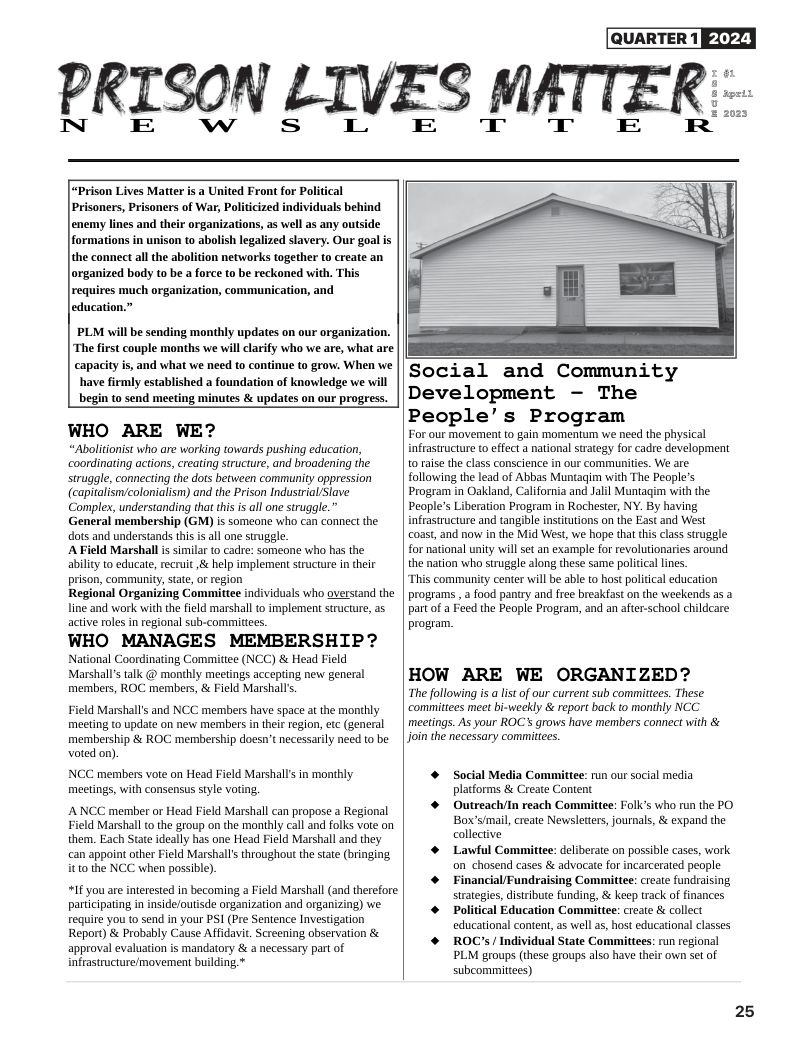
PLM will e sending monthly updates on our organization.
‘The first couple months we will larify who we are, what are
capacity is, and what we need to continue to grow. When we
have firmly established a foundation of knowledge we will
begin to send meeting minutes & updates on our progress.
WHO ARE WE?
“Abolitionist who are working towards pushing education,
coordinating actions, creating structure, and broadening the
Struggle, connecting the dots berween community oppression
(capitalismicolonialism) and the Prison Indusirial/Slave
Complex, understanding that this is all one struggle.”
General membership (GM) is someone who can connect the.
dots and understands this i all one struggle.
AField Marshall i similar to cadre: someone who has the
abilty to educate, recruit & help implement structure in their
stat, or region
ing Committee individuals who overstand the
line and work with the field marshall o implement structure, as
active roles in regional sub-committees.
WHO MANAGES MEMBERSHIP?
National Coordinating Commitee (NCC) & Head Field
Marshall’s talk @ monthly meetings accepiing new general
members, ROC members, & Field Marshalls.
Field Marshall's and NCC members have space at the monthly
meeting to update on new members in ther region, etc (general
membership & ROC membership doesn't necessarily need o be
voted on).
NCC members vote on Head Field Marshal's in monthly
meetings, with consensus syle voting,
ANCC member or Head Field Marshall can propose a Regional
Field Marshall to the group on the monthly call and folks vote on
them. Each State deally has one Head Field Marshall and they
can appoint other Field Marshall's throughout the sate (bringing.
it 1o the NCC when possible).
*1f you are inerested in becoming a Field Marshall (and therefore:
participating in inside/outsde organization and organizing) we.
Fequite you 1o send in your PSI (Pre Sentence Investigation
Report) & Probably Cause Affidavit. Screening observation &
approval evaluation is mandatory & a necessary part of
infrastructure/movement building*
Social and Community
Development - The
People’s Program
For our movement to gain momentum we need the physical
infrastructure to effect a national strategy for cadre development
1o raise the class conscience in our communities. We are
following the lead of Abbas Muntagim with The People’s
Program in Oakland, California and Jalil Muntagim with the
People’s Liberation Program in Rochester, NY. By having,
infrastructure and tangible institutions on the East and West
coast, and now in the Mid West, we hope that his class struggle
for national uniy will et an example for revolutionaries around.
the nation who struggle along these same political lins.
“This community center will be able to host political education
programs , afood paniry and free breakfast on the weekends as a
part of a Feed the People Program, and an after-school childcare
program.
HOW ARE WE ORGANIZED?
‘The following is a listof our current sub committees. These
comitees meet bi-weekly & report back to monthly NCC
meetings. As your ROC'S grows have members connect with &
join the necessary committees
& Social Media Committee: run our social media
platforms & Create Content
& OutreachIn reach Committee: Folk's who run the PO
Box'simail, create Newsleters, journals, & expand the
collective
* Lawful Committee: deliberate on possible cases, work
on chosend cases & advocate for incarcerated people
& FinancialFundraising Committee: create fundraising
strategies, distrbute funding, & keep track of finances.
& Political Education Committee: create & collect
educational content, as well as, host educational classes
* ROC’s/ Individual State Committees: run regional
PLM groups (these groups also have their own set of
subcommitees)
25
DRG] MAGAZINE
Curriculum
Prison Lives Materis a collective i which we come together as ike-minded poliically orented community o siategize on how
1o obain collective lieration from an oppressive sate. Currenly we are focusin on cadre development, to educate ourselves on the
current politcal climate and use our critcal thinking to fnd ways o combat oppression. With focus on POW Journal Book 9 cadre
reques i
Settlers: The Mythology of the White Proletariat by J Sakai
We Are Our Own Liberators by, Jalil Muntagim
Stand Up, Struggle Forward by Sanyika Shakur
Lumpen Ed Mead
Cages of Steal by Ward Churchill
development section to get a better idea on how to move forward. 1f you would like a copy of this journal please write o us to
“New Afikan POW Journals #1-12” (emphasize on 1, 9, &12) (contact us for copies of these journals)
Meditations on Frantz Fanon's Wretched of the Earth by, James Yaki Sayles
Captive Genders: Trans Embodiment and the Prison Industrial Complex Edited by Eric A. Stanley and Nat Smith
Current Capacity
& Needs of PLM
Prison Lives Matter i in i's “Infrastructure Building Stage,” this
means we don't have the capacity of our long term mission
statement & goal. We need people o take on mre responsibilities
and netwrk inside & outside of prison wals to grow our
movement and capacity. We are asking comrades who have been
actively organizing & conducting political education classes to
step up and help build Regional Organizing Committees (ROC)
Currently we have one main PO BOX that answers all the mail
we receive personally, the other PLM PO BOX only sends out
content. We would like to see PO BOX's in each region to take on
the role of responding o the surplus of mail we receive. The
following is a step by step guide on how to create ROCS.
= =
How to Build Regional
Organizing Committee’s
Step 1: Study & Find folks who wanna study with you
Study material should focus on establishing structurprogrars,
understanding the politcal line that we are focused on & more
importantly how to maintain that line and keep those politics in
command.
“See “Curiculum” above
Step 2: Focus on Cadre Development
Building individuals up to the point that they overstand the
political line & programs, they are able to educate and train
others, turning theory into practice. We can have all the theory
and programs in writing but we need cadre in action or there is
nothing. This includes enacting Decolonization Programs. Part
of colonization is that we depend on the appressor/establishment
for education, food, clothing, housing, employment, and security.
Decolonization means establishing self determination in all of
these spheres. (Contact PLM for more details on roles etc...)
26
Step 3: Establish inside-out contact, coordination, &
comradeship.
Finding the committed individuals inside & out that are willing to
correspond and network to help build the chapters/statewide
Structure/infrastructure through the roles of ROC (f it does not
already exist in your region) Connect with National Coordinating
Committee to learn more about creating this infrastructure. Once
you've established a list of individuals inside-out set up
conference calls to trategize what decolonization looks like and
how to actualize it. Network with existing formations; share
resources & collaborate on tactics, and form spokes-councils to
move ideas forward & maintain communication between
formations.
Step 4: Political Steering Commiltee
Selecting cadre within the collective wha are able to strategize
and move things forward through sharing collective ideas and
finding new ways to turn those ideas and theory into concrete
plans of action, that's most suitable for the coliective. Doing
these things with a focus on wha the desires of the collective are
and meeting their needs as they move forward,
Step5: Extend your Network.
When you have social media; link up with our FB: “Prison Lives
Matter NCC" and lets collectively share each others struges
Follow us on G @PLMnational. Have your outside support
system check out www.supporiprisonlives.org & join our
emailing list.
To request a more in-depth break down of PLM Infrastructure
‘Building or to JOIN our mailing lst write a request to:
PO BOX 134 Arvonia, VA 23004
OR EMAIL PrisonLivesMatter@protonmail.com
We Can We Can’t
V' brintsend educational materials, X Be individuals
aresource guide, relevant news pen Pals
anicles
Take on legal
v Send you information on joining. x cases #
PLM a5 2 GM, Field Marshll, ROC
or NCC member. Take on
personal
V' Connect you ithfoks in your personal
egion requests
QUARTER 1 [ETYY}
-]
PRISONERS
UNITE!
Prisons and prison staff have a habit of stifling any type of prisoner unity even
before it begins. Certain boundaries are created and enforced. Staff even go so
far as to begin rumors and falsehoods about prisoners to create friction. Race and
color boundaries are created and rarely crossed. Boundaries are set up between
the heterosexual and LGBTQ community, and crossing those are extremely
taboo. Then there are prisoners who have been convicted of certain crimes, such
as those which are sexual in nature, and crimes with victims who are children. It
doesn't matter if there is innocence claimed or not.
In order to experience prisoner unity and overcome oppression, we as prisoners
need to set aside our differences and dare to cross the boundaries prisons create
and enforce. Instead of complaining about oppression and prison life, we need
to take steps to exhibit unity and work together for the good of us all. When we
spend a lot of energy in pulling others down putting up those boundary walls, we
lack the energy to put into overcoming the system of oppression.
The prison staff stick together covering one another when one falls into scrutiny
for their actions. They have each other’s backs no matter what/ Why can't we
do the same? It's high time we stick together and strive to collectively overcome
the system of oppression. Abolition begins with ourselves. We can be our own
liberators if we can choose to exhibit unity and cross those boundary lines.
THIS IS A CALL FOR PRISONERS OF THE
SYSTEM TO UNITE!
27
BUGS ON THE
WINDSHIELD
BY TYRONE SLOWE
t can be even harder to
cope when that violence is
transacted through the agency
of the govemment. Many
Americans have experienced
the traumatic reality of having
to witness their wrongfully
incarcerated loved ones wither
away and die under life sentences
or be undeservingly murdered
through death sentences.
Posthumous exonerations are
proof that the criminal justice
system s quite literally, fatally
flawed. These ceremonies
allow the system to own up
to its shortcomings and in the
process relieve burdens carried
by surviving family members and
friends. However posthumous
exonerations force us to question
why there isn't more being done
to exonerate before death
Inthelegal system an exoneration
describes the process of an
accused criminal defendant
being acquitted, or freed from all
blame in whatever charges they
may have faced. For wrongfully
convicted prisoners serving
prison sentences, years can
pass fighting and dreaming
for that fateful day of
vindication.
Unfortunately
for many
that day
may never
(QUARTER 1[ETFY]
THE BIGGEST CRITIQUE IS THAT
POSTHUMOUS
EXONERATIONS
SEEM TO HAVE LITTLE OR NO
IMPACT WHATSOEVER TO THE
IRREPARABLE HARM THAT HAS
BEEN DONE
come. Every year several inmates
are executed or die in prison
of natural causes, disease, and
accidents. It is not unusual for
evidence proving a defendant's
innocence to surface years or
decadesaftertheinitial conviction.
As some cases demonstrate, that
evidence may be discovered
too late to save a defendant's
life. For those that have suffered
from this miscarriage of justice,
a growing trend of posthumous
exonerations has been emerging
in courtrooms throughout the
nation arousing healthy amounts
of skepticism.
The biggest critique is that
posthumous exonerations.
seem to have little or no impact
whatsoever to the imeparable
harm that has been done, “The
exoneration of a deceased
defendant may appear, at first
glance, to be a mostly empty
gesture’ (Wiseman, 687).
However, families of victims
have expressed that they feel the
proceedings are a significant step
in the right direction. Clearing the
name of the deceased can lift
burdens carried by survivors, “We
knew he was innocent, and now
we want everyone else to know
it too" (Vellastrations, 2). Susie
Wiliams Carter told reporters
this after a hearing in which
her sibling, Alexander McClay
Williams was exonerated 91 years
after his state commissioned
murder. At 16 years old he
became the youngest person to
be put to death in Pennsylvania's
history. Within six months of his
wrongful conviction in which
he was accused of murdering a
teacher at Glen Mills' infamous
facility for youthful offenders, he
was executed in the electric chair.
The symbolic clearing of a
name itself can be impactful,
“Those who are innocent... suffer
additional devastation of being
blamed for terrible crimes, their
names, families, and entire lives
are forever tainted” (Wiseman,
703). In certain cultures a family
name is cherished and protected;
to bring shame upon a family
name is sometimes believed to be
worse than death because family
names last for centuries. Through
posthumous. exoneration
proceedings, the stigma that
accompanies criminals can be
removed. Though the deceased
are unable to witness it the loved
ones can take pleasure in having
the truth known.
Families of victims can also be
financially compensated through
wrongful death lawsuits though
no amount of money can properly
29
NRCTEIN] MAGAZINE
compensate for alife lost.
Though ~ there
documented ~ cases of
posthumous exonerations, the
number s steadily increasing
One instance of an innocent life
lost at the hands of the criminal
justice system should be enough
to rethink how the system
operates. Even low levels of risk or
accidental deathis not toleratedin
other areas of our society besides
the prison system. Hypothetically
if this rate of unwarranted death
occurred in buses, televisions,
or hotel stays, the practice
would be immediately reformed
and made to operate safely. If
it was not possible to operate
in a safer manner and reduce
mortality of innocent life, the
aren't many
production would be immediately
discontinued to avoid the
recurrence of such tragedies. In
the case of corrections, wrongful
deaths are regarded as collateral
damage. Prisoners are viewed as
insignificant beings unworthy of
a second thought, similar to bugs
squashed against a windshield
The deaths of these innocent
people will never be enough to
stop the machine. A major reason
for that is most victims aren't
"attractive” enough to gamer
the national attention required
to address the ils that run deep
within the criminal justice system.
In Life Grover Thompson was a
disabled transient who suffered
from schizophrenia. He was
known to travel from place to
place without shoes on his feet,
even in winter. He didn't have
much, so it was fairly easy for
him to be framed as the fall guy
for an attempted murder. It was
miraculous that, in death, the
students of Southem llinois
University Law cared enough to
fight for his name to be cleared
Thompson died of natural causes
14 years after being wrongfully
convicted (Kirsc, 1). McClay was
a colored man who was already
labeled as a criminal for the crime
of arson when he was wrongfully
executed.
Another notable posthumous
exoneration was that of Timothy
Cole. He was falsely convicted
of rape, which he was known to
adamantly deny. 13 years into
his 25 year sentence, he died of
an asthma attack picking cotton
at his mandatory prison job. It
would be another 10 years before
Cole would be posthumously
exonerated through DNA testing.
No one is arguing about what a
tragedy it is that these people
have lost their lives. They get their
posthumous day in court and
everyone shakes hands and goes
home. ~ Thompson, McClay
Willams, and Cole never got
the chance to go back home.
Sometimes sorry just isn't enough
asis the case here. Society needs
to ensure this never happens
again.
Besides posthumous,
exonerations there are several
other semblances claiming
to properly address wrongful
convictions that don't address
what is needed. The first is the
legislation that has been enacted
in varying states to compensate
victims after exoneration. These
statues do provide much needed
support to victims but there are
several issues with that. First,
the compensation has caps.
These caps often fall well below
what has been awarded by
jurors to victims, most notably
the state of Wisconsin only
provides $ 5,000.00 per year
with a maximum of $25,000.00
available to victims. Secondly, it
is impossible to put a price on
the years of a life that are lost.
Who could successfully valuate
witnessing a child bom, getting
married, or even burying a loved
one?
An even larger problem is these
statutes are in place to help after
people are exonerated. They do
nothing to address the needs of
those that are in the system.
Criminal appeals are notoriously
difficult to win. The only recourse
for a victim who can not afford
a lawyer (most victims can',
ineffective counsel is a leading
cause for wrongful conviction)
is to solicit innocence projects
for help or try to appeal to the
hearts of a lawyer that s willng to
accept a case onapro bono basis
(free of charge to the defendant).
Both of these tasks are extremely
arduous. Innocence projects can
takedecadestoreviewacase (this
is not the same as investigating
a case). Innocence projects are
often comprised of volunteers
and these organizations often
have very little resources.
Because of these reasons, they
generally are only able to accept
cases that they are guaranteed
to win. For a defendant to have
an organization such as these to
QUARTER 1[ETTY]
commit to represent them it is like
hitting the lottery.
Another contributing factor to
the deaths of those wrongly
convicted s legal manipulation
After years of advocating to
reform laws concerning access
to post conviction DNA testing
in Pennsylvania, Senator Stewart
J. Greenleaf introduced a bill to
allow broader testing. The bill
was signed into law in October
2018. Despite the new law,
judges and prosecutors have
fought vigorously to deny testing
to applicants. President Judge
Emeritus, John T. Bender of The
Pennsylvania Superior Court
also advocated for victims to
have better access to testing
in his 2015 appellate opinion,
“The DNA Testing Statue which
was passed unanimously by the
General Assembly should be.
interpreted in favor of the class
of citizens intended to benefit
therefrom, namely those wrongly
convicted of a crime.” (Payne,
272). As a senator, Greenleaf's
mission was to exonerate as many
wrongly ~ convicted prisoners
as possible. Since the passing
of the bill, Greenleaf’s work has
been reduced to just another
minor appeal issue. Courts have
made the statue very difficult to
overcome. The decision to grant
THE REASON FOR SUCH EXTRANEOUS MEASURES BEING
EMPLOYED IS THAT COURTS DON'T WANT TO OFFER
TESTING TO DEFENDANTS THAT THEY BELIEVE ARE
GUILTY.
31
LTSN MAGAZINE
testing or not has very little to
do with a defendants assertion
of innocence. Applicants face
upwards of 20 stipulations and
even if a defendant has a clearly
logical argument for requesting
testing like newer technology
that could produce substantially
more accurate results leading
to the discovery of a separate
suspect, judges and prosecutors
want all the stipulations met.
This extensive list of stipulations
is a misinterpretation of the law
and a clear cut example of legal
manipulation; it is tantamount to
aperversion of Greenleaf’s vision.
The reason for such extraneous
measures being employed is that
courts don't want to offer testing
to defendants that they believe
are guilty. Ironically, most judges
believe that most defendants
are guity, especially ~those
filing paperwork from a post-
conviction position. There are
litigants that have been fighting
for access to DNA for 20 years
and more. The technical hang-
ups in the US. criminal justice
system brings to mind an old
legal quotation that has been
long lost in the procedural melee,
“Itis better that 10 guilty persons
escape than one innocent suffer”
(Sir Blackstone). Legal
manipulation and outright
stalling forces defendants
to ponder their mortality.
For a wrongly convicted
prisoner serving a long
term sentence and hoping
to be exonerated, the
32
healthiest choices of living must
be resorted to and exercise is
imperative. With the way that
the system operates, with hasty
executions for death sentences
andsluggishlegal proceedings for
long term sentences, not only do
prisoners hope for exonerations,
they have to hope they are alive to
see them.
As far as possible solutions are
concemed, there are a great deal
of casesthat have direct evidence
related to the crime that is either
not linked to the defendant, linked
to someane else, or both. Other
cases have evidence that has led
to inconclusive testing results.
Cases such as these should
be automatically subjected to
re-testing and also should be
subject to newer testing methods
within an allotted period of time
(ie. every 3 years). Cases that
have no physical evidence linked
to the suspect should be barred
from death penalty eligibility and
natural life sentences, no matter
how heinous.
Circumstantial evidence ~(non-
physical evidence)isnotoriously
unreliable. Eyewitness testimony
(another form of circumstantial
evidence) remains one of the
leading causes of wrongful
convictions. Intheaforementioned
cases of Grover Thompson
and Timothy Cole, both were
identified by eyewitnesses and
both undeservingly lost their
lives as a result of those mistaken
identifications prior to being
cleared by DNA Testing. No one
should have to die for a maybe.
Posthumous ~ exonerations are
the bitterest of sweet moments
in the criminal justice system.
Though the relief it provides can
be helpful,if the courts were less
restrictive of testing and retesting
DNAin cases where itis available,
less people would die in prison
through lengthy incarcerations
and the death penalty. @
WORKS CITED
Blackstone, Sir William,
“Commentaries on Laws of
England" 1765-1769
Commonwealth v. Payne 2015 Pa
Super 272, Lexis Nexis
Kirsch, Robyn "SIU School of Law
seeks posthumous justice’, The
Alestie, January 19, 2012
Madrigal, Andrew, Norris, Robert
J. "The Good, The Bad, and The
Uncertain: State Harm and the
Aftermath of Exoneration, and
Compensation for the Wrongly
Convicted, Springer’ July 25,
2022
Wiseman, Samuel “Innocence
After Death” Case Westem
Reserve Law Review
THE BIRD
By Sky Rose
Maya Angelou’s caged bird does not
sing.
It wails, screaming for redemption
to a nation, a society that turns its back
eyes closed and deaf ears to the
caged
Prisoners we both are, the bird and |
at the hands of man, captives
like the exhibits in a zoo
“oddities,” separate from society
The bird’s gilded caged and my iron
bars
are different yet the same
The bird may experience a certain care
atenderness, even love
The inmate seldom knows such
amidst whistles and blaring intercoms
a cacophony of prisoner and captor
the daily chaos of incarceration
I know how the caged bird feels
and it does not sing, it cries
looking between the bars at freedom
just as | stand at my barred window &
QUARTER 1[ETTY]
33
LTSIN] MAGAZINE]
PHONE RESISTANCE
By Safear Ness
Could you live without your cell
phone? How would you function?
Most people in the free world
couldn't imagine life without it
Prisoners don'thave that privilege.
Cell phones are prohibited in
Pennsylvania State Prison. But for
those locked away, there are few
things more precious than the
phone. Its mounted on the wall
costs a dollar for 15 minutes, and
is limited to 20 numbers that must
be pre-approved by the prison
Despite its limitations, it's our
lifeline tothe free world. We ive our
lives through it. Some get married
on it, others divorced. Parents
raise children. Children care for
parents. We laugh, scream, and
cry through the receiver. In prison,
a phone is much more than a
phone.
The mission of the Pennsylvania
Department of Corrections
(PA DOC) is to ‘reduce
criminal behavior by providing
individualized treatment
and education to offenders,
resuting in successful
community reintegration through
accountabilty —and positive
change.” The emptiness of their
words s crushed by the hypocrisy
of their actions. Studies show that
one of the most effective means of
decreasing recidivism is a strong
support system and building
connections in the community.
While the PA DOC seems to
support this in speech, their policy
often reflects differently
34
During the COVID-19 pandemic,
in direct opposition to the mission
of “successful community
reintegration,” the administration
at SCI Fayette decided to limit
incarcerated people to one 15
minute phone call per day. This
essay is how a rainbow coalition
of prisoners at Fayette fought
the phone restriction policy. And
how, despite the mountain of
opposition, we won.
When the pandemic first started
and prison officials restricted our
movement, abolished the chow
hall, canceled programming and
confined us to our cells, we openly
speculated that the prison would
use this medical emergency to
their advantage and continue
these restrictions as a means of
control.
As incarcerated people, our
ccommunication with the outside
world mostly depended on phone
callsandvideovisits.Westruggled
to maintain relationships with our
loved ones on a limit of four 15
minute phone calls each day.
The administration at Fayette
asked us to comply with COVID
precautions to make the transition
easy. Most of us were worried
about catching the virus, so we
complied. At that point violence
among prisoners was ~ almost
non-existent. As time passed
they told us to take the vaccine to
open the prison back up. We were
tired of being locked down, so
most of us complied with that too.
Then, they offered the booster.
We took that too. After all that,
the prison administration repaid
us by implementing a new policy
limiting us to just one 15 minute
phone call per day.
News of the phone restriction
first came from a video recording
posted on a television channel
the prison hosts. An administrator
announced the new policy in a
condescending tone. He claimed
that he previously warned us that
if we couldn't work out the phone
situation ourselves that they
would do it for us. He said they
were still getting complaints. Now
they were taking it into their own
hands.
The policy was to implement
a phone sign up sheet. Each
prisoner would be limited to sign
up for one 15 minute slot during
their recreational time each day.
If there was time left, discretion
would be eftto the block sergeant
to allow further use of the phone.
There was no guarantee we could
make more than one call.
But it was the administration
that created the stressful phone
environment in the first place.
They split the block into cohorts,
only allowing a limited amount
of time for everyone to get on
the phone. There were too many
people, not enough phones,
and not enough time. Instead
of extending our time out, or
adding more phones to the block,
they decided to punish us for a
situation they created.
1 was heated. My comrades were
furious. Everyone that used the
phone, which is almost every
prisoner, hated the idea of the
upcoming restriction. We had
already done the best we could
to make the phone situation as
safe as possible. We created
our own phone lines. | was on
three different blocks during the
lockdown. On each block the lines
would be long, and sometimes we
couldn't get on at the exact time
that we wanted, but everyone
eventually had time to get on the
phone more than once. To us, the
administration was flexing their
power. But what, if anything, could
be done? Would we take this
sitting down? Or would the people
finally say enough is enough and
stand up to fight?
Prison twitter was ablaze with
speculation. A group of us
understood that a revolution
needs organizers. We had the
anger of the people. Now we just
needed to channel it. But we had
to work fast. The administration
announced that the restrictions
would be implemented in about a
week.First stage: planning.
The planning began with a small
group of us housed together
on the same block. We came
from various social groups in the
prison: Muslim, Christian, Black
nationalist, white, and “gang”
affiiated. Using our networks we
checked the pulse of the people.
Not a single person wanted the
restriction. Most were ready to
take a stand. There was a hurdle
to overcome, however. Even
amongst those ready, many
expressed doubt of whether
other people would ride or if they
fold when the pressure came.
Our group quickly developed a
plan of action. The public action
itself was pretty straightforward:
We would boycott the phone list
and refuse tossign. We anticipated
that the prison may counter by
preventing us from using the
phone so we decided we would
boycott the phone altogether. If
therestriction continued we would
then increase our resistance with
afood boycott and send our trays
back to the kitchen.
Most social groups have a leader
or leaders that they look to for
guidance. Some are explicitly
labeled a leader, others act in
that capacity without the title.
Regardless, to be as effective as
possible we targeted leaders of
the various groups throughout the
prison. Once we got them active
in the resistance, they influenced
others.
Spreading our message as a
group tothose withinfluence over
large numbers of people allowed
us to share some of the risk. Now
there was an army of organizers.
That made it much more difficult
for the administration to identify
the initial organizers. And even
if they did by sending us to
solitary confinement, it wouldn't
neutralize the resistance. It's not
that we were leaderless. Instead,
our leaders were embedded
with the people, taking direction
from the people, and directly
QUARTER 1[ETFY]
accountable to them. This is
called building a hydra. When you
chop a dragon's head off, it dies.
A hydra has multiple heads and
when you chop one off, two more
growinits place.
A debate occurred over whether
we should write a pamphlet to
distribute. The writing would be
a reminder to the people of all
the things the prison had taken
from us over the years, their plans
for the phone restriction, and our
plan to fight back with help from
outside accomplices. It would
serve as an encouragement to
stand up to our oppressors. Some
people felt that a pamphlet would
make it back to the administration.
If that happened, they argued,
someone may go to the hole.
Others felt like the administration
was going to hear about our
plans through their informants
anyway. Besides, this group said,
we want the administration to
feel the pressure; we want them
to know we don't plan on taking
this lightly. Everyone understood
that, pamphlet or not, some of us
may end up in the hole. In the end
it was decided to go forward with
distributing it to select organizers
who would show it to other
people, buttake it back when they
were done reading it
Some of us had been developing
friendships with free world
abolitionists. We knew that if we
wanted to pull this off we would
need people attacking from the
outside in as well. Our outside
accomplices were delegated two
tasks. First, a phone campaign
would be developed on social
media. An inside comrade wrote a
short description of the restriction
35
LTSN MAGAZINE
and asked anyone concerned
to call the prison and complain.
And of course we were advising
allincarcerated people to contact
their families and inform them of
the phone restriction. This would
let the administration know we
were not alone inside. We relayed
this information over a video visit.
At the time video visits were less
than the phone. And because we
were onatime crunch, we couldn't
use snail mail If you have the time,
the safestmethodis snail mail and
having a person who is not under
surveillance mail it out.
Second, our outside accomplices
set up a smart communications
account, perhaps multiple
accounts, to communicate with
prisoners throughout the prison.
A prisoner managed to get a list
of the names and numbers of
incarcerated people throughout
the compound. Over 100
prisoners located on different
blocks received a message about
the upcoming phone restriction
and our planned resistance to
it. There were some security
concerns about taking this step.
We didn't want the administration
to think they were responsible for
organizingontheirblock However,
we determined that since COVID
restrictions might prevent some
people being informed, ~ the
benefits outweighed the risk
We advised that they send a
message back saying that they
would not be able to participate
in the phone boycott because it
was against the rules and to block
the sender. That way they would
be able to use that as evidence if
they ever received a misconduct
War is deception. This method
was only used by necessity and
36
should be avoided if you can
They made an announcement,
“If you want to use the phone
tomorrow, sign the sheet in
the dayroom.” Everyone's eyes
darted around the block. Who
would make the first move? A
few comrades and | walked over
to the table. There was a memo
next to the sign up explaining the
policy. We sat near the table and
kept watch.
The people were hype about the
unity we were witnessing. At one
point someone walked over to the
desk and signed the list. Before
he had a chance to walk away a
comrade approached him and
explained that we weren't signing
the list, that we were protesting
the policy. How is it, he explained,
that the mission of the DOC is
supposed to be rehabiltation
and making prisoners productive
members of society, but they
do nothing to actually make
that happen? Studies show that
building community support is
one of the most important factors
to reduce recidivism, yet the
administration wants to block our
connection to the street. Ain't that
fucked up? We were tired of them
oppressing us. This time we were
standing up. The person agreed
and immediately scratched his
name off the list.
Out of everyone on the block,
there was one person who
refused to join the resistance.
He was a known bootlicker and
suspected informant. His block
worker job made him feel like he
ran the block with the COs. He
found more joy in conversing with
them than us. It wasn't a surprise
that he continued to sign the list.
Some suggested we get him out
the way. But the situation didn't
really call for that. We advised the
people to abandon him. He didn't
have any influence so it was safer
tojustleave him
Not every block participated in
the boycott. For example, one
block with low participation
houses the majority of workers
in the Correction Industries (Cl)
shop. They are the highest paid
positions in the prison, averaging
$150 a month. These are mostly
older men who have come to
cherish the money. Many of them
are white. This privilege affects
their unity with other prisoners.
Many of them confine themselves
to the block, never going to the
yard where prisoners congregate.
What's more conceming is
that most of them are buddy-
buddy with the COs and staff.
It's almost as if they relate more
to the administration than the
people they are locked up with.
This dynamic deserves a more
substantial analysis, but at the
very least | can say that the
administration uses their job
as leverage over them. They
resemble the petty bourgeois in
the free world. Rarely do any of
them support collective liberation.
They sold their revolutionary
impulse for some soups and
cookies,
Our outside accomplices
continued to call the
administration. | don't know what
response they received. For us, it
was enough that the prison knew
we were supported, that they
couldn't hide behind their veil
of secrecy as they normally do.
Some outside organizers might
see social media posts asking
them to call prison administrators
and think it isn't important: what
can my call do? They are wrong.
Inside organizing is strengthened
by outside support.
On the second day, they came
around with the phone st at night
again. Only one person signed
the list. You know who. The next
day the phones ran as normal
The third night was the last time
they tried the lst. After that there
was never a list again. We were
surprised no one got locked up.
They didn't lock us down either.
Perhaps the administration
couldn't identify the organizers.
Maybe our outside accomplices
kept them in check. It could be
that their superiors at central
office told them to stand down. Its
hard to say for sure.
Our war was not decided in an
epic battle. There were no victory
celebrations. The administration
announced no defeat. Instead
they let the phone restriction
quietly fade away. But we know
what happened. We came
together, We organized; We
fought the phone restriction; We
won. Despite everyone that said it
would never work, we won.
Incarcerated people are not only
separated from the free world, we
are separated from each other.
Prison erects both physical and
interpersonal walls. More modern
prisons favor smaller blocks
and smaller yards to keep social
interaction to a minimum. If the
heart of organizing is relationship
building, then how doyouorganize
if you don't have the opportunity
to socialize? Incarcerated people
must be creative in overcoming
these barriers. Prison prescribed-
programming can become
subversive bases. The law liorary,
school rooms, and religious
spaces can become gatherings
for organizing. With more time
and opportunity we could have
utilized these “legitimate” prison
spaces to spread word about the
phone boycott.
When you find yourself in these
spaces, step out of your comfort
zone and extend yourself to
meet new people. Instead of
leading with a statement, throw
a question out there. It could be
as simple as, "Hey did you hear
about such and such news?
What do you think about that?
Starting conversations for the
phone resistance was usually as
easy as, "Hey did you hear about
the upcoming phone restriction?
What do you think about that?”
Even people that didn't use the
phone often hated the idea of
the administration taking more
from us. Why? Because they
keep taking shit from us and
"no one stands up” Anticipate
that response. Why is this time
different?
Before the phone resistance we
spent a lot of time building study
groups, connecting incarcerated
people with outside activists and
increasing our political education
collectively. These groups were
integral to our resistance. If there
are no study groups where you're
at, start one right now. Grab a
book, take it to the dayroom and
start a conversation. It can be as
simple as that.
The administration's plan to
2024
restrict the phone backfired
in ways they couldn't have
imagined. Instead of isolating us
from the free world, they brought
us together. And when we come
together collectively, we win. @
37
GAZA e\
STO¥ -
STINEACTION us.
s :vr Pales
’ /ifl| —~ p—— ;-C
7
q§AN FRANCISC Aetm Taken Against BNY Mellon in Solidarity with Palestine!
On Dec.11the 2nd Street entrance to Bank of New York Mellon's (BNY:Mellon) affices e -
turned into an‘art piece highlighting their support of the ongoing genocide in Palestine.
This was done in,solidafity with the ongoing resistance to the Israeli occupation, and to [‘
help mark the General Strike called for by Palestinians in response to the U.S. vetoing the |
(UIN. security council resolution to stop the war on sIz
Y
Al
erican bank that supports the Israeli & U.S. led genocide in Palestine 4
in two major : 1) They are'a primary funder of Elbit Systems, the largest weapons &
manutacturer for Israel; 2) they help facilitate U.S. money transfers in support of the
I0F through a charitable gift fund titled “Friends of the IDF Donor Advised Fund.” BNY.
Mellon s onthe 24th floor of the building that s host to many other offices. The buiilding
—~ occupants should know what their neighbors are doing
- they should know about BNY Mellon's complicityinthe
murder of Palestinian people. - f.f
¥
BNY Mellonis
" Numerous international companies have divested
from Elbit stock noting their contribution to violations
of international humanitarian law. In contrast, over the
last few years BNY Mellon has continued to increase
their holdings (including since October 7th) to a total
of 68,000 shares valued at $13 million. This is direct/”
profiteering from genocide.
TI a call to target all institutions that are implicated
in andjor profiting from the murder of children and the
ongoing colonization. These offices and the individuals
who run them are already drenched with the blood of
Palestinians—make it Visible. Hold demonstrations,
marches, vigils, and clandestine vi until the
demands for their divestment from Elbit Systems and
the permanent removal of the “Friends of the IDF Donor
Advised Fund" from their services are met.
This was done in solidarity with the more than 18,000
Gazan's murdered since Oct. 7th, and all Palestinians
resisting Isragli oppression
n - g L. -
F'
S THEP“iEsrlL’
,
W On November 4, 2023, the Palestinian Youth Movement
1Y Jead over 300,000 people in a march on Washington DC.to =
2§ oppose United States support for srael's genocide in Gaza.
| /1 'SinceOctober7,thelsraeliOccupationForces have murdered £
A over 30,000 people. This has been one of the most violent
A chapters in the Palestinian liberation struggle, and. Israel's _
; ( aggfession is made possible throuhg Sustained military and
**, economic support “from the United States govenrment and
| € American-based corporandns
4
Fre Efl
Batanai.
The PYM and their allies are calling for an,end to the siege
of Gaza, the end of military occupation of Palestine, and the
return of Palesitinains to their ancestral homeland.
STOF
RCHON WASHINGTON
[ECTETN] MAGAZINE
; ’ ; L
SOME FRONTLINE REFLECTIOAs ON BL(l)CK cop CITLY
» > 4
’
hedrfro“n anonymous writer on Q?: Hés fromthe Atlanta Forest 1
£ £
Republi
On Monday, November 13, a
group of about 350 people
marched from Gresham Park to
Constitution Road in an effort
to march onto the Cop City
construction site. We participated
as an affinity group of five people
from Atlanta.
"You fight with the army you have,
not the army you wish you had.”
We are writing this report back
as a group that was initially
skeptical of the Block Cop City
initiative, finding the "nonviolent
direct action” framework a bit
naive. We are not among those
who thought it “dangerous” or
“liberal” As revolutionaries, we
chose to participate despite our
reservations, recognizing that the
worldisnotalways as we wantitto
be. We saw few alternate avenues
for mass participation in the wake
of a failed referendum campaign
and an objective decline in the
frequency of clandestine actions.
We offer our experience, analysis,
and critiques from a place of
respect for all the organizers
and participants, and a desire for
revolution in our lifetime.
42
We unequivocally ~ denounce
and distance ourselves from the
opportunistic, shameful, and
unsolidaristic ~statements and
screeds written by bloggers,
passive spectators, and
media spokespeople from the
City government about this
mobilization and its proponents
over the last several months.
May we all outgrow that part of
ourselves seeking to demean and
belittle people we disagree with.
We send our humble greetings
to those who participated in the
front of the clash and also those
who set fire to 16 Emst Concrete
trucks onthe nightof the 13th. We
are also proud and inspired by the
vigil at Dekalb County Jail during
which inmates broke windows,
set fire to a bush outside the jail
and successfully lowered plastic
bags to the ground; bags which
protesters filled with cigarettes,
lighters, and pizza. While Block
Cop City caused hundreds
of police to evacuate the
construction site of all equipment,
the arson on the night of the 13th
extended the consequences
of the initiative well into the
future, halting construction
for at least a week and forcing
the APF's concrete provider to
unceremoniously back out.
ONTHE SPOKESCOUNCIL
The first day of the spokescouncil
was an opening presentation
and QRA closing. About 450
people crowded the room, a
majority of which were not from
Atlanta and had never been to the
forest. Many had never been to a
protest involving tear gas or less
lethal munitions, and a significant
percentage had never been to a
protest at all. Accordingly, a basic
framework for the action was
shared as well as some rather
necessary information about the
forest, the roads surrounding it,
and the activity happening there
recently. More specific details
about the content of the action
were discussed the next day.
Organizers of the spokescouncil
tookresponsibilityforcoordinating
hundreds of strangers into a
collective conversation, and they
did a good job. They declared
their support and solidarity with
acts of combative protest and
clandestine sabotage within the
movement. The room, which
remained dedicated to tactical
nonviolence for the morning and
mid-day of November 13 in the
vicinity of the Weelaunee forest
only, chanted in unison “if you
build it, we will burn it
At the opening of the second day
of the spokecouncil, roughly 30
minutes of the allotted time were
taken up by someone who had no
intention of attending the action
and actively encouraged others
not to attend. In a confusing and
cliché-filled rant reminiscent of
a counter-insurgency handbook
script, they suggested that
Muscogee people did not support
the initiave. They simultaneously
accused the group of not
being miltant enough and
of not being careful enough.
Another Muscogee person
briefly combated them, vocally
supporting forest _defenders’
bravery and courage. Belkis Teran
spoke up and shared ideas for
supportive roles for those who did
not want to attend the action and
led the spokescouncil in chants.
The openingremarks were closed,
and the spokescouncil broke out
into color clusters.
The colors were not divided
into risk level. Instead, they were
divided by position within the
march, and by roles. The Blue was
the vanguard cluster, assigning
itself the responsibility of setting
the pace and of clearing obstacles
and police if the occasion arose.
The Purple was the middle force,
assigning itself the responsibility
of fillng space cleared by Blue,
and of planting tree saplings,
playing music, and maintaining
morale. The Orange cluster was
the rearguard, assigning_ itself
the responsibilty of maintaing a
solid defense from behind, and a
safe zone for others to retreat to in
case of injury or chaos.
We particapted in the Blue
cluster. It seemed that the Blue
group volunteers were among the
most experienced participants
in the room. The group did not
have some of the anxieties
expressed by other members
of the general spokescouncil
about adventurous outsiders or
legal risks. We discussed tactics
with ease and without a need for
ideological or strategic debate.
The framework of strategic
nonviolence was accepted and
the task of breaching the site
within these parameters was
discussed in some detail.
Afterdiscussing likely ~police
reactions, we decided to maintain
“perpetual forward momentum’
For our cluster, this meant that we
would not indulge in stare downs
or face-offs with the police. Since
this was nota photo-op, and since
we had nothing to communicate
to them, we did not care to yell or
chant at cops outfitted in tactical
gear. We decided to move around
them if possible and through
them if necessary. We discussed
possible munitions at length, and
determined that the use of less
lethal munitions would not make
us retreat automatically, and
that we would only tun around
if we were physically incapable
of continuing forward. Later,
we relayed this to the general
spokescouncil
THE MARCH
When we arrived at Gresham Park
2024
on the morning of Monday the
13th, it became abundantly clear
thatthis was notthe “Mass Action”
we had been hoping for. It seemed
that about a third of the people
who had come to Atlanta for the
weekend had opted to take on
offsite support roles, and very few
locals showed up. The march set
off with 300-400 people, many
of whom were extremely anxious
and insisted on stopping every
10-12 steps so that the crowd
could “stay together. As locals,
we take partial responsibility for
not better inoculating newcomers
to the fact that the first ~1.5 miles
would be on the bike path and
through side streets where we
were highly unlikely to meet a
police response.
The route successfully
misdirected the police. Multiple
lines of riot cops crowded into the
bike tunnel beneath Bouldercrest
Road, anticipating we would
replicate the route we took into
Intrenchment Creek Park on the
first morning of the 5th Week of
Action (March 2023), which we
attempted to take again during
the 6th Week of Action (July
2023). When we tumed off the
bike path onto Cherry Valley
Drive, the police had to scramble
to regroup. In an online blog post
titled “Participant Reflections on
Block Cop City” the author(s)
incorrectly claimed:
“Even on the day of the action,
the planned route that had been
agreed upon (marching down
constitution road rather than the
bike path) was discarded in favor
of marching up the bike path, a
narrow chokepoint that ended
in a fortified tunnel full of Dekalb
County Police officers. People
43
TN MAGAZINE
were then funneled back onto the
street, ending up on constitution
road anyway. From start to
finish, it seemed that the police
controlled and chose the route
that protestors took.”
We are grateful for this article,
because it offers real insights
from a participant without the
smug and self-aggrandizing
tone and perspective of many
other articles and denunciations.
We respectfully disagree with
the above excerpt, and many
other parts of the report as
well. Perhaps the author(s) lack
of familiarity with the terrain
impacted their analysis of what
was happening o of what was
possible. The part of Gresham
Park we departed from does not
connect with Constitution Road,
and it is necessary to either take
another road or the bike path to
reach it. Moreover, the march did
not encounter any lines of police
on the bike path, thus it did not
decide to turn on account of
their presence. Finally, there was
no publicly agreed-upon route.
Instead, Block Cop City organizers
assured us continuously that
not all information was safe to
share during the spokescouncils,
including the route. We agree with
the decision to keep the route a
secret until the moring of the
action. We expected this, and
have experienced thismany times
in black blocs, counter-summits,
and break-away marches. We
believe that the secrecy of the
route helped produce a situation
in which we could clash with
police on our own terms, catching
them off-guard in such a way
that allowed us to temporarily
overwhelm them in spite of their
a4
superior weaponry,as well as their
commitment to violence in the
face of the crowd's commitment
to nonviolence.
For those who can only visualize
this information bottleneck
from afar due to their lack of
participation, picture anonymous
people in balaclavas, hoodies,
sunglasses, gloves, etc. discreetly
sharing the march route with
those who seemed to come
donning similar outfits.
THE WEDGE
Upon meeting the line of riot
cops, the Blue cluster continued
without hesitation, forming the
two banners into a v-shaped
wedge. The wedge broke through
the police line, as planned the
night before. 50-60 protesters
from the Blue and Purple cluster
got behind the banners, chanting
and pushing through three lines
of riot police before being blinded
and suffocated by tear gas and
pepper spray. As the Blue cluster
retreated, the Purple cluster
scattered amidst the wafting tear
gas. The Orange cluster more
or less held their position in the
street. Many may have been
unableto see the clash atall. They
gave others a stable crowd to
reassemble with or blend into. The
clash was more ambitious than
the parameters for confrontation
discussed at the spokescounci.
Spokes had discussed thatifthere
were multiple lines of riot cops, we
would consider alternative routes.
We commend the bravery of the
Blue cluster, which proceeded
until it no longer could, and
prevented police from grabbing
individuals as we retreated.
As we passed the fire station, |
could see a line of armored riot
cops filing into Constitution from
the direction of the Internchment
Creek Park lot. “They're playing
our game,’ said one friend.
We kept marching, many of us
starting to beat our chests and
howl like a pack of wolves in
unison. Two cops came forward
from the main line, seeking to
act as negotiators, holding up a
peace sign with one hand while
the other gripped his riot shield.
“Are we doing this?" | asked.
“Hell yeah!” someone responded.
“Go toward the little one!” yelled
another friend, pointing at one
of the (stil quite large) cops. The
first two cops were bounced off
the banners like water off a duck's
back. Then came the crush of
the crowd against the shields
and batons. Large men pushing
their full weight into 20-year-old
women who can't have weighed
much over 100 Ibs. Foramoment,
could hear the logical,risk-averse
voice inmy head screaming, "Runt
They've got you surrounded!” But
by that time, thankfully, it was too
late. | temporarily ceased to be an
individual, became an organism
whose only function was to push
forward, holding those i front
of me and held by those behind
me. | dropped my shoulder into
it and moved ahead against
the resistance, supported by all
those around me and awash in
the ecstasy of a good mosh pit.
Line after line of police fell away.
It seemed we were unstoppable,
until the banner-holders ~fell
down under fire of rubber bullets
and bean-bag rounds. As we
promptly lifted them back up, |
felt my friend with whom | had
linked arms retreating. Only then
did Irealize | could scarcely see or
breathe, having been shielded by
the umbrella or the adrenaline or
some combination of the two.
When | saw the line of police, a
sense of relief washed over me.
I knew that we stood no chance
of making it into the construction
site when | saw the crowd at the
meet-up point. | was worried that
all of these people would have
come to Atlanta for nothing. The
lines of police showed me my
concerns were unfounded. While
many people prefer to evade the
clash, to move around the danger,
to stick to the
shadows, | have
always preferred
the front lines,
the exploding
canisters, the
sour smell of
the tear gas, the
wild crush of
the crowd. Real
knowledge lives
in the body, not
the mind. The
experience of
the mob howling
in unison, linking ams, rushing
headlong into lines of police,
is worth years of speculation
and theorizing. If we were more
numerous, we would have
doubtlessly split into multiple
corridors to spread the police
response thin. “Be water”: such
is the fashionable watchword. In
that case, | probably would have
stayed with the big group, certain
that they would be fortunate
enough to confront the riot police
directly. To my left and right, my
friends were shoving umbrellas
upward, pushing ahead in the
dense throng. For a few moments,
it was dark and almost silent.
The veil of the umbrellas, the
silent heaving, and incredible
pressure of the comrades packed
together behind the banners is
an experience you can't describe
easily for those who have never
feltit. Eventually, | couldn't breath
anymore and | grabbed someone
as | retreated. Thankfully we didn't
make it past the fourth fine of
officers. We would have all been
arrested.
For the first hour of the
march, | was bored. It wasn't a
contemplative boredom but an
agitated one. | wasn't nervous but
I could tell other people around
me were. As we left the park
someone yelled, “Its not a march,
it's a direct action.” If | had heard
that earlier | might have felt better
about the character of the march
but it was too late. | had no time
to adjust my expectations. What
Iove in crowds was missing. I've
walked up the bike path, into and
out of the forest, countless times.
Sometimes walking my dog,
other times evading the police.
We walked slow. There must
have been thirty photographers
backpeddiing in front of the
2024
banners. If we confront the police
now, they'll be the ones having
to break through their line. When
we tumed onto Cherry Valley
things started to change. The
soundsystem found its way to
the front, neighbors came out of
their houses, and then the police
came into view. The energy was
growing. As we got closer the
clarity pushed us faster. The
indecision, the anxiety, the debate,
was over. There was consensus.
We are going to clash. There was
no talking or even words anymore,
just “Ah-ooh” “"Ah-ooh” We
started to break through the riot
police. | kept my
head up, looking
at the police as
they fought to
hold us back.
One of them
pulled a shotgun
with orange tape
up and pointed
it right into my
face. | looked
down.lwas being
pushed in every
direction and |
was pushing in
every direction. We are making it
through, | could feel it.
The march did not retreat at the
first use of police munitions or
force. In fact, the wedge faced
police batons, pepper spray,
pepper balls, rubber bullets,
beanbag rounds, and teargas
from the first moment of contact
with the skimish line. The first
canister of tear gas was shot
above the Blue cluster, landing
in the middle of the Purple group.
The preparedness of some
people in the front, including
those who brought umbrellas
45
LTSI MAGAZINE
and goggles, went a long way
in limiting the consequence of
those munitions and batons on
the Blue and Purple clusters. The
use of heat-resistance gloves
by a single person in the Purple
cluster allowed them to throw the
canister of noxious gas away from
the crowd.
While the clash was unfolding
up front, two people in black
clothing, one of them wearing
a camouflage baseball hat,
attacked someone pushing a
sound system in the middle of
the crowd. They screamed “the
hyenas were right, fuck you
quys and fuck your plans." They
are certainly referring to a few
bloggers who have spent the
better part of the last 10 months
publishing strange theories and
gossiponline. We donot thinkthat
the hyenas themselves would
have ever participated in this kind
of action against the march. At
least one interpretation of their
writings have allowed two people
tojustify attacking anarchists who
were trying to push through lines
o riot police. This was misguided
and cowardly. We don't know
what these two people were
thinking, but we hope they reflect
on their actions with humility and
clarity instead of doubling-down
on their obscene, authoritarian,
decision. The two opportunists
were not up front with the action.
They fell back in fright when
the tear gas and concussion
grenades began landing in the
road after the eventual retreat of
the wedge.
Itis quite possible that had more
people from the Purple cluster
rushed forward to fill the space
46
we cleared, the march could have
continued past the first lines
of police. Given the number of
marchers and the overwhelming
reinforcements ~ staged farther
down Constitution Road,
continuing ahead would likely
have resulted in many arrests
and more injuries. Nobody can
say for sure if pushing through
would have necessarily allowed
us to get on the site. Given that
the Police Foundation already
cancelled construction for the
day in anticipation of the march,
occupying the site at all costs
would have been a fool's errand.
We feel good about the crowd's
decision to retreat when it did,
with no arrests and only minor
injuries.
Afterthelong retreat, outof harm's
way, hundreds of people broke out
into small groups and discussed
ways to continue fighting Cop
City in the coming hours, days,
weeks, and months.
While we reject the deathat direct
action can or should always be
safe and scripted, we felt satisfied
with this action, which was able to
engage in a frontal clash with the
police without serious negative
consequences
ON PARAMETERS
We applaud everyone who
took initiative to organize this
convergence. We know that the
punishment for taking initiative is
the gossip, animosity, bitterness,
resentment, and shit-talk of
spectators, jealous people, die-
hards, and ideologues. We do
not want to add our voices to
the obnoxious chit-chat. The
following reflections should be
read with a convivial and light-
hearted tone, the tone of people
reviewingacollaborative art piece,
or members of a band reflecting
ontheir collecive performance.
In general, we disagree with the
setting of nonviolent parameters.
Frankly, we disagree with tactical
parametersin generaland withthe
minutely “organized” coordination
of events, although we recognize
that this type of attention to
detail makes some people feel
more confident and brave. We
believe that the march would
have been more successful at
breaking through police lines and
potentially breaching the site had
it been able to use projectiles. We
alsorecognize that tis impossible
to know if this crowd could have
even materialized without the
parameters. We do not believe
that it is possible to know if the
“nonviolence” language in the
promotion helped or hindered
attendance without conducting a
thoroughinterview with attendees
before the action occured. It is our
unprovable suspicion that it did
not increase participation much,
and that it only shifted it from
one segment of the population
to another. It is also concievable
that a high percentage of those n
attendance would have attended
if the event was only branded as
a“mass direct action.” We did not
put in the energy to organize a
convergence of this nature, so we
cannot be sure of all the details
and considerations informing the
discoursive framing of the event.
Without the parameters, we may
have seen a more miltant and
experienced crowd. Perhaps it
would have been smaller, but
more capable. We do not know if
this is true either, judging by the
small - demonstration following
Tortuguitas murder, and the small
crowd that assembled for the 6th
Week of Action. Regardless, given
the forces we had and the terrain
(which is currently much more
favorble to police than protesters),
it made sense to pull some of our
punches
Perhaps an intention of the
organizers in setting these
parameters was to re-establish
trust with the socialist and
abolitionist Left, factions of
which used March 5th as an
excuse to distance themselves
from the direct action-oriented
segments of the movement. In our
experience, though they support
bold action abstractly,these parts
of the local Left never really show
up toactions they do not organize.
This does not mean they are
untrustworthy. We also respect
and understand efforts to build
alliances, because we believe that
the real nature of politics is war,
and the side with greater alliances
can ultimately marshall ~the
greater force. That said, we don't
think the mobilization worked to
build those alliances as intended.
We hope to be proven wrong.
We also recognize that an
innovative and misleading form of
political queitism is re-emerging
at this phase of the movement.
Some people have taken to over-
emphasizing the violence and
capacity of the police, hoping to
lead people to believe that only
extremelydisciplined,clandestine,
and destructive force is adequate
for the task at hand. This
frameworkis lodged energetically
somewhere in the political
Venn-diagram ~ connecting the
"we keep us safe’ community
organizer world, the “nihilist"
environmentalist subculture, and
the militarist orientation of left
wing militias. Because proponents
of this framework cannot be held
accountable for following through
on their proposals (since it would
be an unjustifiable security risk
to inquire), we believe that for
most (but not all) proponents of
this theory, it is just the latest and
most fashionable way to retreat
from real confrontation with Cop
City and its supporters. We are
not a part of this tendency.
We hope the disproportionate
police response dispelled the
narrative that pacifism can keep
us safe from police violence, while
re-broadening the definition of
“nonviolence’ back to where
it was during the Civil Rights
Movement and the Anti-War
movement of the 1960s and 70s.
More than that, we hope that
some of those who participated
feel encouraged to take confident
andboldinitiative moving forward,
with whatever means or tactics
they prefer.
Fight peacefully, fight forcefully.
However you are willing, just fight.
THE CONSEQUENCES
We will not know the real
consequences of this experiment
for at least a couple weeks or
months. For our part, we feel that
the BCC action did well to “break
the spell” of the RICO indictments
and general atmosphere of
repression. Some of us had grown
wary of public demos, extremely
fearful of arrest and long-term
legal consequences despite
being seasoned participants in
the riotous events of the George
QUARTER 1[ETTY]
Floyd Uprising and prior. Police
arrested only one person during
the weekend. They were notin the
crowdorinthemarch. That person
was charged with misdemeanor
obstruction. If we were to guess,
we think that the movement has
created circumstances in which
the state feels it can no longer
charge people with Domestic
Terrorism and RICO, for to do
s0 weakens the initial case. The
last ten people arrested in the
vicinity of the forest or even on
the construction site have only
received misdemeanor charges.
Thismay be ahigherlevel strategy
of the prosecutor to illustrate that
they have a discriminate strategy
of law enforcement, and are only
charging “actual terrorists” with
terrorism. Only more action can
clarify this matter.
We hope to see self-directed
action taking place in cities
across America continuing the
protracted struggle against Cop
City. The paths proposed in the
“What's Next' info session on
Sunday-chiefly the “Uncover
Cop City" campaign targeting
insurance providers Nationwide
and Accident Fund-should be
undertakenwiththesametenacity
as was the campaign against
Atlas Technical Consultants,
who dropped out of the project
after "you guys smashed all
our windows," according to an
executive.
FINAL NOTE ON
“HIERARCHY" AND
"“DISMISSIVENESS"
Inafinal debrief session following
the action, one participant noted
atension within the reflections of
47
LTSN MAGAZINE
many other attendees: on the one
hand, people decried organizers
for not taking more responsibility
for keeping everyone safe (e,
through mass purchase of
respirators and goggles); on
the other hand, they criticized
organizers for being hierarchical
When they say ‘hierarchical,”
we think they must mean that
there was some discretion and
secrecy about the route and the
anonymous group who intended
to break down the perimter
fence. We can't really think of
what else they could have meant,
because the organization of
the weekend was gratuitously,
painfully, democratic. We would
have preferred a slightly less
democratic weekened, even. We
do not think that secrecy is a true
hierarchy, but we understand that
hierarchies do often involve an
element of secrecy.
We also do not think that debate
and principled disagreement are
forms of “dismissal’, as has been
claimed elsewhere. From time
to time, individuals or groups
make objections or claims with
the tone of someone who has
been silenced or harmed, even if
they have not. If their concen or
idea is not immediately adopted
by everyone, they claim to be
“silenced." This, we feel, is the
real authoritarianism we see in
movements time an again. We
also believe that those who act
this way do not always realize
the effects their actions have
on others and probably do not
intend to consolidate influence for
themselves, even if their actions
do often come across that way to
others.
48
During the Block Cop City
weekend, several of these
contradictory positions were
frequently expressed by the same
small group. The comrade who
pointed out this tension later did
soinakindandthoughtfulmanner,
suggesting that this represented
a sort of dialectical awakening
of autonomy in the heart of each
individual. We all have to confront
the terrible burden of autonomy
and freedom head-on.
In the end, there is only anarchy
andthe fear of anarchy. Let's keep
pushing ahead by every single
means at our disposal. Smash
their windows with rocks, break
their lines head on.