Free the Mississippi 5! – Loretta Pierre
Web PDF • Imposed PDF• Raw TXT (OCR)



![Loretta was convicted in 1989 as part of an unprecedented rise in women’s incarceration. Between 1980 and 2021, the number of incarcerated women in the United States increased by over 525%. Women’s imprisonment has outpaced men’s twofold during that time. The majority of those in state prisons have been convicted of what are considered violent crimes. [ // -, 4o 20 1185 1965 1975 1995 (995 2005 0I5 {Image based on graphic from Wendy Sawyer, “The Gender Divide: Tracking Women’s State Growth,” Prison Policy Initiative, January 9, 2018, https:// ‘www.prisonpolicy.org/reports/women_overtime.html; data also gathered from Niki Monazzam and Kristen M. Budd, PhD, “Fact Sheet: Incarcerated Women and Girls,” The Sentencing Project, April 3, 2023, httpsy//www. sentencingproject.org/fact sheet/incarcerated-women-and-girls/]](free-the-mississippi-5-loretta-pierre-campaign-to-free-the-mississippi-5 5.png)


![Life inside was difficult and Loretta was incredibly isolated during her first years in prison. “They designed a whole new custody level for me. It was called D custody. They said it was approved by the legislature. | was the first person to go in there. | couldn’t have a visit, phone calls, or canteen for a whole year. [After that] | saw Damien a lot, except for that one time | couldn’t see him for a whole year. And when | tell you Damien was bouncing off the walls, and then on the phone he was calm, cool and collected. | mean, that’s just how much time had gone by. And how much he changed.”](free-the-mississippi-5-loretta-pierre-campaign-to-free-the-mississippi-5 19.png)





FREE THE
MSSISSPPI .
FI
cover portrait by phan
illustrations by a f azar
text by the MS5 zine team
The “Mississippi Five” originally described five women -
Lisa Crevitt, Anita Krecic, Loretta Pierre, Evelyn Smith,
and Linda Ross - sentenced to life with the possibility of
parole in the late 1980s and early 1990s. Despite their
achievements, personal growth, the loss of loved ones
outside, and even recantations of key witnesses, they have
been denied parole irrespective of their actions and the
people they have become.
After Jacqueline Bames was denied parole a second time
on Christmas eve in 2024, we added her to our campaign.
These six women are now between the ages of 60 and 83
years old. They have collectively been imprisoned over 200
yearsand denied parole 50times. In the words of committee
member and organizer Pauline Rogers, the parole board
continues to act as “judge, jury, and executioner.”
It s time to Free the Five and Free Them All!
This zine is part of a six-part series in the campaign to Free
the Five-an effort to bring home the women while raising
awareness about parole as a repressive political tool.
It is based on an oral history interview with Loretta Pierre
recorded on September 1, 2023.
Want to get involved? Join us:
www.studyandstruggle.com/ms5
Loretta was convicted in 1989 as part of an
unprecedented rise in women’s incarceration.
Between 1980 and 2021, the number of incarcerated women
in the United States increased by over 525%. Women’s
imprisonment has outpaced men’s twofold during that time.
The majority of those in state prisons have been convicted of
what are considered violent crimes.
[ // -,
4o
20
1185 1965 1975 1995 (995 2005 0I5
{Image based on graphic from Wendy Sawyer, “The Gender Divide: Tracking
Women’s State Growth,” Prison Policy Initiative, January 9, 2018, https://
‘www.prisonpolicy.org/reports/women_overtime.html; data also gathered
from Niki Monazzam and Kristen M. Budd, PhD, “Fact Sheet: Incarcerated
Women and Girls,” The Sentencing Project, April 3, 2023, httpsy//www.
sentencingproject.org/fact sheet/incarcerated-women-and-girls/]
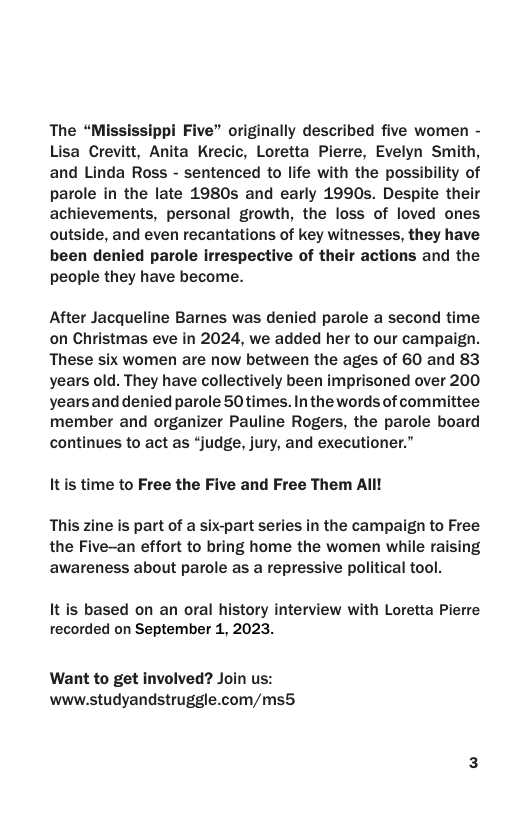
“My name is Loretta Pierre.
My date of birth is June 7, 1965.
And | was born in Jackson, Mississippi,
at the University Medical Center.
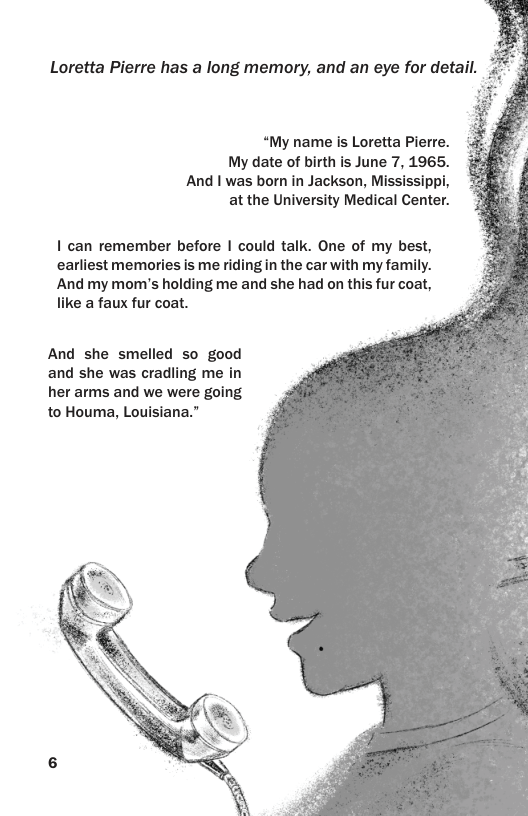
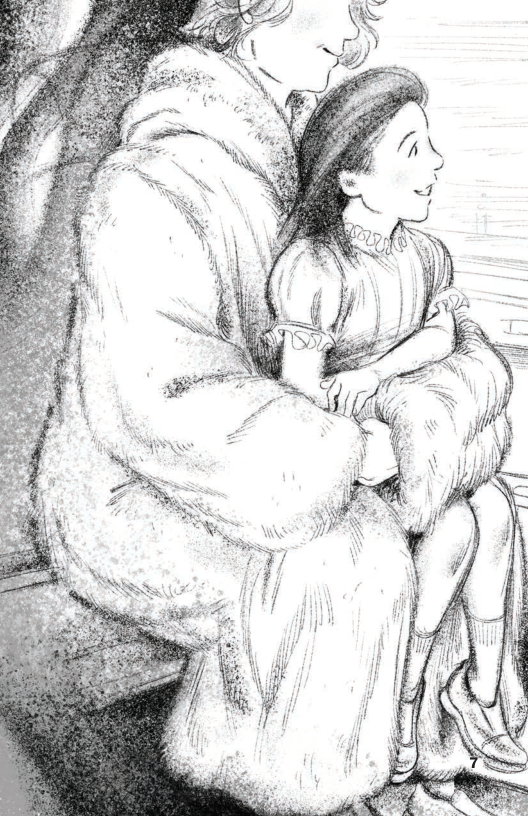
1 can remember before | could talk. One of my best,
earliest memories is me riding in the car with my family.
And my mom's holding me and she had on this fur coat,
like a faux fur coat.
And she smelled so good
and she was cradling me in
her arms and we were going
to Houma, Louisiana.”
One of
the first things
she'll tell you about
is her childhood in
Gulfport, Mississippi.
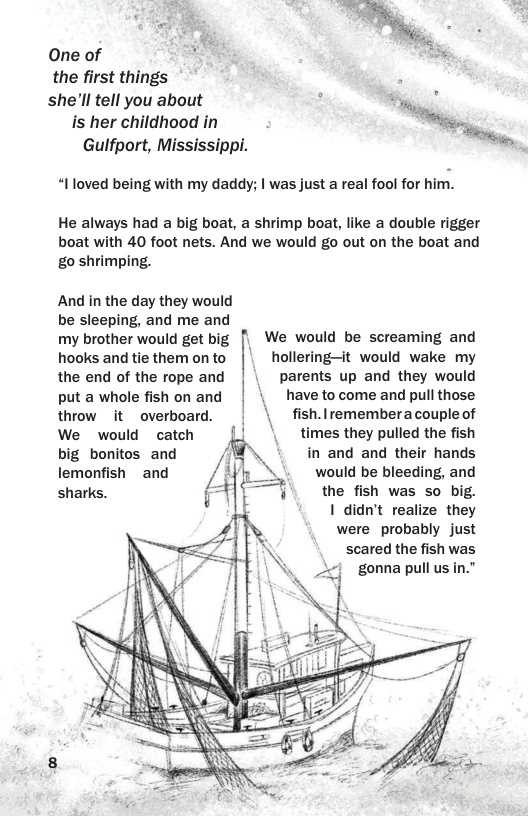
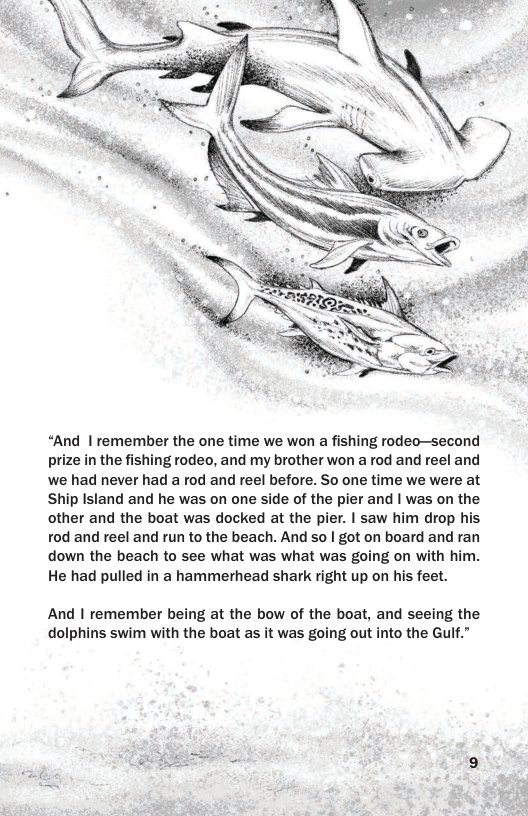
“Iloved being with my daddy; | was just a real fool for him.
He always had a big boat, a shrimp boat, like a double rigger
boat with 40 foot nets. And we would go out on the boat and
go shrimping.
And in the day they would
be sleeping, and me and
my brother would get big || We would be screaming and
hooks and tie them on to hollering—it would wake my
the end of the rope and | | parents up and they would
put a whole fishonand | | have tocome and pull those
throw it~ overboard. fish.Iremembera couple of
We would catch times they pulled the fish
big bonitos and in and and their hands
lemonfish ~ and would be bleeding, and
sharks. the fish was so big.
I didn't realize they
were probably just
scared the fish was
. gonnapull usin.
“And | remember the one time we won a fishing rodeo—second
prize in the fishing rodeo, and my brother won a rod and reel and
we had never had a rod and reel before. So one time we were at
Ship Island and he was on one side of the pier and | was on the
other and the boat was docked at the pier. | saw him drop his
rod and reel and run to the beach. And so | got on board and ran
down the beach to see what was what was going on with him.
He had pulled in a hammerhead shark right up on his feet.
And | remember being at the bow of the boat, and seeing the
dolphins swim with the boat as it was going out into the Gulf.”
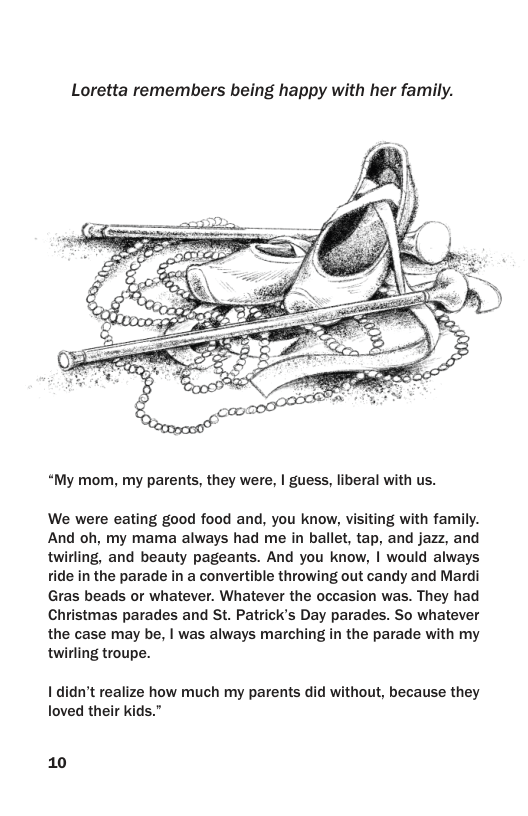
Loretta remembers being happy with her family.
“My mom, my parents, they were, | guess, liberal with us.
We were eating good food and, you know, visiting with family.
And oh, my mama always had me in ballet, tap, and jazz, and
twirling, and beauty pageants. And you know, | would always
ride in the parade in a convertible throwing out candy and Mardi
Gras beads or whatever. Whatever the occasion was. They had
Christmas parades and St. Patrick’s Day parades. So whatever
the case may be, | was always marching in the parade with my
twirling troupe.
I didn’t realize how much my parents did without, because they
Toved their kids.”
10
OPENING SOO!
but buy now from the fruck
11 Gon Swim We el
Lostan, caass, nsw, suumr.
PIERRE'S SEAFOOD W
adway across from Kellweod SPECIAL
Oysters .. $730
_PIERRE'S SEAFOOD
“I opened my own business when | was eight years old.
My daddy owned a seafood market in Gulfport. | opened my own
business inside it and | sold candy and potato chips. Me and
my brother had two pinball machines, two drink machines, and
a snowcone machine. So that was our business inside of the
seafood market.”
AUNIVERGEaLY
sELE
"SPECIAL SHiRiTp $199
OYSTERS COL, T
$'| 1 ’ CATFISH ... ax
[:u:: ;‘;:' PIERRE’S SEAFOOD
PIERRE'S
SEAFOOD
11
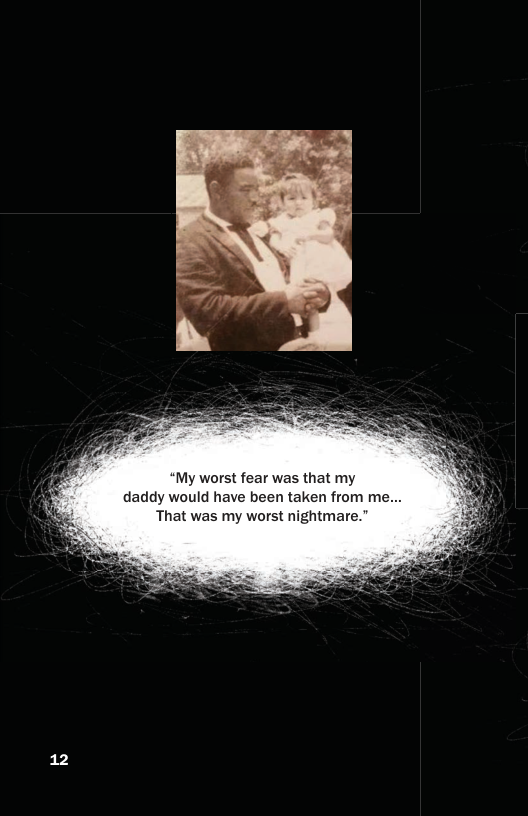
My worst fear was that my
daddy would have been taken from m
That was my worst nightmare.”
12
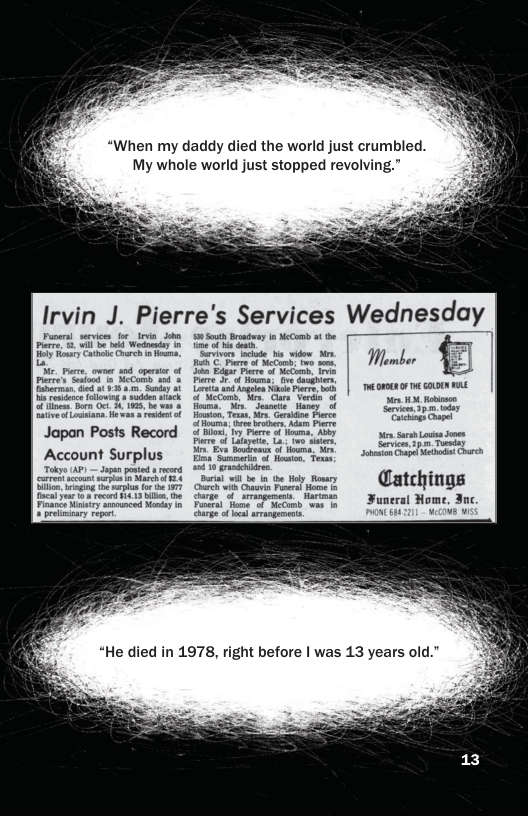
‘When my daddy died the world just crumbled.
My whole world just stopped revolving.”
JEoT——
Japan Posts Record 5 i 1 S b
Account Surplus
o il it e oy Qatchings
KL red © Funeral Home, 3nc
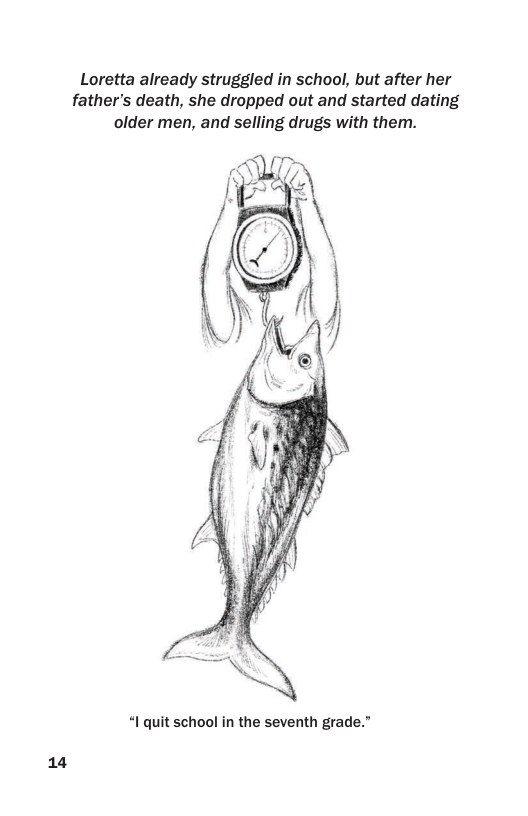
Loretta already struggled in school, but after her
father's death, she dropped out and started dating
older men, and selling drugs with them.
“I quit school in the seventh grade.”
14
“We just really just started doing whatever we wanted to do.
You know, we were smoking weed.
When | was maybe 13 | got a boyfriend. He was older than me,
like 23 years old. And then when | was 14, | met Sherman.
Eventually | moved in with him.
He sold dope on the side. | sold the dope while he was at school
and work. | leamed everything | needed to know about that
from him. I already knew how to weigh the stuff because | had
worked in the seafood market. So | was good at weighing stuff.
And then | was a good business person from working in the
seafood markets, too.”
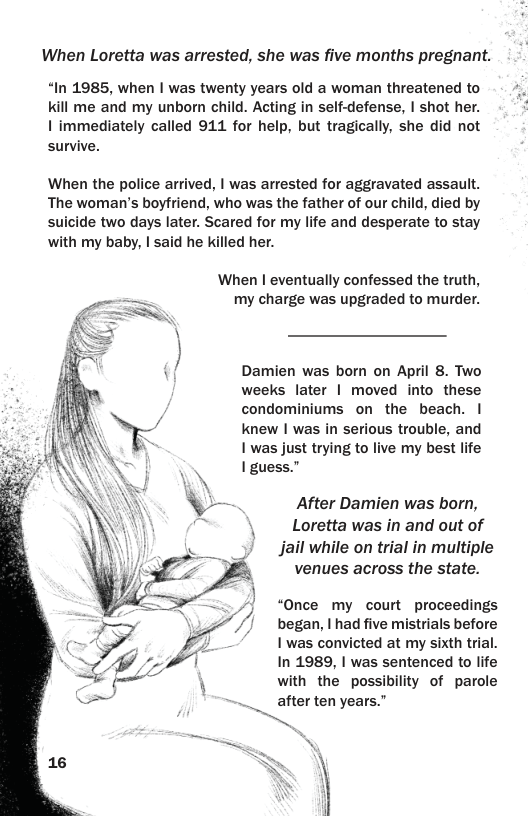
When Loretta was arrested, she was five months pregnant.
“In 1985, when | was twenty years old a woman threatened to
kill me and my unborn child. Acting in self-defense, | shot her.
| immediately called 911 for help, but tragically, she did not
survive.
When the police arrived, | was arrested for aggravated assault.
The woman’s boyfriend, who was the father of our child, died by
suicide two days later. Scared for my life and desperate to stay
with my baby, | said he killed her.
When | eventually confessed the truth,
my charge was upgraded to murder.
Damien was born on April 8. Two
weeks later | moved into these
condominiums on the beach. |
knew | was in serious trouble, and
1 was just trying to live my best life
I guess.”
After Damien was born,
Loretta was in and out of
Jail while on trial in muitiple
venues across the state.
“Once my court proceedings
began, | had five mistrials before
I was convicted at my sixth trial.
In 1989, | was sentenced to life
with the possibility of parole
after ten years.”
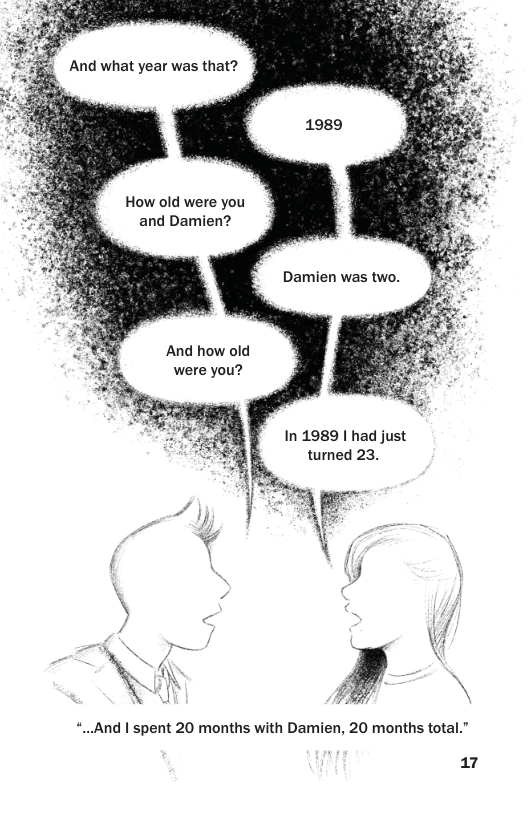
And what year was that? §
How old were you
and Damien?
And how old
were you?
In 1989 | had just
tumed 23.
iy
And | spent 20 months with Damien, 20 months total.”
17
Loretta had already served a year and a half in jail by
the time she arrived at Central Mississippi Correctional
Facility. Credited with this time, she believed she
had only eight and a half years before she would be
released on parole.
“I was sentenced to life with the possibility of parole
after 10 years.
1 wasn't sentenced to die in
the prison.”
Life inside was difficult and Loretta was incredibly
isolated during her first years in prison.
“They designed a whole new custody level for me. It was called
D custody. They said it was approved by the legislature. | was
the first person to go in there. | couldn't have a visit, phone
calls, or canteen for a whole year.
[After that] | saw Damien a lot, except for that one time |
couldn't see him for a whole year. And when | tell you Damien
was bouncing off the walls, and then on the phone he was
calm, cool and collected. | mean, that's just how much time
had gone by. And how much he changed.”
“I had been denied parole for the first time in October 1997.
Then I got A custody.
1 was able to go to the family house. So my mom, Damien,
and my sister come and stay with me 47 times at the family
house. We would go from Monday to Friday or Friday to Monday.
Sometimes it would just be me and my mom or sometimes
it'd be just me and Damien. And so we spent some really good
quality time over there. Because they had a little apartment and
we could grill outside we could slip and slide, play basketball.
They had playground equipment, you know, for Damien.”
Family separation is a key cruelty of prisons.
When the Department of Corrections moved Loretta,
they made it more difficult for her family to see her in
the few ways they were still able.
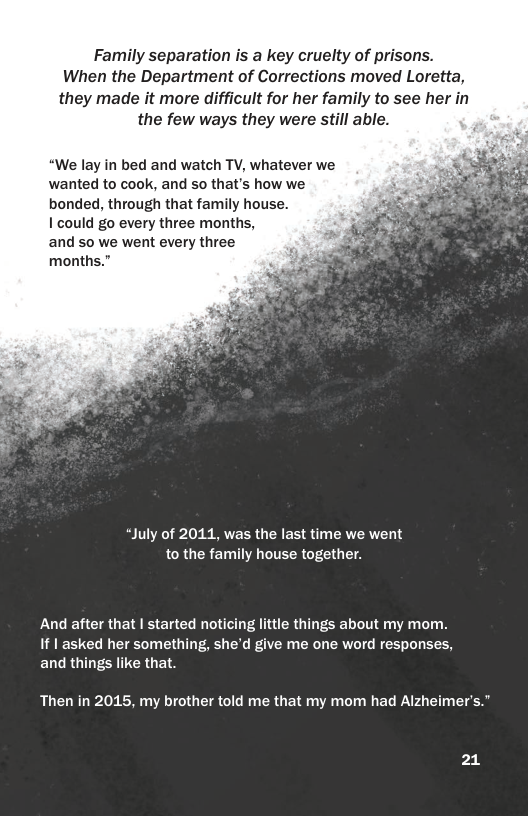
“We lay in bed and watch TV, whatever we
wanted to cook, and so that's how we
bonded, through that family house.
I could go every three months,
and so we went every three
months.”
“July of 2011, was the last time we went
to the family house together.
And after that | started noticing little things about my mom.
If | asked her something, she’d give me one word responses,
and things like that.
Then in 2015, my brother told me that my mom had Alzheimer's.”
21
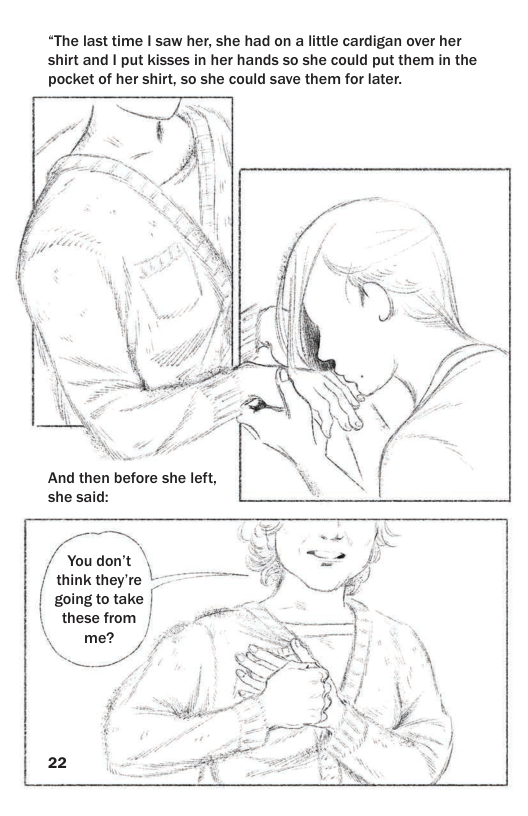
“The last time | saw her, she had on a little cardigan over her
shirt and | put kisses in her hands so she could put them in the
pocket of her shirt, so she could save them for later.
And then before she left,
she said:
think they're -
going to take |
| these from |
22
| they're not going
| to take them.
I'm gonna tell you something about my mama: her entire world
revolved around her children.”
23
Loretta has been up for parole 14 times.
Each time, her hopes have been raised and plans have
been laid. Each time, she tries something different, but
the result is always the same.
“I was thinking that if | didn’t make it | was probably going to
receive about a year setoff before | could see the board again.
But | was the first woman to receive a 5 year setoff.
I tried to not get any more RVRs (Rule Violation Reports).
I tried to not get any RVRs, period. | went 11 years without
getting any paperwork. That didn't change anything.
I mean, nothing I've tried worked.
A new governor came in and ordered the parole board to
bring everybody who had been set off for more than a certain
amount of time to be brought back up for parole. So they
brought me in 16 months early. 'm thinking, it's got to be a
sign. It can't be anything bad. You know, if they're bringing me
up early, surely they're gonna let me go, right?
So | asked my mama to go to North Mississippi, she went to
Horn Lake and rented me a brand new townhouse and nobody
had ever lived in it. And it was on Joy Boulevard. And I'm
thinking oh, it gotta be a sign, Joy Boulevard, it's gotta be a
sign, 'm fixing to go home. Then when | went for parole, | want. *
to say | got a three year setoff. s
Ivenever
met my
grandchildren.
I've seen the
pictures, I've
heard of them.
But you know,
I've never
actually met
them.
. Damien's been
" waiting for me to
come home. And, you
know, I feel like he
thinks it's my fault that
I can't come. But 'm
not here by choice.
I'm here by force.”
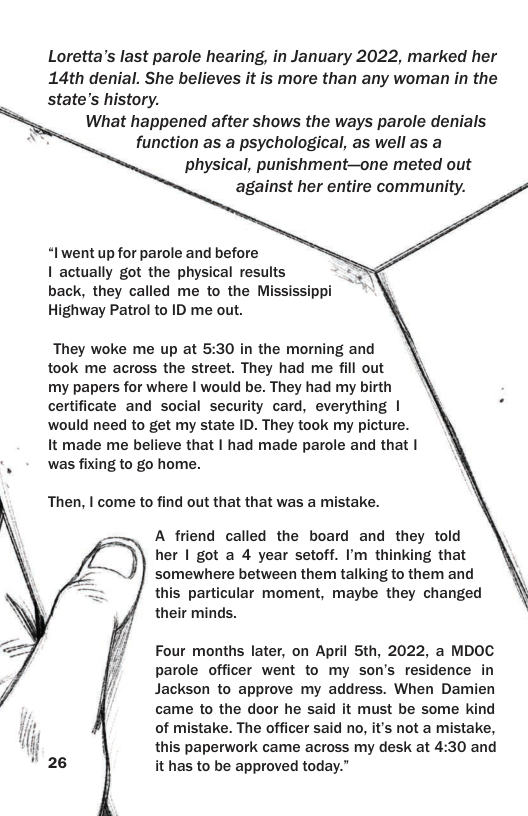
Loretta’s last parole hearing, in January 2022, marked her
14th denial. She believes it is more than any woman in the
state's history.
What happened after shows the ways parole denials
function as a psychological, as well as a
physical, punishment—one meted out
against her entire community.
“Iwent up for parole and before
1 actually got the physical results
back, they called me to the Mississippi
Highway Patrol to ID me out.
They woke me up at 5:30 in the morning and
took me across the street. They had me fill out
my papers for where | would be. They had my birth
certificate and social security card, everything |
would need to get my state ID. They took my picture.
It made me believe that | had made parole and that |
. was fixing to go home.
Then, | come to find out that that was a mistake.
A friend called the board and they told
her | got a 4 year setoff. I'm thinking that
somewhere between them talking to them and
this particular moment, maybe they changed
their minds.
Four months later, on April 5th, 2022, a MDOC
parole officer went to my son's residence in
Jackson to approve my address. When Damien
came to the door he said it must be some kind
of mistake. The officer said no, it's not a mistake,
this paperwork came across my desk at 4:30 and
it has to be approved today.”
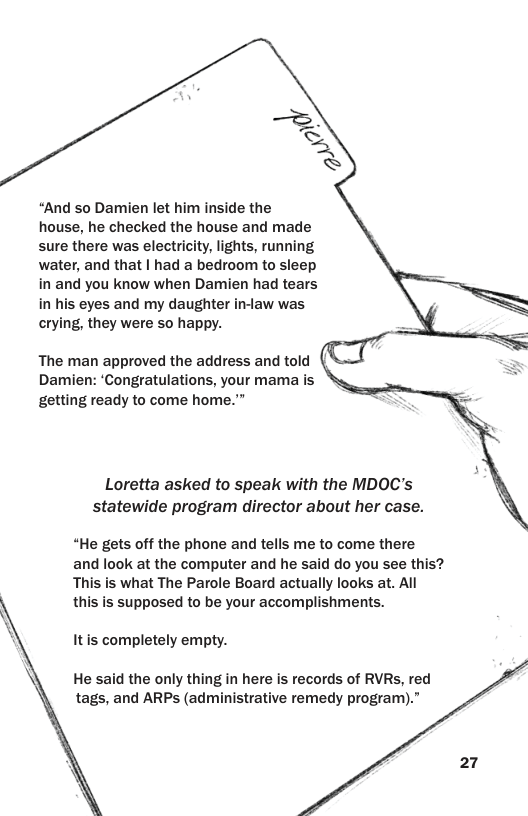
“And so Damien let him inside the
house, he checked the house and made
sure there was electricity, lights, running
water, and that | had a bedroom to sleep
in and you know when Damien had tears
in his eyes and my daughter in-law was
crying, they were so happy.
The man approved the address and told
Damien: ‘Congratulations, your mama is
getting ready to come home.””
Loretta asked to speak with the MDOC’s
statewide program director about her case.
“He gets off the phone and tells me to come there
and look at the computer and he said do you see this?
This is what The Parole Board actually looks at. All
this is supposed to be your accomplishments.
Itis completely empty.
He said the only thing in here is records of RVRs, red
tags, and ARPs (administrative remedy program).”
Loretta Pierre first met Anita Krecic, another of the
Mississippi Five, when she was pregnant in jail. They
even shared a lawyer. Nearly four decades have gone by.
In 2022, they were both denied parole along with several
others of the Five. It was their 10th and 14th denials
respectively.
28
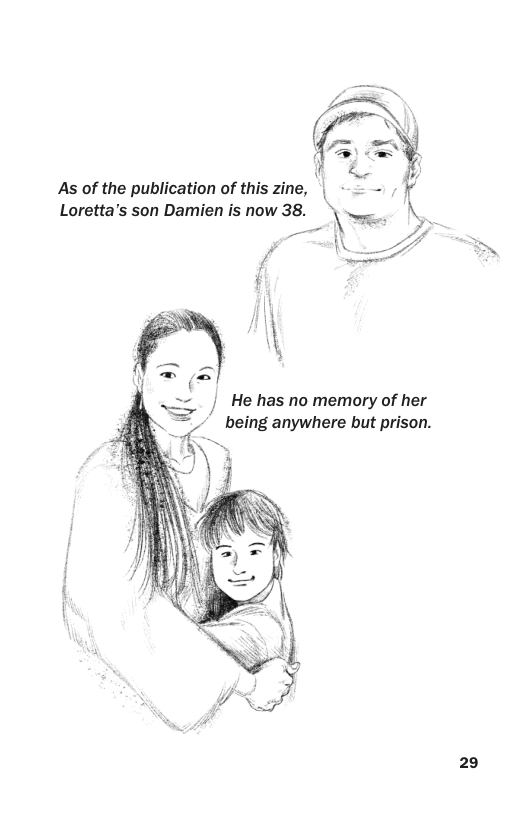
As of the publication of this zine, |
\
Loretta’s son Damien is now 38. \‘
=
/ o
| He has no memory of her
being anywhere but prison.
29
Loretta’s experiences with the opaque and
dehumanizing parole process mirror others who have
been denied. After 36 years of incarceration and 14
denials, all Loretta is left with is a lot of questions.
“What is the point f they are never gonna let me go?
I don't understand how they can just keep me here like this
because | was not sentenced to die here in this prison.
1 was sentenced with the possibility for parole after 10 years.
And considering all of the people they have let out of here,
Idon't know how they can do any different.”
30
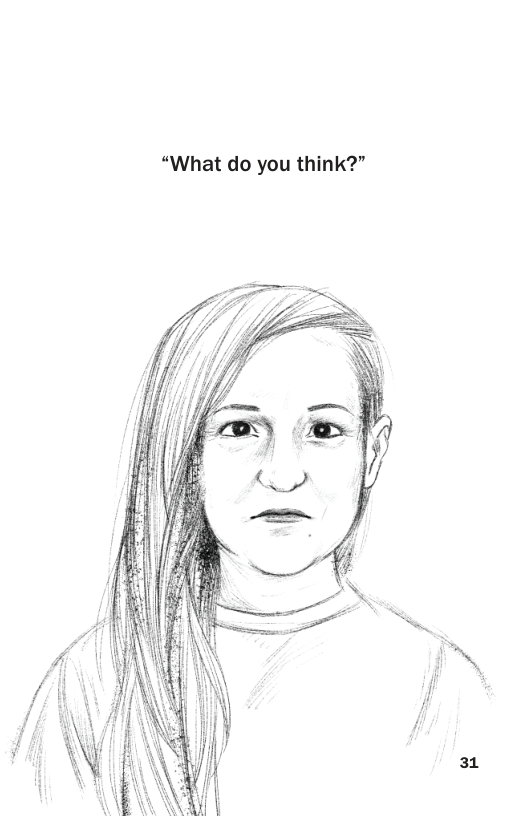
“What do you think?”
WHAT CAN
YOU DO?
Learn more about how you can get involved in the
campaign to Free the Mississippi Five:
https://www.studyandstruggle.com/ms5
Write to Loretta:
Loretta Pierre, #71843
DCF
3800 Co Rd 540
Greenwood, MS 38930