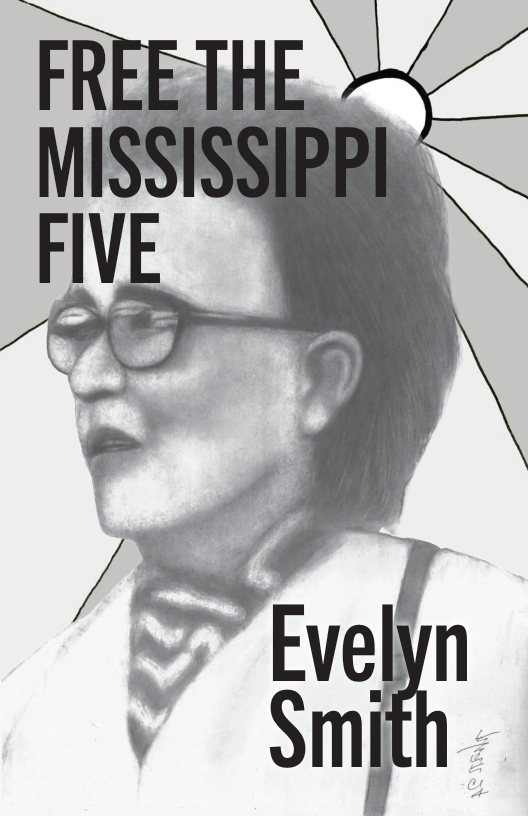
Free the Mississippi 5! – Evelyn Smith
Web PDF • Imposed PDF• Raw TXT (OCR)

![During her 32 years of incarceration, Evelyn has participated in countless programs and jobs. “I worked in a gym for a long time where we did special programs for seniors. It was home away from home, but it was a powerful, bittersweet home away from home. For several years | participated in a quilting class where we stitched quilts for the homeless, disabled, abused, and elderly. This benefited the local folks in Jackson. [Working for Mississippi Prison Industries], we take thread off of spools for Johnson & Johnson, it’s called suture thread. We have to clean the spools and take the thread off. We have a group that sits at the machine and sterilizes them and gets ready to pack them and sell them back to Johnson & Johnson. They started us at 26 cents an hour and we were not satisfied with that so we filed grievances. We now make 50 cents an hour. | have met some awesome people. | could go on and on. | enjoy the people around me. | come in from work and they all say ‘Hi, Mamma E.” The state of Mississippi established the Mississippi Prison Industries Corporation (MPIC) in 1990 through legislation; the nonprofit was supposed to provide incarcerated people with “meaningful job training”; MPIC was closed in July 2024 after a state review hoard determined that it was not providing that training. Indeed, MPIC itself reported that only 1% of incarcerated individuals were enrolled in a program in 2021, and the state board noted the offered trainings were not in fields with opportunities in Mississippi. See Ashleigh Dye, “Ineffective Mississippi Prison Industries on the Chopping. Block After Scathing Report” Prison Legal News, June 1, 2022, https:// whvwprisonlegalnews.org/news/ 2022/Jun/1/neffective-mississipplprison- Industries chopping-blockcaterscathingeport/. 17](free-the-mississippi-5-evelyn-smith-campaign-to-free-the-mississippi-5 9.png)
![Evelyn has been denied parole by the board seven times. The last was a five year set-off, when she will be 85 years old. - “They asked me, ‘If we granit you parole, what would you do and where would you go?’ Then they asked me, ‘Did | think 1 was fit for society?’ | said yes. But they don’t look at it like that. They said the same thing [as the other times]: the serious nature of the crime, insufficient time served. 1 was disturbed. | was hurt. _ But when | went to prayer | said, ‘Okay lord, when it is my time to go lam gonna go. 1am okay with that.’ - 1 got devastated in 2022 N\ when they set me off five years.”](free-the-mississippi-5-evelyn-smith-campaign-to-free-the-mississippi-5 10.png)
![When Evelyn was sentenced to life with the possibility of parole, she had hope that the judge—and maybe others—believed one day she might be worthy of a second chance. “I have reached out to [the victim’’s family]. | wrote letters. When my older brother died, he was at the funeral hall that the gir’’s mom owned. We communicated and everything. And when my grandmother died, we were at the funeral home and it was the same thing. It was: ‘How are you Evelyn’, and ‘Is there this and that we can do?’ This s the type of person she is. She is a caring person.” 16](free-the-mississippi-5-evelyn-smith-campaign-to-free-the-mississippi-5 16.png)


cover portrait by phan
illustrations by abby lee
text by the MS5 zine team
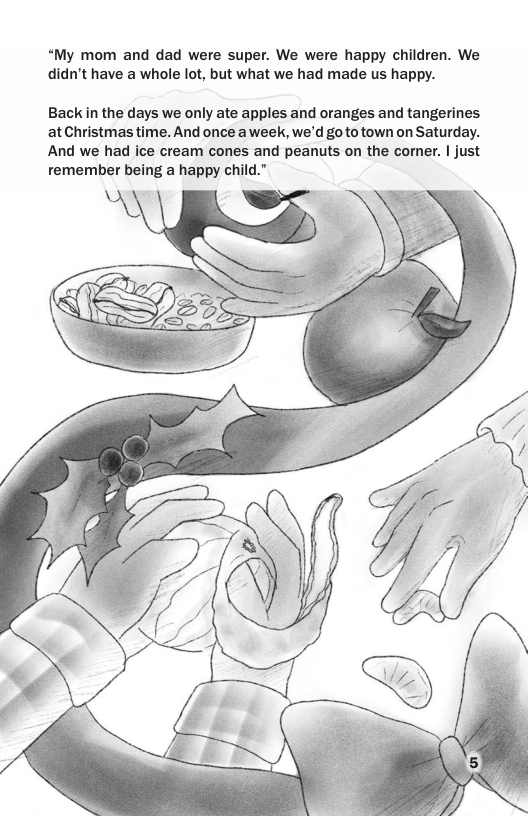
“My mom and dad were super. We were happy children. We
didn't have a whole lot, but what we had made us happy.
Back in the days we only ate apples and oranges and tangerines
at Christmas time. And once a week, we’d g0 to town on Saturday.
And we had ice cream cones and peanuts on the coner. | just
remember being a happy child.”
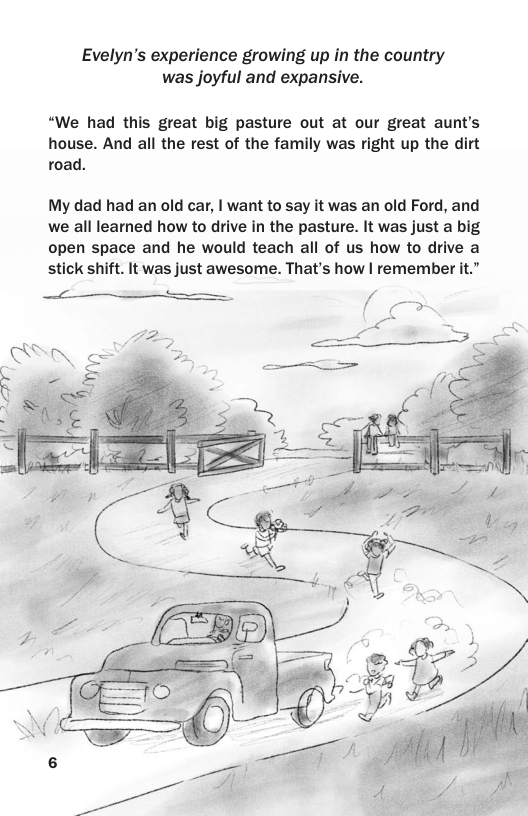
Evelyn’s experience growing up in the country
was joyful and expansive.
“We had this great big pasture out at our great aunt’s
house. And all the rest of the family was right up the dirt
road.
My dad had an old car, | want to say it was an old Ford, and
we all learned how to drive in the pasture. It was just a big
open space and he would teach all of us how to drive a
stick shift. It was just awesome. That's how | remember it.”
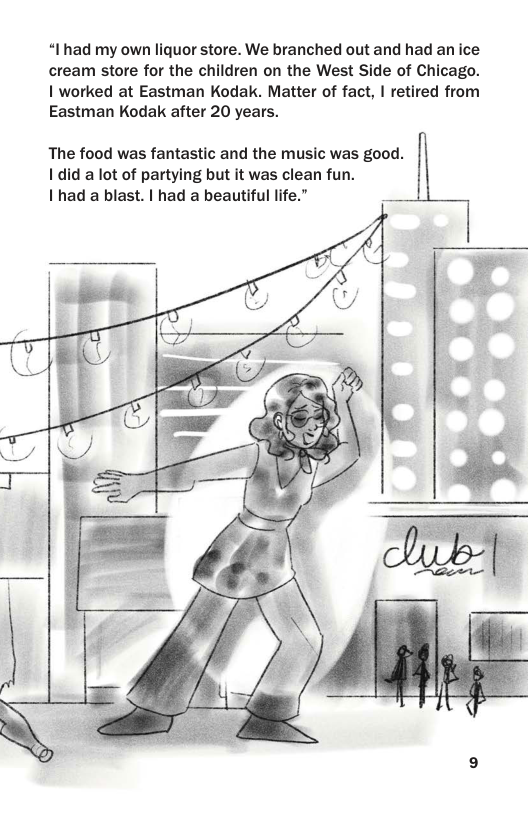
“I'had my own liquor store. We branched out and had an ice
cream store for the children on the West Side of Chicago.
| worked at Eastman Kodak. Matter of fact, | retired from
Eastman Kodak after 20 years.
The food was fantastic and the music was good.
1did a lot of partying but it was clean fun.
I'had a blast. | had a beautiful life.”
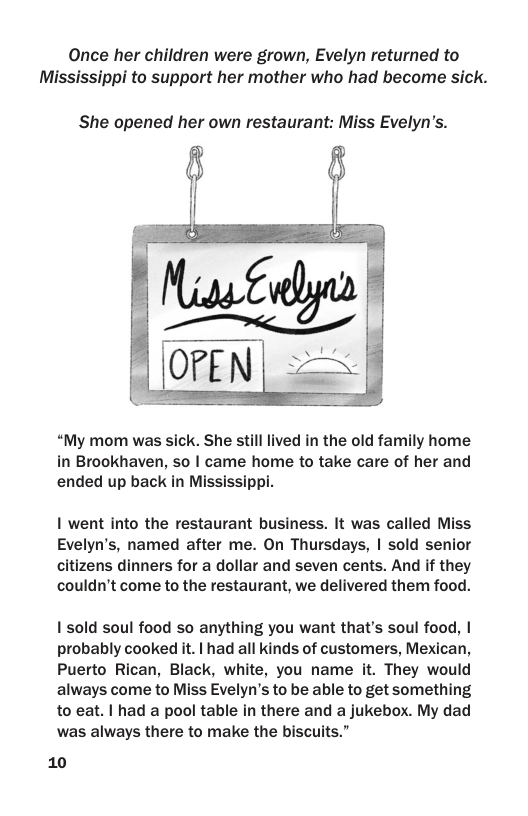
Once her children were grown, Evelyn returned to
Mississippi to support her mother who had become sick.
She opened her own restaurant: Miss Evelyn's.
“My mom was sick. She still lived in the old family home
in Brookhaven, so | came home to take care of her and
ended up back in Mississippi.
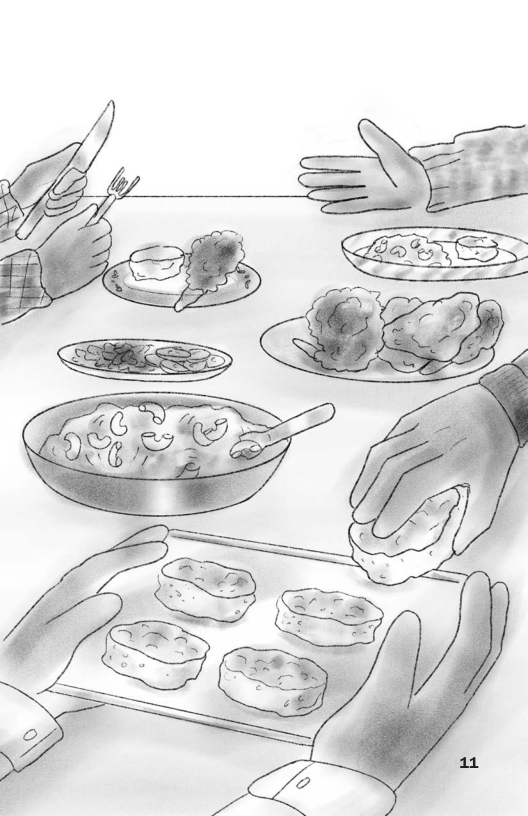
| went into the restaurant business. It was called Miss
Evelyn’s, named after me. On Thursdays, | sold senior
citizens dinners for a dollar and seven cents. And if they
couldn’t come to the restaurant, we delivered them food.
1 sold soul food so anything you want that's soul food, |
probably cooked it. | had all kinds of customers, Mexican,
Puerto Rican, Black, white, you name it. They would
always come to Miss Evelyn's to be able to get something
to eat. | had a pool table in there and a jukebox. My dad
was always there to make the biscuits.”
10
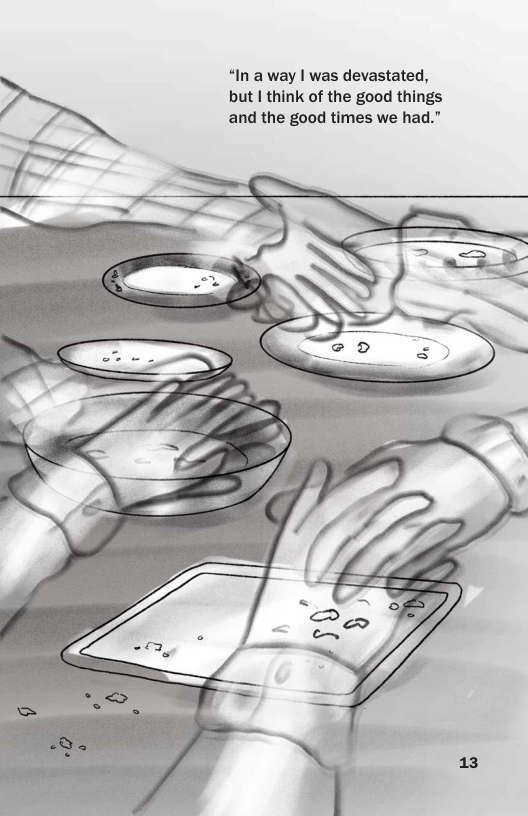
“In a way | was devastated,
but | think of the good things
and the good times we had.”
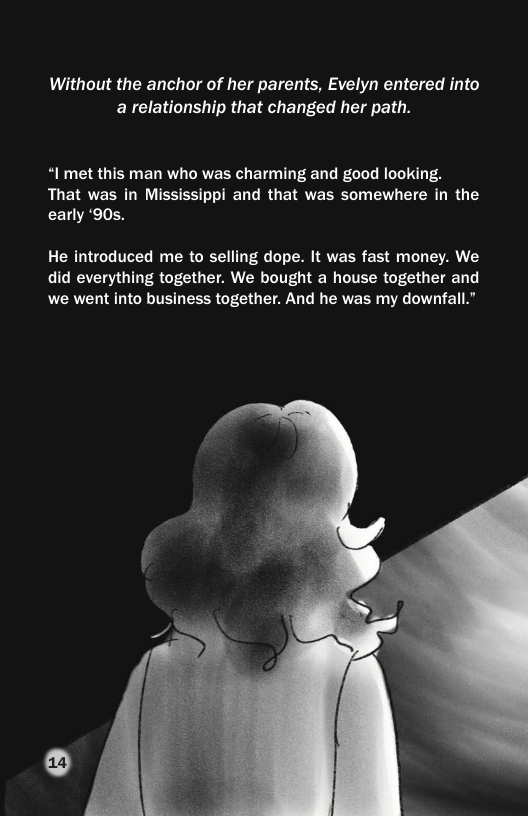
Without the anchor of her parents, Evelyn entered into
a relationship that changed her path.
“I met this man who was charming and good looking.
That was in Mississippi and that was somewhere in the
early ‘90s.
He introduced me to selling dope. It was fast money. We
did everything together. We bought a house together and
we went Into business together. And he was my downfall.”
During her 32 years of incarceration, Evelyn has
participated in countless programs and jobs.
“I worked in a gym for a long time where we did special
programs for seniors. It was home away from home, but it was
a powerful, bittersweet home away from home. For several
years | participated in a quilting class where we stitched
quilts for the homeless, disabled, abused, and elderly. This
benefited the local folks in Jackson.
[Working for Mississippi Prison Industries], we take thread off
of spools for Johnson & Johnson, it's called suture thread. We
have to clean the spools and take the thread off. We have a
group that sits at the machine and sterilizes them and gets
ready to pack them and sell them back to Johnson & Johnson.
They started us at 26 cents an hour and we were not satisfied
with that so we filed grievances. We now make 50 cents
an hour.
| have met some awesome people. | could go on and on. |
enjoy the people around me. | come in from work and they all
say ‘Hi, Mamma E.”
The state of Mississippi established the Mississippi Prison
Industries Corporation (MPIC) in 1990 through legislation;
the nonprofit was supposed to provide incarcerated people
with “meaningful job training”; MPIC was closed in July 2024
after a state review hoard determined that it was not providing
that training. Indeed, MPIC itself reported that only 1% of
incarcerated individuals were enrolled in a program in 2021,
and the state board noted the offered trainings were not in
fields with opportunities in Mississippi.
See Ashleigh Dye, “Ineffective Mississippi Prison Industries on the Chopping.
Block After Scathing Report” Prison Legal News, June 1, 2022, https://
whvwprisonlegalnews.org/news/ 2022/Jun/1/neffective-mississipplprison-
Industries chopping-blockcaterscathingeport/. 17
Evelyn has been denied parole by the board seven
times. The last was a five year set-off, when she will
be 85 years old. -
“They asked me, ‘If we granit you parole, what would you do
and where would you go?' Then they asked me, ‘Did | think
1 was fit for society?' | said yes.
But they don’t look at it like that. They said the same
thing [as the other times]: the serious nature of the crime,
insufficient time served.
1 was disturbed. | was hurt.
_ But when | went to prayer | said,
‘Okay lord,
when it is my time to go
lam gonna go.
1am okay with that.’ -
1 got devastated in 2022 N\
when they set me off five years.”
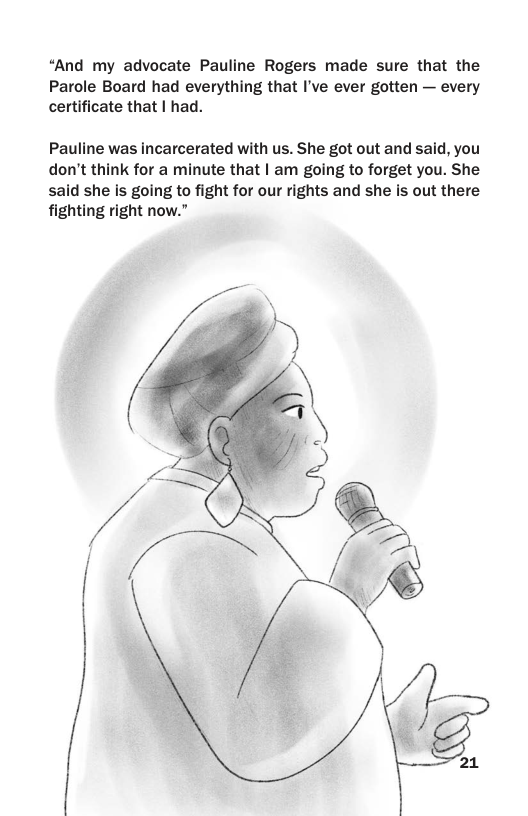
“And my advocate Pauline Rogers made sure that the
Parole Board had everything that I've ever gotten — every
certificate that | had.
Pauline was incarcerated with us. She got out and said, you
don't think for a minute that | am going to forget you. She
said she Is going to fight for our rights and she is out there
fighting right now.”
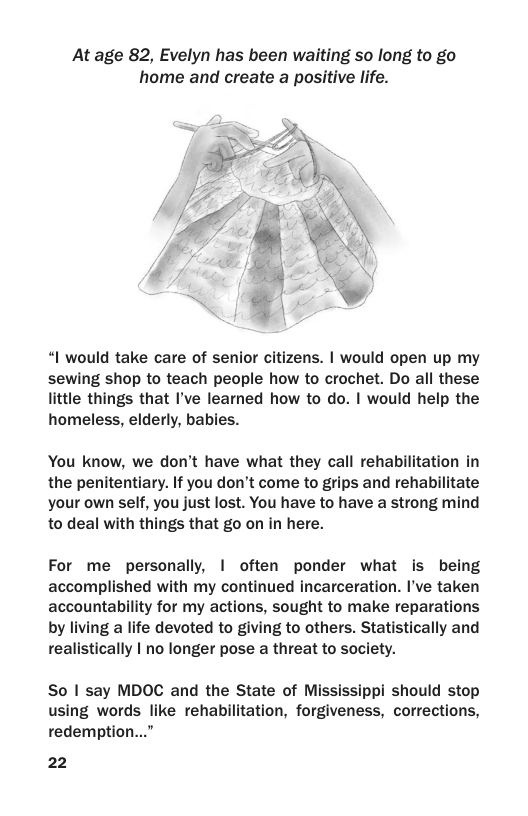
At age 82, Evelyn has been waiting so long to go
home and create a positive life.
“I would take care of senior citizens. | would open up my
sewing shop to teach people how to crochet. Do all these
little things that I've learned how to do. | would help the
homeless, elderly, babies.
You know, we don’t have what they call rehabilitation in
the penitentiary. If you don't come to grips and rehabilitate
your own self, you just lost. You have to have a strong mind
to deal with things that go on in here.
For me personally, | often ponder what is being
accomplished with my continued incarceration. I've taken
accountability for my actions, sought to make reparations
by living a life devoted to giving to others. Statistically and
realistically | no longer pose a threat to society.
So | say MDOC and the State of Mississippi should stop
using words like rehabilitation, forgiveness, corrections,
redemption...”
22
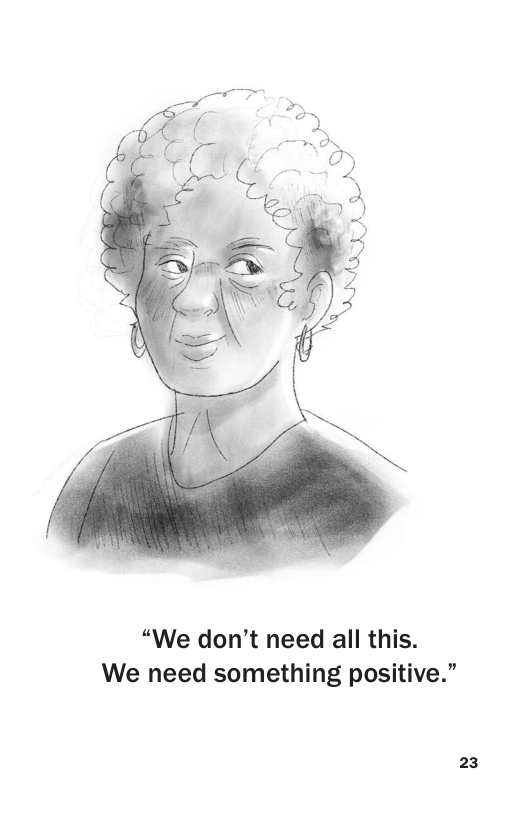
“We don’t need all this.
We need something positive.”
23
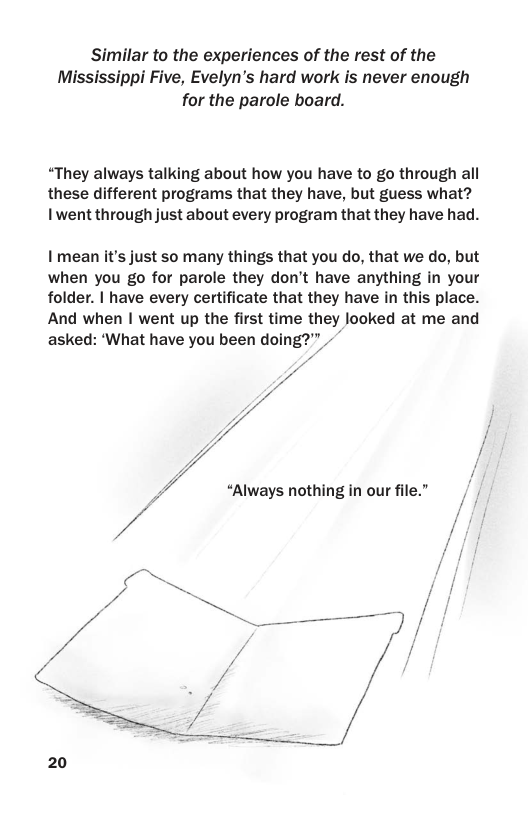
Similar to the experiences of the rest of the
Mississippi Five, Evelyn's hard work is never enough
for the parole board.
“They always talking about how you have to go through all
these different programs that they have, but guess what?
Iwent through just about every program that they have had.
I'mean it's just so many things that you do, that we do, but
when you go for parole they don't have anything in your
folder. | have every certificate that they have in this place.
And when | went up the first time they looked at me and
asked: ‘What have you been doing?”
4
“Always nothing in our file.”
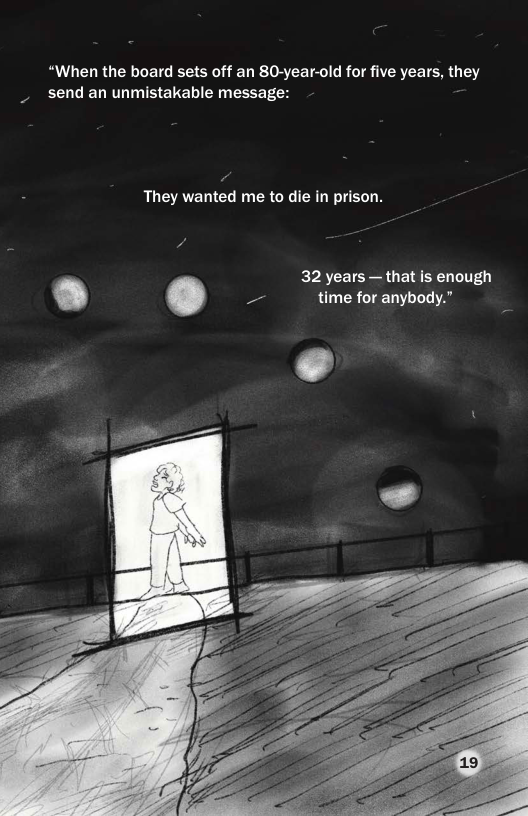
“When the board sets off an 80-year-old for five years, they
_ send an unmistakable message:
They wanted me to die in prison.
32 years — that is enough
When Evelyn was sentenced to life with the possibility
of parole, she had hope that the judge—and maybe
others—believed one day she might be worthy of a
second chance.
“I have reached out to [the victim'’s family]. | wrote letters.
When my older brother died, he was at the funeral hall that
the gir’'s mom owned. We communicated and everything.
And when my grandmother died, we were at the funeral
home and it was the same thing.
It was: ‘How are you Evelyn’, and ‘Is there this and that we
can do?' This s the type of person she is. She is a caring
person.”
16
“Is that what led to you
being incarcerated?”
“Yes, | killed a girl.
I regret what | did.
I can't bring her back.
It's a hurt and loss that | can never undo.”
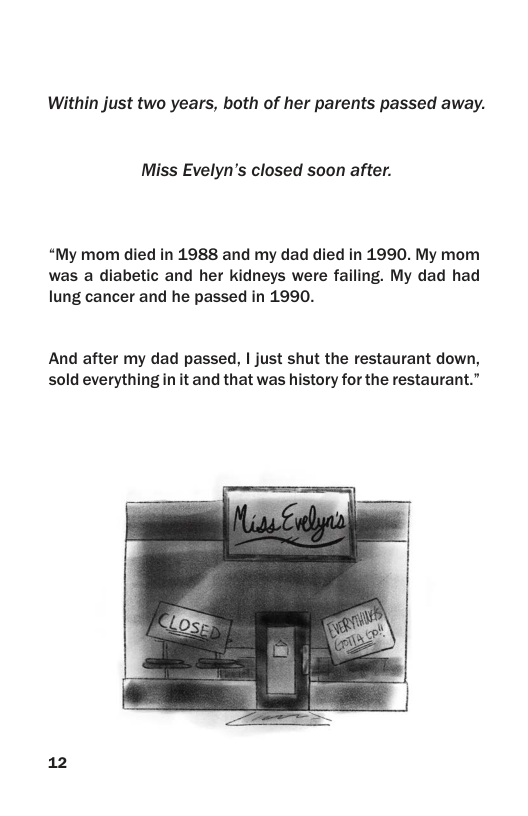
Within just two years, both of her parents passed away.
Miss Evelyn'’s closed soon after.
“My mom died in 1988 and my dad died in 1990. My mom
was a diabetic and her kidneys were failing. My dad had
lung cancer and he passed in 1990.
And after my dad passed, | just shut the restaurant down,
sold everything n it and that was history for the restaurant.”
12
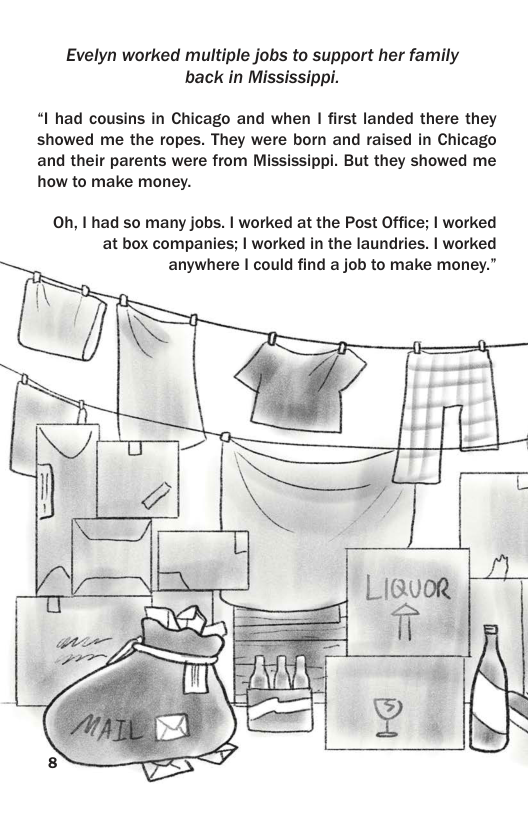
Evelyn worked multiple jobs to support her family
back in Mississippi.
“I had cousins in Chicago and when I first landed there they
showed me the ropes. They were born and raised in Chicago
and their parents were from Mississippi. But they showed me
how to make money.
Oh, I had so many jobs. | worked at the Post Office; | worked
at box companies; | worked in the laundries. | worked
anywhere | could find a job to make money.”
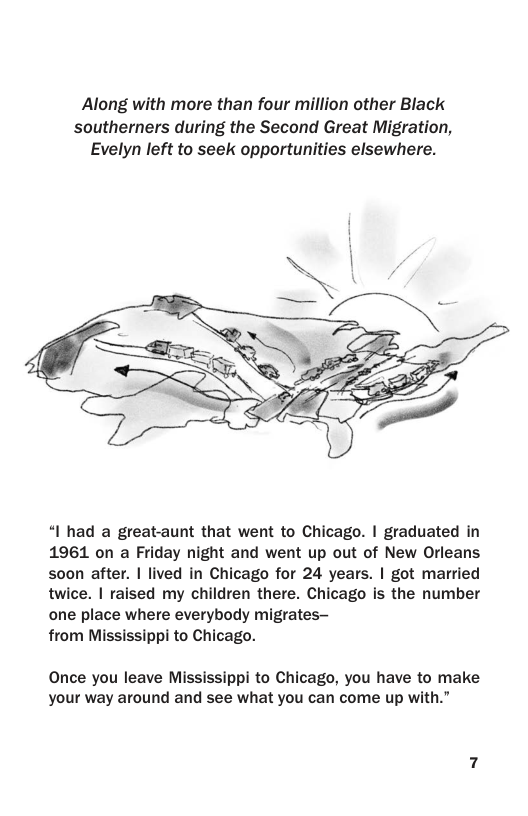
Along with more than four million other Black
southerners during the Second Great Migration,
Evelyn left to seek opportunities elsewhere.
“I had a great-aunt that went to Chicago. | graduated in
1961 on a Friday night and went up out of New Orleans
soon after. | lived in Chicago for 24 years. | got married
twice. | raised my children there. Chicago is the number
one place where everybody migrates—
from Mississippi to Chicago.
Once you leave Mississippi to Chicago, you have to make
your way around and see what you can come up with.”
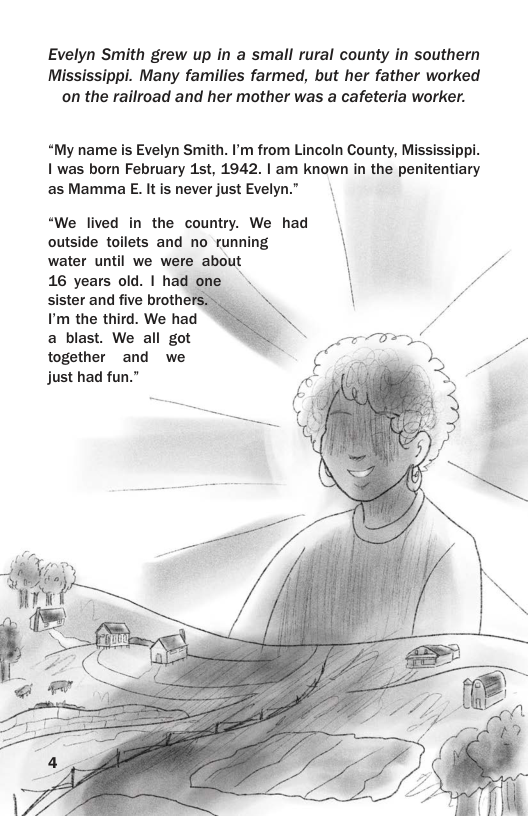
Evelyn Smith grew up in a small rural county in southern
Mississippi. Many families farmed, but her father worked
on the railroad and her mother was a cafeteria worker.
“My name is Evelyn Smith. P'm from Lincoln County, Mississippi.
1 was born February 1st, 1942. | am known in the penitentiary
as Mamma E. It is never just Evelyn.”
“We lived in the country. We had |
outside toilets and no running
water until we were about \
16 years old. | had R
sister and five brother
I'm the third. We had
a blast. We all got
together and we
/
IS
just had fun.” 4 R
The “Mississippi Five” originally described five women -
Lisa Crevitt, Anita Krecic, Loretta Pierre, Evelyn Smith,
and Linda Ross - sentenced to life with the possibility of
parole in the late 1980s and early 1990s. Despite their
achievements, personal growth, the loss of loved ones
outside, and even recantations of key witnesses, they have
been denied parole irrespective of their actions and the
people they have become.
After Jacqueline Barnes was denied parole a second time
on Christmas eve in 2024, we added her to our campaign.
These six women are now between the ages of 60 and 83
years old. They have collectively been imprisoned over 200
yearsand denied parole 50 times. In the words of committee
member and organizer Pauline Rogers, the parole board
continues to act as “judge, jury, and executioner.”
Itis time to Free the Five and Free Them All!
This zine is part of a six-part series in the campaign to Free
the Five-an effort to bring home the women while raising
awareness about parole as a repressive political tool.
It is based on an oral history interview with Evelyn Smith
recorded on October 17th, 2023.
Want to get involved? Join us:
www.studyandstruggle.com/ms5
WHAT CAN
YOU DO?
Learn more about how you can get involved in the
campaign to Free the Mississippi Five:
https://www.studyandstruggle.com/ms5
Write to Mamma E:
Evelyn Smith, #77975
CMCF 720
PO Box 88550
Pearl, MS 39288