Circumventing Prison Tech Censorship
Web PDF • Imposed PDF• Raw TXT (OCR)



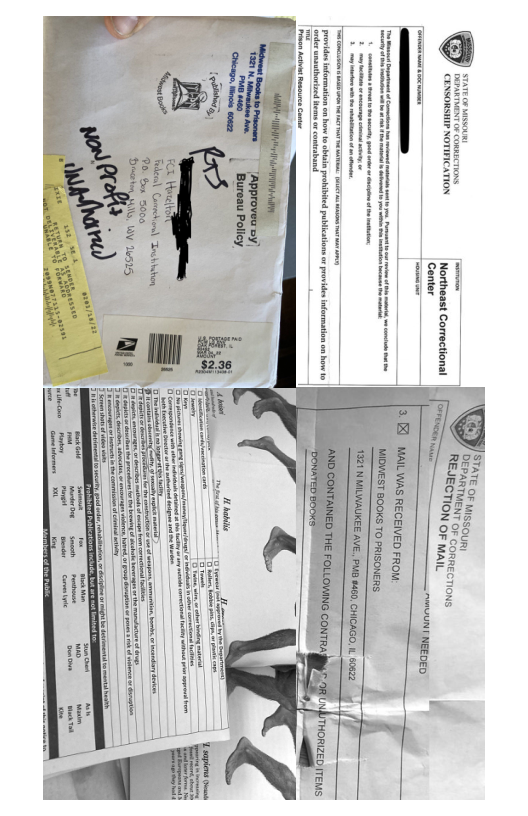
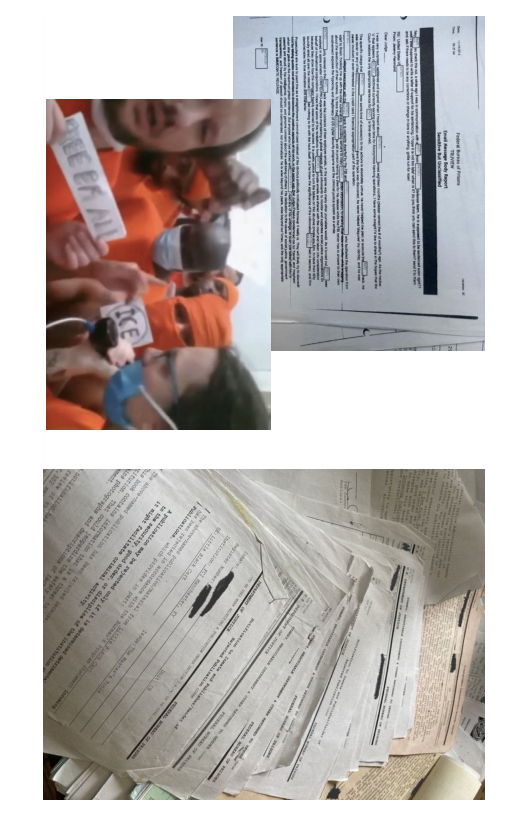
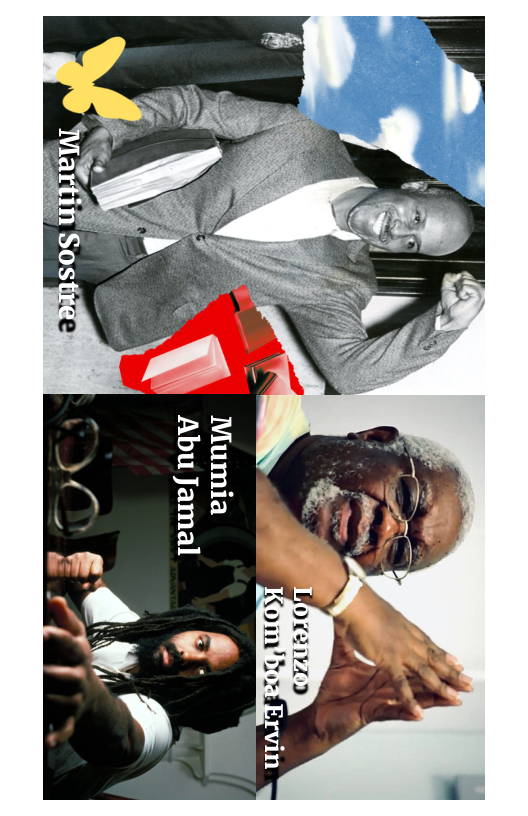
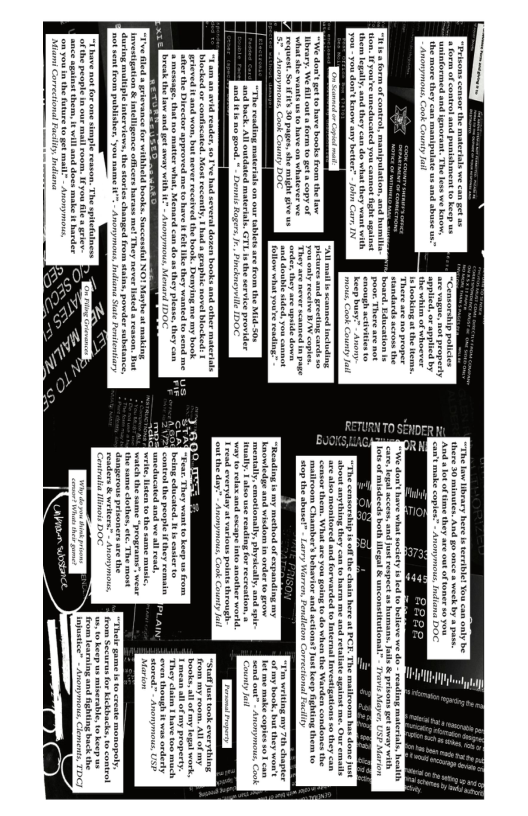
![e Major Cop City / Atlanta Police Foundation financier o Fulton County Jail - smart bands report biometrics and location data e Contacts for “repeat offenders” to wear same bands, alitrix Score” algo determines violations. 95% black Integrated into Fusus Al camera network for real time tracking "We envision a future where technology and (%] ethics go hand in hand, creating a safer, more mu just society for all” - Justin Hawkins, CEO](circumventing-prison-tech-censorship-midwest-books-to-prisoners 26.png)



![In response to this, on June 23, Microsoft CEO Satya Nadella sent an email to his employees, assuring them the company is committed to “address(ing] racial injustice and inequity, and unequivocally believe that Black lives matter.” ‘The company claims that through their “justice reform initiative”, Microsoft will supply digital technologies that increase police transparency and “direct people into treatment alternatives instead of incarceration”” But this is not the full picture of Microsoft’s relationship with criminal justice. What the email did not mention was that for years, Microsoft has partnered with a company called Tribridge to build a corrections management suite ~ based on a flagship product, Offender 360 - which includes an inmate surveillance and risk scoring solution, a “youth offender” management solution and risk assessment solutions for pretrial and the courts. Microsoft has also worked on electronic monitoring solutions with partners for persons under “community supervision”, and has its own Microsoft-branded “Digital Prison Management Solution”. Additionally, Microsoft partners with Morocco-based Netopia Solutions, which offers its own “Prison Management Solution” in Africa. Taken together, Microsoft and its partners’ carceral solutions cover the entire correctional pipeline, from “juvenile delinquency” to pretrial and probation, into prison, and after inmates are released on parole. Microsoft’s involvement in the carceral state reveals how tech corporations are expanding the scope of surveillance and high-tech tools that discipline and punish communities of colour and the poor. For Microsoft, incarceration is a lucrative opportunity, as “Digital transformation malkes it possible to consider prison as a business.” The Microsoft police state Microsoft has a little-known law enforcement-focused division, Public Safety and Justice, which provides integrations and services on its Azure cloud in partnership with independent software vendors operating away from public view. Microsoft’s primary business in criminal justice is carried out with its partners, and it largely generates revenue by licensing software and/or renting out storage capacity, servers and software running on cloud infrastructure.](circumventing-prison-tech-censorship-midwest-books-to-prisoners 53.png)
![Prisoner advocates fears surveillance of prisoners has expanded as new technologies have been introduced to prisons [File: R] Sangosti/The Denver Post via Getty Images] Monica Cosby spent 20 years in Illinois prisons, and is now co-director of Organizing with Moms United Against Violence and Incarceration (MUAVI). She explained to me the problem with continuous prisoner profiling and its effects on the inmate population. Everyone has a “Master File” kept by the IDOC “that has all your info in it,” Cosby explained. This includes your behavioural history, staff assaults (which, Cosby notes, could include false accusations), medical records, inmate property they monitor basically everything you have and do while in prison, she said. The data collected can be used against the inmates. For example, the record of alleged inmate “misbehaviour” can be brought up at a parole hearing, and Big Data analytics can deem inmates as prone to violence or recidivism. However, the fine details about what is collected and evaluated by analytics are often not available to the public. Cosby and other advocates fear the surveillance of prisoners has only expanded as new technologies, such as iPads used for education or entertainment, are introduced in the prison population.](circumventing-prison-tech-censorship-midwest-books-to-prisoners 56.png)
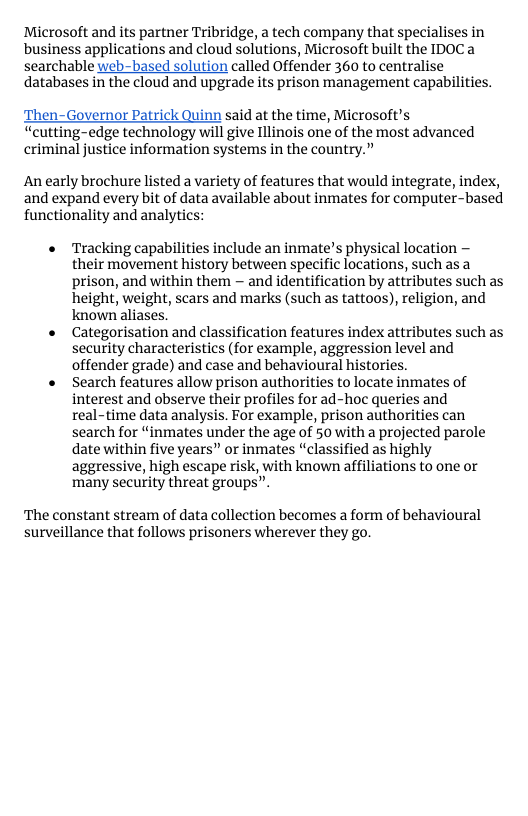
![Over time, each data point creates a record and with it a permanent chain to the past. “There s an inherent narrative in the data and the presentation of that data... that is always going to be held against Black, brown, and poor people [who are already suspected of being criminal],” Cosby said. Youth 360 In linois, the work of Microsoft and Tribridge was not limited to adult incarceration. The Youth 360 system was designed for the Illinois Department of Juvenile Justice (IDJJ), which manages the state’s five Juvenile correctional facilities. A schematic representation of Offender 360 and Youth 360 Microsoft cloud infrastructure. Information includes education data from the Department of Children and Family Services (DCES), Illinois State Board of Education (ISBE), Illinois Department of Human Services (IDHS), Illinois Healthcare and Family Services (IHES), Juvenile Assessment and Intervention System (JAIS), electronic medical records (EMR), Affordable Care Act (ACA), Illinois State Police (ISP), and the courts [Al Jazeera]](circumventing-prison-tech-censorship-midwest-books-to-prisoners 57.png)
![society that surveils them, that punishes them and that maintains gross inequality”. “And then there’s an overlapping system of the school-to-prison pipeline that sends them from schools that are increasingly resembling prisons themselves into actual jails ~ whether that’s a youth jail for kids or getting them ready to go to an adult jail when they leave the school.” The Seattle Times reports that in Seattle schools, racial disparities in youth discipline begin as early as the age of five. Over time, Black school children are suspended at four times the rate of white children, often for developmentally normal behaviours such as “disobedience” or “rule-breaking”. Nationwide, Black children are about five times more likely to be detained in juvenile justice facilities than white youngsters and are disproportionately sent from juvenile to adult court. In llinois, where Youth 360 is deployed, the racial dynamicis similar. August 5, 2020 in Seattle, Washington [David Ryder/Getty Images) For Hagopian, tracking behaviour and creating risk scores for children is “about naming and shaming”. “[1t]) sounds like it is straight out of [Orwell’s] 1984’,” he added.](circumventing-prison-tech-censorship-midwest-books-to-prisoners 59.png)
![In response to a request for comments, the IDOC requested a list of questions. Once they were sent, it responded, “the Department is declining participating in this interview.” Pretrial360 A third system, called Pretrial360, offers case management and predictive analytics software for the courts. Rolled out in Weld County and Mesa County, Colorado, in 2015, it shifts pretrial management from a resource-based model (where the defendant pays for bail) toa risk-based bail decision where risk assessments provide judges with information about defendants and inform decisions about holding or releasing alleged offenders who were arrested and charged before their trial. It also manages the supervision process if defendants are released from the county detention facility. While the fine details about Pretrial360 are not publicly available, some of its metrics include “criminal history tracking, mental iliness, pending charges, past FTAS (failure to appear in court], and ability to track a monitoring device”. Pretrial360 centralises data from criminal records, jails, police departments, and other data sources, which speeds up data assessments for Mesa County’s Criminal Justice Service Department (CJSD). Al persons en property are subject 10 a search of son and /or property (including ehicl). Todas las personas que entren a esta Proponents of pretrial software claim it can be used to keep more people out of jail or prison, but critics argue that biased data and poorly](circumventing-prison-tech-censorship-midwest-books-to-prisoners 60.png)
![designed software can lead to Black people being assigned a higher risk score than white people with the same characteristics (File: Drew Angerer/Getty Images] Avariety of pretrial products are available on the market, such as Northpointe COMPAS and CorrectTech Pretrial. Proponents of pretrial software claim it can be used to keep more people out of jail or prison. When guided by algorithms, they argue, a court can quickly determine if aperson is likely to skip trial or re-offend. Low-risk defendants can be promptly released back into the community and placed under the supervision of a probation officer. That officer can then use the pretrial Software to manage the probation process, potentially adding more data points to the surveillance archives. Algorithms can also be used to calculate sentences. But critics argue that for communities of colour - over-policed, discriminated against and disadvantaged by structural factors like inter-generational poverty and residential segregation ~ biased data and poorly designed software leads race-neutral algorithms to assign a ‘higher risk score to Black people than white people with similar characteristics. While judges often make the final decision about a defendant, and can override the software’s recommendations, evidence suggests the algorithms bias outcomes. In 2019, {0 academic studies found that Kentucky courts guided by pretrial algorithmic assessments produced outcomes more favourable to white than to Black defendants. A third studyfound that judges across the country guided by algorithms exhibit a class bias against the poor.](circumventing-prison-tech-censorship-midwest-books-to-prisoners 61.png)
![UNITED STATES Incarcerated people, according to their family’s income A male who grew up ina famity sarming less than 14,000 (batom auintle) i Simes o Thaty o1 Excucarses I ey st e o Bl X P F F F ] F ) [AlJazeera] Risk assessment software is typically proprietary, so the “black box” algorithms shaping criminal justice cannot be scrutinised by the public. Certain variables in an algorithm might serve as proxies for race, such as formal education level, employment status, or criminal record, and therefore re-inscribe race - and racial bias - in a “criminal risk score”. Without an ability to understand how the systems work, everyone is simply asked to “trust” the software is fair and just, including defendants. Expanding the correctional surveillance web Even if correctional software did not produce racially biased risk assessments, people from all walks of life are now being swept into a rapidly expanding surveillance net where personal histories are archived by the state and carried along with them through each stage of correctional supervision.](circumventing-prison-tech-censorship-midwest-books-to-prisoners 62.png)
![Living with a Master File collected by the state thus becomes an endless burden. Once you are caught in the correctional system, any mistake or perceived misdeed can be held against you. Prison correctional officers (COs) assign “tickets” to those they deem to be misbehaving. Yet “misbehaviour” is often in the eyes of the beholder, and COs facelittle accountability for potential abuse of the system. MUAVT’s Monica Cosby said many of the “staff assaults” recorded in the Master File are “BS, (like the officers] got their toe stepped on while breaking up a fight”. In one incident, “one lady got a ‘staff assault’ (ticket] because the police ran into three different people, and her cane got knocked out of her hand because one of the people he bumped into bumped into her,” she explained. When “tickets” resulting from correctional bias or abuse of authority are recorded in an inmate’s Master File, it can have an effect on that inmate’s chance of getting parole. “[A parole board may say) ‘we don’t think you’re a good candidate for parole because you got a ticket 10 years ago that says “staff assault”,’ when really, the police ran past you and tripped over your wheelchair,” Cosby said. Issues of staff abuse and even outright fabrication make data collection and analysis all the more problematic.](circumventing-prison-tech-censorship-midwest-books-to-prisoners 63.png)
![£ = == NYPD security cameras covered with paint by protesters [File: Lev Radin/Pacific Press/LightRocket via Getty Images] Tribridge’s three core products Offender 360, Youth 360 and Pretrial360 ~ drastically expand data collection and analysis. The software brings together “separate silos” of information ~ be it from schools, medical systems, or disparate correctional databases ~ to givea complete “360-degree view” of each person. Individuals can then be compared against other people in the database as part of an ongoing (involuntary) human experiment said to identify traits like aggressiveness or predict behaviours, such as “escape risk” or the likelihood of committing a crime. Under the guise of “data collection” and “better management” of people, Big Data systems are designed to keep tabs on people in increasingly fine detail - at a profit for tech corporations. More counties In October 2014, Cook County, Illinos, the second-most populous county in the US, toits jails. In , Microsoft partner DXC Technology, a Fortune 500 giant, acquited Tribridge and re-branded its Offender 360 software under as “DXC Offender360”.](circumventing-prison-tech-censorship-midwest-books-to-prisoners 64.png)
![‘The following year, DXC pitched its software for use in Miami-Dade County - the seventh most populous county in the US. The contract details a staggering variety of features. Capabilities include the ability to track the movement of inmates across facilities using barcode scanners, wristbands, mobile devices, or biometric readers; real-time “head counts” of inmates at all locations; and alerts for probation violation. People hold posters as they stage a demonstration against Immigration and Customs Enforcement (ICE) in front of the Microsoft building in New York on July 31, 2018. Demonstrators claims Microsoft has substantial contracts with ICE and the Border Patrol that enable these agencies to tear migrant families apart [File: Atilgan Ozdil/Anadolu Agency/Getty Images] DXCalso says its software can help track down and detain people for Immigration and Customs Enforcement (ICE). Microsoft has come under fire in recent years for its contract servicing ICE, an agency within the Department of Homeland Security which detains and deports undocumented immigrants. Microsoft’s CEO, Satya Nadela, and its president, Brad Smith, defend the contract, stating that they support immigrants and that their company simply provides ICE with services for moving email, calendar, messaging and document management workloads.](circumventing-prison-tech-censorship-midwest-books-to-prisoners 65.png)
![Other counties that have inked contracts for Offender360’s correctional software include San Diego County, CA, Placer County, CA, Santa Clara County, CA, and Maricopa County, AZ (the fourth-most populous US county). Public records also indicate a launch in San Francisco, CA. E-carceration Over the past few decades, US prison populations dramatically expanded under the “war on crime” that disproportionately targeted people of colour. Today, while the US has less than 5 percent of the world’s population, it has at least 20 percent of the world’s known prison population. UNTED STATES Adults in the correctional syste [AlJazeera] However, there is a second form of incarceration less spoken about, called “e-carceration”. As crime has dropped and prison populations in the US have modestly declined, the criminal justice system has increased the number of people released on probation (where courts order offenders to be supervised in their communities instead of sending them to prison) and parole (where prisoners are released under supervision after serving all or part of their sentence). Other supervised communities](circumventing-prison-tech-censorship-midwest-books-to-prisoners 66.png)

![Blue dots on an aerial photo of Quincy represent where individuals wearing GPS and radio monitoring bracelets have been, as seen ona computer screen demo at the Mass Probation Service electronic monitoring program File: John Tlumacki/The Boston Globe via Getty Images] Monica Cosby was placed under electronic monitoring for 60 days after she was released from prison and put on parole. Cosby told me, “there are a gazillion rules to follow about where you can go, where you can live, who you can associate with”, which is tied to your Master File, This can lead to isolation, especially for communities of colour: “Alot of this [information in your Master File] determines where you can be and ‘who you can communicate with when you come out... You can’t talk to anybody that is in a gang, or is a ‘security threat” ~ or s affiliated [with a gang] - that’s everybody” because so many people know people who are part of an alleged “gang”, she said. Moreover, “all of this data that is held actively targets people”, Cosby said. With electronic monitoring, officers can show up to search parolees at any time. In effect, EM “brings the prison to you, it makes your criba satellite of the prison”. This “puts everyone in proximity to the police”, leading to further isolation from the community.](circumventing-prison-tech-censorship-midwest-books-to-prisoners 69.png)
![In response to a request for comments, DXC Technology asked for a list of questions. Once they were sent, it did not respond to further emails. Microsoft’s carceral solutions in the UK In addition to DXC, Microsoft has developed its own Azure solution for electronic monitoring, what it calls “next generation offender tracking”, powered by the Microsoft Internet of Things. The solution, created for UK authorities, strives to alert police and probation officers in real-time toparole violations. In the UK, Microsoft is also advertising its controversial Domain Awareness System, the Microsoft Aware surveillance platform, as its very own Digital Prison Management Solution (DPMS) for prisons. A product that combines “Microsoft technology with corrections operational knowledge”, the solution “empowers agencies and prison authorities to ingest and collaborate on data to respond to real-time threats and hazards whilst streamlining operations,” providing “a feature rich situational awareness platform” for prison authorities. For Microsoft, this was years in the making. In a 2016 blog post, “Digital Technology and the Prison of the Future”, Microsoft envisioned prisons monitored with CCTV, drones and IoT devices, including “finger, face, and eye recognition to identify inmates” as well as RFID tagging and tracking bands. Much like its New York City surveillance solution, the DPMS seeks to provide authorities with a 21t century God-like view of their human subjects. “Law enforcement organisations and prison authorities,” Microsoft explains, “have many powerful tools to provide insight regarding violent crime and terrorism, including real-time sensors (e.g, remote detectors, automated car registration plate readers, and closed-circuit television [CCTV] cameras) as well as traditional law enforcement data (such as.... police ...and national security records).” Yet they face a problem: “These tools are disconnected from each other, requiring enforcement staff to manually assemble a complete picture of a potential threat or crime.” Authorities require “a solution that can “fuse’ this disparate sensor and system data to help provide instant, comprehensive situational awareness and help investigative and response activities” to keep both “prisoners and staff safe.”](circumventing-prison-tech-censorship-midwest-books-to-prisoners 70.png)
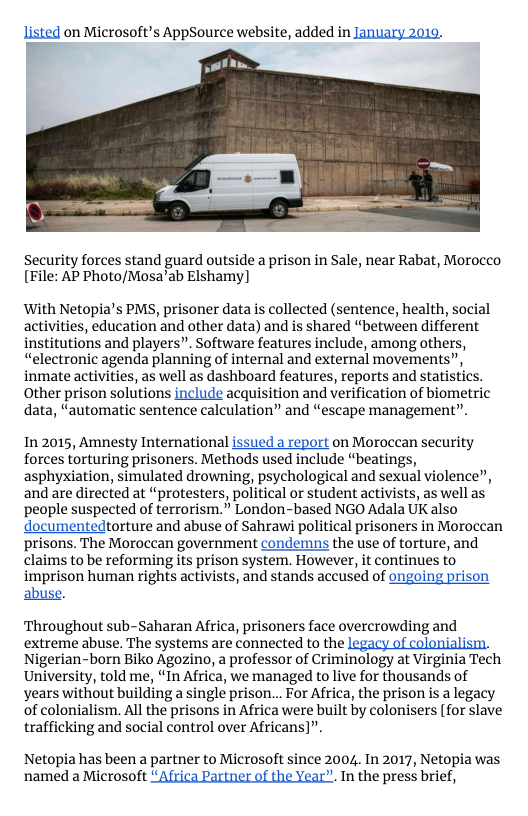
![A Microsoft logo seen at one of their stores in London, UK [File: Keith Mayhew/SOPA Images/LightRocket via Getty Images] Enter Microsoft. With the , prisons can ingest and process CCTV cameras, body-worn cameras, and tactical system data for applications like crowd control, perimeter breaches, and recorded incidents. Using surveillance devices, authorities can “virtually patrol a custodial community 24x7.” The Solution provides “geospatial analysis”, and claims it will “detect threats” by “aggregating massive amounts of data”, “make data-driven decisions”, “eliminate investigative silos”, and “enhance intelligence capabilities” for things like “collabor[ation] with detectives, patrol, and other analysts”. For prisons, Microsoft’s DPMS appears unprecedented in scope and sophistication. ‘Africa Partner of the Year’: Netopia Prison Management Solution Microsoft has also expanded its footprint into African prisons. Its partner, Morocco-based Netopia Solutions, provides software called “Prison Management Solution”, or PMS. Netopia as “amodern system dedicated to the management and monitoring of the prisoners, from their incarceration to their release.” The software is](circumventing-prison-tech-censorship-midwest-books-to-prisoners 71.png)
![Microsoft praised its software, explaining that: “Their eGov suite called CIVIS includes biometric passport solutions, prison management and healthcare assistance modules being rapidly adopted. Recognised this. year with the Microsoft eGov Innovation Grant, Microsoft Azure platform is the next generation platform helping Netopia scale their solutions across new markets. Netopia were successful in transforming their business model and now going to offer their solutions as managed ®” While it is not clear where exactly Netopia Prison Management Solution is deployed, Microsoft stated that “Netopia s [a Microsoft partner/vendor] in Morocco with a deep focus on transforming digitally, ‘Government services in North and Central Africa”. Sohela Surajpal, a recent graduate of the Pretoria Centre for Human Rights who wrote her dissertation on prison abolition in Africa, told me that many Africans “get lost in the system” during pretrial, because “the courts are overburdened” and those arrested are often poor and unable to afford legal assistance. In some countries, if their records get lost, “they will now most likely spend the rest of their lives in the prison because nobody even knows they are there”. Software can help avoid these horrific problems, she remarked. On the flip side, Surajpal said, Netopia describes a system that “creates an expanded carceral state with a lot more power and control of the people in prisons.” In many African countries, “inmates can leave and go visit their family or walk around town”, she said. “This is the result of ‘how these communities think about justice, and because there are not enough resources and will to control people.” This approach, “may not be perfect, but is more humane than locking people away in cages”. Surajpal said systems like Netopia’s PMS “could do a lot of damage to these kinds of open-air prisons.” When companies start to build in “escape probability” and “monitoring prisoners and their movement, ‘we begin to cement prisons in the way that they exist in the US”, she said. Moreover, with the “shift towards more surveillance that we’re seeing in parts of the justice system .. if states [obtain] the technology to surveil far more effectively, it’s only going to push this extreme surveillance attitude that s being adopted.” Surajpal noted, “Africa has its fair share of dictators or authoritarian ‘governments, and very homophobic countries.” She worries with “technology which allows governments to track people more effectively, make projections about prisoner behaviour, and risks of re-offending ...](circumventing-prison-tech-censorship-midwest-books-to-prisoners 73.png)
![you equip governments to use prisons more effectively to pursue this authoritarian, prejudicial mandate.” Netopia Solutions did not respond to multiple email requests for comment. Microsoft public relations: A house built on sand In July, Microsoft CEO Satya Nadella commemorated John Lewis, the US congressperson and civil rights legend who had just passed away. Lewis was arrested 45 times during the course of his life, and was sent to prison for using a “white” restroom in Jackson, Mississippi. At the Parchman prison, guards dehumanised Lewis and his comrades for resisting Jim Crow segregation. Decades later, the cruel and inhumane conditions of prisons remain intact, in the United States, in Africa and elsewhere. For Dennis Childs, author of “Slaves of the State: Black Incarceration from the Chain Gang to the Penitentiary”, “the [prison industrial complex] represents a system of transferring public wealth over to powerful corporate and political interests that are wreaking harm on an unimaginable scale.” In true capitalist form, Microsoft offers prisons its Aware Solution ata price per head: £504 ($679) to £2602.74 ($3,505.98) per person per day.](circumventing-prison-tech-censorship-midwest-books-to-prisoners 74.png)


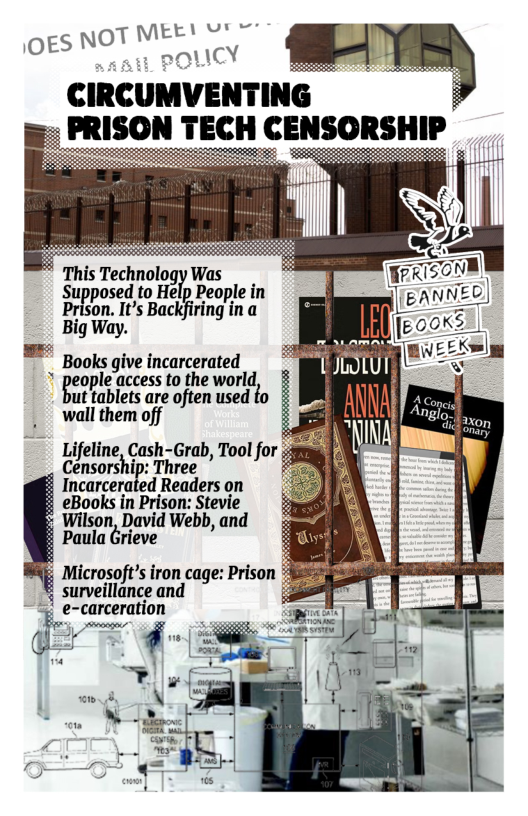
CIRCUMVENTING
PRISON TECH CENSORSHIP
This Tethnolggr Was
Supposed to Help People in
Prison. It’s Backfiring in a
Big Way.
= Books give incarcerated
* people access to the world,
ut tablets are often used to
wall them off
Lifeline, Cash-Grab, Tool for
Censorship: Three
Incarcerated Readers on
eBooks in Prison: Stevie
Wilson, David Webb, and
Paula Grieve
: Microsoft’s iron cage: Prison
surveillance and
carceration
Circumventing
© Prison Tech
~ Censorship
e Power through criminality, economics, and
intersections of oppression
e Algorithms recursively reinforce systemic
biases and inequalities
e Experimentation on marginalized
populations - prisoners, immigrants,
Palestine
Once it exists, it can’t be reformed:
exposing it isn’t enough, it must be
destroyed
e Ascontradictions and crises escalate,
government double down on cop cities and
megaprisons
i»_;; ey
Al
-,
.
1%
4
v
=
i
1
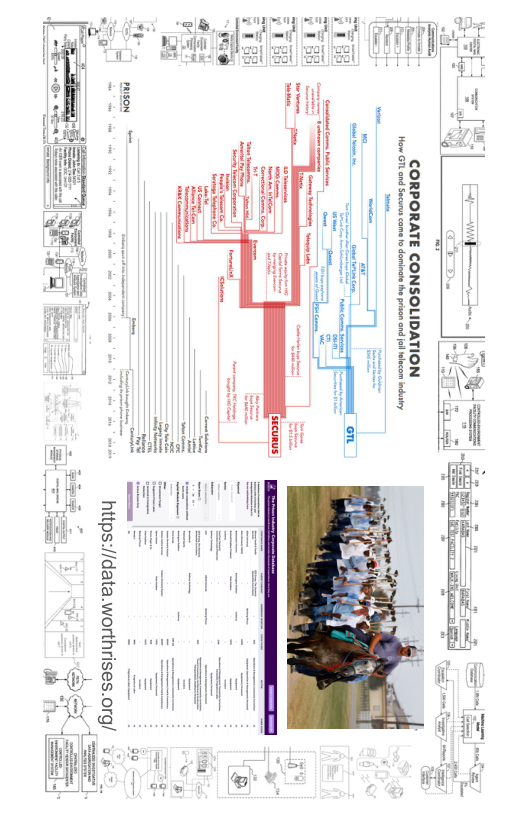
https://data.worthrises.org/ s =
L .
I
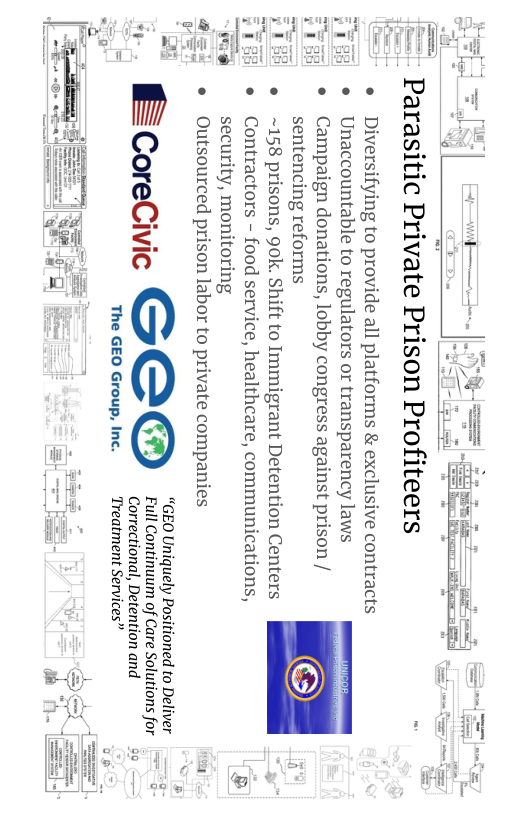
o Diversifying to provide all platforms & exclusive contracts
e Unaccountable to regulators or transparency laws
e Campaign donations, lobby congress against prison /
sentencing reforms (&) 3
e ~158 prisons, 9ok. Shift to Immigrant Detention Centers "
e Contractors - food service, healthcare, communications, 1
security, monitoring —
e Outsourced prison labor to private companies ey
“GEO Uniquely Positioned to
Full Continuum of
WOOEO_So QQ
The GEO Group, Inc.
Correctional, Detention and
Treatment Services”
War on drugs” group pu
Content-neutral” rest
s as cover for
ly-motivated censorship
Grievance process & courts = garbage can
d monopolies only (84%)
tion replaces physical mail
%i®e Resources, not Restrictions!
b
W,
I
240
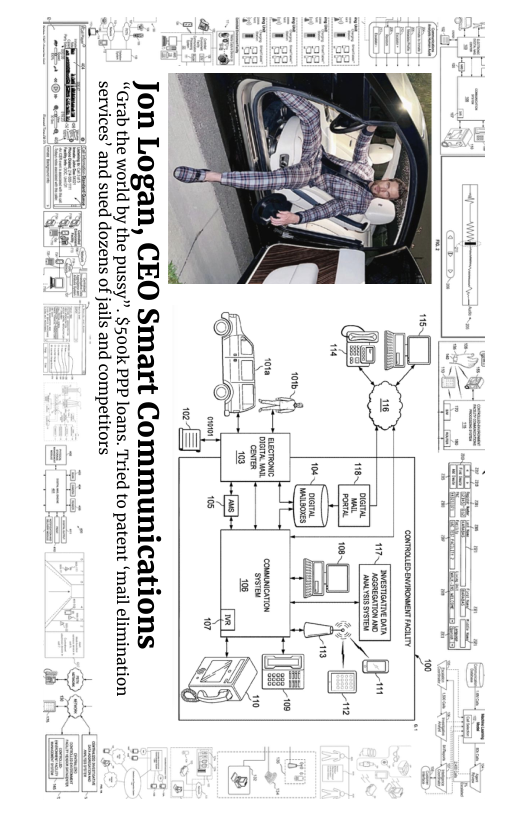
;.. Jon Logan, CEO Smart Communications
~ “Grab the world by the pussy”. $500k PPP loans. Tried to patent ‘mail elimination
4~ services’ and sued dozens of
and competitors
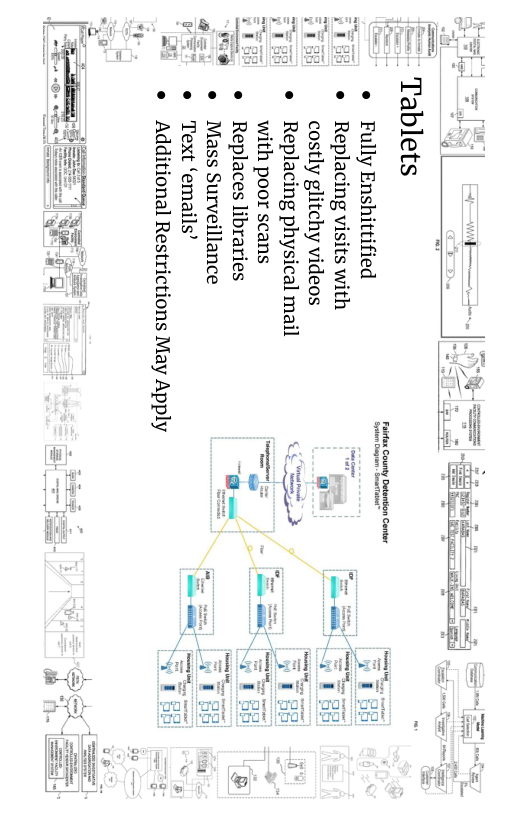
Tablets
e Fully Enshittified
e Replacing visits with
costly glitchy videos
e Replacing physical mail
with poor scans
Replaces libraries
Mass Surveillance
Text ‘emails’
Additional Restrictions May Apply
[T
wli
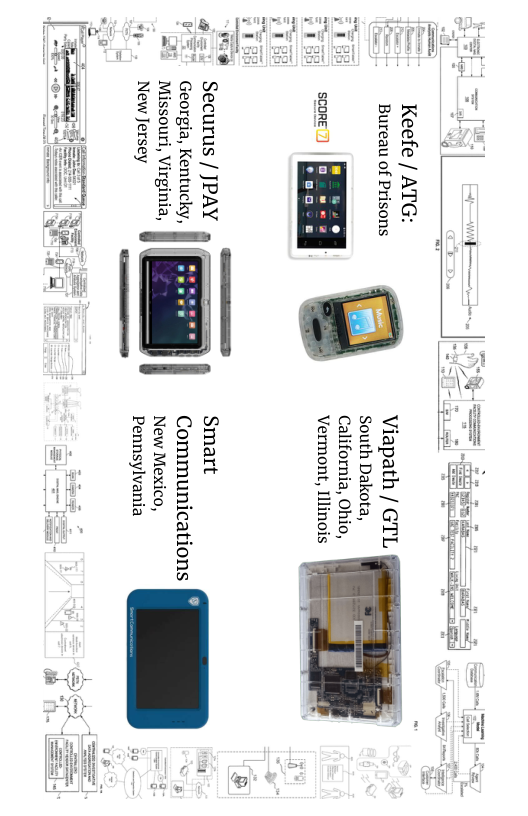
Keefe / ATG:
Bureau of Prisons
B eb— T
. Securus /JPAY
" Georgia, Kentucky,
<% Missouri, Virginia,
Zy. . NewJersey
et
Viapath / GTL
South Dakota,
California, Ohio,
Vermont, Illinois
Smart
Communications <
New Mexico, =
Pennsylvania
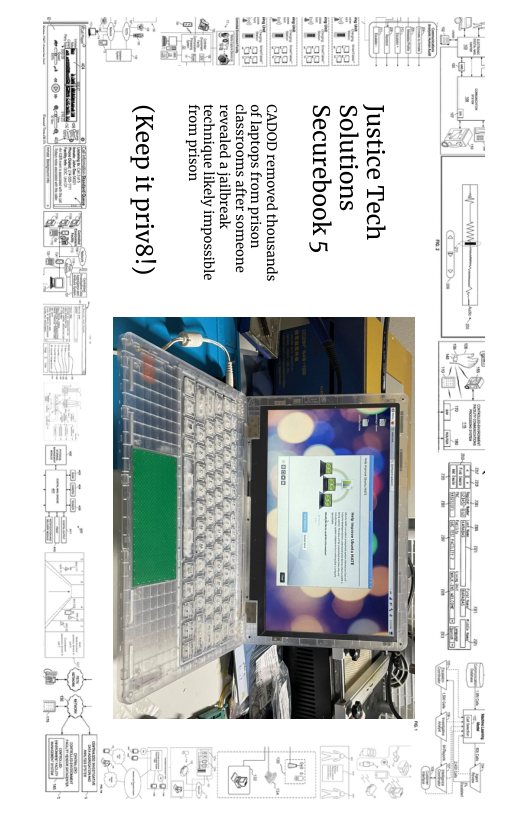
Justice Tech
Solutions
Securebook 5
CADOD removed thousands
of laptops from prison
classrooms after someone
revealed a jailbreak
technique likely impossible
from prison
ir- (Keep it priv8!)
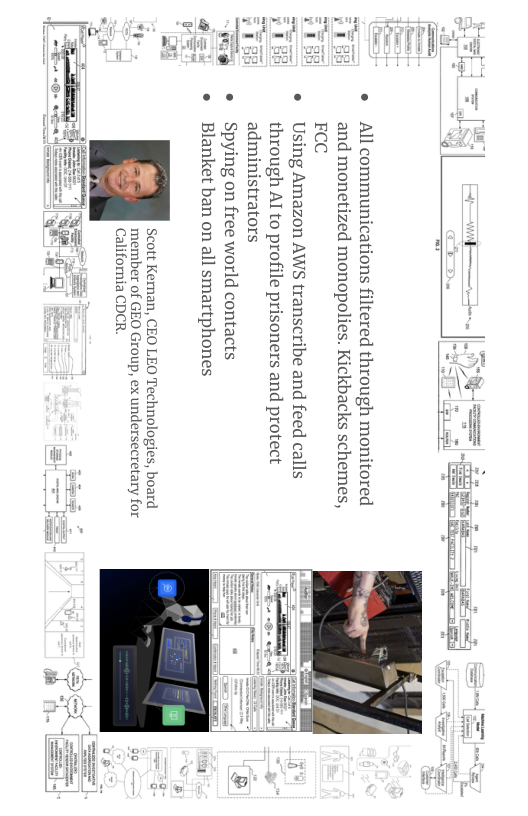
All communications filtered through monitored
and monetized monopolies. Kickbacks schemes,
FCC
Using Amazon AWS transcribe and feed calls
through Al to profile prisoners and protect
administrators
Spying on free world contacts
Blanket ban on all smartphones
Scott Kernan, CEO LEO Technologies, board
member of GEO Group, ex undersecretary for
California CDCR.
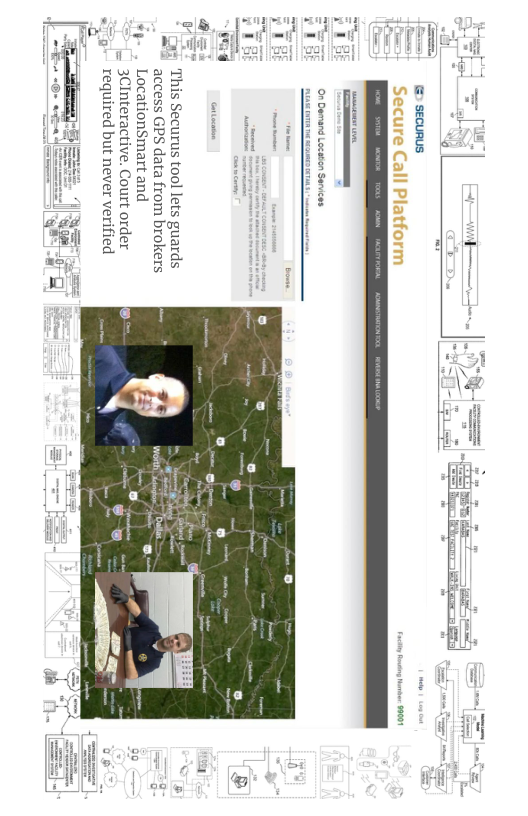
his Securus tool lets guards
* access GPS data from brokers
- , LocationSmart and
_ 3Cinteractive. Court order
required but never verified
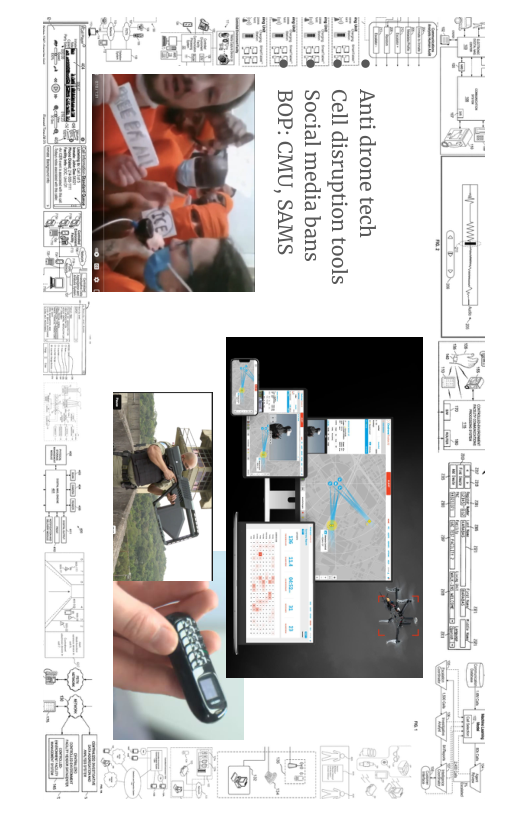
e Antidrone tech
Cell disruption tools
Social media bans
BOP: CMU, SAMS
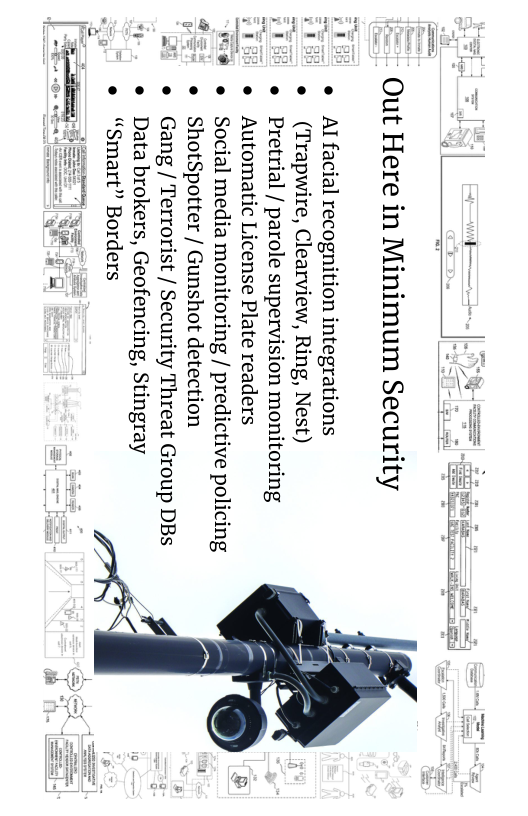
Out Here in Minimum Security
Al facial recognition integrations
(Trapwire, Clearview, Ring, Nest)
Pretrial / parole supervision monitoring
Automatic License Plate readers
Social media monitoring / predictive policing
ShotSpotter / Gunshot detection
Gang / Terrorist / Security Threat Group DBs
Data brokers, Geofencing, Stingray
“Smart” Borders
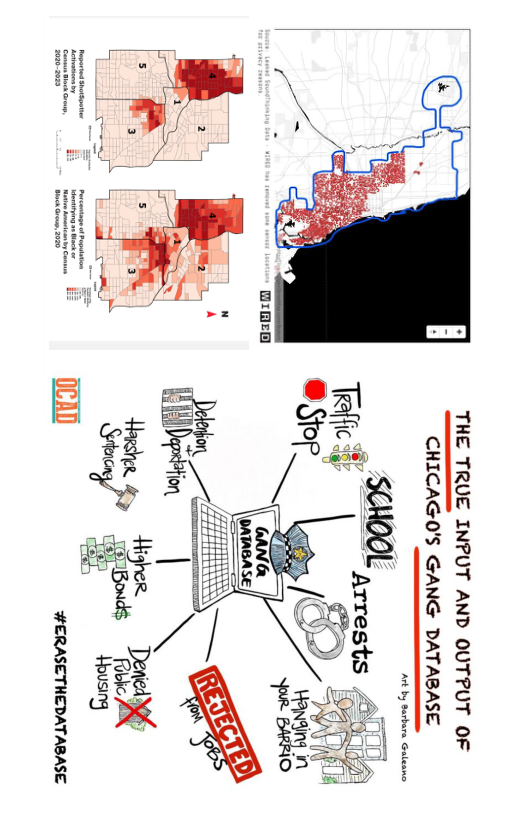
THE TRUE INPUT AND OUTPUT OF
CHICAGO0'S GANG DATABASE
"t by Barbara Galeano
OCAD H#ERASETHEDATABASE
Automated risk assessments determine eligibility for
bail, early release, prison security level, program
eligibility, (jobs, housing, healthcare...). Recursively 5
perpetuates systemic bias. Equifax 1
SM network mapping, cell data brokers, RW copbots £
Digidogs. Police drones T
Israeli kill drones using Meta/WhatsApp data (Project i 21
Lavender)
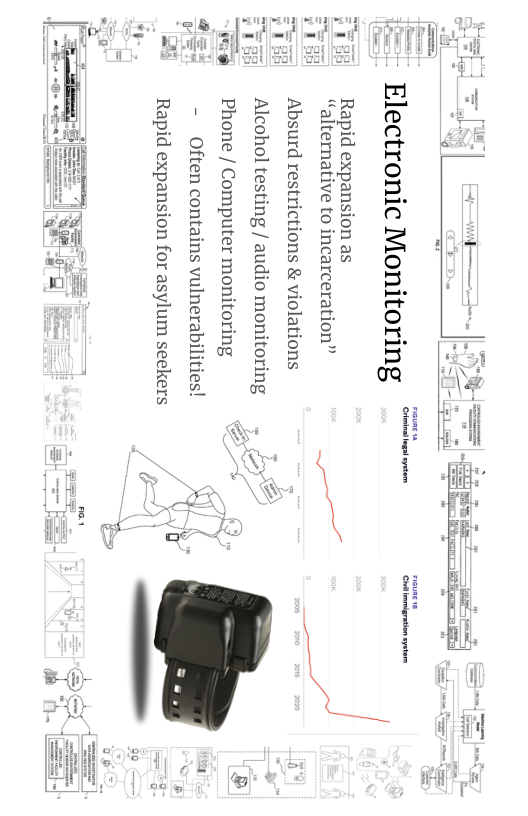
.= Electronic Monitoring
Rapid expansion as
“alternative to incarceratios
Absurd restrictions & violations
i
Alcohol testing / audio monitoring
o
[
Phone / Computer monitoring
<8,
il
i
- Often contains vulnerabilities!
Rapid expansion for asylum seekers
ot o
e Major Cop City / Atlanta Police Foundation financier
o Fulton County Jail - smart bands report
biometrics and location data
e Contacts for “repeat offenders” to wear same bands,
alitrix Score” algo determines violations. 95%
black
Integrated into Fusus Al camera network
for real time tracking
"We envision a future where technology and
(%] ethics go hand in hand, creating a safer, more
mu just society for all” - Justin Hawkins, CEO
— - Solidarity: wi_.nammm Not Walls
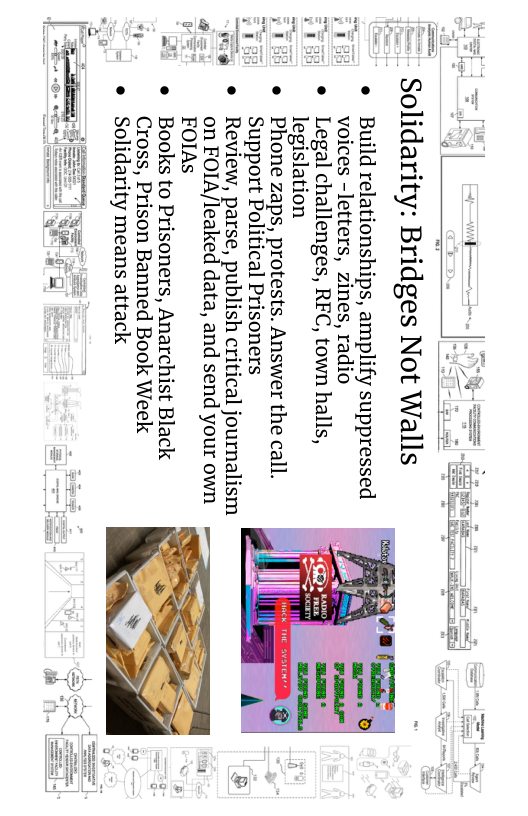
e Build relationships, amplify suppressed
voices -letters, zines, radio
e Legal challenges, RFC, town halls,
legislation
e Phone zaps, protests. Answer the call.
Support Political Prisoners
e Review, parse, publish critical journalism
on FOIA/leaked data, and send your own
FOIAs
e Books to Prisoners, Anarchist Black
Cross, Prison Banned Book Week
e Solidarity means attack
Letcher County prison,
TAMMS, Thomson SMU -
Fulton County Jail
Free phone calls
(MA,CO,CA,CT,MN)
NY attempted “censorship
committee” and NYC
package ban
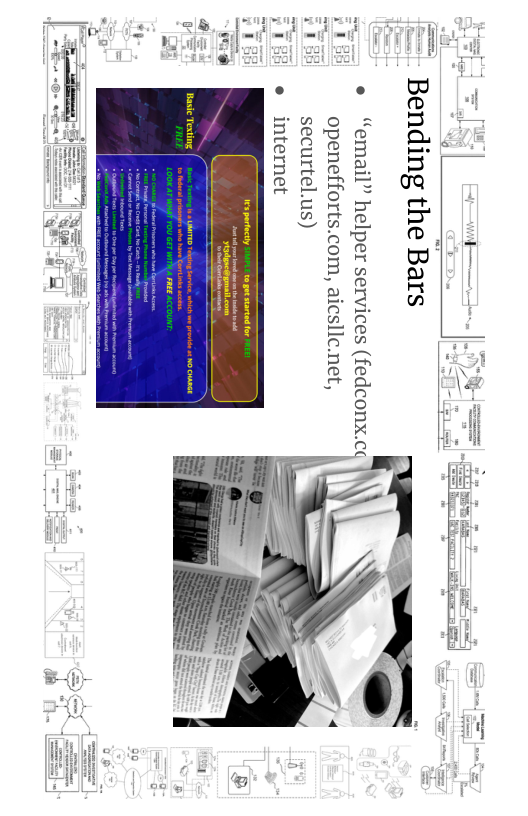
“email” helper services (fedconx.c
openefforts.com, aicsllc.net,
securtel.us)
internet
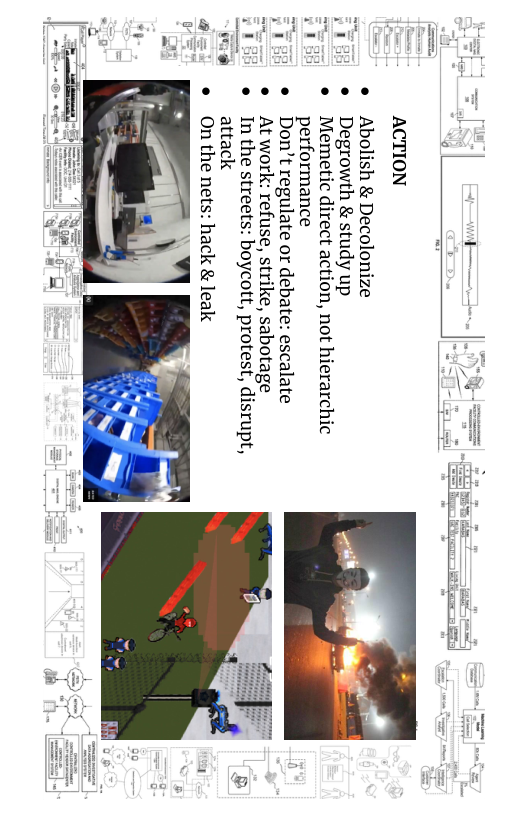
ACTION
Abolish & Decolonize
Degrowth & study up
Memetic direct action, not hierarchic
performance
Don’t regulate or debate: escalate
At work: refuse, strike, sabotage
In the streets: boycott, protest, disrupt,
attack
On the nets: hack & leak
d
(
1
A\
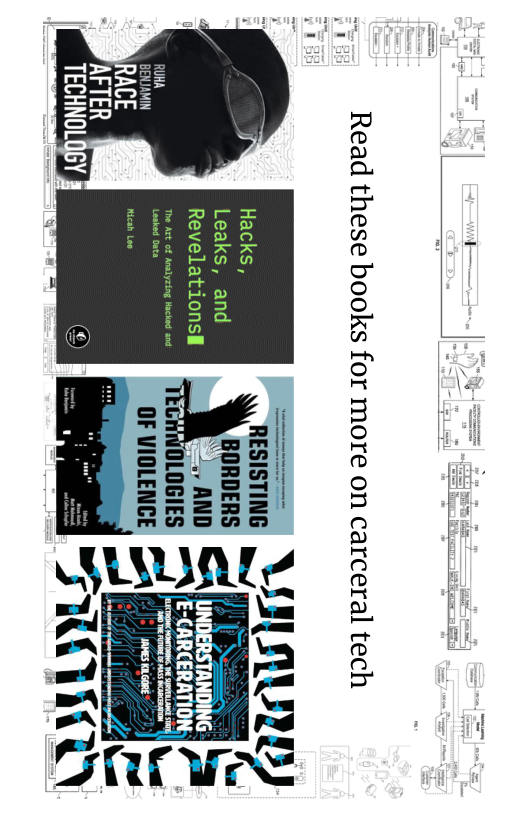
RESISTING >
BORDERS
yfi..aa__ =)
6LOGIES =
OF VIOLENCE “gx 4
Bk
-5
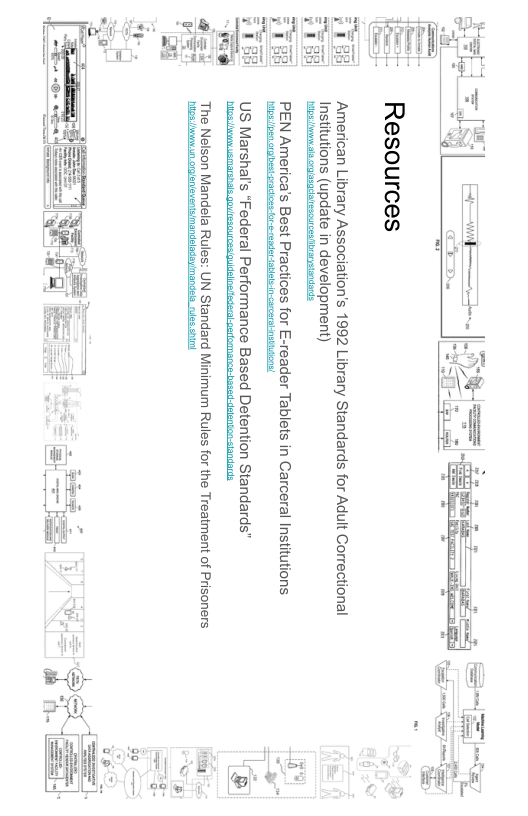
Resources i@
ican Library Association’s 1992 Library Standards for Adult Correctional S
jons (update in development) B
«
PEN America’s Best Practices for E-reader Tablets in Carceral Institutions .«M\ .,
P
US Marshal's “ #U@
The Nelson Mandela Rules: UN Standard Minimum Rules for the Treatment of Prisoners T
Slideshow from a talk given at Hackers On Planet Earth 2024
= Download slideshow: https://bit.ly/HopeXVPrisonTech
This Technology Was Supposed to
Help People in Prison. It’s
Backfiring in a Big Way.
By Moira Marquis
Sept17,202410:00 AM
1[ JWLUI F
A
AQ)
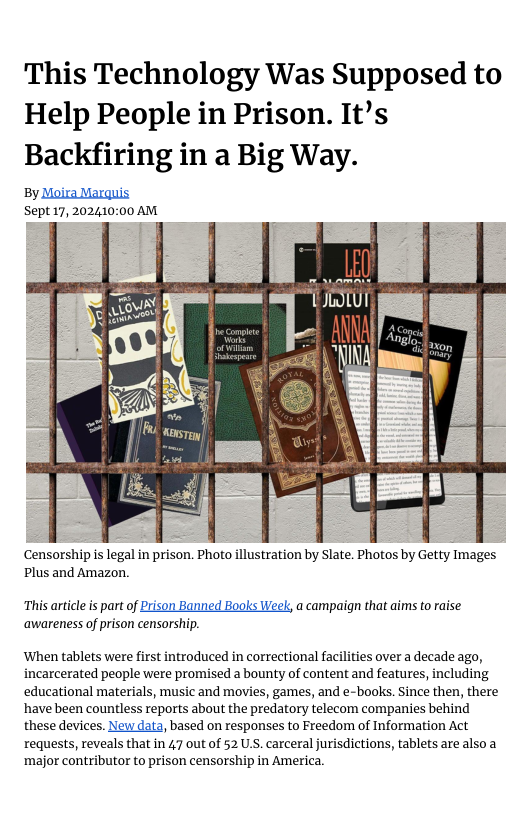
Censorship is legal in prison. Photo illustration by Slate. Photos by Getty Images
Plus and Amazon.
“This article is part of Prison Banned Books Week, a campaign that aims to raise
‘awareness of prison censorship.
‘When tablets were first introduced in correctional facilities over a decade ago,
incarcerated people were promised a bounty of content and features, including
educational materials, music and movies, games, and e-books. Since then, there
‘have been countless reports about the predatory telecom companies behind
these devices. New data, based on responses to Freedom of Information Act
requests, reveals that in 47 out of 52 USS. carceral jurisdictions, tablets are also a
major contributor to prison censorship in America.
Prisons already censor more than any other public institution. In fact,
single-state prison systems (Elorida, Texas. New York, and Virginia) censor
‘more titles than all schools and libraries in the country combined. It’s difficult to
imagine how prison censorship could get more extreme, and yet tablets are
limiting what people can read in myriad ways.
Consider the prison telecom JPay advertising 30,000 free titles on its tablets:
EQIA requests revealed that all these books have been taken from the repository
of lapsed copyright titles and Project Gutenberg and are over o5 years old. Titles
such as A Concise Anglo-Saxon Dictionary for the Use of Students, published in 1894,
‘The Ruined Cities of Zululand, published in 1869, and The Euahlayi Tribe: A Study of
Aboriginal Life in Australia, published in 1905, are representative of the selection.
There are many older works that are worth reading, of course, and Shakespeare,
Ulysses, Anna Karenina, Frankenstein, and Mrs Dalloway can all be found on Project
Gutenberg But these gems are few and far between. Shawn Younker,
incarcerated in Pennsylvania, writes, “We might as well be rummaging the dusty
old leftovers in some thrift store or back alley dumpster.” Indeed, marketing the
figure of “30,000” is particularly pernicious when you realize that you could
scan through this list of titles for hours and find only a handful of things yowd
actually want to read.
Asbad as thisis, there’s an even worse consequence of the “thousands of titles”
thetoric. Prison officials often say that because there is such a plethora of
reading material available on tablets, incarcerated peaple no longer need access
to paper literature. Missouri’s Department of Corrections is exemplary. It
implemented a draconian censorship policy in September 2023—the strictest
such policy in the United States. People incarcerated in Missouri cannot receive
books as gifts or any free reading material. Instead, books can be purchased only
through a person’s prison caseworker, paid for directly from the person’s
prison’s bank account—which charges extensive fees—and from a highly
limited number of “approved vendors.”
Censorship s legal in prisons, but it has to conform to certain criteria, one of
which is that the bans have to enable some way for incarcerated people and
booksellers to exercise the right to free expression. So, the banning of some
books s fine, but the banning of all books is not. By pointing to the tablets,
prison officials are effectively telling the courts that they can stop allowing paper
literature into prisons.
For the past 17 years, I have read letters from incarcerated people asking for
reading material through several different prison book programs. People inside
are hungry for reading material of all kinds, but especially educational materials.
‘The most frequently requested book s the humble dictionary. Prison book
‘programs have to fundraise and beg for dictionaries. They fly off the shelves
faster than they can be stocked. Nearly every request—and the 40-plus prison
book programs around the country get hundreds to thousands a
‘month—includes a dictionary.
Dictionaries are so requested because people teach themselves how to read or
read better by using them. Most incarcerated people have not been well served by
‘public education. In the last major study conducted by the National Center for
Education Statistics, in 2003, 60 percent of incarcerated people were found to be
functionally phonemically illiterate—that s, although they could pronounce
written words, they could not parse meaning from texts written abovea
fourth-grade level. Malcolm X famously says in his autobiography that he taught
‘himself to read from the dictionary while incarcerated. It's got to be a laborious
way to acquire this skill, but it speaks to the dedication many incarcerated people
'have—a commitment that is thwarted by censorship policies.
Another barrier is cost. For example, Keefe Group subsidiary Advanced
Technologies Group has a contract with the Federal Bureau of Prisons that s over
$76 million. This eye-wateringly large contract does not, however, offer people
iin federal prison anything for free. People in federal prisons pay for access to
each book, magazine, and video on their tablets. Georgia and Michigan charge 99
cents per e-book. New Mexico and South Carolina charge peaple 5 cents and 1
‘penny per minute for reading, respectively.
Cost barriers are censorship. The prison wage in 12 states is 25 cents an hour. A
functionally lliterate person trying to teach themselves to read on their prison
tablet in New Mexico would have to pay around $35 for a short (50,000-word)
book because they are charged 5 cents a minute. People incarcerated in New
Mexico make 10 cents an hour, so that person would have to labor for an
unfathomable 357 hours to be able to read this one book.
‘Where does all this money go? It gets divided between states and the telecom
‘companies. For example, Georgia receives an average monthly revenue of
$432,243.80 from tablet services in 2020 through their contract with
Securus/JPay. This revenue share s for all media—not just books—but
illustrates the extreme financial incentive prisons have to participate with prison
telecom companies in this fleecing of incarcerated people. For the 2022-26
contract, Georgia’s “Estimated Value (Revenue Share)” is over $9.6 million.
Michigan receives $10 from the sale of each tablet and 10 percent of all e-book,
‘music, game, and movie sales from its contract with JPay. Pennsylvania’s
contract for §50 million with GTL includes a 22.5 percent kickback from the sale
of music, e-messaging, games, e-books, and deposits into people’s prison bank
accounts—called commissaries. Pennsylvania can make up to $4.35 million a
year off these sales.
Carceral administrators claim that tablets were introduced not solely to make
‘money. Instead, prison officials say, tablets are a “safer” option because paper
‘mail is the primary conduit for contraband into prison.
Prisons and jails also claim that liquid drugs, especially synthetic cannabinoids
and fentanyl, are being sprayed on books and other literature mailed to
incarcerated people. Concern about drugs in prisons s not unfounded, but the
belief that mail is the main vehicle for sneaking drugs into prison is largely
unsupported by available evidence. Florida stopped all paper mail going into
prisons by citing 35,000 contraband items found in paper mail between January
2019 and April 2021, Although this may sound like a lot, it represents only 1.7
percent of the nearly 2.1 million contraband items found in the prison system
during the same period.
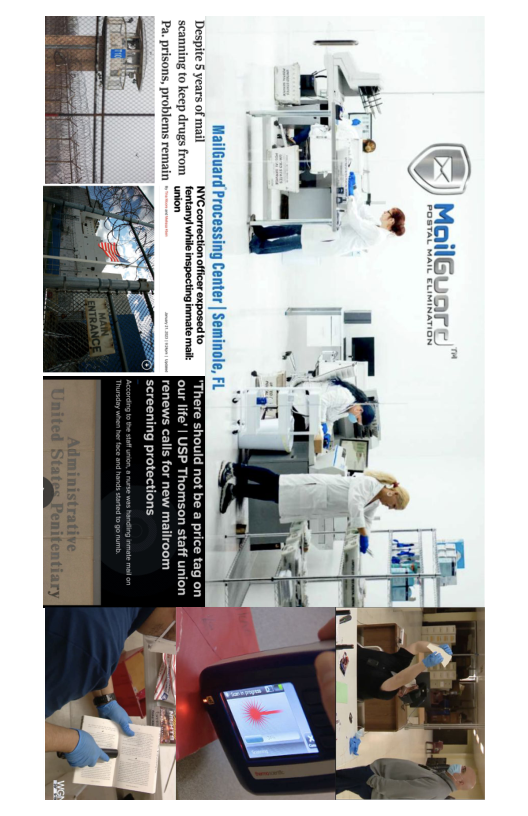
prison policies have extensive censorship criteria, and mailroom staff must
individually scan each letter, book, and magazine that enters a prison—flipping
through the entire reading content—to determine if it violates the censorship
policy. Pennsylvania set up an entire processing center where all books have to
be mailed and where staff go through rigorous examination of all materials
before it is allowed to be passed along to the intended recipient. The people that
work there spend all day inspecting spines and scanning content. Christopher,
incarcerated in Pennsylvania, says, “The entire process may take up to three,
four months, with no explanation for the delay.” Sometimes it's much longer.
For example, he ordered a photo book, which took over a year to be
processed—likely because images are heavily censored.
In recent years, prisons have struggled to hire and retain enough staff to ensure
they function, and mailrooms are no exception. This may contribute to some
attempts to limit the volume of mail coming into facilities in the first
place—including the emphasis on tablets as alternatives to paper literature.
‘Tablets could be an amazing resource. A tablet can hold far more books than any
individual cell or prison library, and tablet users can watch videos, stream music,
and stay in touch with loved ones with electronic messaging and phone calls.
As they currently exist, though, prison tablets are a clear representation of how
prisons censor—limiting content in myriad ways and allowing access only
through high costs
Prison Banned Books Week: Books
give incarcerated people access to
the world, but tablets are often used
to wall them off
Instead of taking advantage of their possibilities,
the companies that got rich off prison phone calls
offer limited book selections on tablets, as part of
their continued efforts to sap money from
incarcerated people and their families.
by Mike Wessler and Juliana Luna, September 16, 2024
Books have long served as abridge tothe outside world for incarcerated people. They allow
people cutoff from their normal lives — and often (o theis (arailies — to engage with
hinking and ideas that can open their mind and stories that transport them anywhere on
earth and beyond. But carceral authoriies have alo alays resricted access to books, and
eading behind bars has only become harder in recent years
‘This year's Prisan Banned Books Week highlights the role tablets are ironically playing in
further restricting incarcerated people’s access to reading materials. To better understand
these changes, we looked at data collected by the Prison Banned Books Week campaign on
prison book bans, policies around books, and the availability of ebooks on tablet
computers.
‘What we found is that tablets limit access to important modern writing and knowledge
behind bars
Tablets are nearly everywhere
‘When we last looked at the availability of prison tablets in 2019, they were relatively new
and rare behind bars. Only 12 atcs had (e, Since then, the technology has quickly
Spread. Today, at least 45 prison systems indicate they have tabletsor, asinthe case of
‘Alaska and Nevada, are in the process of implementing tablets
‘The two companies providing tablets to the most state prisons are Securus/JPay and
ViaPath/GTL. Perhaps this should come as no surprise since these two companies have long
been the largest providers of telecommunication services for incarcerated people. They.
control roughly 80% of both the phone and e-messaging markets behind bars.
Importantly, these companies have shifted their focus to tablets as the prison and jail voice:
and video calling market has come under increasing scrutiny and regulation, Tablets
behind bars have not undergone the same oversight, leaving companies like these free to
use the devices to continue squeezing money from incarcerated people and their families
for services like e-messaging, digitized mail, and music streaming.
Physical books are increasingly rare behind bars
‘The rapid expansion of tablets behind bars has occurred at a ime when access to physical
books in prisons has become increasingly rare
Books have always been hard to come by behind bars. While it i true that most prisons
technically have libraries, they are often undsr —resourced, sizictly regulated, and have
limited and outdated selections of bools making them unreliable for accessing books and
information. And increasingly frequent lockdowns often keep them entirely out of reach
‘This situation has become even more dire in recent years as more states have implemented
‘content-neutral hook hansthat restrict families and friends from sending books directly to
their incarcerated loved anes. These policies mandate that books sent to people in prison
can only come from a imited selection of approved vendors. This means that friends,
family, churches, ibraries, nonprofit organizations, and others who want to send books
directly to people n prison can no longer do so. Instead, they must purchase tiles from the
vendor hand-picked by the prison and have that vendor send the books directly to the
facility. A 2023 study by PEN America found 54% of prison mailzooms the surveyed had
implemented these sorts of bans, even when it was not the statewide policy.
Of course, even facilties that il allow people o send books to their incarcerated loved
ones dramaticaly restrict what they can read. A 2033 revieu by the MarshallProject found
that sare prisons explicty ban over 50.000 books, However, that only tells a partof the
story. At least 23 states, along with Washington, D.C.and the Federal Bureau o Prisons, do
ot have written lists of explicitly banned bools but nstead say they evaluate books on a
case-by—case basi, providing mailroom staff with immense discretion o implement
already vague rules, with ittl oversight.
1t will come as litle surprise that one of the mst frequently cited reasons for a rison to
bana book s “sccury” However, it s clear this reasoning is applied indiscriminately and
often n stuations where no reasonable securiy threat exists. For example,in 2022, Texas
xisons banned the second edition of Merriam-Webster's Visual Ditionary on security
grounds because it contained apicture of 2 gun. And it would likely surprise many that the
Prison Ramen details how.
incarcerated people can use ingredients often sold at commissaris to add flavor to ramen
(another common tem in prison commissaries). Perhaps prison authorites worry that the
book's recipe for “Shawshank Spread” might serve a inspiration for people behind bars.
Andof course,i goes without saying that there s ltte tono evidence that any of these:
books explicity banned in prisons have ever led o any actual scurity incident.
Tablets aren’t filling the gap
Prisons often claim that the addition of tablets behind bars wil increase access to books,
despite other book bans they have implemented. Unfortunately, though, because of imited
‘and outdated ebook selections, tablets are not living up to their potential and lkely aren't
even filling the emerging book-gap.
‘The companies behind these tablets often boast that they offer access to tens of thousands.
of free books, which sounds quite impressive until you examine their offerings more
closely. For example, none of the best-selling books released snce the vear 2000 are
avalable on Securus/[Pay tiblots in Georgia. It s hard to imagine that prisons can attribute
this to security concerns since many Harry Potter books — which are considered a rite of
‘passage for many young readers — and The Purpose Driven Life — a bible study book
written by Pastor Rick Wilson — are among those best-sellers that are not available.
Instead, most of the books that are available on tablets come from Project Gutenberg, a
collection of free ebooks. Importantly, these books are free because their copyright expired
when they reached 100 years old,
‘Undoubtedly, this collection includes some important classic books. However, their age —
and the companies” decisions not to offer newer books — creates some significant
‘problems. For example, you likely won't find books by author and civil rights activist James
Baldwin on these tablets. However, you'lllkely find Yankee Girls in Zulu Land, a book that is
over 130 years old and is known fof its racist ideas and sentiments.
Additionally, not alltablets even offer ebook. Michigan's tablets have no reading material
and the state has astatewide approved vendor policy thatlimits incarcerated people’s book
purchases to four booksellers, making reading costly and inaccessible in Michigan prisons.
Making tablets work for incarcerated readers
Prison tablets are not inherently bad, but the ways that facilities and companies have
implemented them are. Tablets can and should provide new opportunities for incarcerated
‘people to engage with high-quality books and other content in ways that don’t sap them of
whatlittle money they have.
‘The single most important step that prisons can take to make tablets workin the best
interest of incarcerated readers is by forcing the companies to offer other apps that give
incarcerated people access to the catalogs a their local libraries. Apps like Hoopla offer free
access to selected ebooks, audiobooks, movies, and more from local libraries. Communities
are already paying to provide access to these materials to people outside of the prison
walls, it only makes sense to expand that access to people locked up in prisons, too.
‘The companies behind these tablets will certainly resist this effort because it would likely
cut into their bottom line. Their track record shows that profit, not the well-being of
incarcerated people, s their driving force. However, prison officials have the upper hand in
contract negotiations. If few states band together to demand access to materials from the
local library on tablets, the companies would be forced to respand or else risk devastating
revenue losses.
Of course, prisons all too often collude with telecom providers to make money by squeezing
incarcerated people for goods and services they can' refuse. But even if prisons aren't
‘moved by a desire to help the people n their care, tate lawnakers should pay attention to
prisons' policies around reading. We know that when people who are incarcerated stay
connected to the outside world, it improves their mental and physical well-being and
prepares the for their release. States should do more to ensure that tablets are operating
inthe best interest of the people who use them.
Footnotes
1 Itisimportant to note that this analysis only looks at prison policies, and does not
Iookat local jails.Jails generally have fewer resources and offer fewer services to.
incarcerated people, so it is reasonable to assume that the issues raised in this.
briefing are likely even worse in local jail. -
2 Louisiana, Mississippi, Utah, and Oregon did not respond to FOIA requests for
information about tablets inside their facilities. -
3. Itis worth noting that tablet companies nitially charged incarcerated people to
access these free books. After public pressure, they ultimately made these books
free, however the incident exemplifies the ways these companies attempt to
unfairly extract money from incarcerated peaple and their families. -
Mike Wessleris Communications Director at the Prison Policy Iitiaive. (Other articles | Eullbio
| Contact) Juliana Luna is apoetry MFA student at Brooklyn College and a researcher or Prison
‘Banned Books Week,the national campaign raising awareness about carceral censorship.
Lifeline, Cash-Grab, Tool for
Censorship: Three Incarcerated
Readers on eBooks in Prison
September 20, 2024
Stevie Wilson s an imprisoned Black, queer, abolitionist organizer and multi-genre
writer from Philadelphia. His work interrogates the meanings of freedom, community,
belonging, identity, and truth. Wilson is rewriting a collection of essays that explore
kinship and HIV/AIDS. The first version of the original manuscript, which focuses on
the period between 1993 and 2009 when Stevie worked in the AIDS-services field, was
destroed by prison guards. Wilson i the founder of the inside abolitionist study
collective 9971 and is the founder of the abolitionist journal In The Belly. He was a
2022 Marvel Cooke Fellow. Wilson has published numerous articles in print and
online. His most recent work appears in Radical History Review, the Journal of
American History, and the collection After Accountability: A Critical Genealogy of a
Concept. Currently, he is acolumnist for the Abolitionist, a newspaper published by
Critical Resistance!
'David Webb was born in Baltimore in 1971 He was raised and attended public schools
inWest Baltimore. K-3rd Pimlico Elm, 4th and 5th 125 Furman L. Templeton, 6th
‘Booker T. Washington, 6th ~ 8th graduated Mount Royal Middle, 9th Dunbar High. As
akid, David loved sports, and began playing in leagues organized by the Rec Centers
(Robert Marshall, McCollough Homes, Murphy Homes, Lexington Terrace, Crispus
Attucks) at age eight. David had no other dream but to play in the NBA. At 14, he got
into the trouble that he is till paying for. He discovered literature and that he loved it
in his late twenties, and began writing shortly afterward. He currently attends
‘Georgetown University through their college in prison program.
Paula Grieve is incarcerated for life and is currently in Homestead Correctional
Institution in Florida
Stevie Wilson: Tablets Are a New Way
for Prisons to Profit off the Incarcerated
In 2015, the PA DOC introduced tablets sold by GTL (now Viapath) to the general
‘population. We were told we would be able to send and receive emails, buys
songs and books, submits requests to staff and order commissary via the tablets.
These were the selling points of the device which cost $160. PA DOC paid us $0.19
anhour and expected us to buy a tablet that required over 842 hours of labor.
Most of us purchased the tablet with the financial help of our families and
friends. When the DOC introduced the tablets, it phased out the cassette tape
‘program run through its libraries. So, if we wanted to hear music, we had to buy a
tablet. And at first, music was all we could access on the tablet.
For almost a year, we didn’t have email or eBook access. Even today, nine years
later, we still don’t have the ability to submit requests to staf or order
commissary. Songs, which include lectures and other spoken word materials,
costs $191. Initially, we could purchase entire lectures, some two hours long, for
$1.91. The PA DOC got wise and chopped the lectures up, making 20 to 25 minutes
available for $1.91. So, if we want to hear the entire lecture, we had to spend
almost $12
Emails cost $0.25 and are restricted to 2,000 characters, including spaces.
Calling them emails is a misnomer. It's e-messaging. Unlike emails, which
‘people can use for free, we pay. Also, it can take days before the message is
delivered or received. While faster that snail mail, it is nothinglike email. Many.
imprisoned people in PA depend upon e-messaging as a primary form of
communication with the world because our snail mail operation was outsourced
to Florida in 2018, We don't receive the actual mail that people send to us. We
receive a copy. No pictures. No cards. No original drawings. And since snail mail
can take 10 days to reach us, people have turned to e-messaging as their primary
communication method. The DOC has made receiving mail onerous so many
‘people have stopped using it.
Outsourcing our mail has lined the pockets of Smart Communications ($4
‘million/year), GTL/Viapath and the DOC. Imprisoned peaple and their families
are impoverished by this move.
In 2017, the DOC enabled the eBooks app on the tablet. The search function on
the tablet is horrible. Most of the subject categories listed have no books listed
under them. The only way to know what is available for purchase is to scroll
through the entire search list. This would take hours. A hard copy of the
catalogue was made available in the library. But you had to purchase a copy.
That's $15.
The books range from $0 to $27. The only free books are religious texts that are
in the public domain. Other books that are in the public domain still costs
between $3 and $10. Most of the books are classical literature and fiction. Current
fiction is the most expensive to purchase. We cannot make suggestions. So are
tastes are not represented in the catalogue. The catalogue hasn’t been updated
once in six years.
In 2018, the PA DOC tried to restrict all purchases of book and magazines via the
tablet. We had to submit a request via tablet to purchase a book or magazine. The
DOC would then search for the book or magazine and respond with a price for it.
We didn't know where they searched or how they priced the publication. If we
‘wanted the publication, we would have to submit a cash slip to have the funds
deducted from our accounts. The publication would then be purchased, shipped
toanother address in PA, and then finally shipped to the prison. No one used this
service. It was too cumbersome and time consuming, Four months after
launching the initiative, the DOC cancelled it.
‘We were told that along with an expansion of available texts via the tablets, each
library under the DOC would be expanded. It never happened. Because the tablets
are expensive, there are many people who don’t have one. These folx cannot
access the eBooks and they have restricted access to the actual library.
‘We read less and pay more to be distracted. The digitization and monetization of
‘mail has made obtaining books a struggle, financially and emotionally.
Tknow few people who have purchased any eBooks. I am a writer so 1 am an
exception. T have 42 eBooks. Prices ranged from $3 to $22. Most of my eBook
library is classicalliterature and historical works. When 1 asked other imprisoned
‘people about their tablet experiences and eBooks, most told me they didn't use
the tablet to read books. Pricing and selection were the two main reasons cited
for not using the tablet to read. Those who didn’t have tablets told me they didn’t
know eBooks are available on it. People don't talk about eBooks. Music, yes.
Games, yes. But eBooks, no.
‘Games were made available in 2019. They cost $4 or $5. These are the very games
‘people out there play for free. Some eBooks are cheaper than the games, but
people sill don’t buy them. Overall, there has been a downturn in reading behind
the walls. The DOC has erected numerous barriers to books. Whether it's the mail
policies, the exorbitant costs of eBooks, especially newer books, or the
censorship of the mailrooms, obtaining books has become harder. On the
flipside, the DOC has made available numerous distractions (music, games, TVs)
at steep prices. We read less and pay more to be distracted. The digitization and
‘monetization of mail has made obtaining books a struggle, financially and
‘emotionally. Money, mainly from the pockets of our families, is being sucked
into the coffers of the DOC and private corporations. Access to reading materials
is being stymied via policies that claim security and, incredibly, access are the
underlying context for the changes. Minds are being closed and pockets are being
‘opened. And the state and its corporate partners are reaping the benefits.
David Webb: Prison Tablets are Great
but Could Be So Much Better
It has been close to a year since we were given tablets at this institution in
Maryland where I've spent the last two years of a sentence started in 1986.
Everyone loves them—myself included. Honestly, they are so convenient. I
believe many remain silent about some of the tabiet's issues for fear of being
accused of seeking the perfect over the useful. The technology is useful, after al.
Butwhat I'm asking for isn’t perfect.
To start using a GTL tablet you type in your prison ID and scan your face with
facial recognition software. Once you're logged in you can see different
applications for different content, like any regular computer or phone. There are
two sets of apps: one is free, and the others can only be used after a monetary
transaction. Payments can be made from someone on the outside, or through a
prison account whose information is already on the tablet because it's affiliated
with our IDs,
10's possible some people feel the content s perfectly adequate.
A premium package consists of 55 apps. This package costs §22 per month. A
smaller package gives the same 55 apps at $10 but s only good for 400 minutes
during a 30-day period, which is eight hours. In prison, this is nothing. Either of
those might seem like a deal until you realize 38 of the apps are games —games
that I've been told are mind-numbingly boring, like Burrito Bison, Bubble Witch,
and Pet Saga. Playing games like these is certainly better than staring at the wall,
‘which might be someone’s only other option. But they're not much more
interesting I think they grabs people’s attention and holds it merely due to
activating the fight or flight response.
This is not a high hat to those peaple who enjoy them. Doing time s incredibly
hard. know. If someone survives doing their time because they were able to play
these stupid games, it’s much better than them being destroyed mentally or
engaging in other ways to survive incarceration. It is also not to advocate for
getting rid of these games. Merely, what is also needed is the availability of more
diverse, informative, and educational content.
Other apps have great content, but there’s a roughly two in ten chance you'll get
‘what you select and pay for. For instance, Pluto has documentaries, history, and
biography along with films. But good luck viewing what you paid for. Many’
times, the signal indicator spins endlessly without ever connecting. iHeart has a
nice selection of material aside from it catalog of music, like recorded history,
famous speeches, and foreign languages. But in order to access exactly what you
‘want, someone on the outside must sign you up and pay a monthly charge.
Without that, you can look up an artist and see their work, and maybe hear some
songs from them before it arbitrarily switches to music from someone else
entirely. For instance, while listening to Tina Turner, you could be switched to
‘Madonna or Cyndi Lauper. In addition to that, there is a built-in default that
‘never allows you tolisten to the songs you choose—even when you pay for the.
Instead, your choice is redirected to another album or another artist.
S0 far there has been no remedy to any of this. As 've said, it has been a year and
these problems still exist. But many are of the mind that it's better than nothing
and, because there is no choice, we should accept the warts and all. So, we.
purchase the apps, pretty much, by default as well
As one would expect, the free apps feature even less. Of my tablet’s twenty apps,
seven are related to prison operations. There is one for Settings, as in, color,
print size (we can’t print), etcetera. One deals with personal account
information, and another for commissary. The Notices app features a variety of
things, like what form of pictures are restricted and descriptions of diseases and
their symptoms. The Help app describes how to use the tablet. The Facility
Information app features scant information on parole and reentry. The Facility
Messages app is an overlap of the others, and features new notices. The Requests
app is supposed to address complaints.
‘That leaves roughly twelve other applications in addition to those. There is an
FM radio app, a couple of religious apps featuring literature from multiple
denominations and word of the day verses. There is a Merriam Webster's app,
which doesn’t have modern definitions of words like “gaslight” —for that you
have to purchase the better version in the paid apps. There is a Calm app devoted
to meditation, with ambient sounds and scenery. The others include the Career
One Stop job search app, a Calculator, and a Photo app where you can receive
pictures from the outside.
And there is a free Books app.
Most of these free books are titles with expired copyrights that the companies
can acquire and distribute for free. For example, some of the titles date back
nearly 3,000 years to Homer and others to 150 years ago such as James Joyce. As a
writer, T enjoy reading masters like Homer and Joyce. But with innovation
constantly upon us, it seems this would require new literature as well. The threat
of Al appropriating our employment seems like a more pertinent topic than
Charles Dickens relaying the horrors of child labor.
Most of the books available would be by those authors chronologically on the
timeline between Home and Joyce. Authors like Ovid, Dante, Chaucer,
Shakespeare, Flaubert, Jane Austen and Emily Dickinson. (The paid apps have
about 25% of these itles as audiobooks. I guess we are paying not to read.) This
i the bulk of the free Books app, which is the classics section. Other sections, like
Legal—which has only one book, a glossary—and Modern fiction, which has six
books, are scant and by obscure authors.
‘The Addiction section has two books—Alcoholics and Narcotics
Anonymous—and the Reference has two books, the Constitution and Dale
Carnegie’s Art of Public Speaking. This is pretty much the entire collection of
books with classics dominating the volume. There is no option for search and
choice—say, for amath book or something on celebrities or some other subject
of interest—only what s already there. And, whenever I talk to another reader
about the tablets—or anyone for that matter—it is never about the reading
‘material. For that, everyone still relies on the library.
S0, someone interested in plumbing or some other practical trade is out of luck.
‘When many incarcerated people are eager to learn because we know upon
release, a skill would enable a much greater chance of success at transitioning
back There are physical books in the prison library on these skills—sometimes.
Butlibrary access is limited.
Most prisons allow one visit per week, some every other week, with a little extra
time if you have an upcoming court date. Max time with book is two weeks.
Book drops are set up in high traffic areas like the chow hall to eliminate the need
to return to the library. Late returns can result in restrictions and money taken
from your account. All these restrictions mean library books are highly limited
‘and most people can’t access books with near regularity.
In the nine prisons I've been in, not one has had the capacity to meet the needs of
incarcerated people. With the exception of people who do their time reading
books, many have conditioned themselves not to go to the library unless there is
an immediate need. This is done with amind toward conscientiousness, sonot to
getin the way of those who need to search and do legal work—which in the
‘minds of prisoners everywhere supersedes everything else in the library.
‘Tablets represent a tremendous opportunity to increase access. Without taking
any space, through the miracle of technology, the mountain is brought to
‘Muhammad on the tablet. Alongside Webster’s, there could be reference
‘materials like encyclopedias, content on US history, GED instruction courses,
and a very needed Case Law app. | am not suggesting that tablets should replace
the physicallibrary, or end the allowance of books. Rather, tablets with robust
content would be more than mindless entertainment. It would supplement the
physical library, providing access to a broader set of leaming and enabling access
for people who are in solitary and expand the number of people that can read and
learn as they do their time.
1f we consider people are here for correction then tablets offer many meaningful
and substantial benefits. Reading offers ameliorating effects on the mind and
character. Less accessibility appears here as unmitigated error, and shares an
affinity with censorship. Depriving someone of reading compounds stagnation.
with less choice of potential ways to improve themselves and move forward does
not support rehabilitation.
‘The idea that books and information can change lives is not pollyannaish or
liberal fantasy for me. It is a reality. Prior to coming to prison, I had never read a
ook from cover to cover, or outside of school. I didn’t like reading or writing,
and was incarcerated with an 8th grade education. Now, I've published a couple
articles and T am two years into a Bachelor of Liberal Arts degree with
‘Georgetown University. It took years and years for me to reach this point.
‘Tablets represent a tremendous opportunity to increase access. Without taking
any space, through the miracle of technology, the mountain is brought to
Muhammad on the tablet
Istruggle and still have to work for it. Rarely does any of the study come to me
easily. But it has always been worth it. The aim in learning i to fill the mind with
as much information as it can hold
One of the things that inspired me long ago was an article in the sports section of
the newspaper about Los Angeles Lakers owner Dr. Jerry Buss. After he’d been
asked why he still went to school with all of his success, he replied—I'm
paraphrasing—that education was a lifelong pursuit. Something simple like that.
S0 'm not done. More than anything, my education has shown me how much I
still don’t know. How much there stillis to search and learn. There is a free app
onmy tablet called Edovo. They are a nonprofit that charges providers and offers
free educational content to incarcerated people. I've taken a course on writing
that taught me things I didn’t know. I learned about major literary periods like
the Enlightenment and modernism and how writers in those movements wrote
and how to distinguish as a reader those characteristics. That opened up awhole
realm of writing for me. They also offer certificates for completing these courses.
Thave three so far.
‘The addition of Edovo on the tablets is a big step towards equipping incarcerated
‘people with education and skills. In addition to the educational content, they also
‘have information about re-entry, recovery and health and wellbeing. Having
tablets stocked like the shelves in a library would go a very long way toward
achieving what prisons claim their goal is: rehabilitation. Thatis, if prisons are
not really the warehouses of the new Jim Crow.
Paula Grieve: My Disillusionment
with JPay/Securus eBooks
In September of 2018, JPay kiosks were installed in my dormitory. The line of
‘women who waited to use the kiosk slinked down the hallway. Once I reached the
front of the line, frustrated and impatient women stood behind me while I read,
then responded, to email. With scant remaining minutes before the system
automatically logged me out, I searched through the eBooks. It was readily
‘apparent that the selection leaned heavily towards classics. I've read a slew of
classics throughout my life, which meant I was not initially as disappointed as
‘my neighbors were. I downloaded Dracula, Alice in Wonderland, and The Count of
Monte Cristo, though I never opened the app on my tablet to read them. Instead, I
continued to access the facility’s library to check out books, or read books loaned
tome from a friend. My preferred genre was YA fiction and post-apocalyptic
dystopian fantasy.
Eventually, there was a notification sent to all JPay customers, which advised the
eBooks would be updated at some unspecified future dae.
Nearly six years have elapsed and the only eBooks available remain versions
from the public domain with expired copyright. Each eBook I looked at began
with the disclaimer: “Project Gutenberg this eBook is for the use of anyone
anywhere at no cost and with almost no restrictions whatsoever. You may copy
it, give it away, or re-use it under the terms of the Project Gutenberg License
included with this eBook or online at www.gutenburg,org.”
Last year JPay’s contract with FLDOC ended and Securus began servicing the
Media, e-Messaging and eBooks. My expectation for a revised catalog was
quickly dispelled. The catalog remained the same.
Last week, when I read the call for the eBook experience submission, I decided to
search through the Securus catalog, yet again, for any updates. I typed “Poetry”
into the search bar and the return was a mixed bag: “Poetry a Magazine of Verse,
Volume 1, October-March, 1912-13, as well as, “Plunkitt of Tammany Hall: a
series of very plain talks on very practical politics, delivered by ex-senator
George Washington Plunkitt, the Tammany philosopher, from his rostrum at
the New York County courthouse bootblack stand; recorded by William L. Rior.”
Plunkitt of Tammany Hall was definitely political science, not poetry.
Iclicked on most downloaded, which returned the options of: 10,000 Dreams
Interpreted; or What's in a Dream a Scientific and Practical Exposition by
Gustavus Hindman Miller” which, surprisingly, had the most downloads at 439,
as of yesterday.
Lyman’s Frank Baum’s “Glinda of Oz In Which are Related the Exciting
Experiences of Princess 0zma of Oz, and Dorothy, in Their Hazardous Journey to
the Home of the Flatheads and to the Magic Isles of the Skeezers and How They
Were Rescued From Dire Peril by the Sorcery of Glinda” garnered only 34
downloads.
My experience with the eBook catalog was not a complete disappointment. Last
‘month received the required text st for a Study of Literature course I enrolled
in through Adams State University. I must pay for all required reading separately
from tuition costs. 1 was grateful to find that 4 of the 10 required texts were
available for free through the Securus eBook catalog. My family did not have to
‘purchase: O Pioneers! by Willa Catha, Frankenstein by Mary Shelley, Heart of
Darkness by Joseph Conrad and The Great Gatsby by F. Scott Fitzgerald. Thank you
Securus!
Thad hoped for a more robust selection, but truth be told, I prefer to hold a real
book in my hands. Due to recent policy changes, incoming physical mail must be
scanned and send digitally to the tablet. My greatest concern regarding the
lackluster showing of available eBooks stems from the very real possibility that
the FLDOC may eventually bar incoming books. Were that to occur, educational
and recreational reading opportunities would be limited solely to eBooks.
Microsoft’s iron cage: Prison
surveillance and e-carceration
Tech corporations are expanding the scope of surveillance across the
correctional pipeline, but who pays the price?
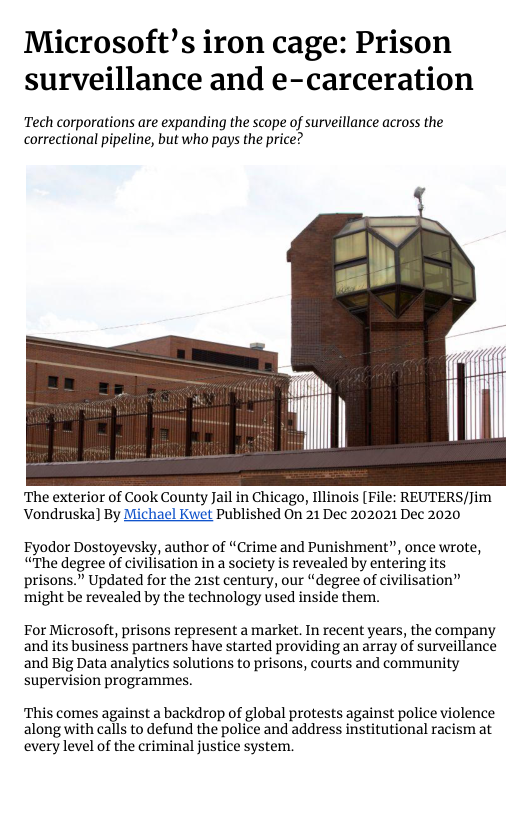
‘The exterior of Cook County Jail in Chicago, Illinois [File: REUTERS/Jim
Vondruska) By Michael Kwet Published On 21 Dec 202021 Dec 2020
Fyodor Dostoyevsky, author of “Crime and Punishment”, once wrote,
“The degree of civilisation in a society is revealed by entering its
prisons.” Updated for the 215t century, our “degree of civilisation”
might be revealed by the technology used inside them.
For Microsoft, prisons represent a market. In recent years, the company
and its business partners have started providing an array of surveillance
and Big Data analytics solutions to prisons, courts and community
supervision programmes.
‘This comes against a backdrop of global protests against police violence
along with calls to defund the police and address institutional racism at
every level of the criminal justice system.
In response to this, on June 23, Microsoft CEO Satya Nadella sent an
email to his employees, assuring them the company is committed to
“address(ing] racial injustice and inequity, and unequivocally believe
that Black lives matter.”
‘The company claims that through their “justice reform initiative”,
Microsoft will supply digital technologies that increase police
transparency and “direct people into treatment alternatives instead of
incarceration””
But this is not the full picture of Microsoft’s relationship with criminal
justice.
What the email did not mention was that for years, Microsoft has
partnered with a company called Tribridge to build a corrections
management suite ~ based on a flagship product, Offender 360 - which
includes an inmate surveillance and risk scoring solution, a “youth
offender” management solution and risk assessment solutions for
pretrial and the courts.
Microsoft has also worked on electronic monitoring solutions with
partners for persons under “community supervision”, and has its own
Microsoft-branded “Digital Prison Management Solution”. Additionally,
Microsoft partners with Morocco-based Netopia Solutions, which offers
its own “Prison Management Solution” in Africa.
Taken together, Microsoft and its partners’ carceral solutions cover the
entire correctional pipeline, from “juvenile delinquency” to pretrial and
probation, into prison, and after inmates are released on parole.
Microsoft’s involvement in the carceral state reveals how tech
corporations are expanding the scope of surveillance and high-tech tools
that discipline and punish communities of colour and the poor. For
Microsoft, incarceration is a lucrative opportunity, as “Digital
transformation malkes it possible to consider prison as a business.”
The Microsoft police state
Microsoft has a little-known law enforcement-focused division, Public
Safety and Justice, which provides integrations and services on its Azure
cloud in partnership with independent software vendors operating away
from public view. Microsoft’s primary business in criminal justice is
carried out with its partners, and it largely generates revenue by
licensing software and/or renting out storage capacity, servers and
software running on cloud infrastructure.
In addition to an extensive partner ecosystem, Microsoft offers its own
law enforcement solutions, such as its Domain Awareness System (DAS),
called Microsoft Aware - a surveillance and analytics system first
developed in tandem with the NYPD and unveiled publicly in 2012. Since
then, Aware has been purchased by police forces in Atlanta, Washington,
D.C,, Singapore and Brazil.
With Aware, people are monitored by CCTV cameras and city sensor
dragnets, subjected to facial recognition, video analytics, and
surveillance-based police patrols, supplemented by Big Data analytics.
Aswe will see later, Microsoft Aware forms the foundation for its own.
Digital Prison Management Software.
In response to a request for comment about the software in this article,
Microsoft stated, “Microsoft has nothing to share”.
‘The regional headquarters of Microsoft in the Silicon Valley town o
Sunnyvale, California [File: Smith Collection/Gado/Getty Images)
Offender 360: To surveil, predict and analyse
the correctional pipeline
Microsoft’s first flagship product for correctional services dates back to
around 2009, when the Illinois Department of Corrections (IDOC)
‘embarked on'a multi-phase, $30-million overhaul of its antiquated
computer systems.
At the time, the IDOC managed 49,000 offenders in custody and 28,000
parolees across 28 facilities using more than 40 separate computer
applications. Search inquiries required customisation and could take up
to two weeks.
Microsoft and its partner Tribridge, a tech company that specialises in
business applications and cloud solutions, Microsoft built the IDOCa
searchable web-based solution called Offender 360 to centralise
databases in the cloud and upgrade its prison management capabilities.
Then-Governor Patrick Quinn said at the time, Microsoft’s
“cutting-edge technology will give Illinois one of the most advanced
criminal justice information systems in the country.”
An early brochure listed a variety of features that would integrate, index,
and expand every bit of data available about inmates for computer-based
functionality and analytics:
o Tracking capabilities include an inmate’s physical location —
their movement history between specific locations, such as a
prison, and within them ~ and identification by attributes such as
height, weight, scars and marks (such as tattoos), religion, and
known aliases
o Categorisation and classification features index attributes such as
security characteristics (for example, aggression level and
offender grade) and case and behavioural histories.
o Search features allow prison authorities to locate inmates of
interest and observe their profiles for ad-hoc queries and
real-time data analysis. For example, prison authorities can
search for “inmates under the age of 50 with a projected parole
date within five years” or inmates “classified as highly
aggressive, high escape risk, with known affiliations to one or
many security threat groups”.
The constant stream of data collection becomes a form of behavioural
surveillance that follows prisoners wherever they go.
Prisoner advocates fears surveillance of prisoners has expanded as new
technologies have been introduced to prisons [File: R] Sangosti/The
Denver Post via Getty Images]
Monica Cosby spent 20 years in Illinois prisons, and is now co-director
of Organizing with Moms United Against Violence and Incarceration
(MUAVI). She explained to me the problem with continuous prisoner
profiling and its effects on the inmate population.
Everyone has a “Master File” kept by the IDOC “that has all your info in
it,” Cosby explained. This includes your behavioural history, staff
assaults (which, Cosby notes, could include false accusations), medical
records, inmate property they monitor basically everything you have
and do while in prison, she said.
The data collected can be used against the inmates. For example, the
record of alleged inmate “misbehaviour” can be brought up at a parole
hearing, and Big Data analytics can deem inmates as prone to violence or
recidivism. However, the fine details about what is collected and
evaluated by analytics are often not available to the public.
Cosby and other advocates fear the surveillance of prisoners has only
expanded as new technologies, such as iPads used for education or
entertainment, are introduced in the prison population.
Over time, each data point creates a record and with it a permanent chain
to the past. “There s an inherent narrative in the data and the
presentation of that data... that is always going to be held against Black,
brown, and poor people [who are already suspected of being criminal],”
Cosby said.
Youth 360
In linois, the work of Microsoft and Tribridge was not limited to adult
incarceration. The Youth 360 system was designed for the Illinois
Department of Juvenile Justice (IDJJ), which manages the state’s five
Juvenile correctional facilities.
A schematic representation of Offender 360 and Youth 360 Microsoft
cloud infrastructure. Information includes education data from the
Department of Children and Family Services (DCES), Illinois State Board
of Education (ISBE), Illinois Department of Human Services (IDHS),
Illinois Healthcare and Family Services (IHES), Juvenile Assessment and
Intervention System (JAIS), electronic medical records (EMR),
Affordable Care Act (ACA), Illinois State Police (ISP), and the courts [Al
Jazeera]
Offender 360 and Youth 360
Microsoft cloud infrastructure
ocre i ey
i et e .
o / oo
Snanmes
Mental heaith data
| crimedma | o
s =
Medical data Heatindata
Hesith information Websites Victim
Exchange notification services.
Medical and Mental poc § o
Hasith Data
Youth 360 is similar to Offender 360 in that ingests a wide range of data
about its subjects. Youth 360 data can be linked to other data systems,
such as school and public health systems, and it hosts Youth Assessment
and Screening Instrument (YASI) data to profile “criminogenic risks,
needs, and strengths.” YASI is used for every youth put on probation.
For many youth - especially children of colour, disabled, lower-class
and other marginalised groups ~ schools can be hostile sites of policing
and surveillance. As a result, schools often become entry points into the
carceral system, in what scholars and activists call the
“school-to-prison pipeline”.
Jesse Hagopian, a Seattle-based activist, teacher and editor of the
magazine Rethinking Schools, explained to me that young people of
colour are disproportionately subjected to a “school~to-prison nexus”
in which schools “increasingly resemble jails themselves, so that you
have metal detectors, and police, and random searches of students in the
school building themselves, conditioning mostly BIPOC youth to accept a
society that surveils them, that punishes them and that maintains gross
inequality”.
“And then there’s an overlapping system of the school-to-prison
pipeline that sends them from schools that are increasingly resembling
prisons themselves into actual jails ~ whether that’s a youth jail for kids
or getting them ready to go to an adult jail when they leave the school.”
The Seattle Times reports that in Seattle schools, racial disparities in
youth discipline begin as early as the age of five. Over time, Black school
children are suspended at four times the rate of white children, often for
developmentally normal behaviours such as “disobedience” or
“rule-breaking”. Nationwide, Black children are about five times more
likely to be detained in juvenile justice facilities than white youngsters
and are disproportionately sent from juvenile to adult court.
In llinois, where Youth 360 is deployed, the racial dynamicis similar.
August 5, 2020 in Seattle, Washington [David Ryder/Getty Images)
For Hagopian, tracking behaviour and creating risk scores for children is
“about naming and shaming”.
“[1t]) sounds like it is straight out of [Orwell's] 1984’,” he added.
In response to a request for comments, the IDOC requested a list of
questions. Once they were sent, it responded, “the Department is
declining participating in this interview.”
Pretrial360
A third system, called Pretrial360, offers case management and
predictive analytics software for the courts. Rolled out in Weld County
and Mesa County, Colorado, in 2015, it shifts pretrial management from
a resource-based model (where the defendant pays for bail) toa
risk-based bail decision where risk assessments provide judges with
information about defendants and inform decisions about holding or
releasing alleged offenders who were arrested and charged before their
trial. It also manages the supervision process if defendants are released
from the county detention facility. While the fine details about
Pretrial360 are not publicly available, some of its metrics include
“criminal history tracking, mental iliness, pending charges, past FTAS
(failure to appear in court], and ability to track a monitoring device”.
Pretrial360 centralises data from criminal records, jails, police
departments, and other data sources, which speeds up data assessments
for Mesa County’s Criminal Justice Service Department (CJSD).
Al persons en
property are subject 10 a search of
son and /or property
(including ehicl).
Todas las personas que entren a esta
Proponents of pretrial software claim it can be used to keep more people
out of jail or prison, but critics argue that biased data and poorly
designed software can lead to Black people being assigned a higher risk
score than white people with the same characteristics (File: Drew
Angerer/Getty Images]
Avariety of pretrial products are available on the market, such as
Northpointe COMPAS and CorrectTech Pretrial. Proponents of pretrial
software claim it can be used to keep more people out of jail or prison.
When guided by algorithms, they argue, a court can quickly determine if
aperson is likely to skip trial or re-offend. Low-risk defendants can be
promptly released back into the community and placed under the
supervision of a probation officer. That officer can then use the pretrial
Software to manage the probation process, potentially adding more data
points to the surveillance archives. Algorithms can also be used to
calculate sentences.
But critics argue that for communities of colour - over-policed,
discriminated against and disadvantaged by structural factors like
inter-generational poverty and residential segregation ~ biased data and
poorly designed software leads race-neutral algorithms to assign a
‘higher risk score to Black people than white people with similar
characteristics.
While judges often make the final decision about a defendant, and can
override the software’s recommendations, evidence suggests the
algorithms bias outcomes. In 2019, {0 academic studies found that
Kentucky courts guided by pretrial algorithmic assessments produced
outcomes more favourable to white than to Black defendants. A third
studyfound that judges across the country guided by algorithms exhibit a
class bias against the poor.
UNITED STATES
Incarcerated people, according
to their family's income
A male who grew up ina famity sarming less than 14,000 (batom auintle) i
Simes o Thaty o1 Excucarses I ey st e o Bl
X
P
F
F
F
]
F
)
[AlJazeera]
Risk assessment software is typically proprietary, so the “black box”
algorithms shaping criminal justice cannot be scrutinised by the public.
Certain variables in an algorithm might serve as proxies for race, such as
formal education level, employment status, or criminal record, and
therefore re-inscribe race - and racial bias - in a “criminal risk score”.
Without an ability to understand how the systems work, everyone is
simply asked to “trust” the software is fair and just, including
defendants.
Expanding the correctional surveillance web
Even if correctional software did not produce racially biased risk
assessments, people from all walks of life are now being swept into a
rapidly expanding surveillance net where personal histories are archived
by the state and carried along with them through each stage of
correctional supervision.
Living with a Master File collected by the state thus becomes an endless
burden. Once you are caught in the correctional system, any mistake or
perceived misdeed can be held against you.
Prison correctional officers (COs) assign “tickets” to those they deem to
be misbehaving. Yet “misbehaviour” is often in the eyes of the beholder,
and COs facelittle accountability for potential abuse of the system.
MUAVT’s Monica Cosby said many of the “staff assaults” recorded in the
Master File are “BS, (like the officers] got their toe stepped on while
breaking up a fight”. In one incident, “one lady got a ‘staff assault’
(ticket] because the police ran into three different people, and her cane
got knocked out of her hand because one of the people he bumped into
bumped into her,” she explained.
When “tickets” resulting from correctional bias or abuse of authority are
recorded in an inmate’s Master File, it can have an effect on that
inmate’s chance of getting parole. “[A parole board may say) ‘we don’t
think you're a good candidate for parole because you got a ticket 10 years
ago that says “staff assault”,’ when really, the police ran past you and
tripped over your wheelchair,” Cosby said.
Issues of staff abuse and even outright fabrication make data collection
and analysis all the more problematic.
£ = ==
NYPD security cameras covered with paint by protesters [File: Lev
Radin/Pacific Press/LightRocket via Getty Images]
Tribridge’s three core products Offender 360, Youth 360 and
Pretrial360 ~ drastically expand data collection and analysis. The
software brings together “separate silos” of information ~ be it from
schools, medical systems, or disparate correctional databases ~ to givea
complete “360-degree view” of each person. Individuals can then be
compared against other people in the database as part of an ongoing
(involuntary) human experiment said to identify traits like
aggressiveness or predict behaviours, such as “escape risk” or the
likelihood of committing a crime.
Under the guise of “data collection” and “better management” of
people, Big Data systems are designed to keep tabs on people in
increasingly fine detail - at a profit for tech corporations.
More counties
In October 2014, Cook County, Illinos, the second-most populous
county in the US, toits jails.
In , Microsoft partner DXC Technology, a Fortune 500 giant,
acquited Tribridge and re-branded its Offender 360 software under
as “DXC Offender360”.
‘The following year, DXC pitched its software for use in Miami-Dade
County - the seventh most populous county in the US.
The contract details a staggering variety of features. Capabilities include
the ability to track the movement of inmates across facilities using
barcode scanners, wristbands, mobile devices, or biometric readers;
real-time “head counts” of inmates at all locations; and alerts for
probation violation.
People hold posters as they stage a demonstration against Immigration
and Customs Enforcement (ICE) in front of the Microsoft building in
New York on July 31, 2018. Demonstrators claims Microsoft has
substantial contracts with ICE and the Border Patrol that enable these
agencies to tear migrant families apart [File: Atilgan Ozdil/Anadolu
Agency/Getty Images]
DXCalso says its software can help track down and detain people for
Immigration and Customs Enforcement (ICE).
Microsoft has come under fire in recent years for its contract servicing
ICE, an agency within the Department of Homeland Security which
detains and deports undocumented immigrants. Microsoft’s CEO, Satya
Nadela, and its president, Brad Smith, defend the contract, stating that
they support immigrants and that their company simply provides ICE
with services for moving email, calendar, messaging and document
management workloads.
Other counties that have inked contracts for Offender360’s correctional
software include San Diego County, CA, Placer County, CA, Santa Clara
County, CA, and Maricopa County, AZ (the fourth-most populous US
county). Public records also indicate a launch in San Francisco, CA.
E-carceration
Over the past few decades, US prison populations dramatically expanded
under the “war on crime” that disproportionately targeted people of
colour. Today, while the US has less than 5 percent of the world’s
population, it has at least 20 percent of the world’s known prison
population.
UNTED STATES
Adults in the correctional syste
[AlJazeera]
However, there is a second form of incarceration less spoken about,
called “e-carceration”. As crime has dropped and prison populations in
the US have modestly declined, the criminal justice system has increased
the number of people released on probation (where courts order
offenders to be supervised in their communities instead of sending them
to prison) and parole (where prisoners are released under supervision
after serving all or part of their sentence). Other supervised communities
include those on pretrial release, juveniles, and immigrants awaiting the
results of asylum or deportation cases.
Probation and parole are collectively known as “community
supervision”. When a person is put under community supervision, the
courts generate a set of terms and conditions for the sentence. A person
may be put in house arrest or given curfews. They may be allowed out of
the house from 10 am to 4 pm only, Monday to Friday. They may have to
undergo drug and alcohol tests — which can be demanded by an officer at
any given time, without warning ~ and/or be required to obtain
employment.
A security guard checks for contraband inside an ankle monitor as a man
‘goes through security before going into the Douglas County courthouse
on January 14, 2019 in Castle Rock, Colorado [File: Helen H.
Richardson/The Denver Post via Getty Images)
Probation and parole officers typically use technology like GPS-enabled
ankle bracelets for electronic monitoring (EM). Human rights advocates
have objected to the use of EM as a means to “release” people from
correctional facilities, arguing that it instead creates “digital prisons”
that extend incarceration into the offender’s own personal community.
ames Kilgore is a research scholar at the University of Illinois’s Center
for African Studies in Champaign-Urbana. After spending six years in
prison, he became a respected advocate for prison abolition, and has
published high-profile works about incarceration and human rights.
Kilgore was under community corrections after he was released from
prison in 2009, and was given an ankle monitor to make sure he was
‘home during the hours set by the courts. Under EM, the GPS device must
always be on, and supervision officers can show up to conduct searches
atany time. He described the psychological effects.
“When Iwent to bed at night, I kept having to feel my parole agent was
laying across the bottom of the bed under the covers,” he told me.
“I’s a sense of always being watched, never sure if you're going to do
the right thing. If the device has technical flaws, it might lose its charge
or signal. If it lost signal, I'd have to go and stand out in my front yard at
two o’clock in the morning so the signal would pick up. You always feel
something is going to go wrong and you’re going to get called in and sent
back to prison simply because the device doesn’t do the right thing.”
Kilgore added: “It places huge stresses on your families because A) they
have to worry about whether or not you make it back in time if you go out
with them, they worry more than you do to get you back in time, and B)
then they have to do things for you because you can’t go out. If you need
something, if you get a headache and need some aspirin, they've got to
godo it for you... It becomes a burden.”
Many, he said, are “going to find it very difficult, if not impossible, to get
work, because A) you've got restrictions of your hours, and B) a lot of
people don’t want you working if you have this big, clunky thing on your
leg. Or your parole agent can show up at your workplace to look around...
They have a 24/7 search warrant for any place that you are.”
‘The result is that those under electronic monitoring who do find work
tend to end up in “part-time, precarious jobs”, Kilgore said. “Your hours
are not predictable, your days are not predictable, but you have to be
predictable to your parole agent.”
DXC offers solutions for community supervision. Its Offender36o
software for Miami-Dade County lists the Sentinel Omnilink GPS
Trackable Ankle Monitor and Fleetmatics GPS fleet tracking software
(acquired by Verizon) as software “interfaces” for the Offender360
application. Additionally, it offers the PUMA smartphone software for
probation and parole.
Blue dots on an aerial photo of Quincy represent where individuals
wearing GPS and radio monitoring bracelets have been, as seen ona
computer screen demo at the Mass Probation Service electronic
monitoring program File: John Tlumacki/The Boston Globe via Getty
Images]
Monica Cosby was placed under electronic monitoring for 60 days after
she was released from prison and put on parole. Cosby told me, “there
are a gazillion rules to follow about where you can go, where you can
live, who you can associate with”, which is tied to your Master File,
This can lead to isolation, especially for communities of colour: “Alot of
this [information in your Master File] determines where you can be and
‘who you can communicate with when you come out... You can’t talk to
anybody that is in a gang, or is a ‘security threat” ~ or s affiliated [with a
gang] - that’s everybody” because so many people know people who are
part of an alleged “gang”, she said.
Moreover, “all of this data that is held actively targets people”, Cosby
said. With electronic monitoring, officers can show up to search parolees
at any time. In effect, EM “brings the prison to you, it makes your criba
satellite of the prison”. This “puts everyone in proximity to the police”,
leading to further isolation from the community.
In response to a request for comments, DXC Technology asked for a list
of questions. Once they were sent, it did not respond to further emails.
Microsoft’s carceral solutions in the UK
In addition to DXC, Microsoft has developed its own Azure solution for
electronic monitoring, what it calls “next generation offender tracking”,
powered by the Microsoft Internet of Things. The solution, created for
UK authorities, strives to alert police and probation officers in real-time
toparole violations.
In the UK, Microsoft is also advertising its controversial Domain
Awareness System, the Microsoft Aware surveillance platform, as its
very own Digital Prison Management Solution (DPMS) for prisons. A
product that combines “Microsoft technology with corrections
operational knowledge”, the solution “empowers agencies and prison
authorities to ingest and collaborate on data to respond to real-time
threats and hazards whilst streamlining operations,” providing “a
feature rich situational awareness platform” for prison authorities.
For Microsoft, this was years in the making. In a 2016 blog post, “Digital
Technology and the Prison of the Future”, Microsoft envisioned prisons
monitored with CCTV, drones and IoT devices, including “finger, face,
and eye recognition to identify inmates” as well as RFID tagging and
tracking bands.
Much like its New York City surveillance solution, the DPMS seeks to
provide authorities with a 21t century God-like view of their human
subjects. “Law enforcement organisations and prison authorities,”
Microsoft explains, “have many powerful tools to provide insight
regarding violent crime and terrorism, including real-time sensors (e.g,
remote detectors, automated car registration plate readers, and
closed-circuit television [CCTV] cameras) as well as traditional law
enforcement data (such as.... police ...and national security records).”
Yet they face a problem: “These tools are disconnected from each other,
requiring enforcement staff to manually assemble a complete picture of
a potential threat or crime.” Authorities require “a solution that can
“fuse’ this disparate sensor and system data to help provide instant,
comprehensive situational awareness and help investigative and
response activities” to keep both “prisoners and staff safe.”
A Microsoft logo seen at one of their stores in London, UK [File: Keith
Mayhew/SOPA Images/LightRocket via Getty Images]
Enter Microsoft. With the , prisons
can ingest and process CCTV cameras, body-worn cameras, and tactical
system data for applications like crowd control, perimeter breaches, and
recorded incidents. Using surveillance devices, authorities can “virtually
patrol a custodial community 24x7.” The Solution provides “geospatial
analysis”, and claims it will “detect threats” by “aggregating massive
amounts of data”, “make data-driven decisions”, “eliminate
investigative silos”, and “enhance intelligence capabilities” for things
like “collabor[ation] with detectives, patrol, and other analysts”. For
prisons, Microsoft’s DPMS appears unprecedented in scope and
sophistication.
‘Africa Partner of the Year’: Netopia Prison
Management Solution
Microsoft has also expanded its footprint into African prisons. Its
partner, Morocco-based Netopia Solutions, provides software called
“Prison Management Solution”, or PMS. Netopia
as “amodern system dedicated to the management and monitoring of
the prisoners, from their incarceration to their release.” The software is
listed on Microsoft’s AppSource website, added in January 2019.
Security forces stand guard outside a prison in Sale, near Rabat, Morocco
[File: AP Photo/Mosa’ab Elshamy)
With Netopia’s PMS, prisoner data is collected (sentence, health, social
activities, education and other data) and is shared “between different
institutions and players”. Software features include, among others,
“electronic agenda planning of internal and external movements”,
inmate activities, as well as dashboard features, reports and statistics.
Other prison solutions include acquisition and verification of biometric
data, “automatic sentence calculation” and “escape management”.
In 2015, Amnesty International issued a report on Morocean security
forces torturing prisoners. Methods used include “beatings,
asphyxiation, simulated drowning, psychological and sexual violence”,
and are directed at “protesters, political or student activists, as well as
people suspected of terrorism.” London-based NGO Adala UK also
documentedtorture and abuse of Sahrawi political prisoners in Moroccan
prisons. The Moroccan government condemns the use of torture, and
claims to be reforming its prison system. However, it continues to
imprison human rights activists, and stands accused of ongoing prison
abuse.
‘Throughout sub-Saharan Africa, prisoners face overcrowding and
extreme abuse. The systems are connected to the
Nigerian-born Biko Agozino, a professor of Criminology at Virginia Tech
University, told me, “In Africa, we managed to live for thousands of
years without building a single prison... For Africa, the prison is a legacy
of colonialism. All the prisons in Africa were built by colonisers (for slave
trafficking and social control over Africans)”.
Netopia has been a partner to Microsoft since 2004. In 2017, Netopia was
named a Microsoft “Africa Partner of the Year”. In the press brief,
Microsoft praised its software, explaining that: “Their eGov suite called
CIVIS includes biometric passport solutions, prison management and
healthcare assistance modules being rapidly adopted. Recognised this.
year with the Microsoft eGov Innovation Grant, Microsoft Azure
platform is the next generation platform helping Netopia scale their
solutions across new markets. Netopia were successful in transforming
their business model and now going to offer their solutions as managed
®”
While it is not clear where exactly Netopia Prison Management Solution
is deployed, Microsoft stated that “Netopia s [a Microsoft
partner/vendor] in Morocco with a deep focus on transforming digitally,
‘Government services in North and Central Africa”.
Sohela Surajpal, a recent graduate of the Pretoria Centre for Human
Rights who wrote her dissertation on prison abolition in Africa, told me
that many Africans “get lost in the system” during pretrial, because “the
courts are overburdened” and those arrested are often poor and unable
to afford legal assistance. In some countries, if their records get lost,
“they will now most likely spend the rest of their lives in the prison
because nobody even knows they are there”. Software can help avoid
these horrific problems, she remarked.
On the flip side, Surajpal said, Netopia describes a system that “creates
an expanded carceral state with a lot more power and control of the
people in prisons.” In many African countries, “inmates can leave and go
visit their family or walk around town”, she said. “This is the result of
‘how these communities think about justice, and because there are not
enough resources and will to control people.” This approach, “may not
be perfect, but is more humane than locking people away in cages”.
Surajpal said systems like Netopia’s PMS “could do a lot of damage to
these kinds of open-air prisons.” When companies start to build in
“escape probability” and “monitoring prisoners and their movement,
‘we begin to cement prisons in the way that they exist in the US”, she
said.
Moreover, with the “shift towards more surveillance that we’re seeing in
parts of the justice system .. if states [obtain] the technology to surveil
far more effectively, it’s only going to push this extreme surveillance
attitude that s being adopted.”
Surajpal noted, “Africa has its fair share of dictators or authoritarian
‘governments, and very homophobic countries.” She worries with
“technology which allows governments to track people more effectively,
make projections about prisoner behaviour, and risks of re-offending ...
you equip governments to use prisons more effectively to pursue this
authoritarian, prejudicial mandate.”
Netopia Solutions did not respond to multiple email requests for
comment.
Microsoft public relations: A house built on
sand
In July, Microsoft CEO Satya Nadella commemorated John Lewis, the US
congressperson and civil rights legend who had just passed away.
Lewis was arrested 45 times during the course of his life, and was sent to
prison for using a “white” restroom in Jackson, Mississippi. At the
Parchman prison, guards dehumanised Lewis and his comrades for
resisting Jim Crow segregation.
Decades later, the cruel and inhumane conditions of prisons remain
intact, in the United States, in Africa and elsewhere. For Dennis Childs,
author of “Slaves of the State: Black Incarceration from the Chain Gang
to the Penitentiary”, “the [prison industrial complex] represents a
system of transferring public wealth over to powerful corporate and
political interests that are wreaking harm on an unimaginable scale.”
In true capitalist form, Microsoft offers prisons its Aware Solution ata
price per head: £504 ($679) to £2602.74 ($3,505.98) per person per day.
: What it feels like 4,
X @ deal with c.,,ksn'.kf,mfl
wailroom