Between the Sun and the Sea (reflections on being arrested in DC)
Web PDF • Imposed PDF• Raw TXT (OCR)




SEVERAL BLOCKS BEFORE THE L & 12TH STREET INTERSECTION, I wAs
already fecling that the march had run its course. At each cross
street, we met a line of police, sirens blaring. A few brave souls
still managed to fell some final windows on the periphery. Yet
while the Bank of America windows had crashed in triumphant
cacaphony, these windows struck the pavement with an urgency
that reflected our increasingly dire situation. We had no desti-
nation, no end goal. It felt as though we were running solely to
evade police. | knew that it was time to break from the group, yet
Istill held a kind of separation anxiety.
Leaving has always been hard for me. Dispersing consis-
tently feels like a haphazardly unthought-out ending tacked
onto an otherwise compelling novel. A novel that begins with,
“Collectively, anything is possible—you can do whatever you'd
like” and ends with, “Everyone goes their own way and pretends
10 be normal.” Leaving the bloc means leaving the safety of a
powerful mass of people, ofien to wander the streets immediate-
Iy adjacent to crime scenes, alone, with police looking to single
out suspects. There was a rumor circulating that, given their
history with lawsuits, the DC police would be unlikely to mass
arrest. This false prediction spelled doom for s unlucky rioters,
as the police did just that. 1t was with these thoughts circling my
head, alongside memories of past dispersals gone awry, that 1
decided to stay with the march.
1 was with a few friends. We stayed together. We kept track
of cach other. As the march shrunk in size, we paired off and
prepared to jettison ourselves from the bloc. We turned to face
an alleyway on L Street between 13th and rath. I knew very well
that this could be my chance to safely exit the march. My friends
bolted down the alleyway, not knowing what lay the next street
over. For a moment, I thought to follow suit, but decided that
100 many of us in one place might attract police attention. A few
minutes later, | was trapped between a wall and a riot shield.
Facing the corridor that had offered safe passage just moments
carlier to anyone brave enough to step down its halls, I contem-
plated the hesitation that had led me to this fate. If there’s any-
thing I can say from my experience being pinned against that
wall it is that a split second of intuition in the street is worth
more than weeks of prior planning
The kettle was where | made my biggest mistake. It was
there, and the moments just before, that I put almost no effort
into escaping. The police had us sardined together so tightly that
1 gravely underestimated our collective potential within the ket-
tle. I thought that I was about to be arrested with at most seventy
people, less than a third of our actual numbers. I was primarily
among strangers. In my heart, felt that I would participate in a
second attempt to charge the police line. It was my fear of being
castas aleader, in a film produced by live-streamers and on-duty
officers, that kept me from voicing my intent. If there was any
time to risk collective trust and courage, it was there, where we
were most vulnerable.
‘There was a larger reason I was compliant in my own captiv-
ity. I felt myself above persecution. There are two reasons why
one would go willingly to their arrest. The first, they think that
they haven't committed any crime. The second, that they com-
mitted a crime so flawlessly that they could not possibly be con-
victed of it. Both of these presumptions involve a false sense of
security; neither save you from prosecution. Though I did not
delude myself with the pretense that I had performed a perfect
excution of black bloc factics, I considered myself “high-hang-
ing fruit.” | was counting on the prosecution to be lazy, to lack
the funding or time to convict me. When I was in the kettle, I
2 BETWEEN THE SUN AND THE SEA
was convinced that I wouldn't actually be arrested. At worst, I
would be charged with a misdemeanor, slapped on the wrist,
and eventually end up with a check from a class action lawsauit.
Instead, | had to navigate the next year and a half with looming
felonies.
1 had not come to DC innocently. I knew the risk, the poten-
tial repercussions. I chose to look them in the face. The pepper
spray and stun grenades were terrifying, but not unexpected. In
some ways, they heightened my senses and fortified my convic-
tions. My heart races when I look back on the march—but not
from trauma, nor from anxiety. It drums in vigorous reverie,
recounts the last time it beat with purpose.
Over the following year, I was forced to tame my heart. In
court, I stilled my breathing, attempted to hide my guilt. I kept
a caged life. The legal procedure left me fraught with anxiety. I
clung to the safety and certainty of routine. I denied every pas-
sion, every risk, in hopes that I would be able to convince a jury
that 1 was simply not the adventurous type. My heart sat and
sulked. I came to learn that, s a friend so eloquently put it, “The
process s the punishment.”
Felonies change things. I catch glimpses of understanding
in the eyes of my friends who have faced prosecution to this de-
gree. One of the beauties of black bloc is that I might be anyone
under this mask; a restaurant server, a designer, a nurse. Once
donned, the mask allowed me to act in ways a nurse can only
dream.
To be unmasked is to be held in purgatory between selves.
I was no longer the person I was in the streets, yet 1 could not
retun to being who I had been just days carlier. At its core, the
bloc hinges on the moment when we shed our black clothes and
retum to normaley. While there have been times where I've de-
bloc'ed with a profoundly different understanding of the world,
I was still banking on returning to work with only one less sick
day. As time passed after J20 and my charges remained, I real-
ized there was a possibility that I might never retum to being
the person I had been before my arrest.
ICARUS AT 12TH AND L 3
DURING THE INTERIM AWAITING TRIAL, | CHOSE A COURSE OF ACTION
that seems common among anarchist pending-felons. I applied
o college.
For me, college was an attempt to regain some agency in
two different ways. In one way, I was trying to influence my
potential sentencing. If I could convince a judge that I was an
upstanding citizen, then
he or she might be alitile
more lenient in punish-
ing me. Going o college
was also an attempt to sal-
vage my future, a future [
el was starting to escape
my grasp.
At the time I was ar-
rested, I did not consid-
er myself to have a clear
vision of the future, Yet
in the wake of my arrest,
all successful _futures
scemed out of reach.
Success felt like a mirage,
shimmering, hazy, always
on the horizon. My case
continued and evidence
mounted against me. I
scrambled to claim any
sort of successful future I
could before a conviction
made one unobtainable.
1 raced towards the hori.
zon without drawing any
dloser to it, meeting the
same scene in every direction. My charges sent me spiraling
and forced me to examine my feelings of helplessness.
When I did so, I realized that all along, I had held within
me a concrete image of success afier all. It was not the unimag-
inable utopia I had believed myself to be pursuing. On the
4 BETWEEN THE SUN AND THE SEA
contrary, it was all too familiar; I had simply kept it intention-
ally obscured from myself. When I honestly consulted myself
about what constituted my image of a successful future, what I
found was indistinguishable from the world I already knew—
only in the future I had been imagining, I had a little more
‘money, a better presence on social media. I had been so dis-
gusted by this vision that
I'had I banished it to the
horizon of my mind.
The anarchist canon
has changed dramati-
ally over the past de-
cade. Today, we are not
as steeped in subculture.
Our politics rely a lot less
on consumer choices.
We've come a long way
from the comerstone
pieces of the early 20005.
Early CrimethInc. texts
took the Situationist ex-
hortation “Never Work—
Ever’ literally, propos-
ing a sort of exodus that
often looked more like
voluntary exile; today, as
work becomes more and
more a part of our social
as well as professional
lives, the proposal seems
unthinkably absurd. We
have largely escaped the
cultural pitfalls of the
punk scene, expanded our access to funding for our projects,
even created our own platforms so that anarchist ideas can pro-
liferate. Along with these conscious efforts to grow and develop
nuance with age, for me, something has shifted silently in the
background.
ICARUS AT 12TH AND L 5
1 gave up my resistance to work—even took up office at some
of the same companies I believed were bringing about an apoc-
alyptic nightmare. I closed my eyes, clicked my heels, and re-
peated “There is no ethical consumption under capitalism.” I
justified my increasingly indiscriminate use of money, sought
1o tally up my influence on the world. I became obsessed with
power, quantifiable power. I searched for any sign that the an-
archist movement was gaining traction, that one day we could
finally make “The Switch.” My measurements for success had
paralieled social norms; now they began to overlap with them.
Soon Anarchy was just something I believed in. Aside from
sharing meals and resources among friends, it was not some-
thing I practiced.
To SOME, THE BLACK BLOC IS A TACTIC, A MEANS TO AN END. FOR ME,
having lived through a myriad of outcomes, black bloc is prac-
tice. Black blocs are a practice in timing: when to return tear
gas to the police, when to leave an intersection, when to smash
windows, when to disperse. As in all practice, some days are
better than others. To be in bloc is to experience what can be
possible when the laws that typically govern us are momentarily
superseded and how to act when our adversaries try to reassert
them. When we participate in black blocs, we are attempting to
learn the balance between exercising an otherwise impossible
freedom at the cost of our safety and maintaining a minimum
degree of safety so that we can continue to act frecly.
Every night as I mulled over my legal predicament, I would
ask myself the same questions. “Are black blocs a pertinent part
of the way we do Anarchy today? Are they just hollow tradition
from a bygone era? Are they worth risking the world you inhab-
it daily for a fleeting experience, however ecstatic>” I think of
my friends who are a little older than I, who have beter jobs,
who were noticeably absent from the march on January 2o. For
many people, their lot of worldly success is not worth the risk.
‘When 1 look back to the texs that inspired me as I was com-
ing of age in radical politics, | trace a common thread binding
6 BETWEEN THE SUN AND THE SEA
them. Travel logs, accounts of underground healthcare, epics of
animal liberation—at their core, all of them conveyed the same
story. They told that There s a Secret World Concealed Within
‘This One; a world that I had long since forgotten. The once-com-
mon anarchist saying “Another world is possible” is no longer
spoken between friends. It is not overlaid on images of riots,
nor commonly held as an anarchist truth. | mourn it's absence.
There are those who would say there is no life outside of capital-
ism, that we are bound to this world by birth. Only recently has
the premise emerged that being born into a position invalidates
your abiliy to transcend it.
‘The truth is that we alone are the visionaries of our success.
We define our values, sculpt our objects of beauty. If we build
from the blueprints of power and safety laid out in this world,
then we will make more of the same. But I believe that we are
capable of breaching the precedents of modern life. We can
imagine less abhorrent futures, create lives worth living—but
10 do so, we must abandon the worldly successes we scek for vali-
dation. If we want to continue to experience the transcenden-
tal, unbridled ecstasy of black blocs, the practice of anarchy and
experimentation, then we must create and maintain worlds in
which the consequences of a felony rioting conviction are not
so dire—worlds worth leaving this one to get to. Another world
is not only possible, it is waiting for us. We must believe in our
ability to reach it so we can find the strength to depart. We have
tolet go of our attachments and truly believe that we are capable
of taking flight.
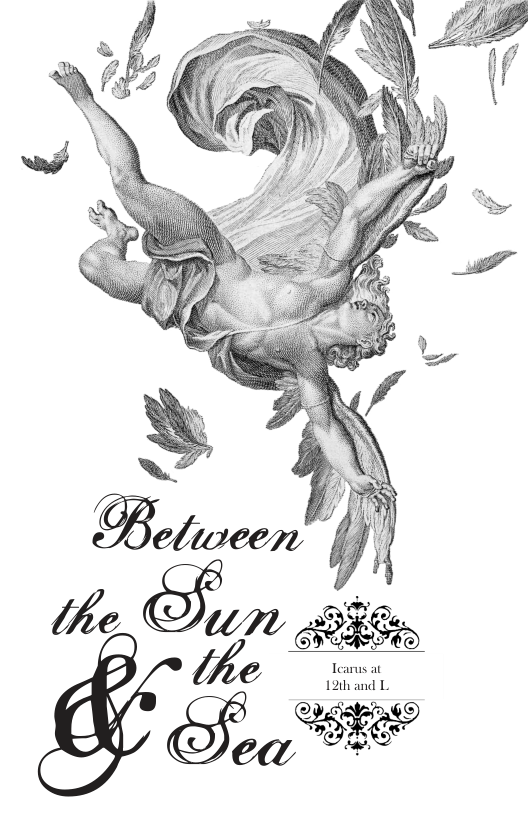
In the face of repression, I sometimes feel like a young
Iearus, hurtling towards the sun only to plummet into the sea.
Al exercises in freedom have these risks. To those who dare to
soar, may we also learn to swim, and never fear the consequenc-
es of singed wings.
Despite its abrupt end and unfortunate outcome, the march
on January 20, 2017 was one of the most inspiring, vitalizing
moments of my life. Despite its obvious challenges, | am thank-
ful that facing charges has given me time to reflect. Let me take
2 moment here to explicitly state, with a clear mind and cer-
tain heart, that—having cluded conviction—I would 100% do
ICARUS AT 12TH AND L 7
it again no questions asked. I hope someday to share an expe-
rience of elation similar to that of J20 with the readers of this
piece. If and when that day comes, may we both avoid arrest and
get off scot free.
With love,
a CrimethInc. ex-defendant
8 BETWEEN THE SUN AND THE SEA
crimethinc.com
Crimethlnc.%‘